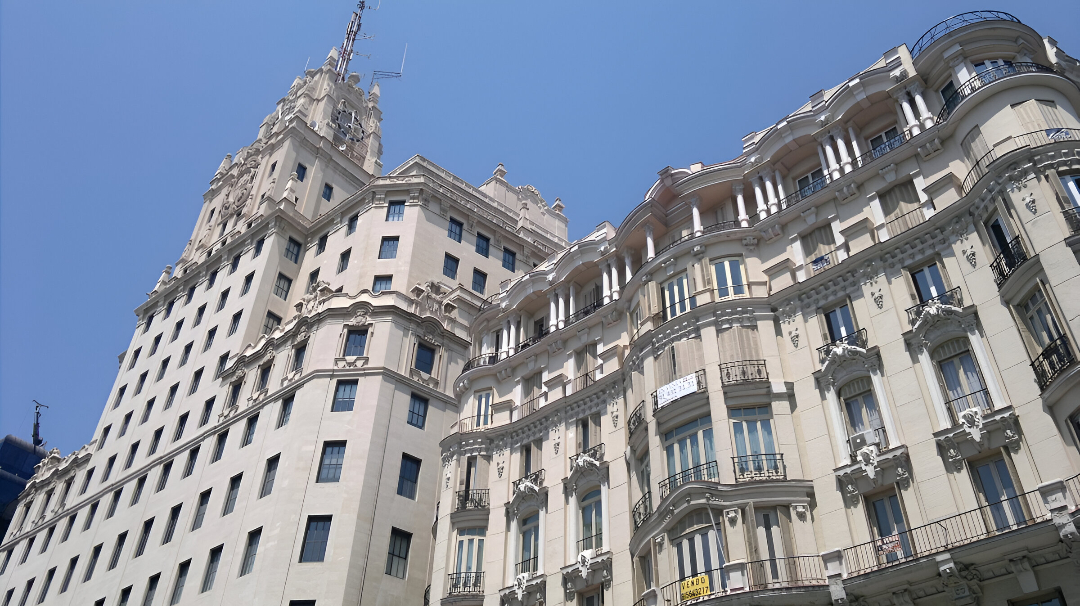
Standing on Madrid’s Gran Vía, the Telefónica Building represents one of the most important turning points in Spanish architecture. Completed in 1929, it is widely recognised as the country’s first true skyscraper, a project that introduced modern vertical construction to Spain and reshaped the skyline of Madrid for generations to come.
At the time of its completion, the building reached around 90 metres in height, making it one of the tallest structures in Europe. More than a symbol of scale, it reflected a new era of technological ambition and urban modernisation, aligning Madrid with the rapidly evolving skyscraper culture emerging in the United States.
Architecture Influenced by the American High-Rise Model
Designed by Spanish architect Luis Ignacio de Cárdenas, the project was developed with strong influence from North American skyscrapers of the 1920s. Working alongside the International Telephone and Telegraph (ITT) company, Cárdenas adapted the vertical composition and setback form typical of New York towers while integrating details better suited to Madrid’s architectural character.
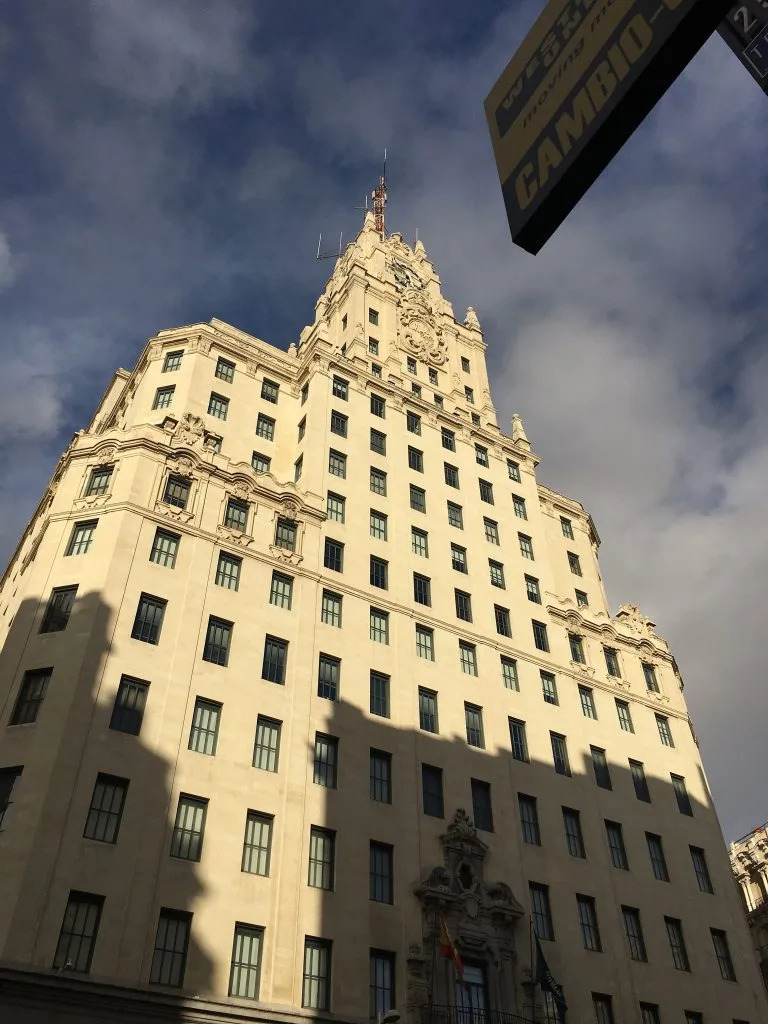
Construction began in 1926 and progressed rapidly, with completion achieved in less than three years. The building introduced a steel structural frame, an advanced solution for Spain at the time, allowing greater height and slimmer proportions than conventional masonry buildings. 
The tower was designed not only as an office building but also as a key telecommunications hub. It housed advanced telephone exchange systems and played an important role in Spain’s communications infrastructure. Even before full completion, Spain’s first transatlantic telephone call was made from the building, highlighting its technological significance.
The exterior reflects the architectural language of early skyscrapers, where solid materials defined both performance and aesthetics.
- Upper sections clad in Bateig sandstone
- Granite used at the lower levels to create a strong base
- Repetitive vertical window rhythm enhancing the perception of height
- Decorative stone detailing integrated throughout the façade
Instead of large glass surfaces, the design relies on proportion, material texture and vertical articulation to deliver its visual impact.
Like most towers of its time, the Telefónica Building uses traditional punched windows set within thick stone walls. The glazing was designed mainly to provide daylight and ventilation rather than transparency or expansive views.
Historical Role and Evolution
Beyond its architectural importance, the tower quickly became a landmark within Madrid. During the Spanish Civil War, its height made it a strategic observation and communications point. Over time, it remained closely linked to the country’s telecommunications development.
Today, following major restoration works, the building houses Espacio Fundación Telefónica, a cultural and exhibition space that preserves the historical character of the tower while adapting it to contemporary use.
Nearly a century after completion, the Telefónica Building still marks the starting point of Spain’s skyscraper history. Long before the country adopted glass-dominated towers, this building demonstrated how vertical architecture could define a modern city.
Source: Glass Balkan