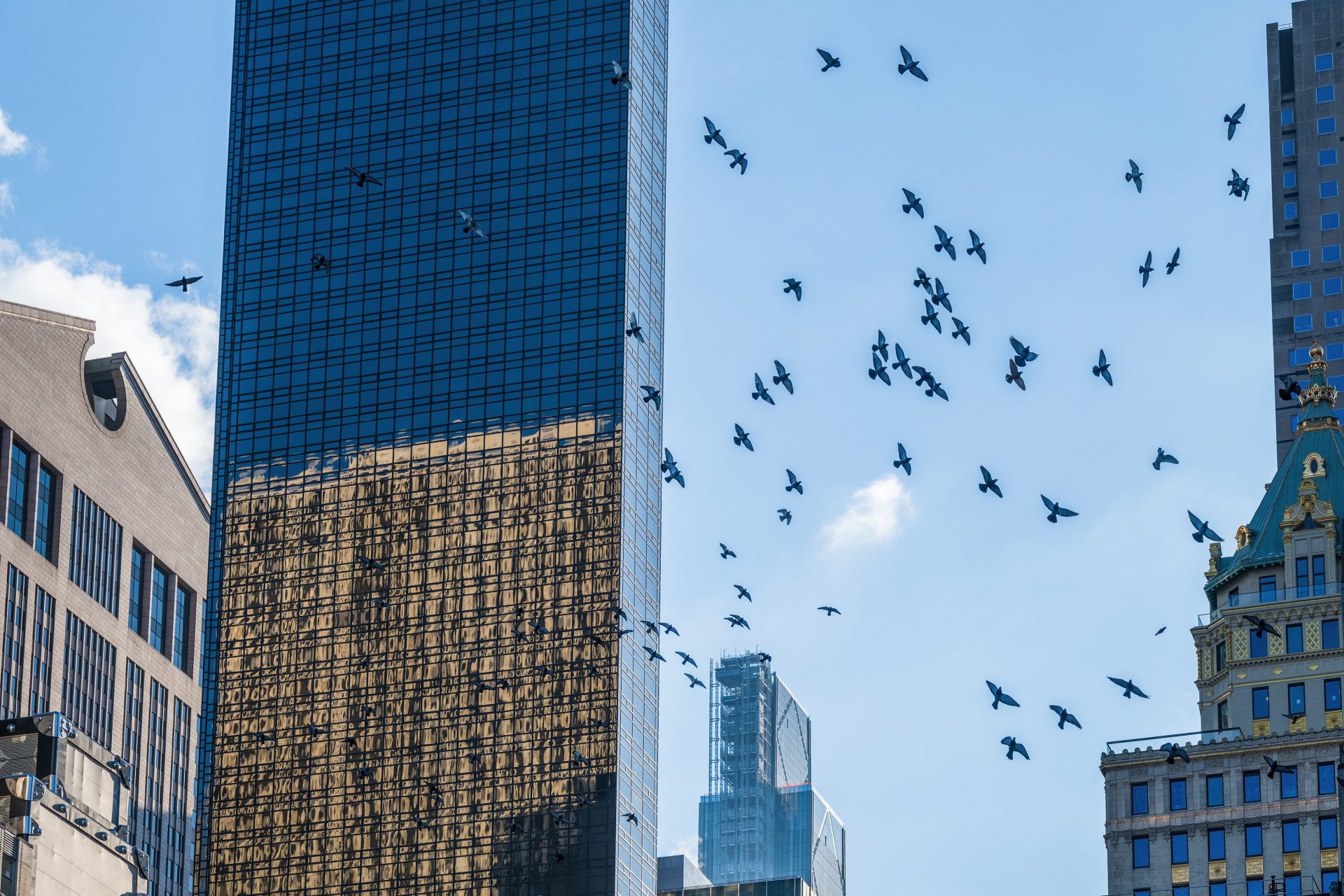
Glass façades have become a defining feature of modern architecture, but for birds, they remain a serious hazard. In the United States alone, up to 2 billion birds die each year after colliding with glass surfaces, according to the U.S. Geological Survey’s Bird Banding Laboratory. In response, the building and glazing industries have taken a major step forward with new bird-friendly façade guidelines.
A newly approved Addendum o to ASHRAE 189.1 and the International Green Construction Code introduces standardized requirements for bird-safe glazing. Approved on January 30, 2026 by ASHRAE and the American National Standards Institute, the addendum is written as a jurisdictional option, allowing regions to adapt the rules to local ecosystems and migration patterns.
The guidelines apply to vertical glazing, spandrel glass, skylights, corner glazing, and glazed railings up to 100 feet above grade in new buildings and major renovations. In most cases, at least 90% of these glazed areas must incorporate bird-friendly treatments, particularly near vegetation, water features, courtyards, skywalks, and fly-through conditions.
Technically, the glass must include visible or ultraviolet-reflective markers that break up reflections and transparency. These markers must follow precise spacing rules: linear patterns no more than 2 inches apart, or point patterns dense enough that a 2.7-inch circle cannot fit between them. Approved solutions include etched, opaque, translucent, or UV-reflective patterns. 
Certain buildings, such as places of worship and nationally protected historic structures, are exempt. Still, Addendum o marks a significant shift toward façades that balance architectural expression with environmental responsibility, protecting wildlife without compromising design.
Source: USGlassMag with additional information added by Glass Balkan