HORN Glass Industries advances its sustainability strategy in glass manufacturing through the e-Fusion Power Boosting System, an electric boosting technology designed to optimize furnace performance while reducing fossil fuel consumption and CO₂ emissions.
The system works by injecting electrical energy directly into the molten glass bath through submerged electrodes. This additional heat source increases local temperatures inside the melt, improving fining, homogenization, and overall melt convection. By strengthening internal glass circulation, the system helps reduce batch stones, bubbles, and thermal inconsistencies that typically limit production efficiency.
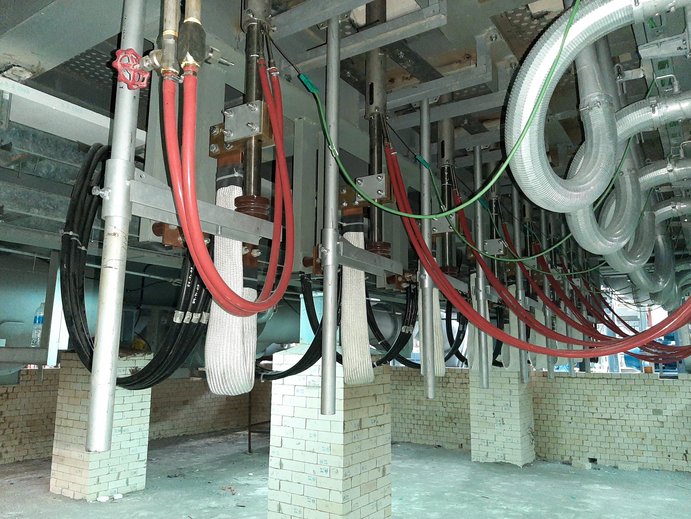
Technically, the e-Fusion system is designed to supplement conventional fossil-fired furnaces with up to 20% electrical energy input, although around 10% is commonly used as an optimal operating range to balance cost, thermal stability, and efficiency gains. The system can be configured with side-wall electrodes, bottom electrodes, or combined arrangements depending on furnace geometry and pull rate requirements.
For larger furnaces, HORN often distributes electrical input across multiple boosting zones. This multi-point configuration improves current distribution in the melt, stabilizes convection loops, and allows more precise thermal control across different furnace sections such as melting end, throat, and refining zones. Each configuration is tailored through computational modeling before installation to ensure optimal electrode positioning and current density. 
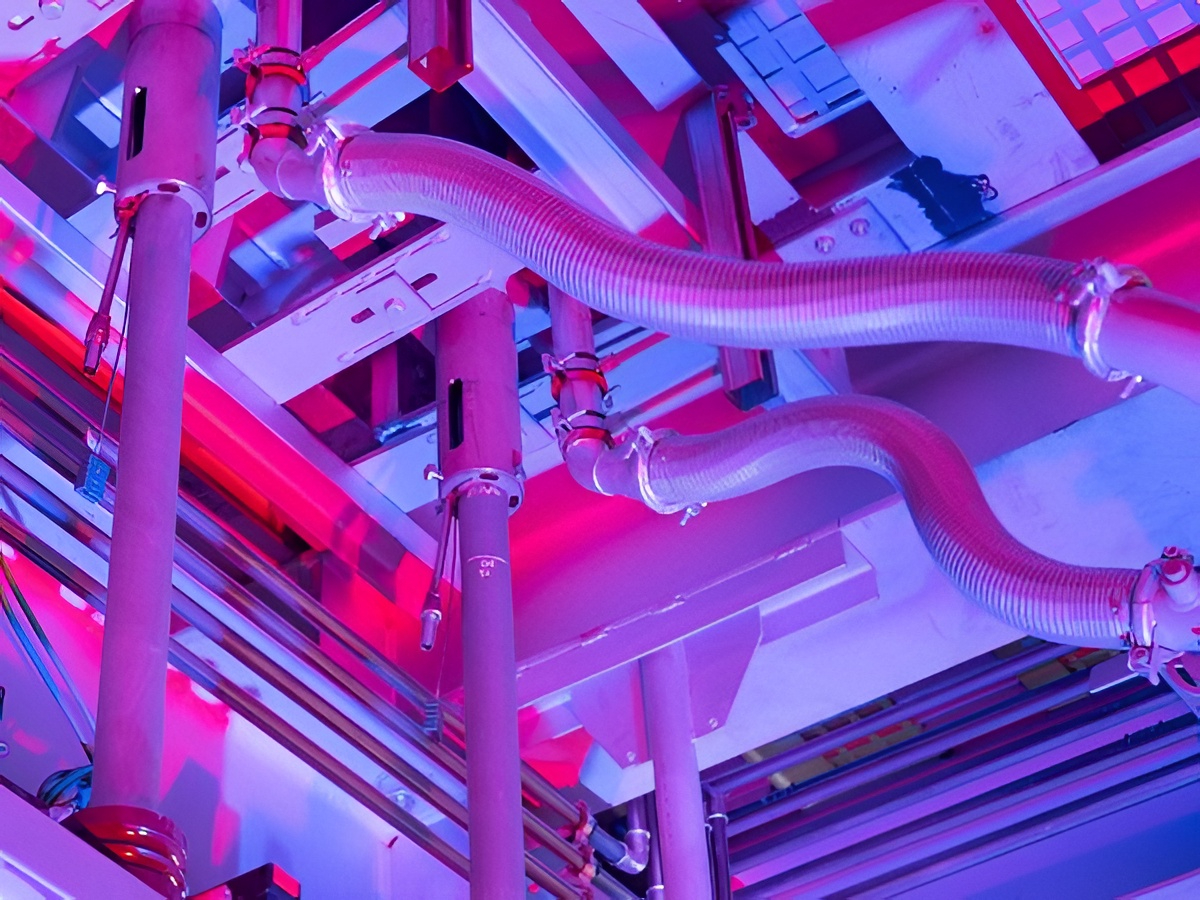
The system is powered by oil-cooled three-phase transformers or thyristor-controlled units, enabling precise regulation of voltage and current. Fully automated control systems continuously monitor electrical load, electrode wear, and glass temperature conditions, adjusting power input in real time to maintain stable furnace operation. Integrated cooling water circuits ensure electrode and holder durability under high thermal stress.
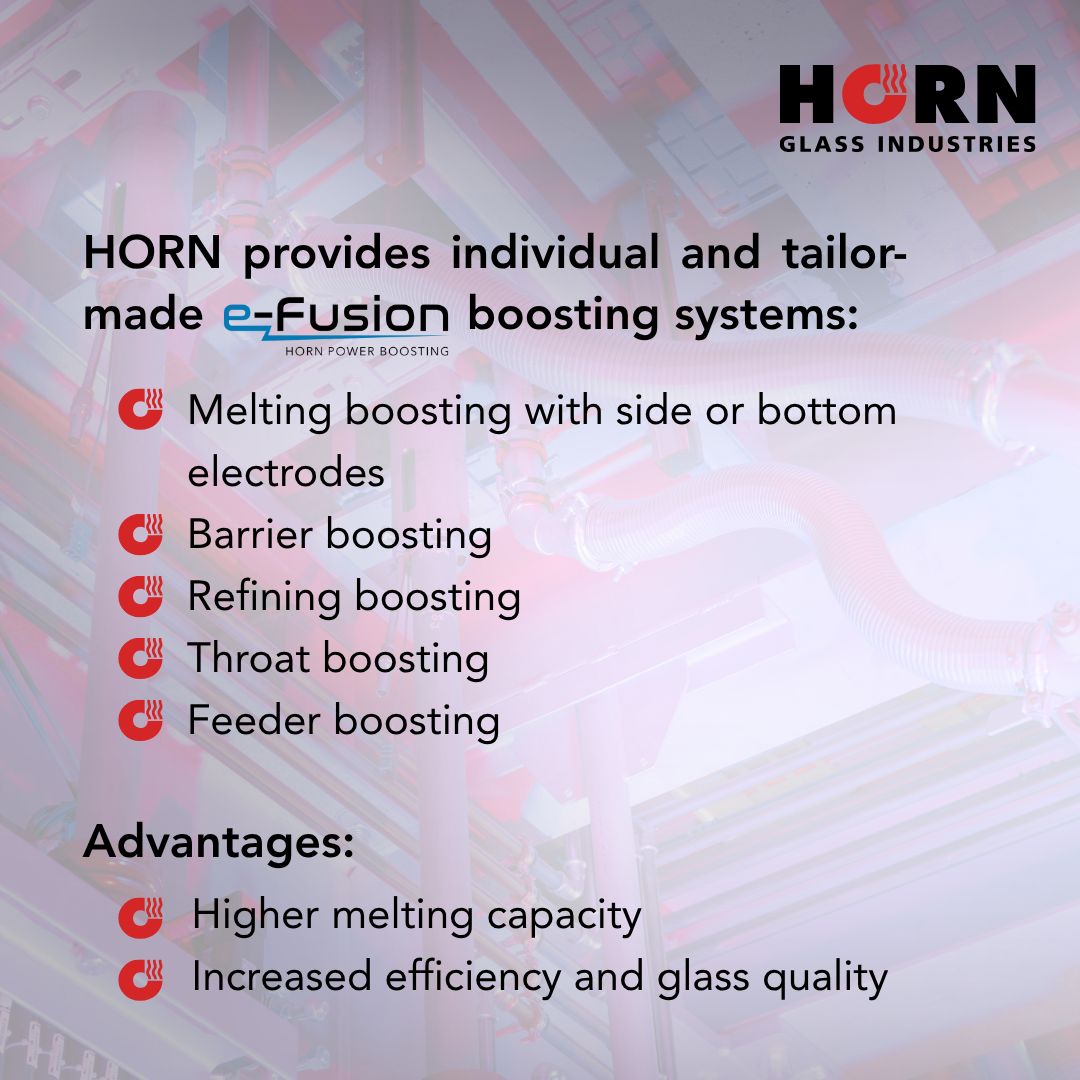
Key applications include melting boosting (increasing pull rate), refining boosting (improving glass clarity), throat boosting (enhancing flow stability), and feeder boosting (ensuring consistent gob formation). Barrier boosting can also be used to control glass flow paths and prevent unmelted batch carryover.
Operational benefits include higher specific melting capacity, improved energy efficiency, faster color change transitions, reduced fossil fuel dependency, and lower emissions intensity per ton of glass produced. Importantly, the system can also be retrofitted into existing furnaces, allowing producers to upgrade sustainability performance without full reconstruction of the melting line.
Source: HORN Glass with additional information added by Glass Balkan