At glasstec, the glass industry’s role as an innovation driver is highlighted through projects that extend far beyond conventional applications such as coatings, energy performance, or production machinery. Two exemplary developments presented by exhibitors demonstrate how glass is now being engineered to solve complex architectural challenges while also enabling advanced digital technologies.
In Helsinki, a former car park at Pohjoisesplanadi 37 has been transformed into a sheltered, year-round public courtyard embedded within a historic urban block. The site lies between protected buildings in a heritage area recognized by the Finnish Heritage Agency, where 19th-century architecture by Carl Ludvig Engel still defines the surrounding context.
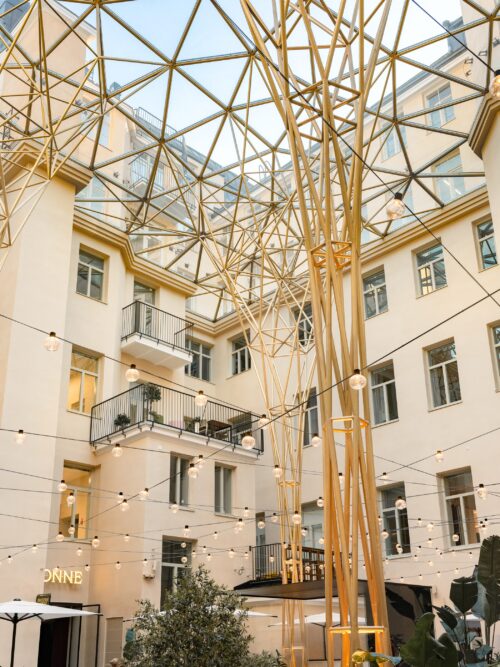
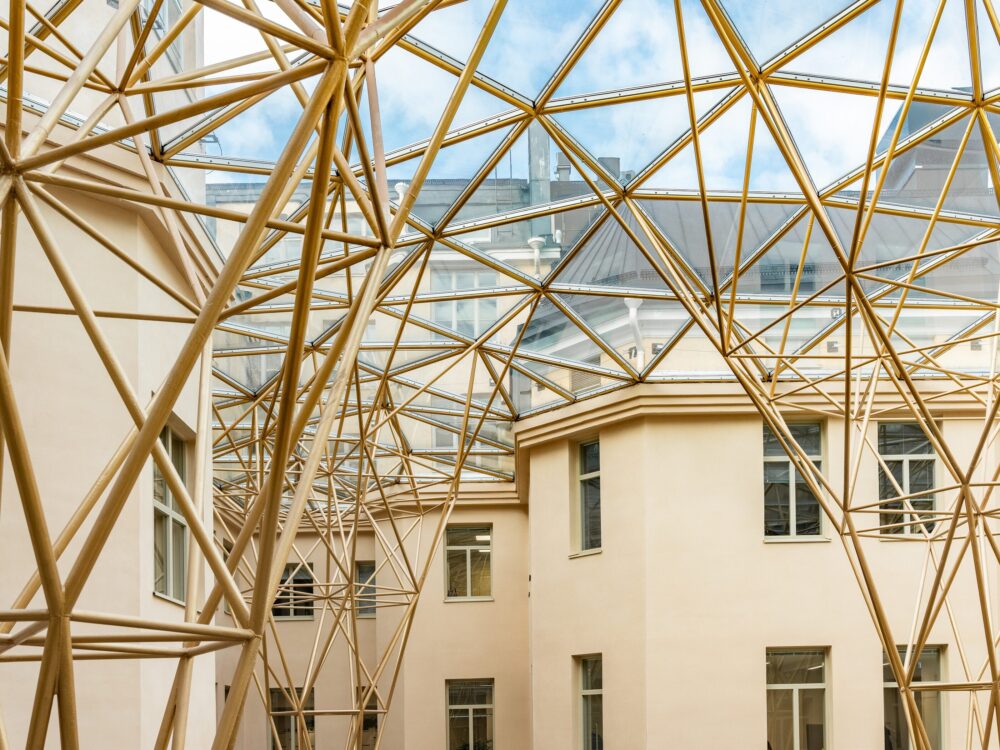
The redevelopment, designed by JKMM Architects, introduces a sculptural glass roof inspired by the structure of a forest canopy. Rather than relying on a conventional roof system, four approximately 14-meter-high steel columns branch outward into an extremely delicate, tree-like framework that supports the glazing above. This approach reduces material usage while achieving both structural efficiency and a visually light architectural expression that respects the historic surroundings without imitating them.
The roof is composed of around 190 custom-made triangular triple insulating glass units, each uniquely shaped due to the irregular geometry of the structure. These electrically heated glazing elements are engineered to withstand significant snow loads while maintaining high transparency and thermal efficiency. Their structural performance is enhanced through advanced PVB interlayers supplied by Kuraray, which contribute to both mechanical strength and optical clarity. 
The glazing system also integrates surface heating across the entire roof, preventing snow and ice accumulation and ensuring uninterrupted daylight transmission throughout the year. With high light transmission, low solar heat gain, and strong insulation performance, the roof turns a previously underused urban void into a functional, climate-responsive public space that supports social and commercial activity even in severe winter conditions.
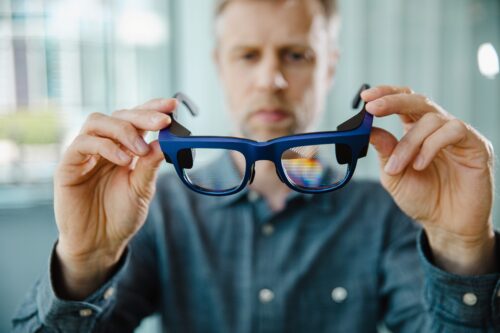
Photo: SCHOTT
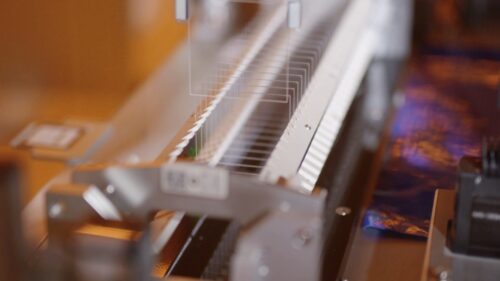
Photo: SCHOTT
In parallel, SCHOTT has achieved a major technological milestone in the field of augmented reality by enabling the industrial-scale production of geometric reflective waveguides. These ultra-precise optical components are embedded within smart glasses lenses and are responsible for guiding images from micro-displays into the wearer’s field of view while keeping the real-world environment fully visible. This allows digital overlays, such as navigation cues, translations, or contextual information, to be seamlessly integrated into natural vision.
The manufacturing process behind these waveguides is highly complex and demands micron-level precision at every stage. It begins with coating specialized optical layers onto glass substrates, followed by stacking multiple layers with extreme alignment accuracy.
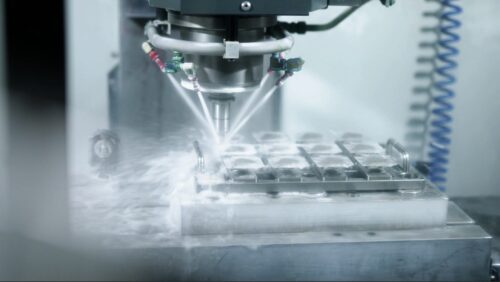
Photo: SCHOTT

Photo: SCHOTT
The assembled stacks are then sliced into thin optical elements, polished to eliminate even microscopic surface defects, and finally shaped into their functional geometry. Each step is tightly controlled, as even minimal deviations can result in distortion, reduced brightness, or color inaccuracies in the final image. SCHOTT’s new production facility in Malaysia enables this process to be scaled for high-volume manufacturing while maintaining consistent optical quality across thousands of units, addressing a key barrier that previously limited AR adoption.
Together, these two projects illustrate a broader transformation in the glass industry. In architecture, glass is evolving into a structural and environmental system capable of reshaping how urban spaces are experienced and used. In digital technology, it is becoming a precision-engineered optical medium that enables immersive, real-time interaction between physical and virtual environments. What connects both applications is a shift in perception: glass is no longer seen as a passive transparent material, but as an active, multifunctional platform that integrates performance, design, and technology at an increasingly sophisticated level.
Source: glasstec with additional information added by Glass Balkan