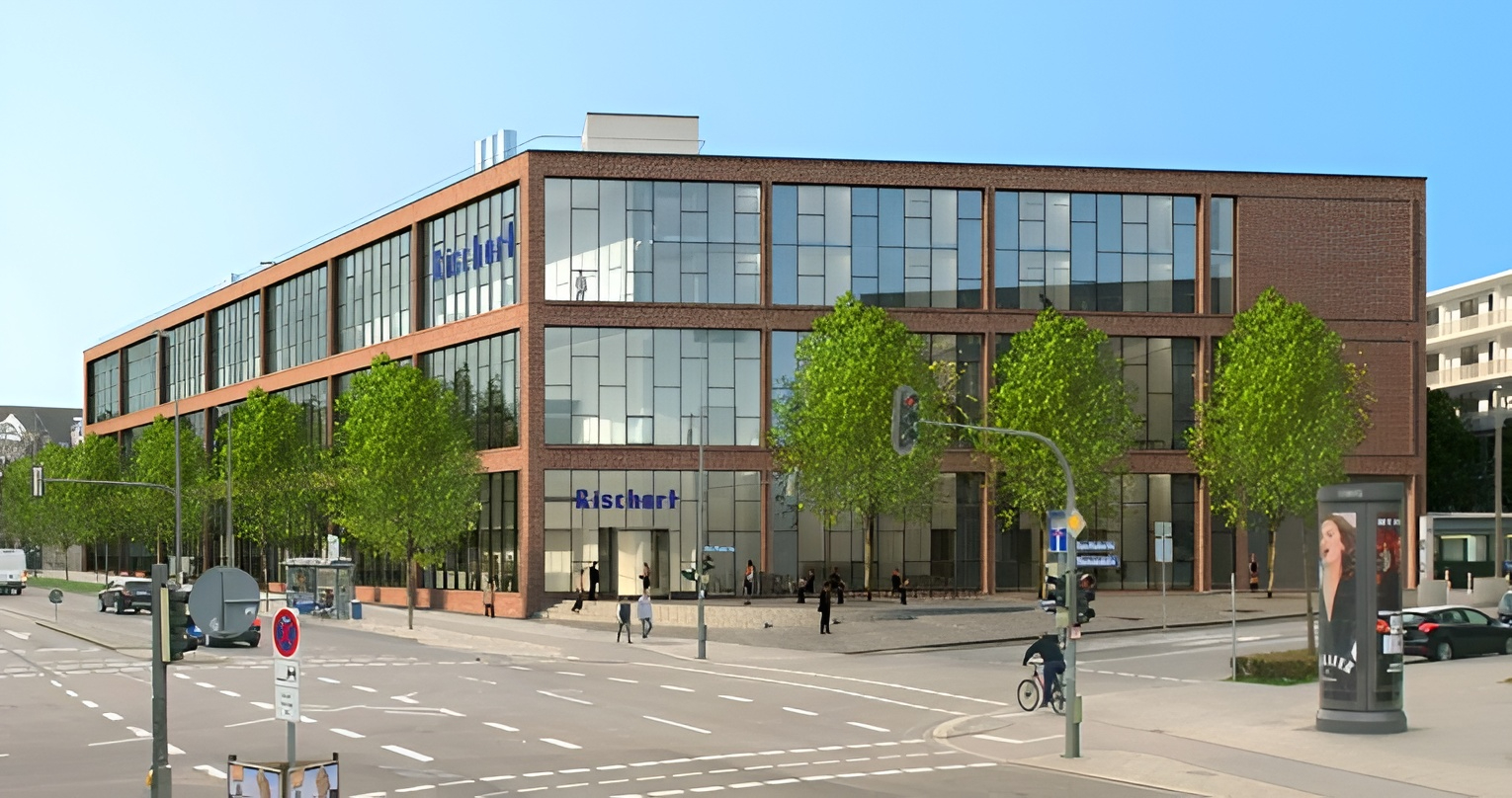
The new headquarters of Max Rischart’s Backhaus KG in Munich demonstrates how a long-established food producer can combine 140 years of tradition with advanced building technology and sustainable architecture. Founded in 1883, the company today serves around 8 million customers annually across 18 branches in Germany, with its most visited bakery at Marienplatz attracting approximately 1.2 million customers per year.
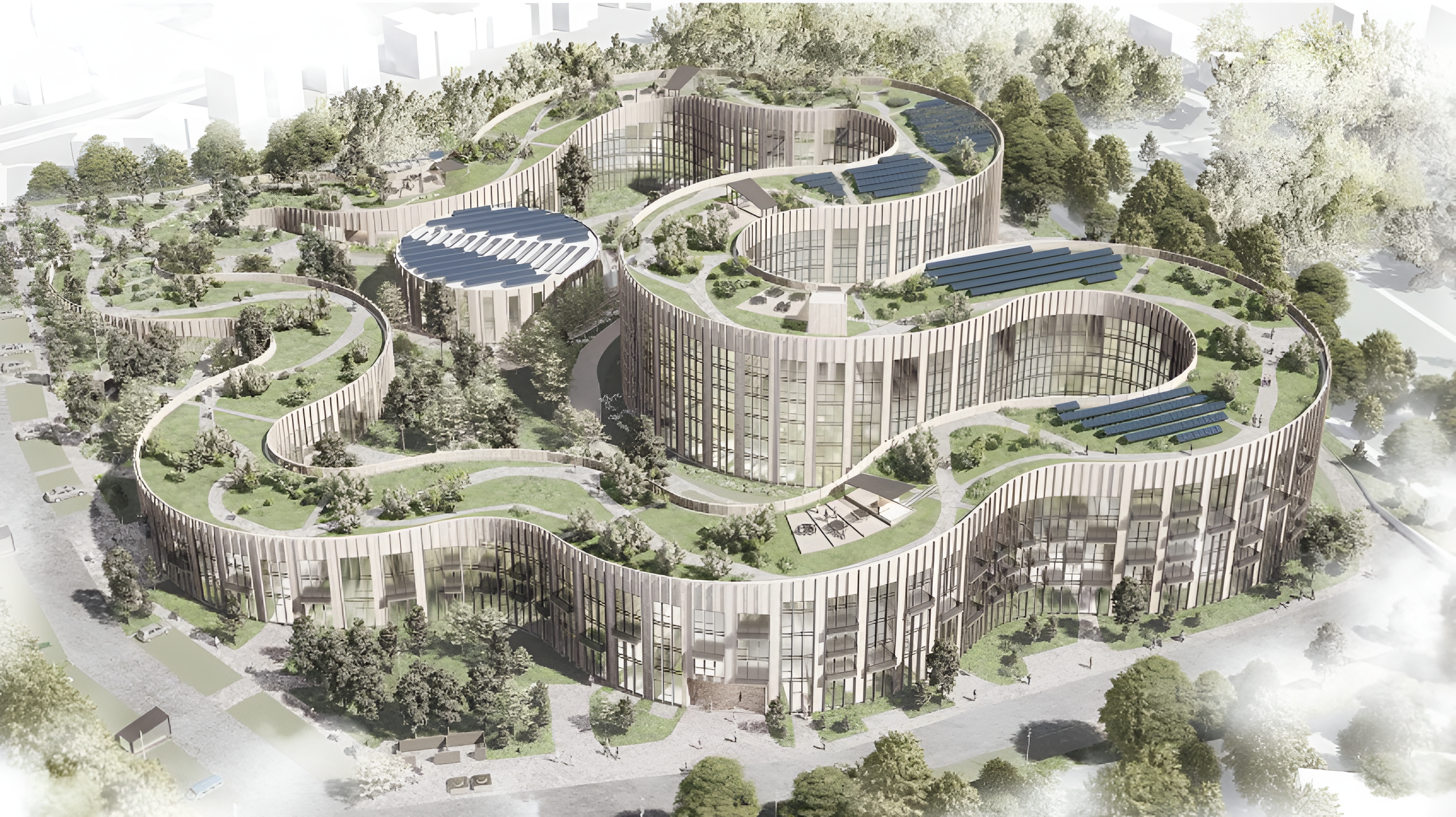
Designed by Kiessler Architekten, the new building is located at Theresienhöhe on the former exhibition grounds and replaces the company’s previous, space-limited site. The project was enabled through a city-supported development initiative that allowed Rischart, which employs over 500 staff, to remain centrally located in Munich. The building has a total volume of approximately 105,000 m³ and follows a trapezoidal footprint, incorporating three internal courtyards that improve daylight penetration and spatial quality.
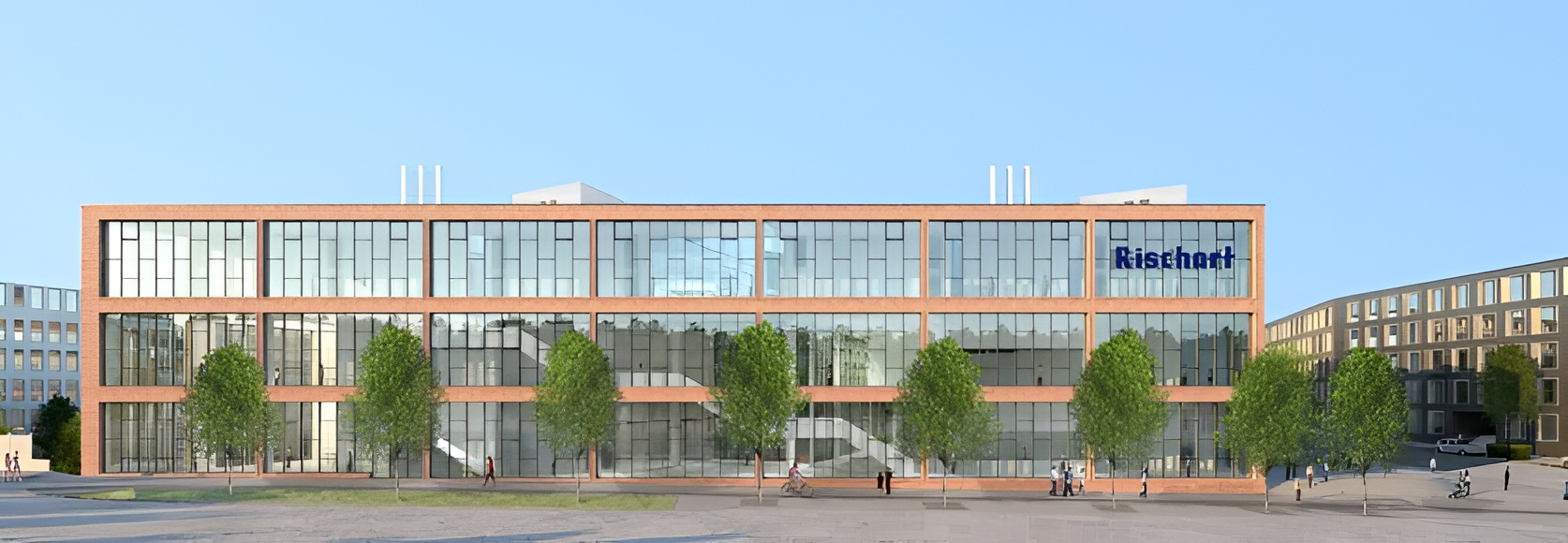
A defining feature of the headquarters is its high-performance glazed façade, which combines transparency with functional efficiency. The exterior is structured with vertical and horizontal brick divisions, creating a strong visual identity while maintaining openness and natural light throughout the interior production and office spaces. The façade concept extends beyond aesthetics, acting as an integrated energy system.
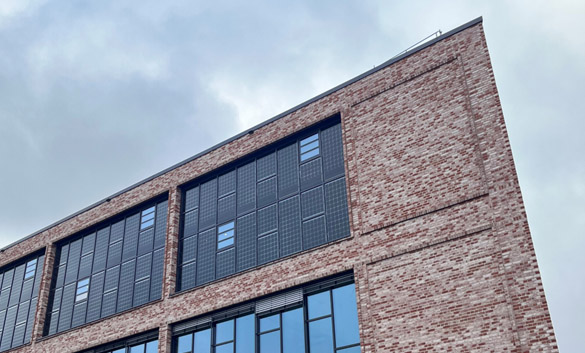
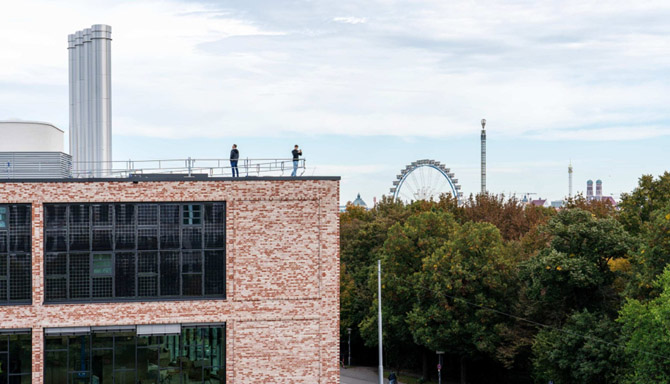
At the uppermost level, a photovoltaic façade system developed by ML System has been installed, consisting of 200 individually designed photovoltaic glass units. These elements were engineered specifically for the project, incorporating tailored aesthetic requirements alongside technical performance criteria such as enhanced acoustic insulation and optimized energy output. 
The system uses laminated safety glass configurations (including multi-layered VSG and TVG compositions with Low-E coatings), ensuring durability, safety, and thermal efficiency. The total installed capacity reaches 49.8 kWp, effectively transforming the façade into an active power-generating component of the building envelope.
Façade execution and integration were carried out in collaboration with FRENER & REIFER, ensuring precise installation of the complex glass modules within the architectural grid. The result is a seamless integration of engineering and design, where the building envelope contributes directly to operational energy needs.
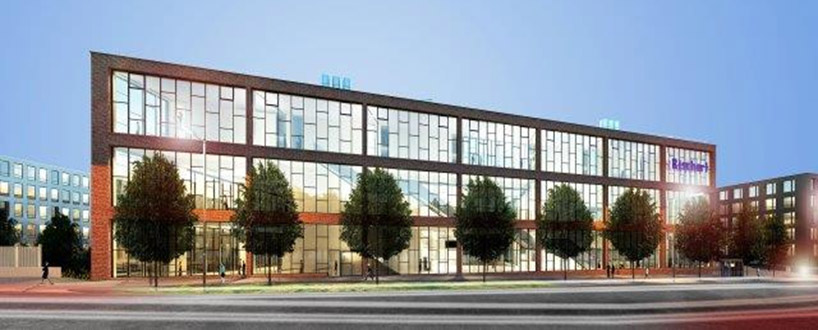
Functionally, the building is organized into multiple layers of use. In addition to bakery production and logistics, primarily located in underground levels, the upper floors accommodate 100 service apartments for employees and 84 hotel apartments operated by the Cocoon hotel chain. This mixed-use structure strengthens urban efficiency while reducing spatial fragmentation.
The Rischart headquarters stands as a model of contemporary urban architecture, where food production, hospitality, and energy generation converge within a single integrated system, redefining the role of façade design in industrial-commercial buildings.
All image courtesy of © kiessler architekten
Source: ML System with additional information added by Glass Balkan