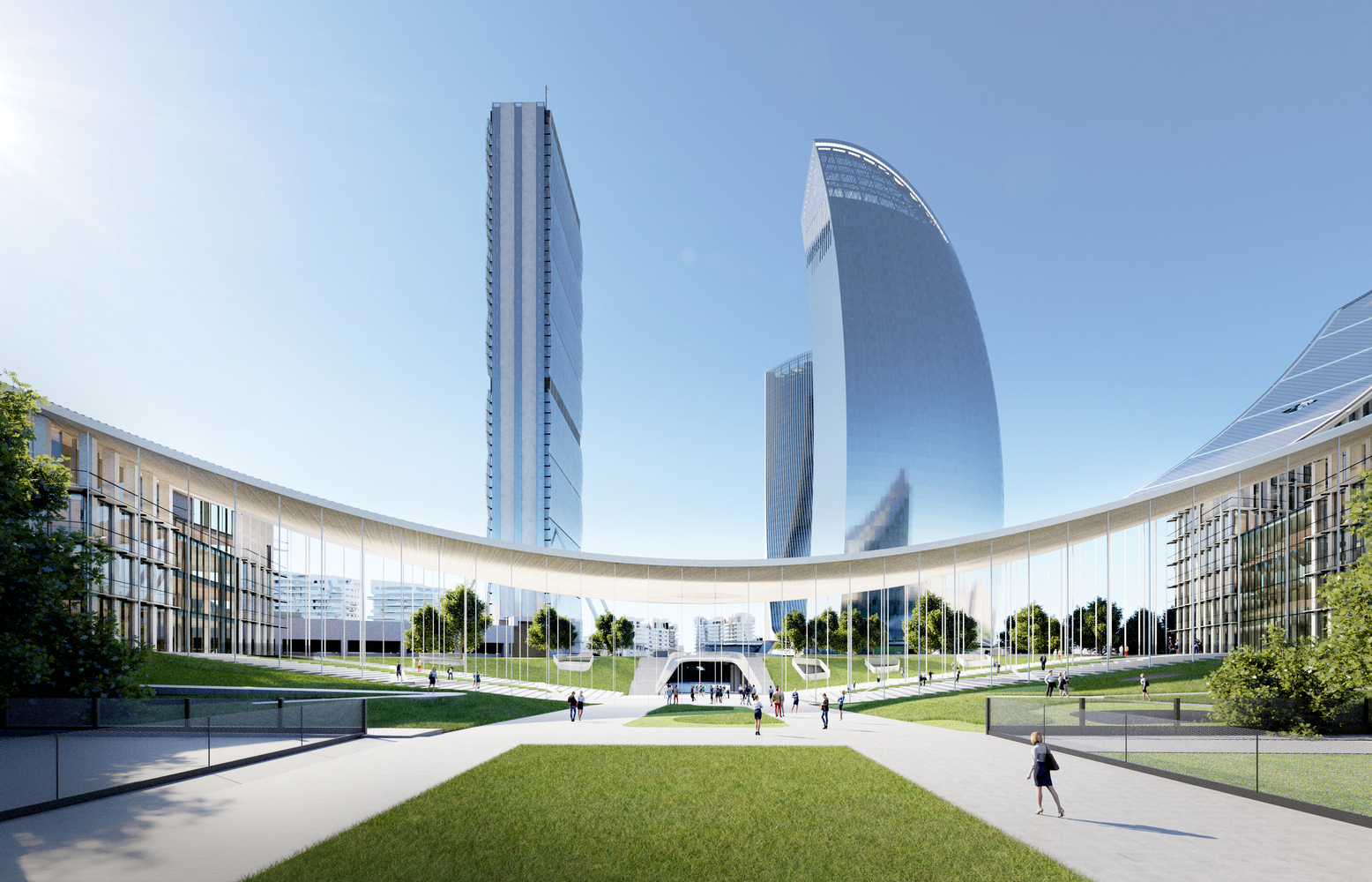
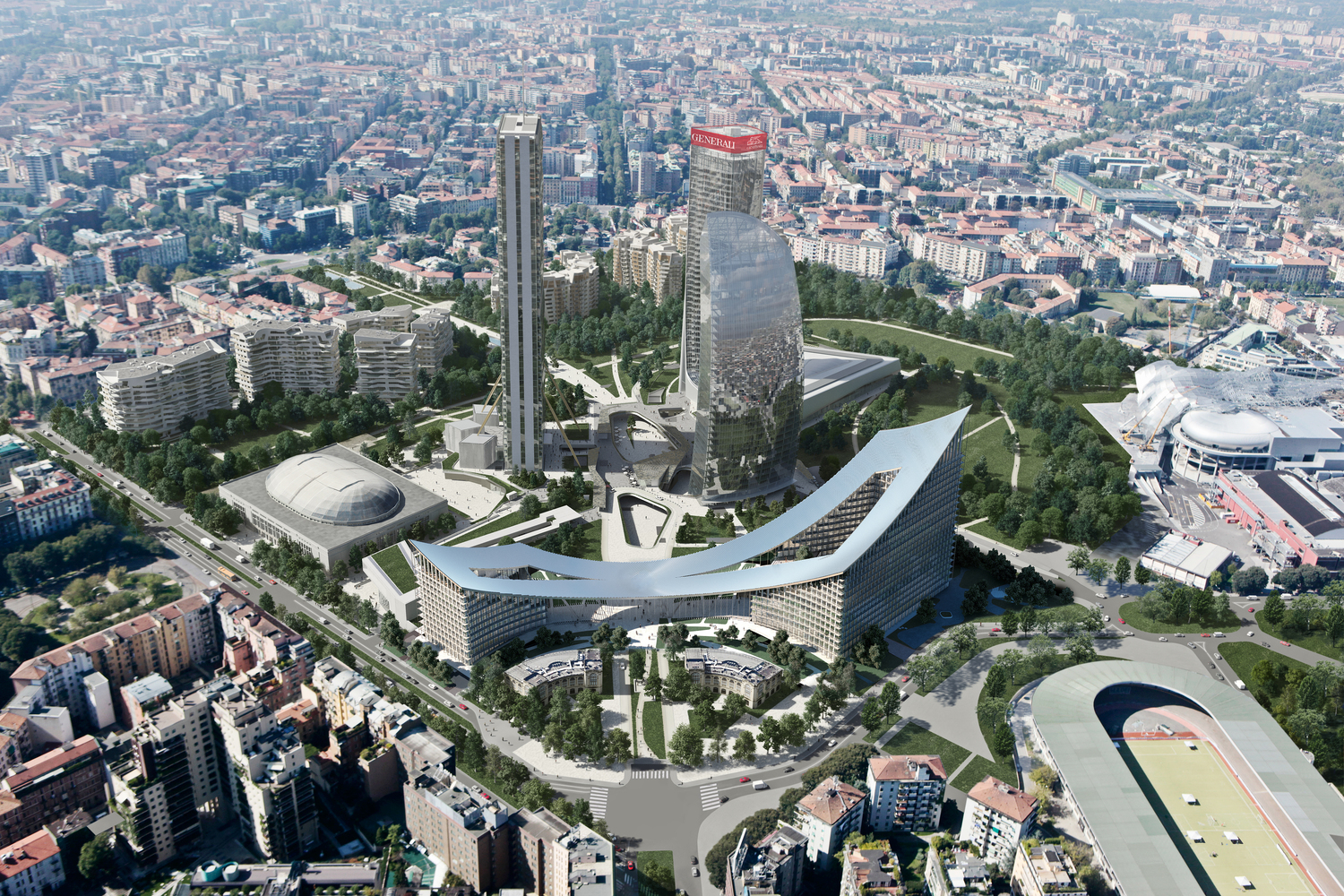
CityWave is one of Milan’s most ambitious contemporary office developments, redefining the idea of the skyscraper by shifting the focus from height to horizontal continuity. Designed by Bjarke Ingels Group (BIG) and located in the CityLife district, the project is composed of two office buildings connected by a monumental 140-metre-long curved canopy, forming a single architectural and environmental system.
From a façade and building-envelope perspective, CityWave is defined by its large-scale integration of photovoltaic glass. The canopy, which visually and physically links the two volumes, is entirely clad with approximately 11,000 m² of photovoltaic panels, making it one of the largest urban rooftop solar installations integrated into an office complex. This photovoltaic skin transforms the roof into an active façade element, designed to generate around 1,200 MWh of renewable electricity per year, directly supporting the building’s operational energy demand.
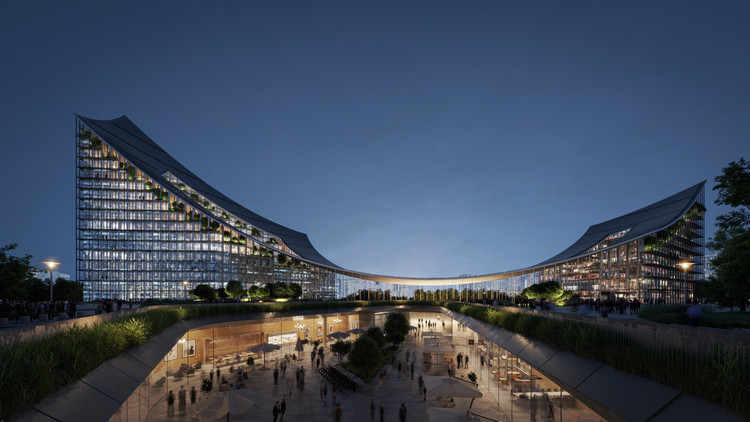
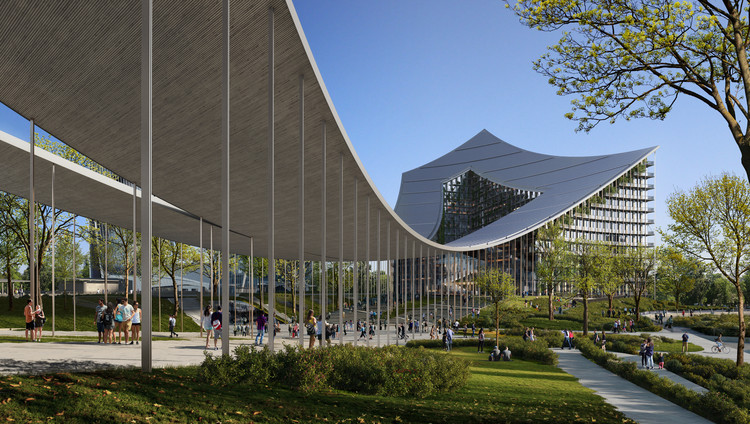
The façade strategy extends beyond energy production. The office volumes below the canopy feature high-performance glazed façades, designed to maximise daylight penetration while ensuring thermal comfort and solar control. The project reflects a growing industry trend toward multi-functional façades, where glass is no longer a passive enclosure but a contributor to energy efficiency, indoor comfort, and architectural identity.
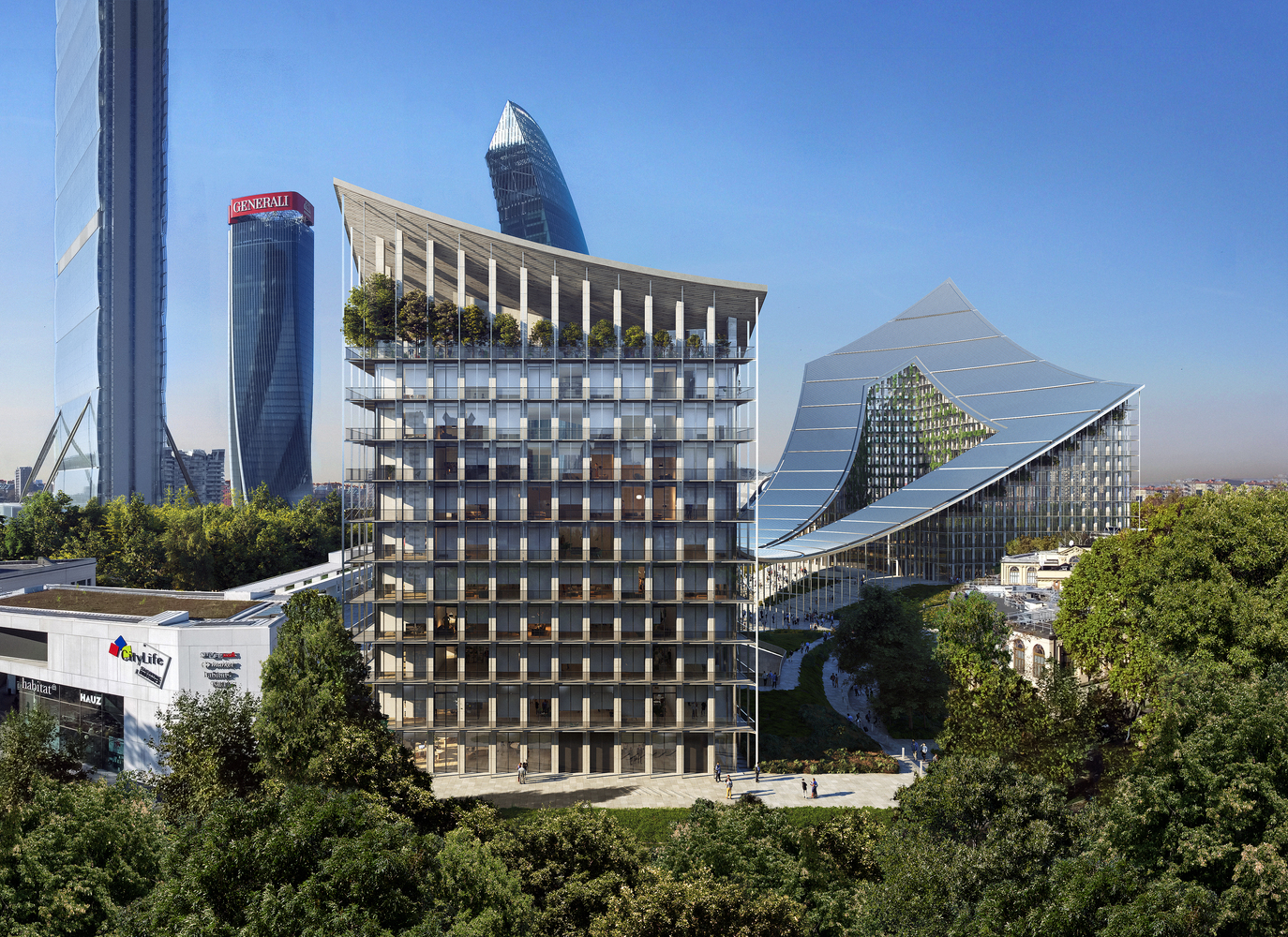
Structurally, the canopy combines steel and timber, with a visible wooden soffit beneath the photovoltaic surface. This contrast between warm natural materials and advanced solar glass technology creates a clear architectural dialogue between sustainability and human scale, particularly in the public space formed beneath the canopy. 
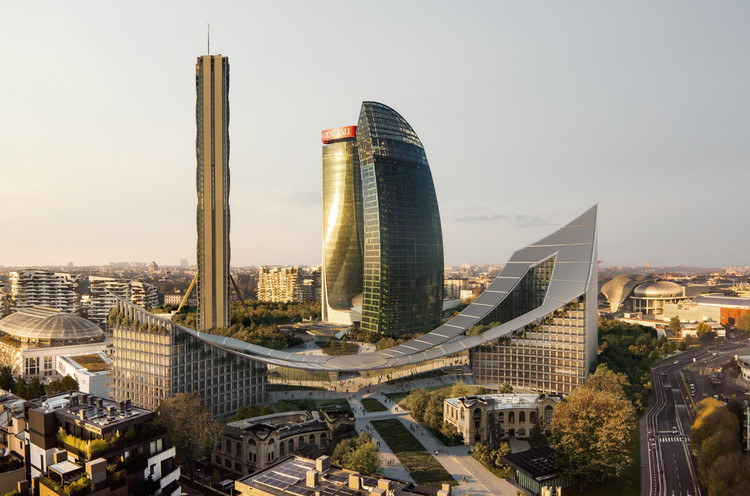
Rather than competing with Milan’s vertical skyline, CityWave acts as a horizontal urban gateway, demonstrating how façade engineering, photovoltaic integration, and architectural expression can merge into a single coherent system. Scheduled for completion in 2026, CityWave stands as a reference project for the future of energy-generating façades and large-scale photovoltaic glass applications in dense urban environments.
Source: Bjarke Ingels Group (BIG) with additional information added by Glass Balkan