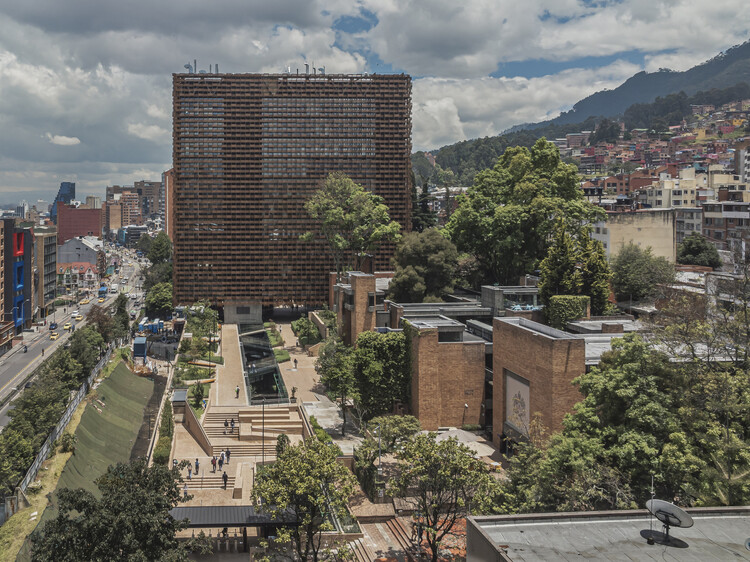
Completed in 2020, the new Faculty of Sciences at the Pontificia Universidad Javeriana represents a carefully calibrated architectural response to one of Bogotá’s most sensitive academic sites. Designed by taller de arquitectura de bogotá, the 19,992 m² project negotiates heritage, climate, and campus circulation through a clear platform–tower composition, where façade design plays a decisive role in both performance and urban presence.
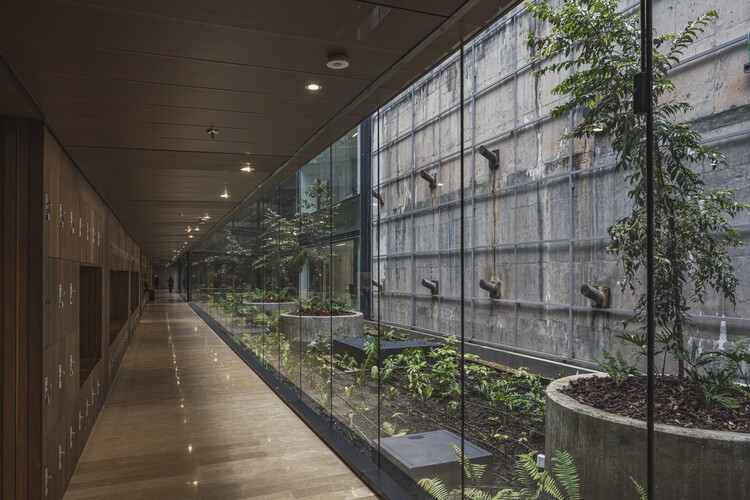
The linear platform establishes a new, human-scaled frontage along Carrera Séptima, consolidating the campus edge while accommodating teaching laboratories. Its material expression is intentionally restrained, relying on brick as the dominant surface, reinforcing continuity with the historic Pablo VI building (1967) by Aníbal Moreno. The façade rhythm is calm and repetitive, prioritising depth, shadow, and solidity over transparency. Two longitudinal “English courtyards” carve through the platform, allowing daylight and cross-ventilation to penetrate deep laboratory spaces while introducing controlled landscape views into the interior.
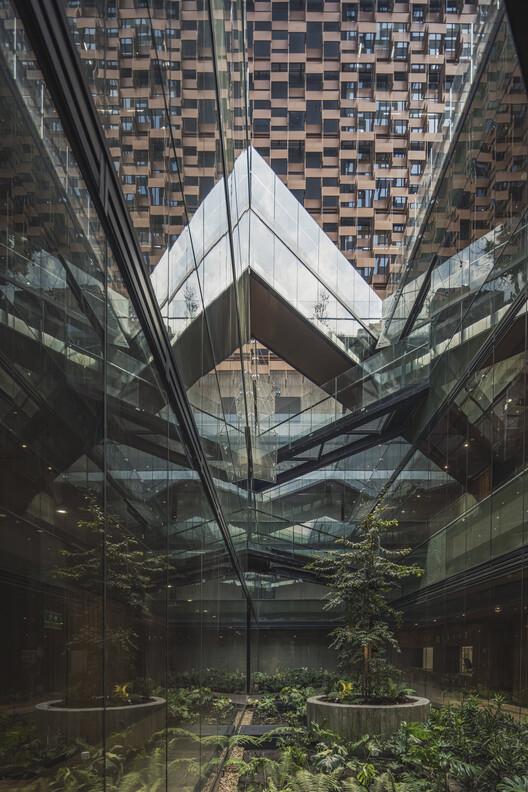
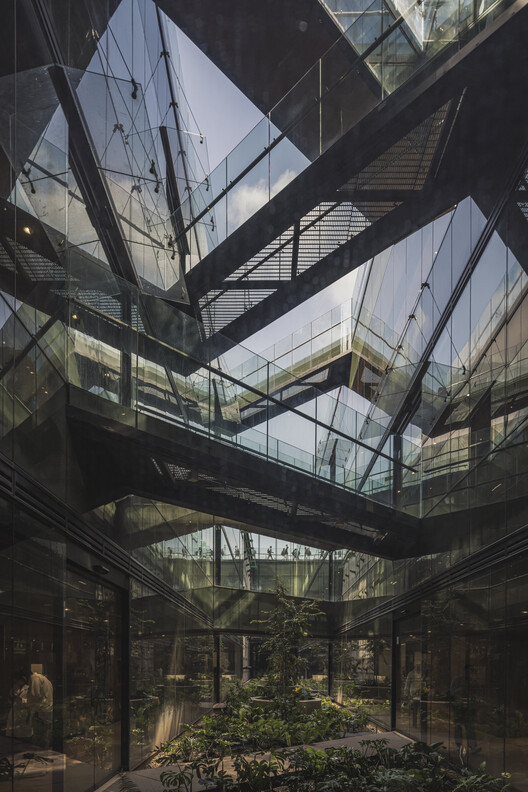
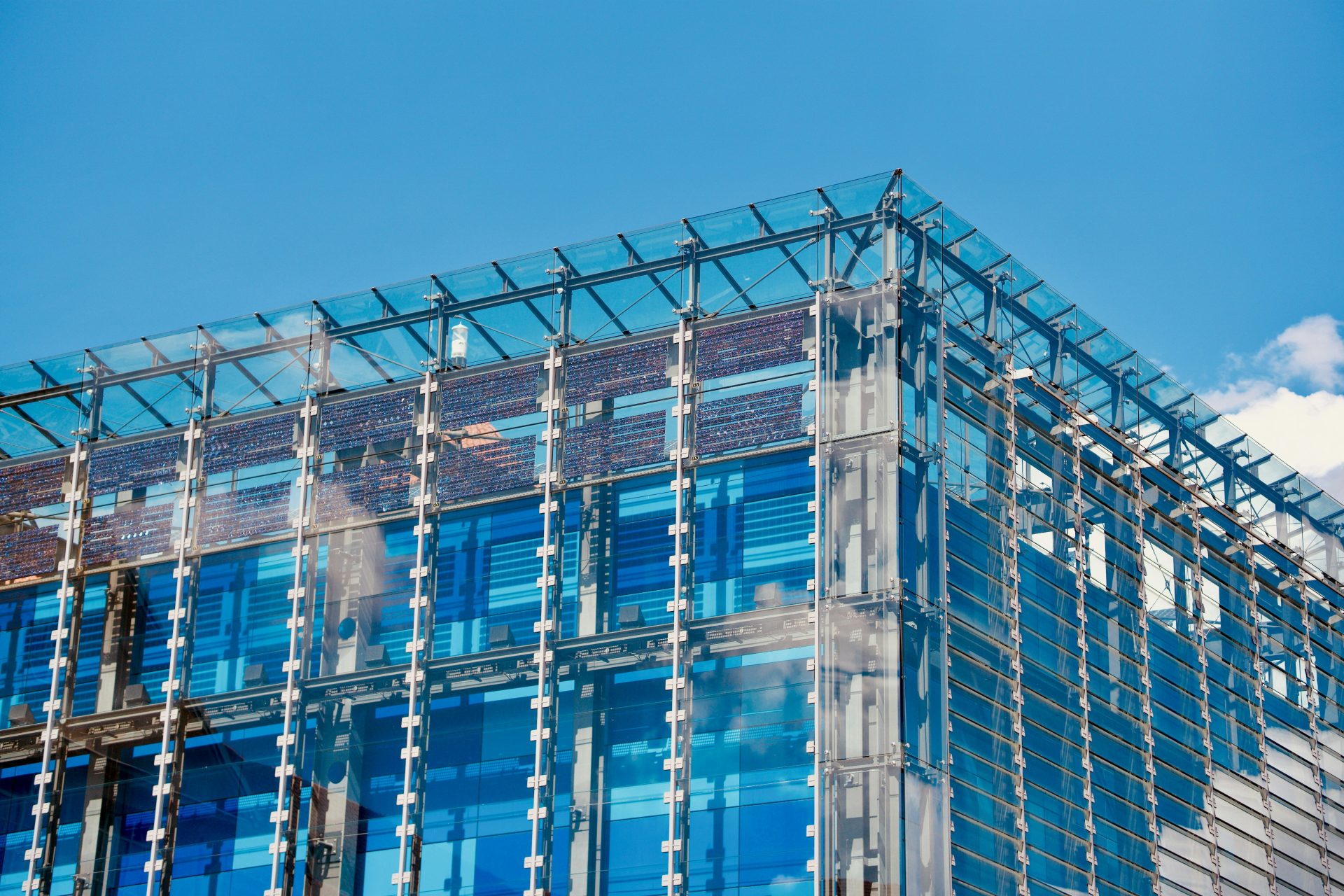
Rising above, the tower operates as a contemporary counterpoint. Structurally organised around four concrete cores and perimeter Vierendeel trusses, the tower’s façade is liberated from load-bearing constraints, enabling a flexible envelope strategy suited to evolving laboratory requirements. All four elevations are wrapped in metal sun-shading panels with variable micro-perforation density, precisely calibrated to solar orientation. This system mitigates solar gain, reduces glare, and ensures a consistent external reading despite differing environmental demands on each façade.
The façade’s uniform metallic veil contrasts deliberately with the brick platform below, marking the tower as a new campus landmark without competing with the historic context. Transparency is controlled rather than celebrated, reinforcing the building’s scientific program and climatic logic. 
A walkable roof above the platform extends the architectural envelope into the landscape, connecting campus flows and creating elevated public space. By limiting ground occupation to less than 30 percent, the project reinforces the university’s vision of a green, permeable campus, where façade, structure, and landscape operate as a single, integrated system.
Source: Glass Balkan