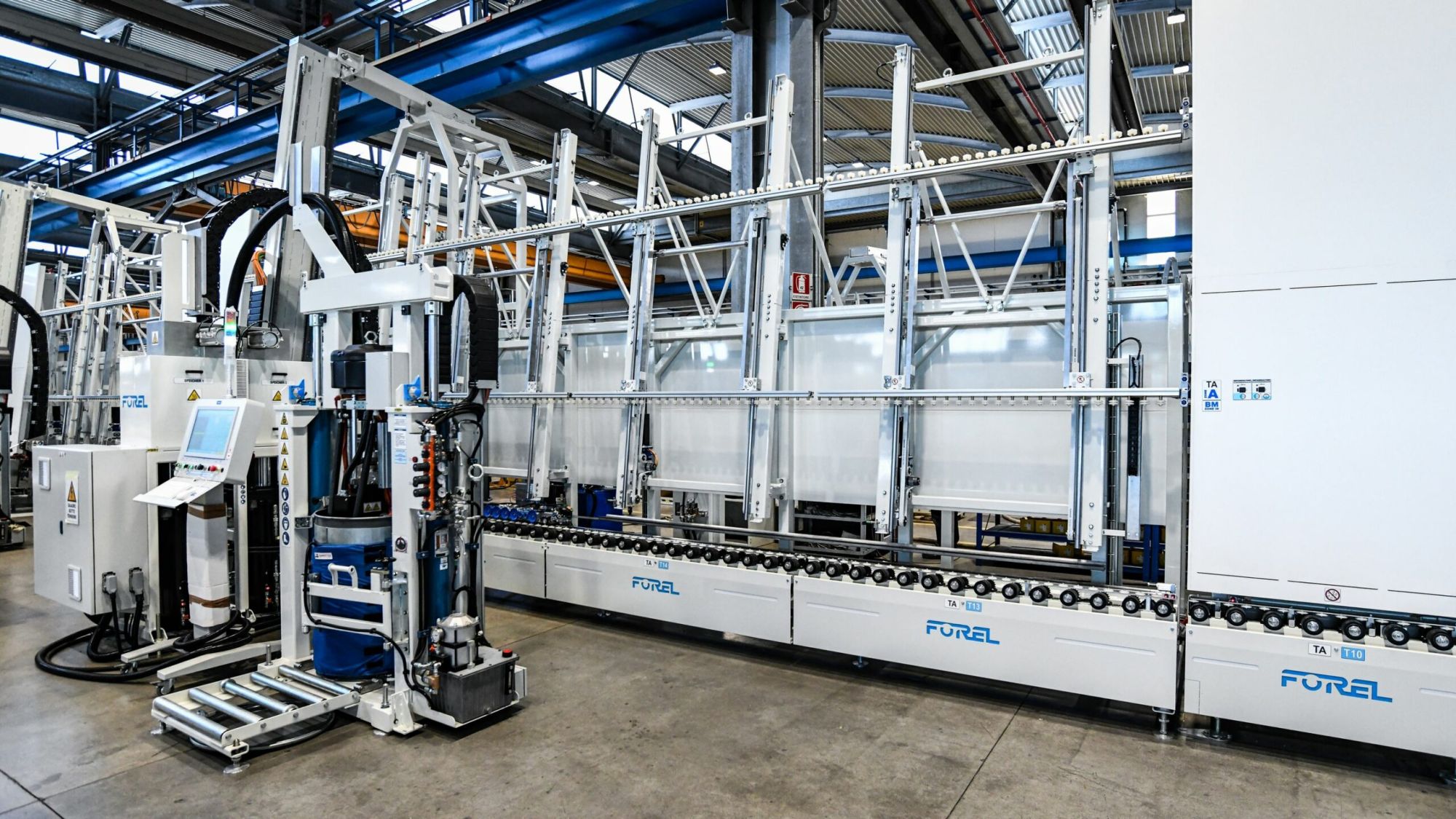
SCHOLLGLAS Group has significantly upgraded its production capabilities with the installation of a fully customized jumbo insulating glass line at its Nossen facility, developed in collaboration with Forel. The investment reinforces the company’s long-term strategy to scale high-performance insulating glass unit (IGU) production while maintaining precision, flexibility, and operational efficiency.
The new “High Tech Jumbo” line spans 96 meters and is engineered to process large-format glazing with advanced automation at every stage. At the front end, a CR coating remover equipped with dual operating heads simultaneously processes low-emissivity coatings. The system operates in a self-learning mode, automatically identifying glass dimensions, thickness, and coating type, ensuring consistent edge deletion across varying formats without manual input.
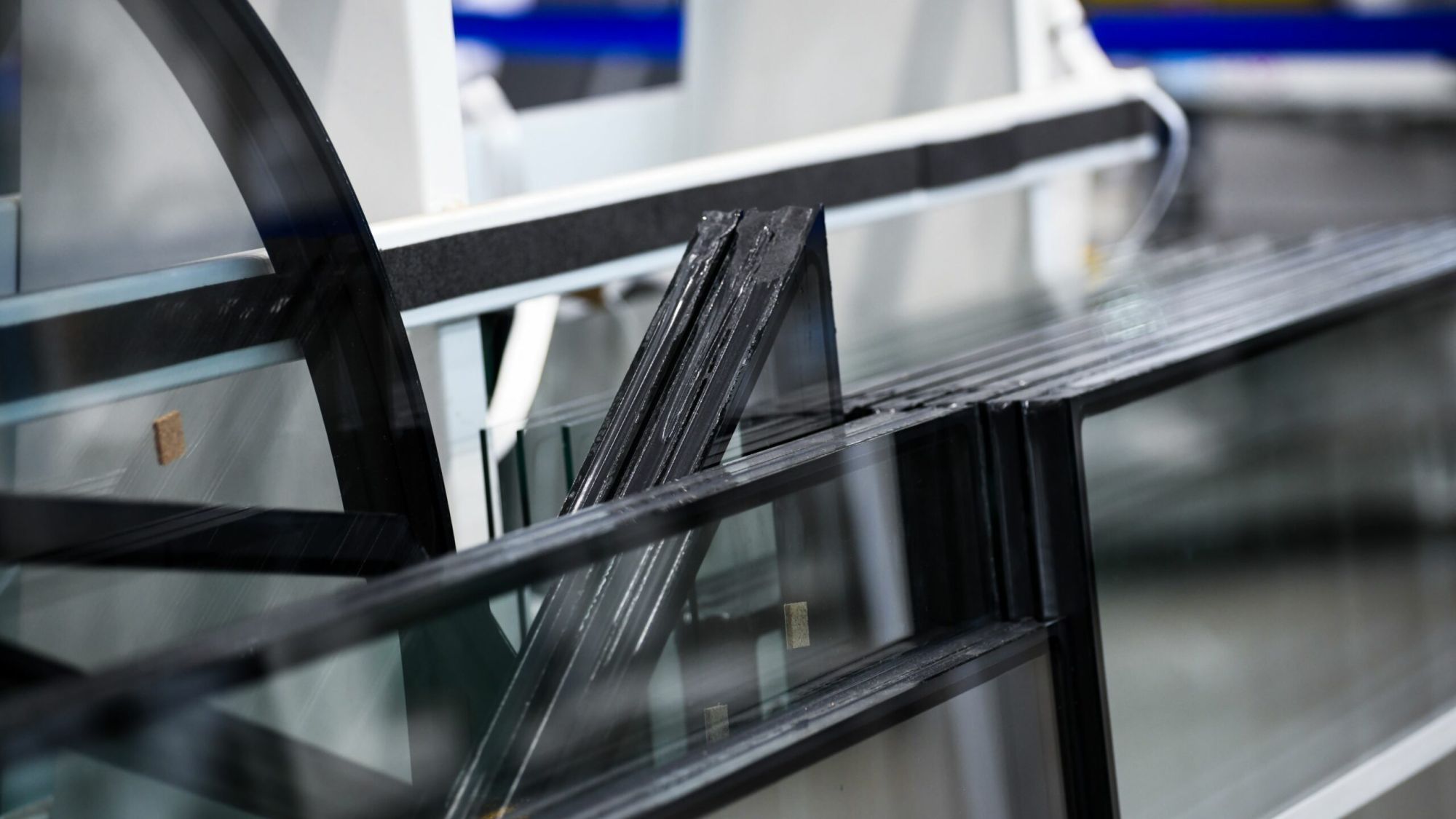
A key innovation lies in the dual thermoplastic applicator configuration. Two robotic extrusion units are arranged in series, enabling continuous application of thermoplastic spacers alongside conventional rigid spacer profiles. This dual capability allows SCHOLLGLAS to switch between spacer technologies without halting production, significantly reducing changeover times and increasing throughput in mixed-order environments.
To support large and complex units, the line integrates Forel’s patented production buffer with automatic profile alignment. This system is specifically designed for thermoplastic spacers exceeding 20 mm in width, allowing the material to stabilize before pressing. The result is precise linear alignment, elimination of deformation risks, and consistent dimensional accuracy in oversized IGUs. 
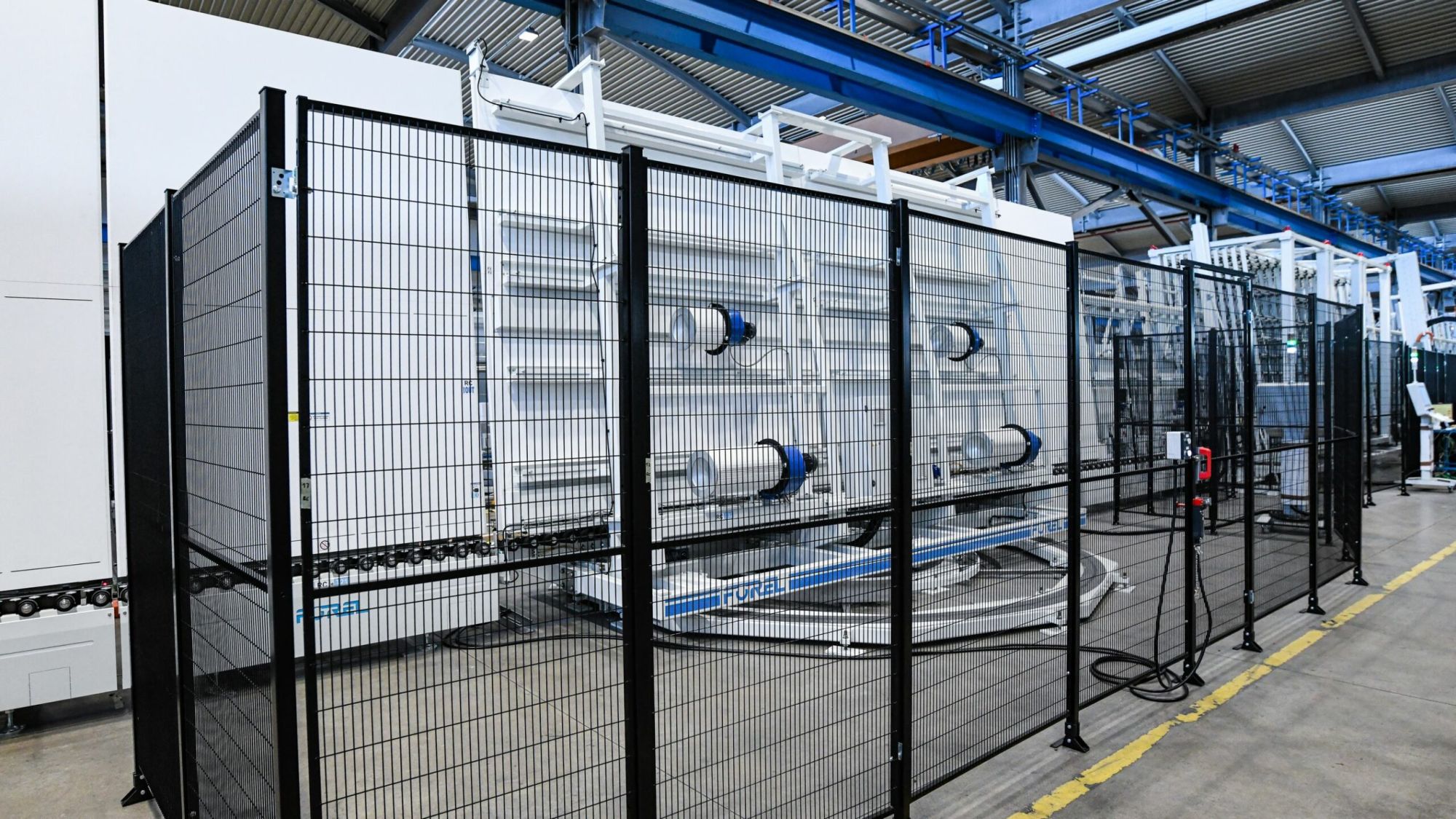
The assembly stage is completed using a tandem coupling press capable of handling triple and quadruple glazing configurations, including offset units of up to 100 mm per side. Gas filling options – argon, krypton, or custom mixtures – ensure compliance with stringent thermal performance requirements. Downstream, an automated sealing robot manages units weighing up to 2,400 kg, delivering uniform perimeter sealing with an integrated corner-finishing system that eliminates manual rework.
The entire line is supported by a multi-level diagnostic architecture based on edge computing, providing real-time visualization of machine status, guided fault detection, and rapid recovery protocols.
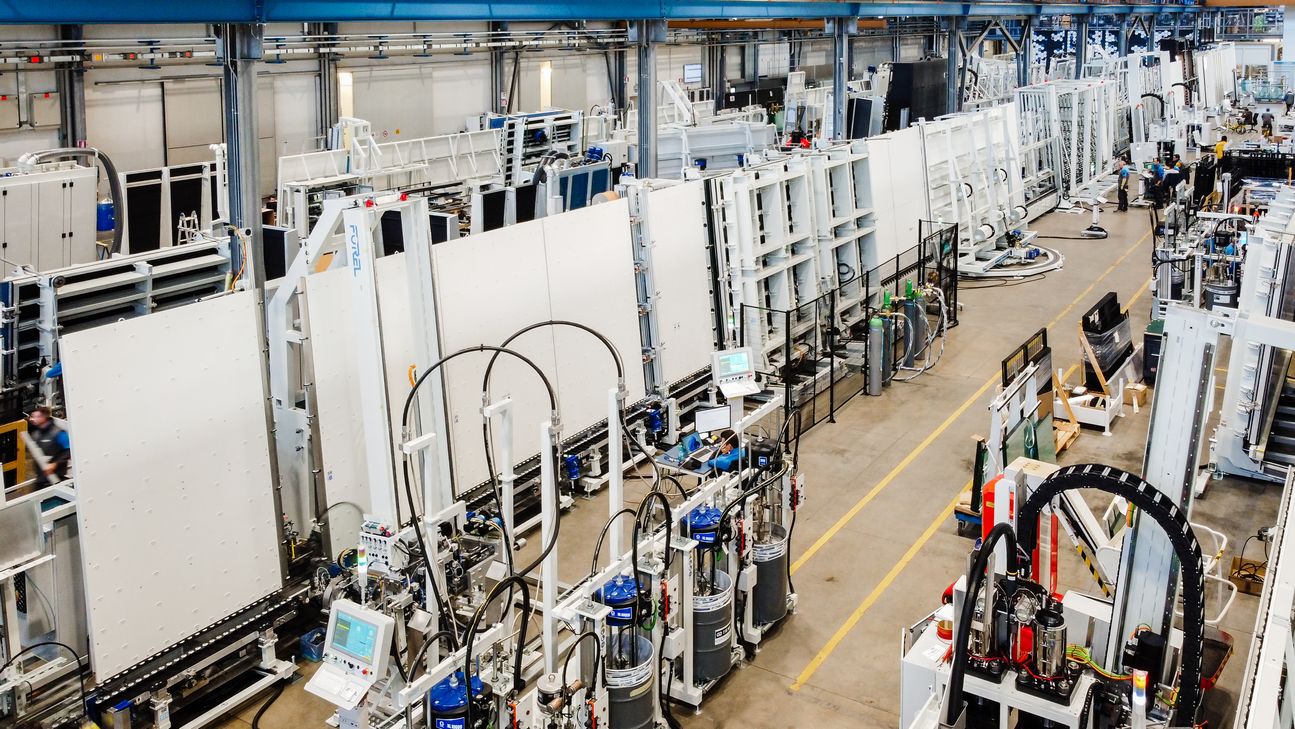
Image courtesy of Forel
Source: Forel with additional information added by Glass Balkan