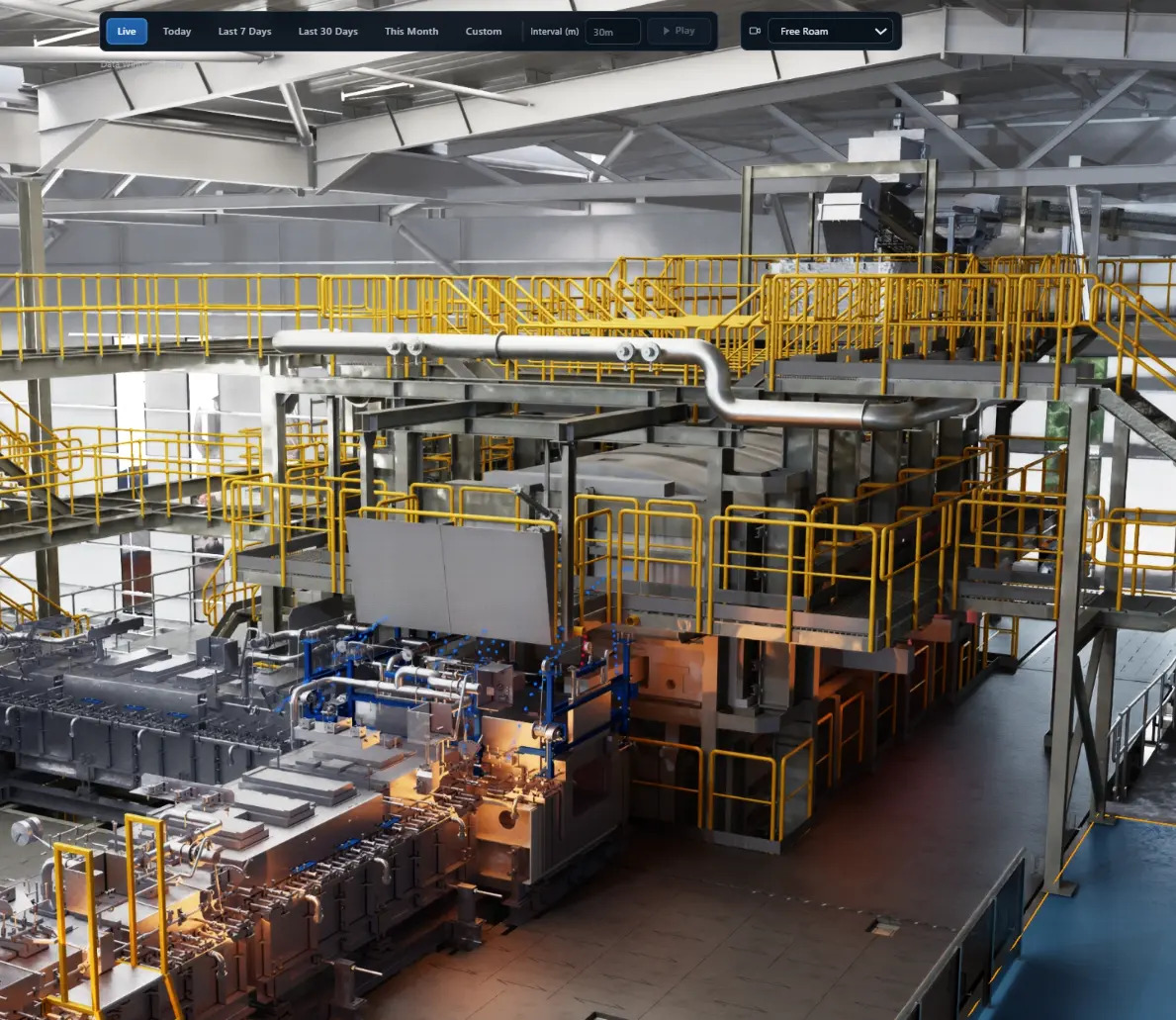
Glass Futures has introduced an advanced AI-driven digital twin of its multi-fuel pilot glass furnace, providing manufacturers with a powerful platform to test and optimize production processes before implementing them in real-world operations. Installed at the organization’s global centre of excellence in St Helens, the digital replica combines live furnace data, simulated information and physics-based artificial intelligence to accurately predict furnace performance and glass output.
The digital twin was developed through the AI-GLASS project, a collaboration between Glass Futures, NVIDIA and the University of Liverpool’s Virtual Engineering Centre (VEC). By integrating data from the physical furnace with advanced modelling capabilities, the system enables users to evaluate changes in temperature, pressure, density and other operating conditions while generating reliable predictions of production outcomes.
Powered by NVIDIA RTX Pro 6000 GPUs and NVIDIA PhysicsNeMo technology, the platform combines information from 16 sensor points with physics-informed neural networks. This allows the digital twin to perform more than 11,500 calculations simultaneously while remaining grounded in established scientific principles.
The technology is expected to accelerate innovation and support decarbonization efforts across the glass sector. Manufacturers can explore alternative fuels, including hydrogen and biofuels, as well as electric heating and other process improvements in a virtual environment before conducting physical trials. 
Glass Futures also plans to extend the benefits of the technology to industries such as steel and ceramics, helping organizations reduce risk, improve efficiency and adopt digital solutions more effectively. The AI-GLASS project is part of a wider £1.5 million Innovate UK funding programme delivered through Make UK.
Source: Glass Futures with additional information added by Glass Balkan