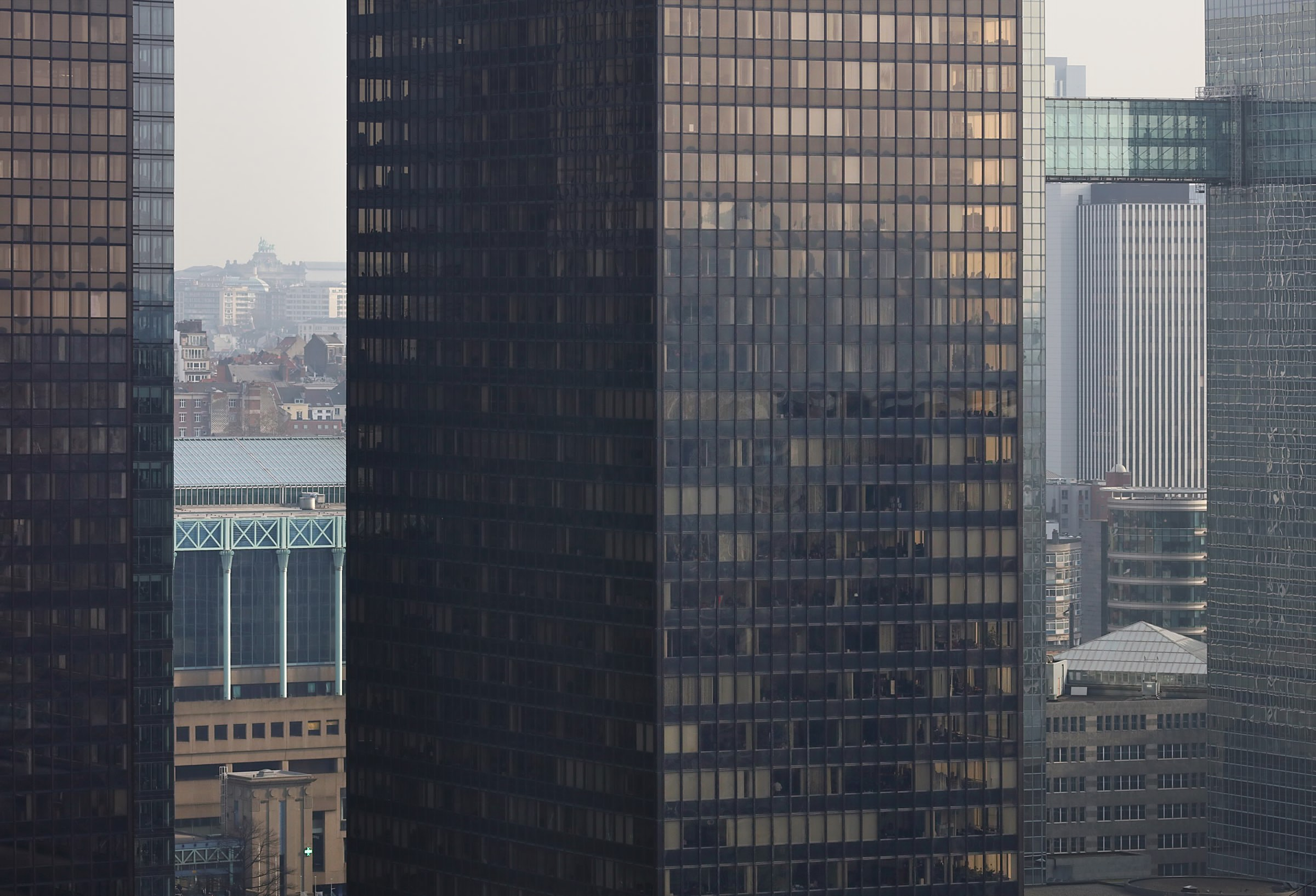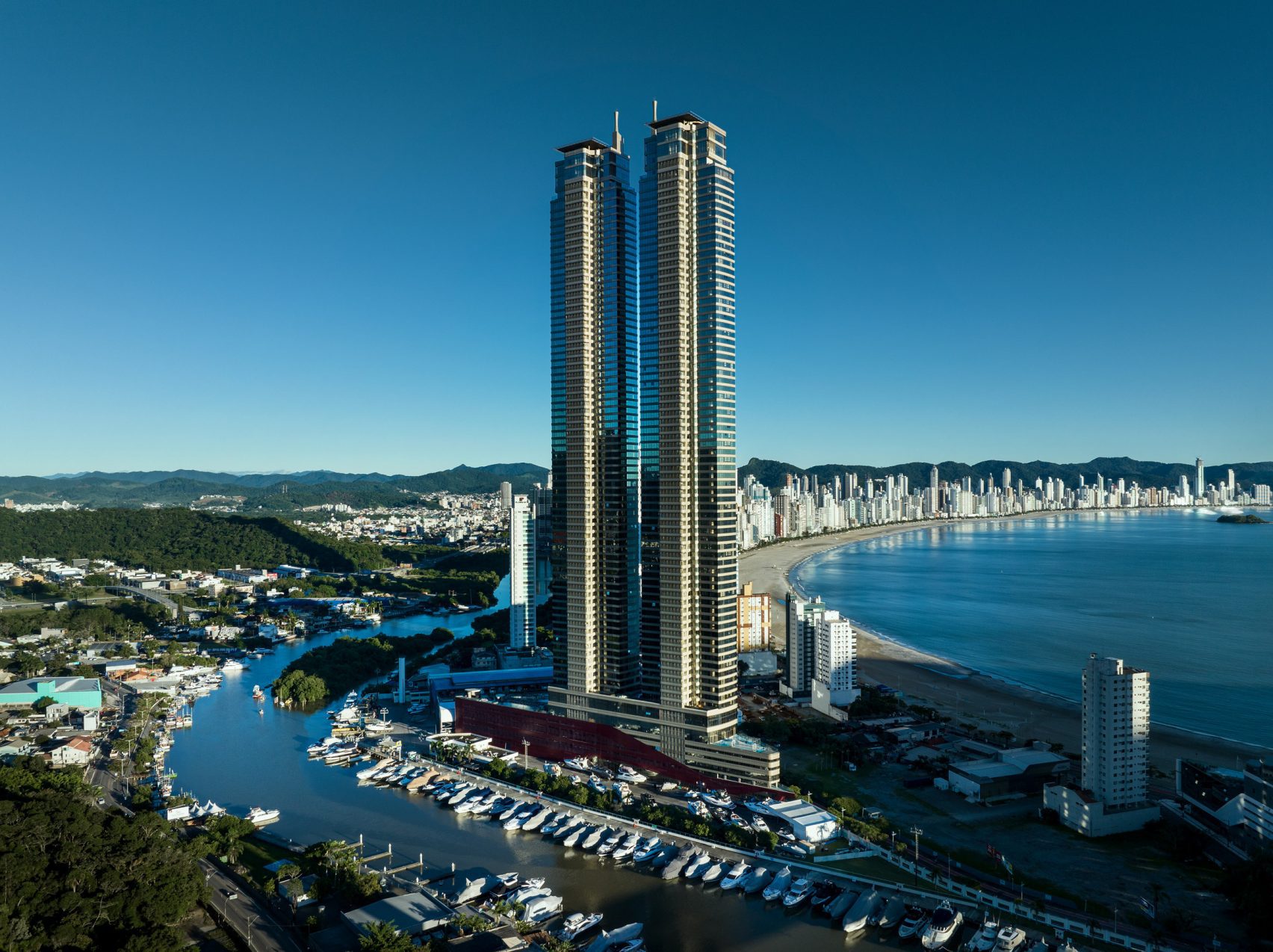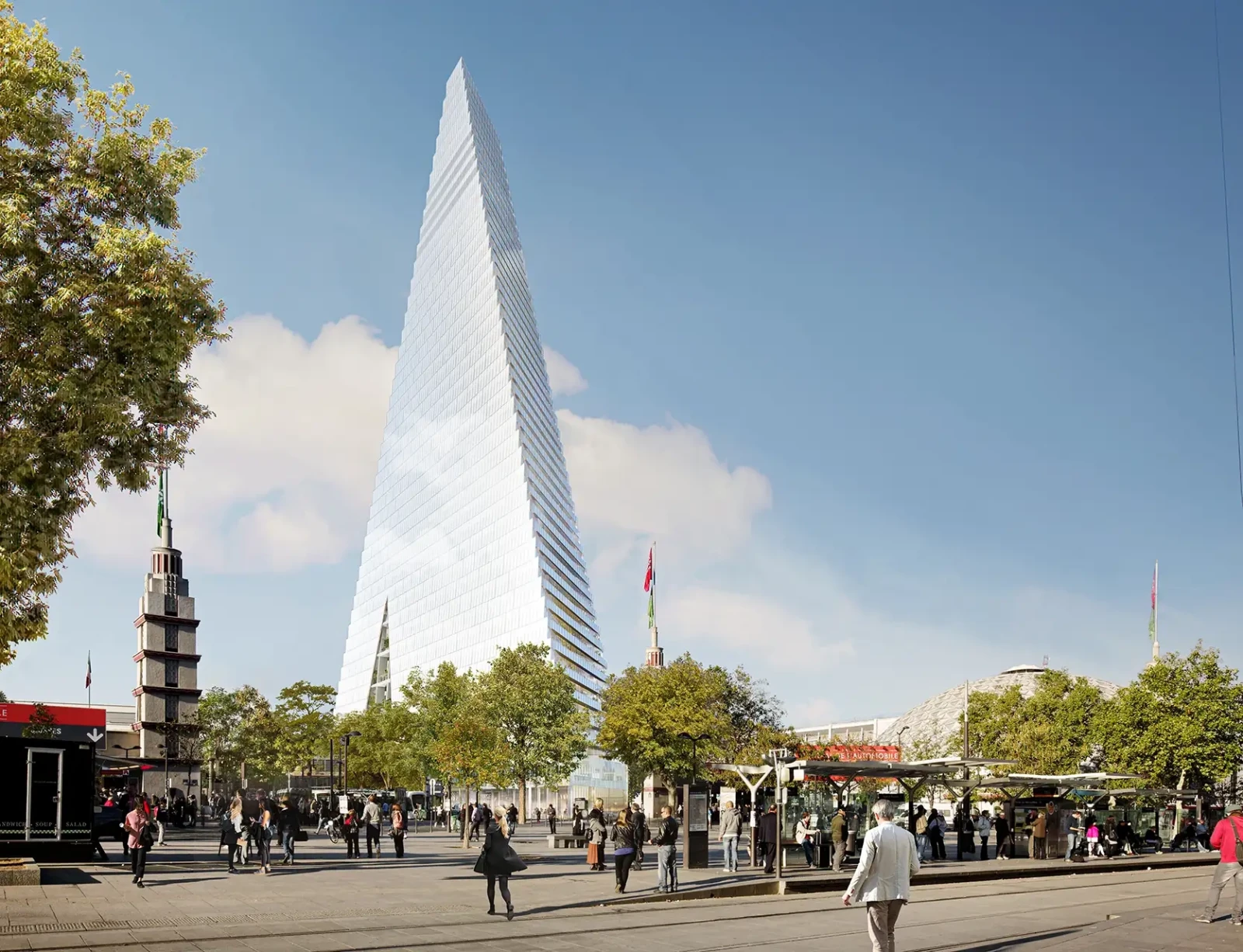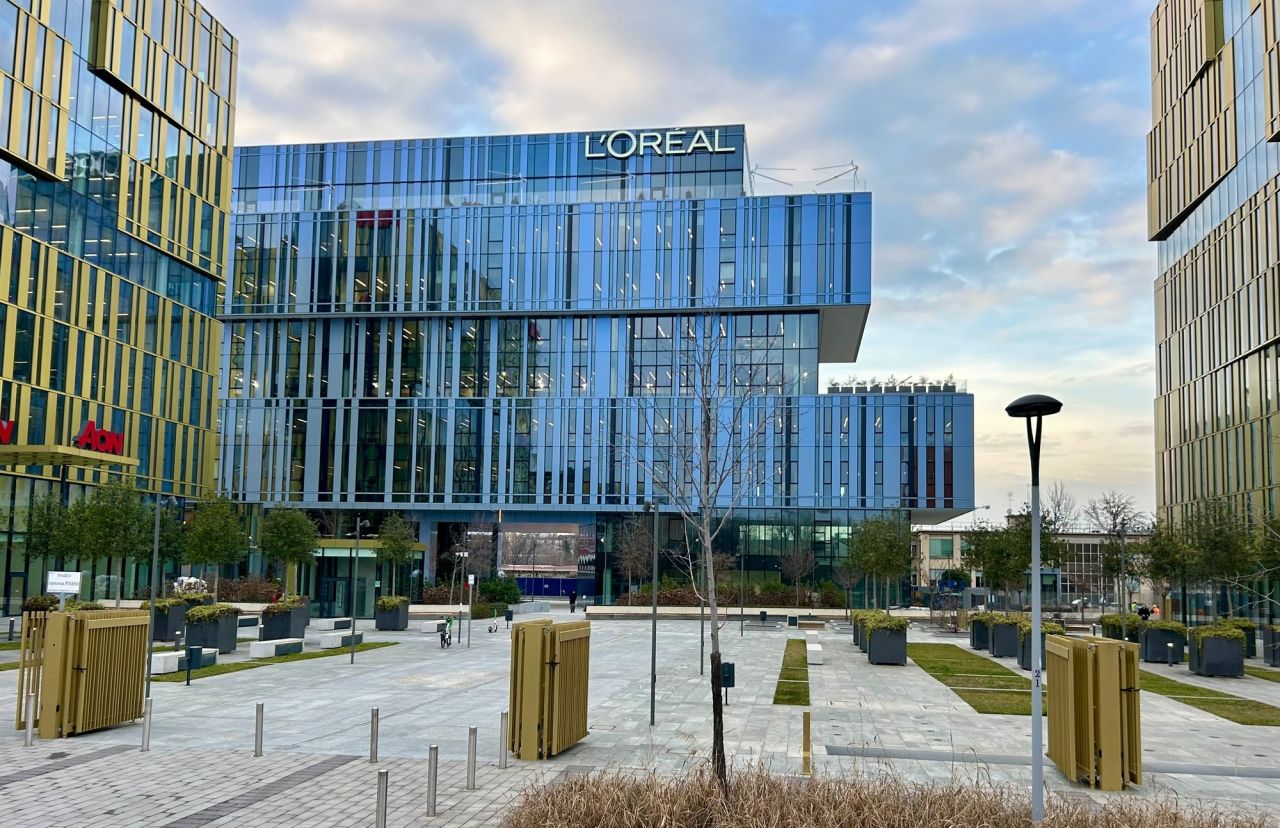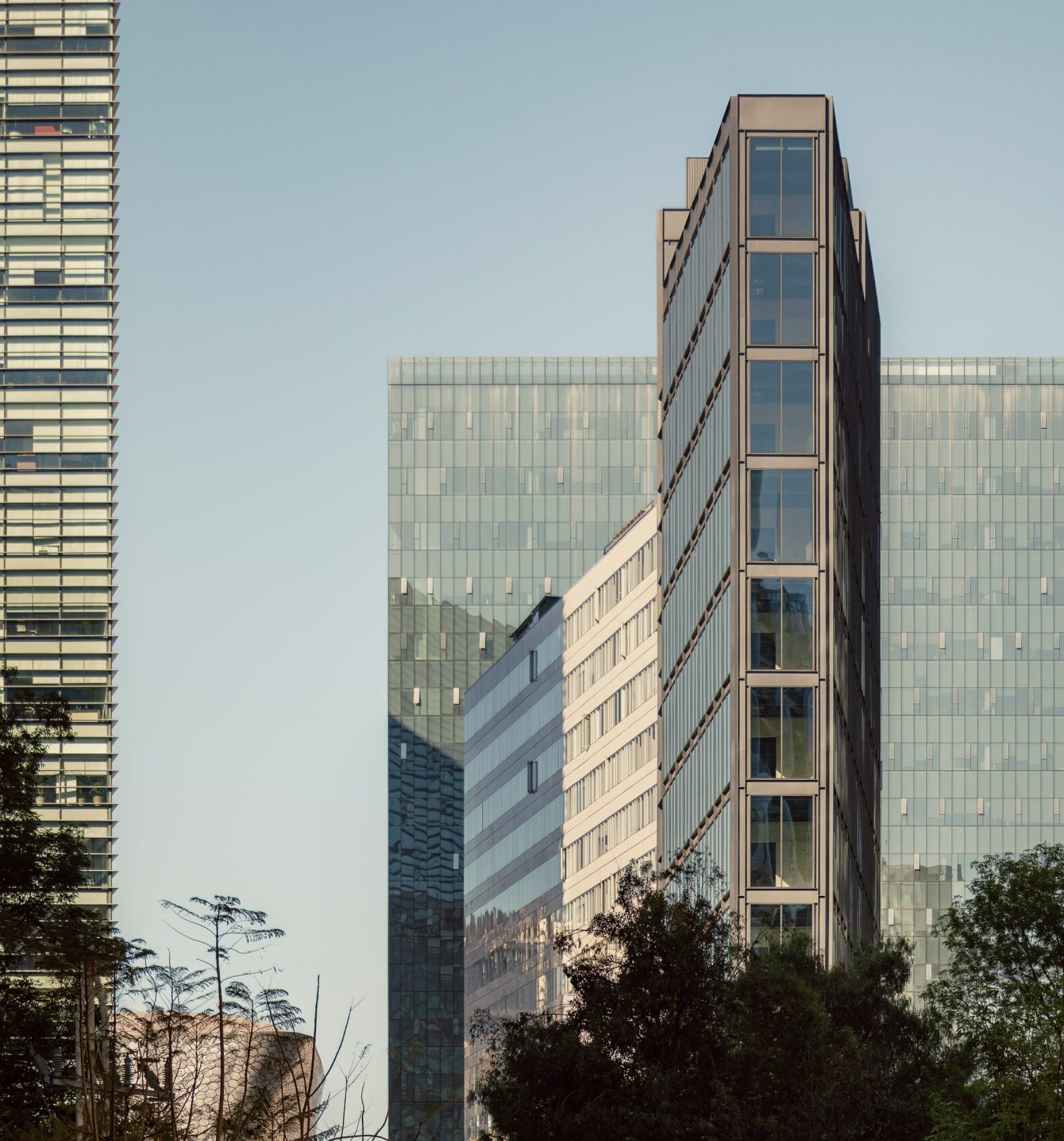
Local studio HEMAA has completed Ferrocarril de Cuernavaca 780, a 13-storey steel, concrete, and glass building developed on a narrow post-industrial site in Mexico City’s Polanco neighbourhood. Located between a public street and the remnants of the former Ferrocarril de Cuernavaca railroad, the project occupies an underutilised linear plot with a total built area of 9,465 m².
The architectural concept and execution were led by HEMAA, with a multidisciplinary design and construction team including Santiago Hernández Matos, Alejandra Tornel Cahue, José Miguel Fainsod Castro, José Pedro López González, Alonso Sánchez Toscano, Adriana Aguirre Becerra, Andrea Motilla Chávez, Daniela Parra Orozco, José Miguel Santivañez Gómez, Juan Octavio Ferreira, Mónica García Cruz, and Patricio Salgado Rodríguez. The building’s wedge-like form directly responds to extreme site constraints, transforming limited width into a defining architectural and façade strategy.

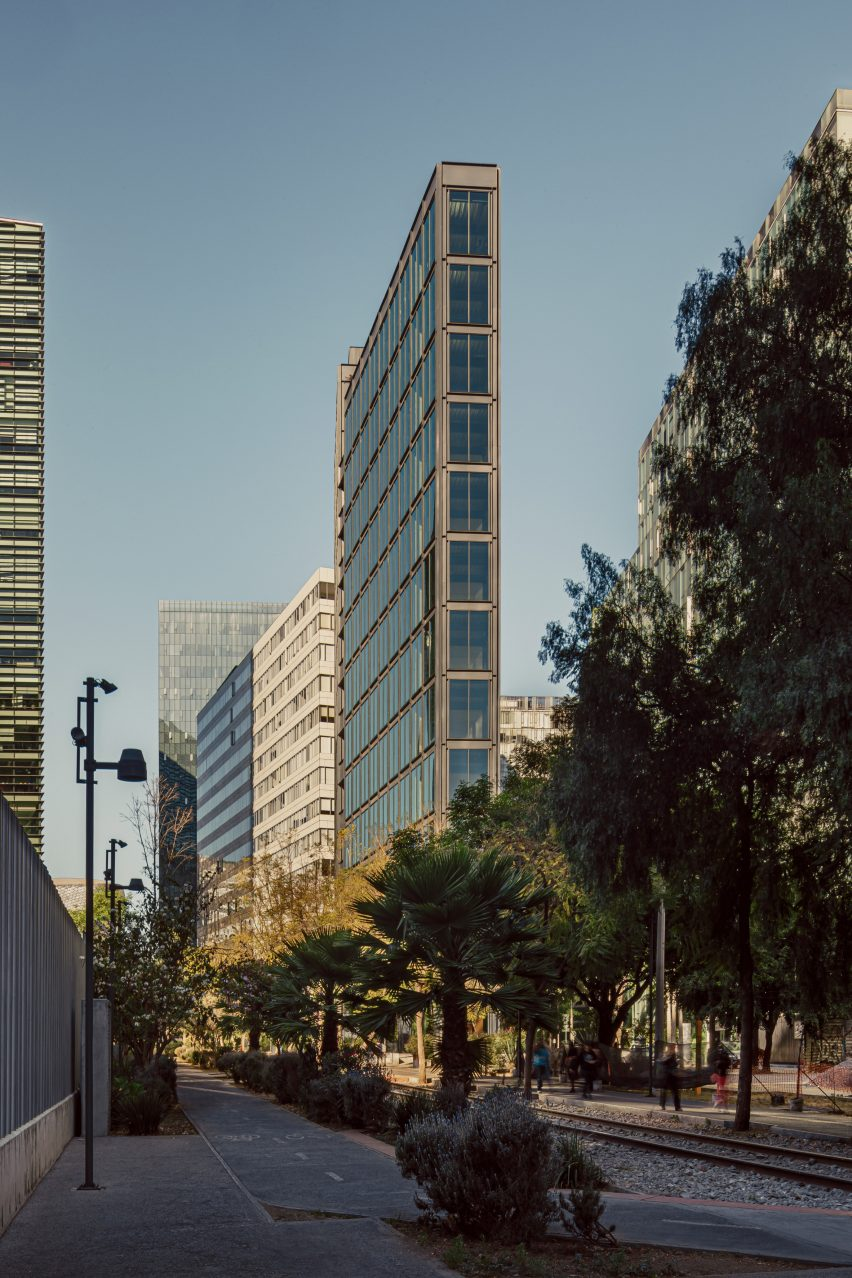
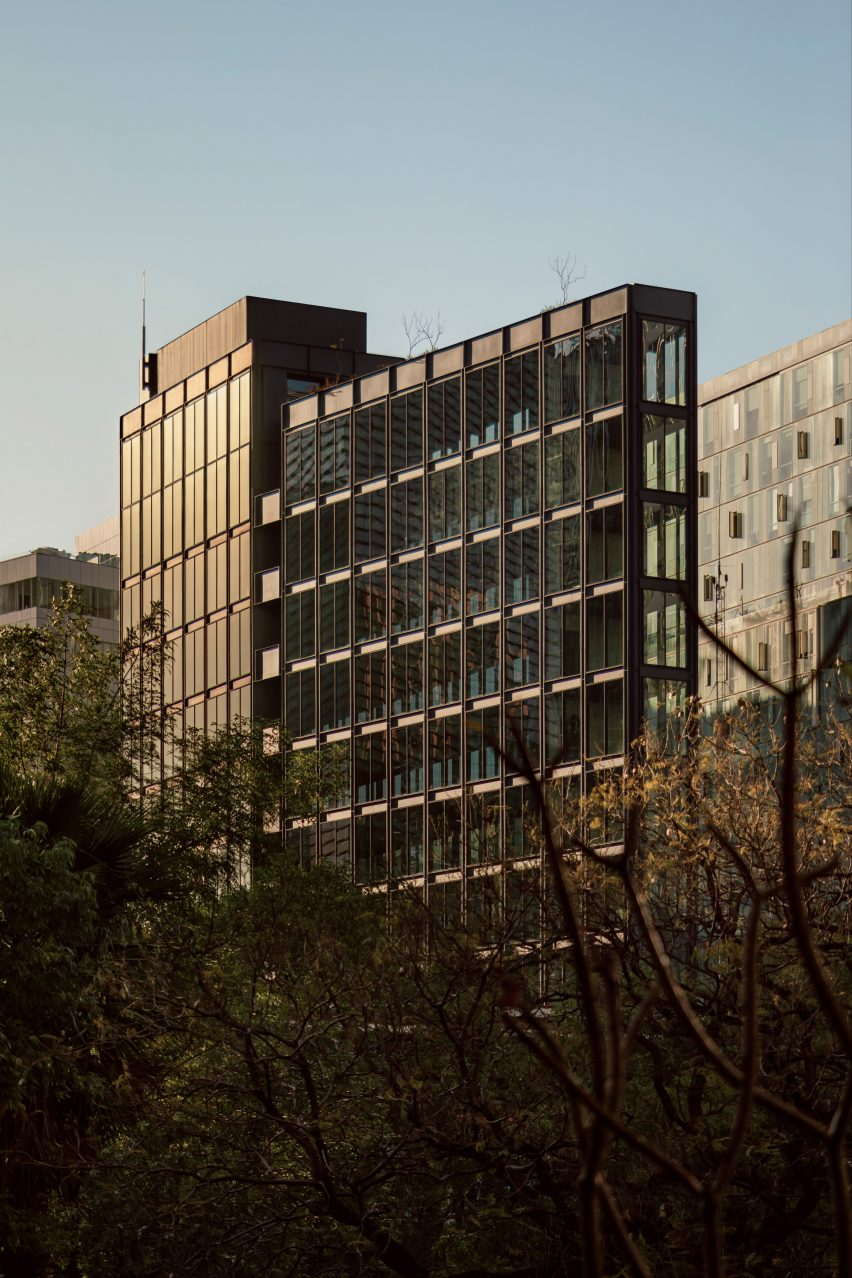
Façade and structural performance were developed in close coordination with PESA as structural engineer. A black exposed steel structure defines the building envelope, referencing the area’s industrial past while meeting Mexico City’s seismic requirements. The steel system allows column-free interior floors, positioning the façade as both a load-bearing and architectural element. Electrical systems were engineered by DEC, plumbing by Garza Maldonado, and HVAC systems by CYVSA, ensuring integration between envelope performance and building services.
Glazing wraps almost entirely around the building, maximising daylight penetration and visual permeability. The façade’s appearance shifts throughout the day as reflections, transparency, and structural rhythm interact with changing light conditions. Special engineering coordination was provided by TecnoBuildings, supporting the building’s complex technical systems and robotic parking infrastructure. 
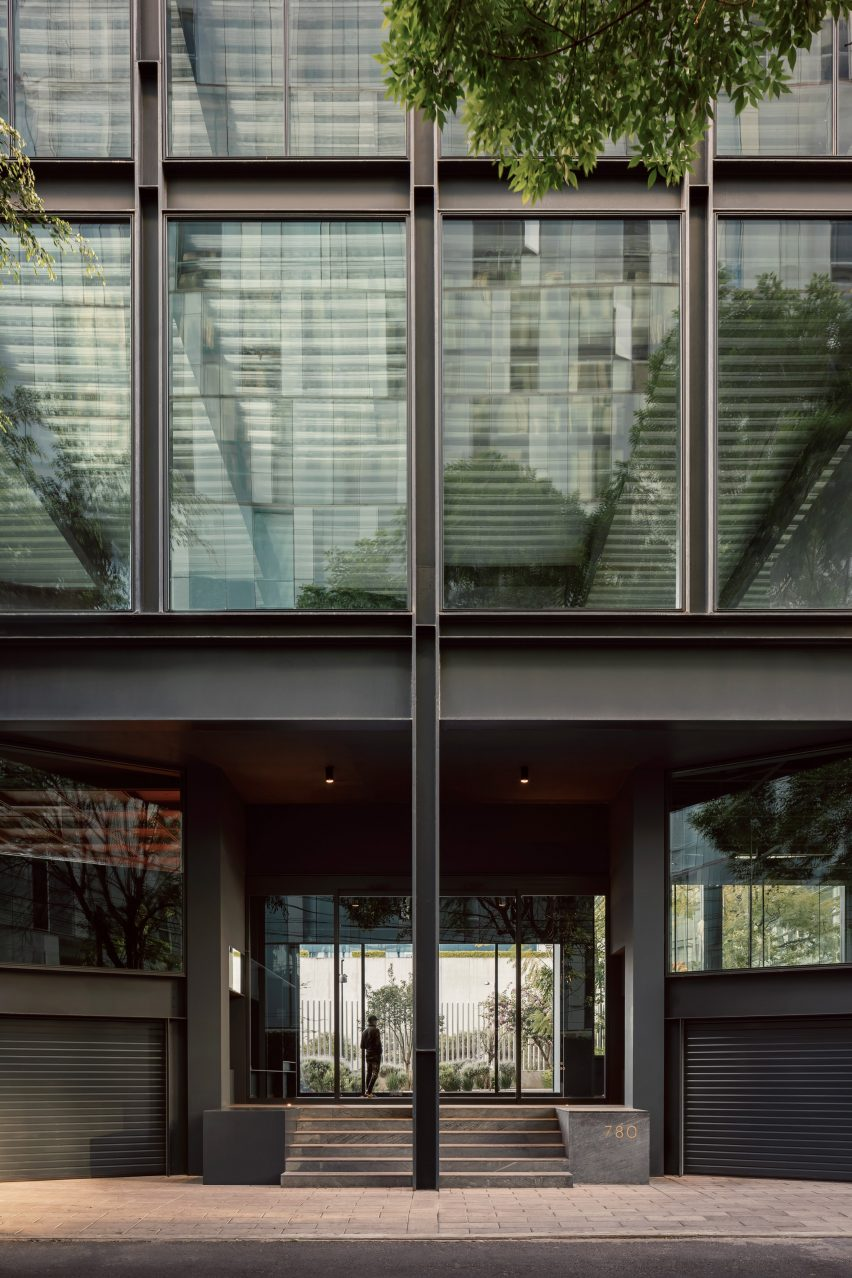
At ground level, the façade opens toward the public realm through two glazed entrances forming a visual enfilade between the north and south elevations. Landscape design by DLC Architects reinforces the building’s relationship with the adjacent park, while a reduced footprint prioritises public space over maximum build-out.
Above, upper floors are deliberately minimal, containing only essential cores and services, allowing flexible tenant layouts behind the glazed envelope. The 13th floor steps back to form a rooftop terrace overlooking the Mexico City skyline and Chapultepec Park.
The building achieved LEED certification, commissioned by Alejandro Trillo and Gabriel Morales, incorporating high-performance insulation, efficient HVAC systems, rainwater harvesting, and water-saving fixtures. The architectural model was developed by Taller Cuatro Cuartos, with additional contributions by Omar Sad and Augusto Álvarez.
Source: Dezeen with additional information added by Glass Balkan