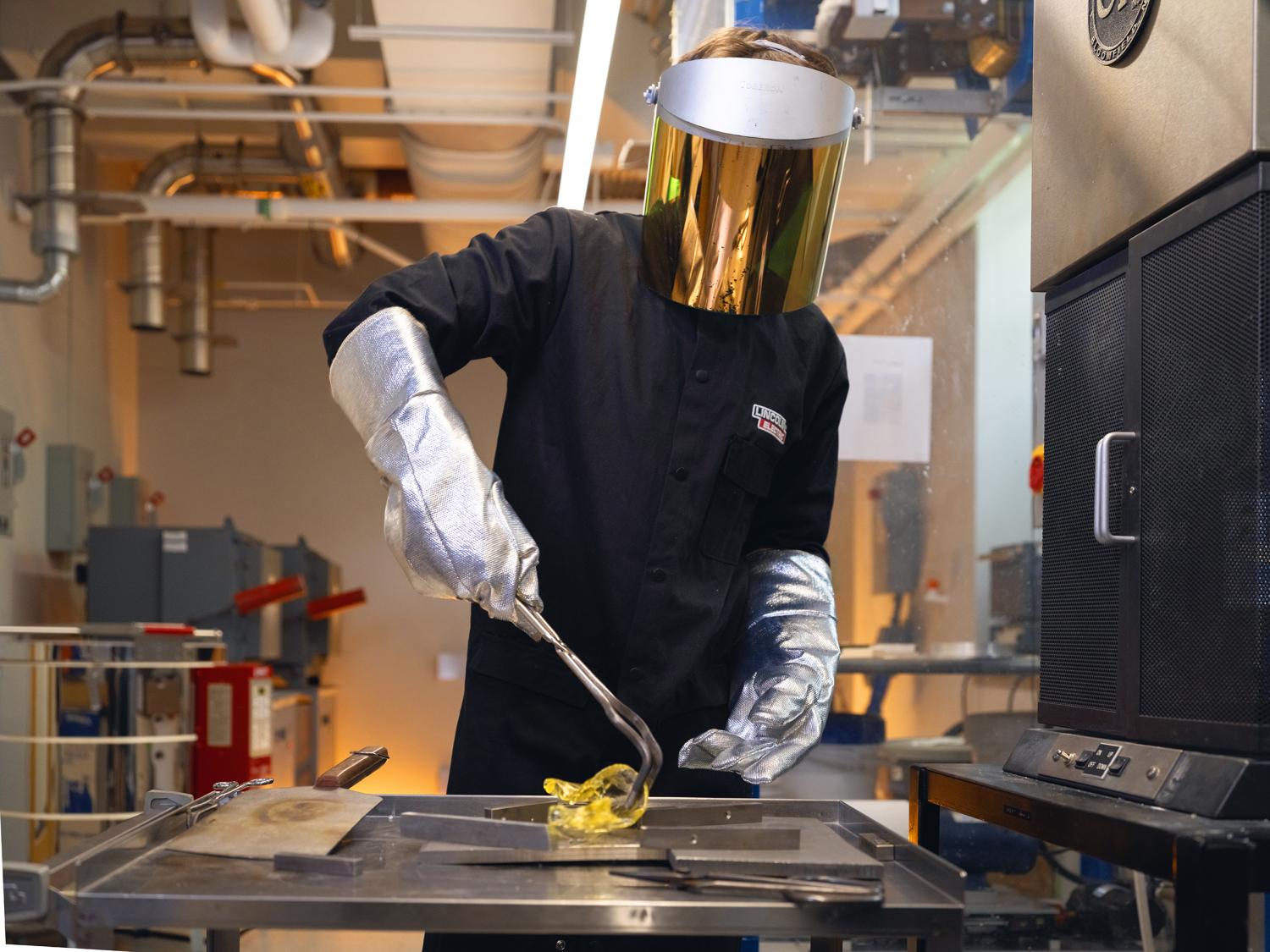
Vitro Architectural Glass has entered a multi-year research partnership with Penn State University to evaluate and scale LionGlass, a next-generation glass composition engineered to significantly reduce the carbon footprint of glass manufacturing. The collaboration focuses on testing LionGlass’ compatibility with industrial float glass production, a critical step toward potential adoption in architectural and automotive applications.
LionGlass was developed by researchers at Penn State and represents a departure from conventional soda-lime silicate glass formulations. According to Penn State, the material requires substantially lower melting temperatures and eliminates the use of carbonate raw materials, two factors that together contribute to a projected 50% reduction in carbon dioxide emissions during production. In addition to its environmental profile, LionGlass has demonstrated significantly higher damage resistance, in some cases achieving up to ten times the crack resistance of conventional glass.
Under the agreement, Vitro will work closely with Penn State’s materials science team to optimize LionGlass specifically for flat glass manufacturing. Testing will focus on compatibility with float processes and downstream applications relevant to architectural, automotive, and solar glass markets, where consistency, scalability, and performance are essential.
As part of the collaboration, Vitro will second Daniel Kramer to Penn State to pursue a doctorate while working directly on the LionGlass project. Kramer previously completed both his bachelor’s and master’s degrees at Penn State under the supervision of the late Carlo Pantano, former director of Penn State’s Materials Research Institute. Kramer will lead the research alongside Nicholas Clark, assistant research professor at Penn State and co-inventor of LionGlass. 
From an industry perspective, Vitro views the partnership as a strategic investment in long-term manufacturing innovation. Adam Polcyn, vice president of research and development at Vitro, highlighted the value of Penn State’s materials science expertise and its established legacy in glass research.
John Mauro, co-inventor of LionGlass and head of Penn State’s Department of Materials Science and Engineering, notes that the material’s reduced melting temperature, approximately 752°F lower than conventional glass, combined with the removal of carbonate inputs, underpins both its energy efficiency and emissions reduction potential.
The research program is scheduled to run through July 2028, marking a sustained effort to bridge laboratory innovation with industrial-scale flat glass production.
Source: Vitro with additional information added by Glass Balkan