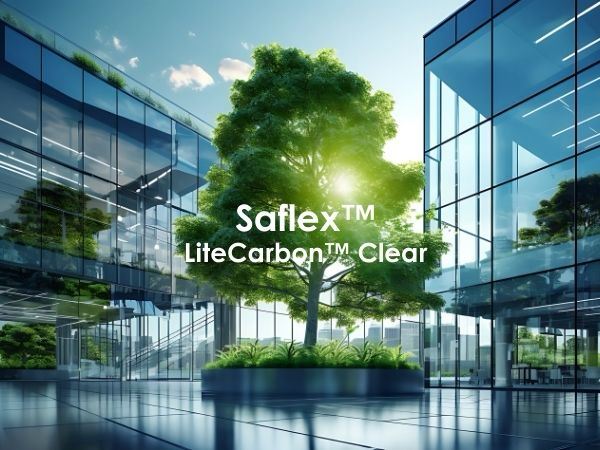
Eastman has expanded the availability of its Saflex™ LiteCarbon™ Clear PVB interlayer across Europe, giving laminated glass manufacturers a practical new route to lower embodied-carbon glazing, without changing the look, process, or safety performance they expect from Saflex.
Designed for architectural laminated glass, Saflex LiteCarbon Clear is now offered in two thickness options (0.38 mm and 0.76 mm), helping window manufacturers and glass laminators tailor interlayer build-ups for different applications, from standard safety glazing to enhanced performance laminates.
The standout benefit is its reduced carbon footprint, delivering up to 37% less embodied carbon compared with standard Saflex Clear. This reduction is verified through Environmental Product Declarations (EPDs), an increasingly important requirement as façade and window supply chains face stronger pressure to document product-level sustainability credentials for project reporting and procurement.
While low-carbon materials sometimes raise concerns about optical compromises, Eastman emphasizes that LiteCarbon Clear maintains the unaltered laminated-glass appearance, with high transparency and optical clarity, and no impact on laminated glass safety or typical processing outcomes. That combination makes it particularly relevant for modern façade and glazing packages where daylight quality, appearance, and compliance must align. 
From a production standpoint, LiteCarbon Clear has been positioned as a process-friendly solution, designed to integrate into existing lamination lines without equipment changes. For European processors managing tight lead times and high product variation, this “drop-in” compatibility helps reduce operational risk, minimizing downtime, requalification work, and unnecessary complexity.
Another key capability is large panel availability, supporting fabrication of up to 3.2 m laminated glass panels. This aligns with the market’s growing shift toward bigger glazing formats in façade design, where fewer joints and cleaner sightlines are often demanded by architects and developers.
Beyond carbon reductions, Saflex LiteCarbon Clear holds Cradle to Cradle Certified® Material Health (Silver), a credential that adds material transparency value for projects targeting advanced sustainability and wellness requirements.
With building and construction supply chains increasingly focused on reducing Scope 3.1 emissions (purchased goods and services), Eastman’s portfolio extension directly supports customers who need measurable carbon reductions tied to verifiable documentation. For many façade and window projects, this can also contribute to LEED and BREEAM credits, especially where EPD-backed products strengthen project-level sustainability scoring.
Source: Eastman with additional information added by Glass Balkan