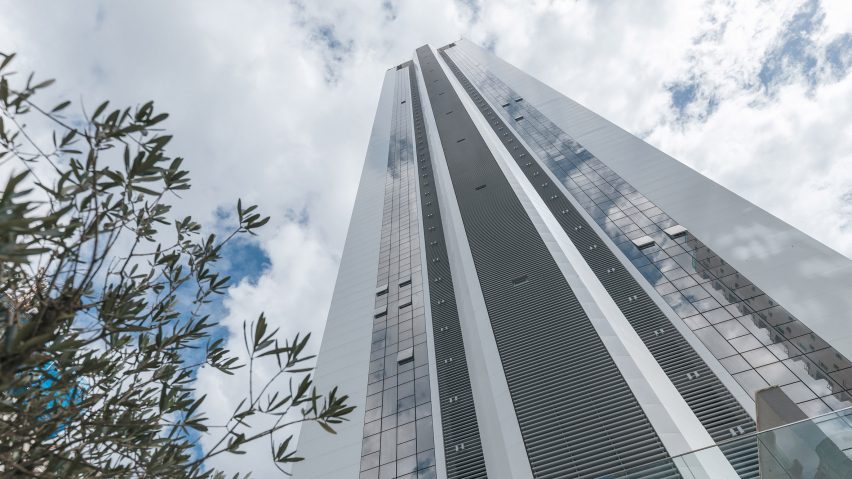
In Balneário Camboriú, Brazil’s most vertical coastal skyline, Vitra introduces a façade concept that’s less about complexity and more about precision, proportion, and a single dominant move. Designed by Pininfarina and developed by GT Home, the mixed-use tower rises 62 storeys to around 208 metres, positioned along Avenida Brasil, slightly inland from the dense beachfront cluster at Praia Central.
The façade concept: one frame, one identity
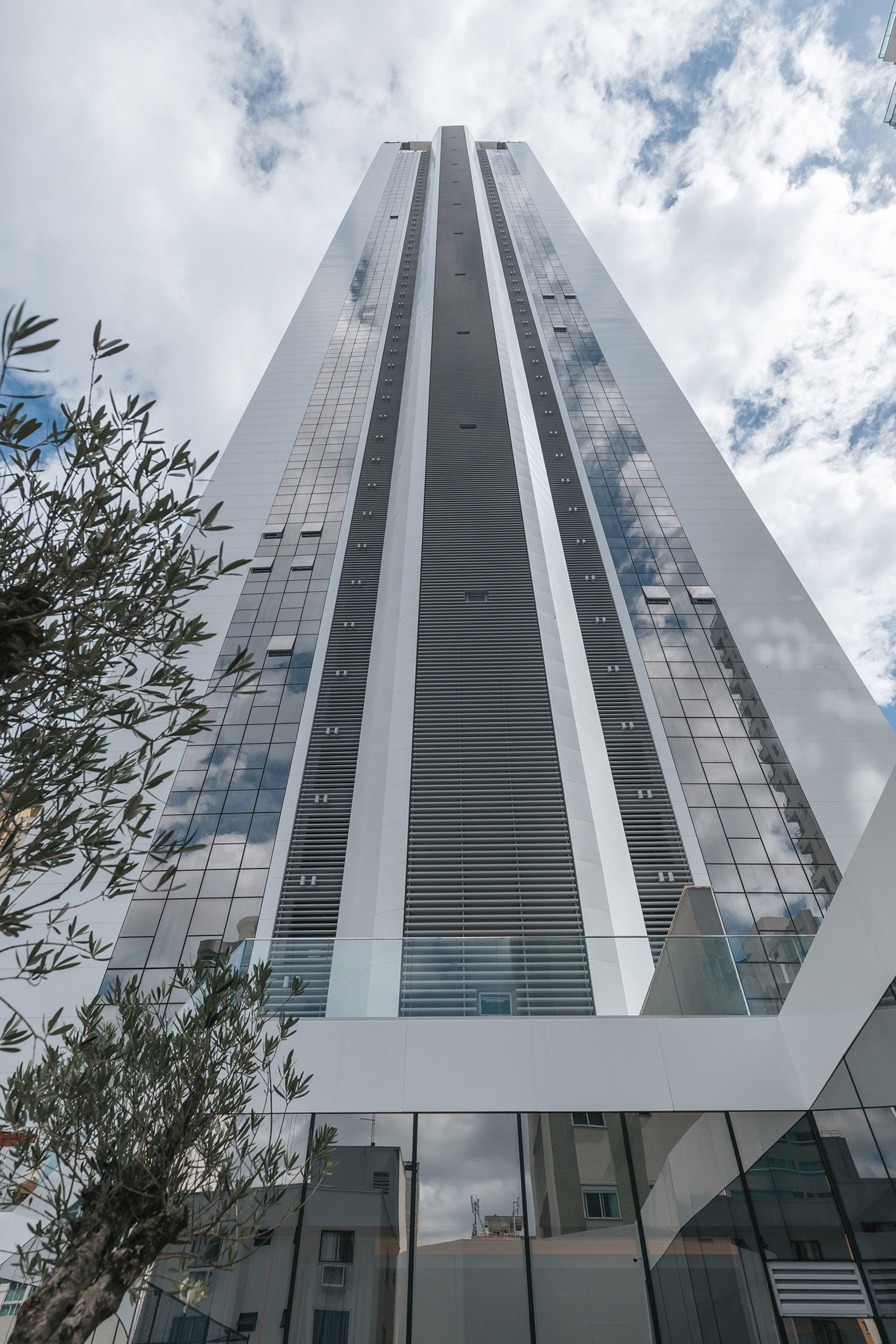
The defining element of Vitra’s envelope is a continuous aluminium frame that wraps the building like a perimeter outline. Instead of treating the façade as a typical repeated curtain-wall grid, the project uses this frame as a vertical “edge condition”, a strong architectural border that stays visually legible from street level to crown.
This strategy does three important things:
- Gives the tower a clear, graphic silhouette against a crowded skyline
- Unifies podium + tower into one coherent massing gesture
- Creates a strong visual hierarchy, where the frame leads and the glass supports
Dark glass as the quiet surface behind the “structure”
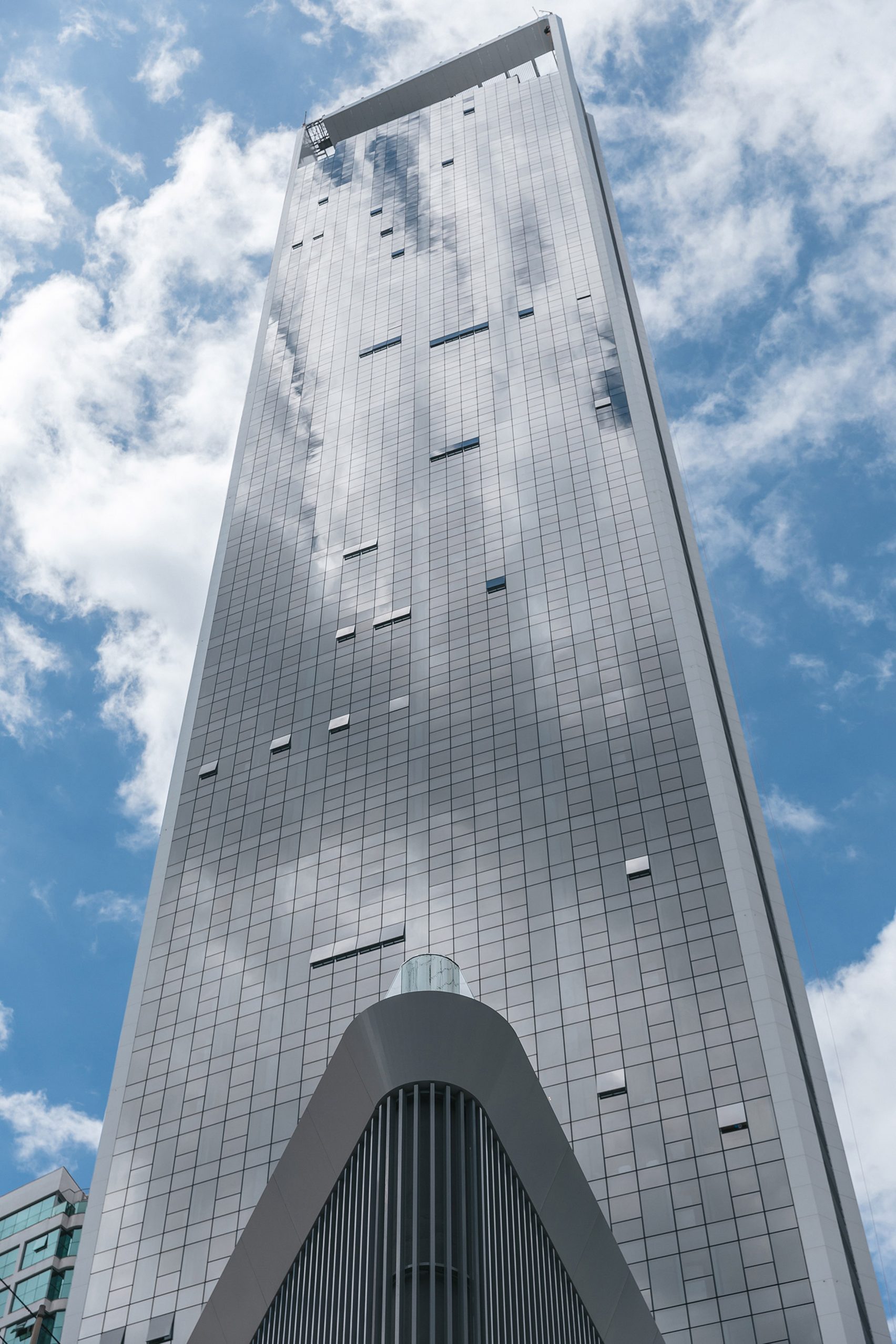
Within the aluminium boundary, the tower is clad in dark-toned glazing, making the central volume read as sleek, continuous, and calm. The glass isn’t trying to be decorative, it functions as the “body” of the building, while the aluminium frame acts as the “signature.” 
This contrast is the façade’s key visual performance:
- Aluminium = definition, rigidity, identity, outline
- Dark glass = depth, reflectivity, minimalism, continuity
The result is a tower that feels more like a single object than a stack of floors, the façade is intentionally restrained, emphasizing silhouette and proportion over pattern.
The frame as a façade “separator” between public and private
Vitra’s program shift is built directly into the envelope language. The building sits on a wedge-shaped podium that holds the commercial component, topped by an outdoor terrace and pool. From this base, the residential tower rises directly through the centre, and the aluminium frame becomes the element that clearly defines the transition between the public urban base and the exclusive residential levels above.
Instead of breaking the tower with setbacks or dramatic geometry, the façade does the work: it signals where the commercial city-facing functions end and where the private residential volume begins, all without losing visual continuity.
Residential façade logic: premium vertical rhythm
Above the podium, the tower contains 100 residential units, arranged as two apartments per floor. This layout supports a façade that is intentionally clean and uniform, prioritizing:
- Consistency of glazing lines and reflections
- A slender, vertical proportion rather than bulky massing
- A “quiet luxury” surface, where the envelope reads elegant instead of loud
At the top, the façade culminates in a rooftop sky lounge, giving the building a distinct crown-level destination while keeping the same disciplined exterior language.
A façade designed like a product
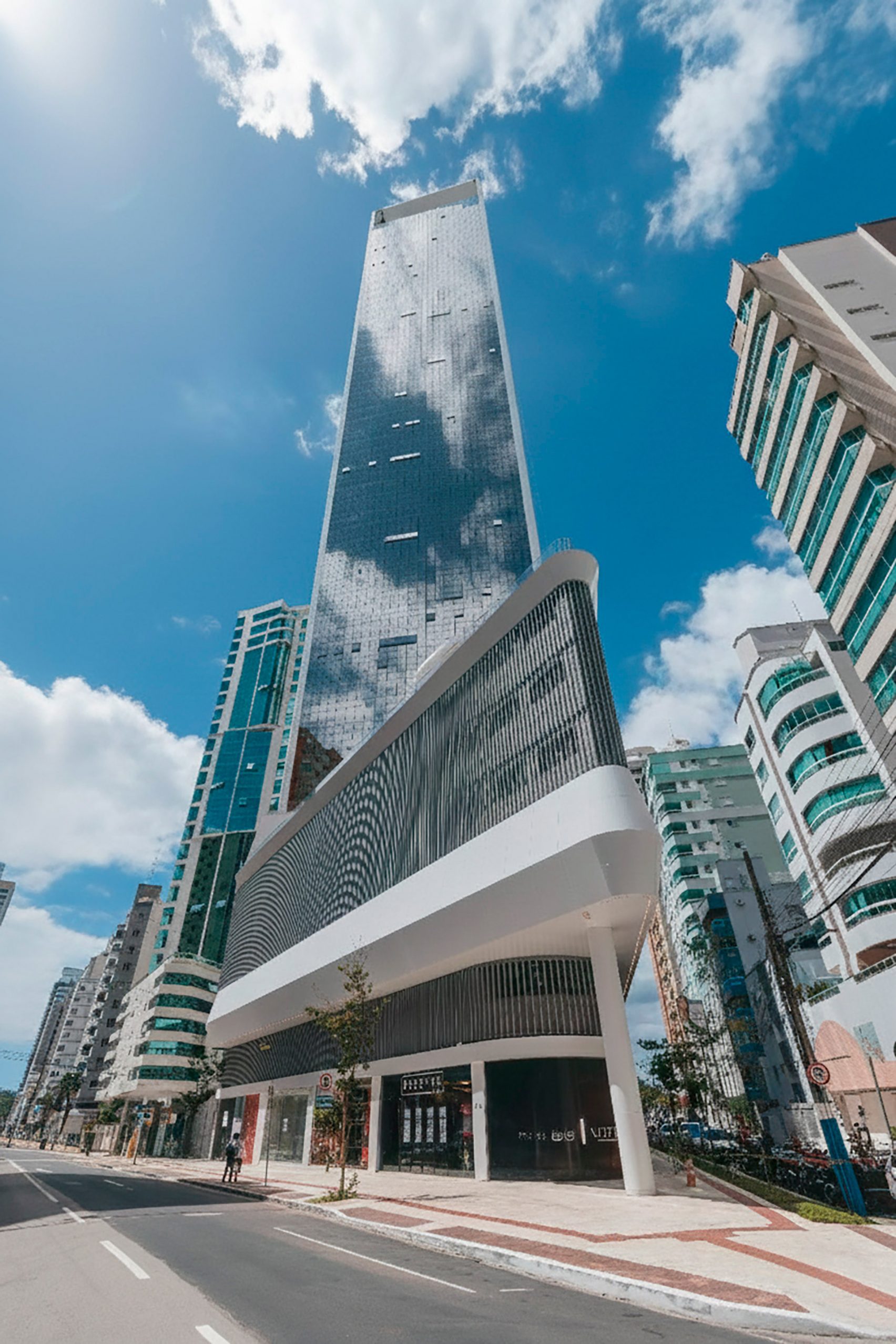
Vitra feels unmistakably Pininfarina in the way it treats architecture like an engineered object: one concept, executed with control. The aluminium frame acts as a continuous architectural stroke, giving the building instant recognisability in a skyline filled with glass towers. Meanwhile, the dark glass plane keeps the tower sleek, premium, and visually unified.
In a city where height is common, Vitra’s impact comes from the façade’s discipline, a continuous aluminium outline holding a dark glass volume, turning a mixed-use high-rise into a single, coherent architectural statement.
The photography is courtesy of Pinifarnia.
Source: Vitra with additional information added by Glass Balkan