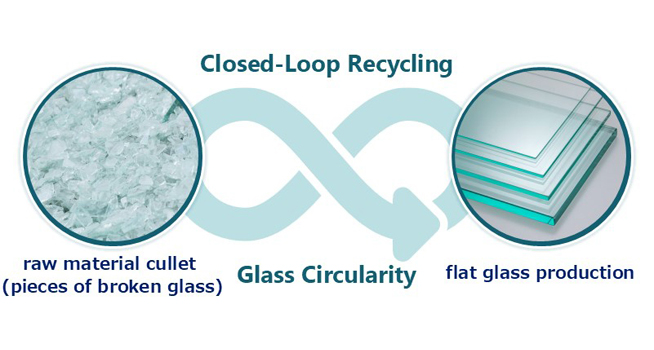
AGC and TRE HOLDINGS CORPORATION have completed a practical demonstration in Suwa City, Nagano Prefecture, proving that window glass waste removed from aluminium sashes can be recycled horizontally into new flat glass of equivalent quality. This is a major step beyond traditional approaches where demolition glass is typically landfilled or pushed into lower-grade uses through down-cycling.
The project focused on end-of-life glazing generated from demolition sites, where contamination, mixed materials, and logistics usually prevent high-value recycling. In the Suwa region, Shinshu Takeei (TRE Group) handled the collection and disassembly process, separating glass from frames while also studying transport routes, handling requirements, and the real costs behind each step. Once separated, TRE GLASS CORPORATION processed the recovered glass into cullet and performed quality inspections to ensure it met the standards required for flat-glass production.
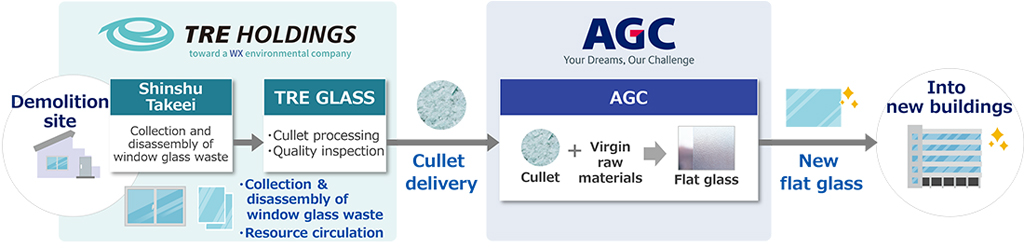
The most critical phase was completed by AGC, which verified the feasibility of manufacturing new flat glass using this cullet at the AGC Yokohama Technical Center (YTC). The aim was not only technical success, but also to validate whether this model can be expanded into a repeatable supply chain.
In Japan alone, window glass waste is estimated to exceed 500,000 tonnes per year, yet most of it still becomes industrial waste. By increasing cullet usage, the initiative supports lower greenhouse-gas emissions, reduced furnace energy demand, and less reliance on virgin raw materials such as silica sand and soda ash. 
Beyond sustainability, the demonstration also tackled the toughest barrier: economics. While aluminium frames are widely traded as valuable scrap, glass has lacked a stable purchasing mechanism. AGC and TRE calculated costs across the chain and will now assess nationwide feasibility, with the goal of building a scalable framework for circular architectural glazing.
Source: AGC with additional information added by Glass Balkan