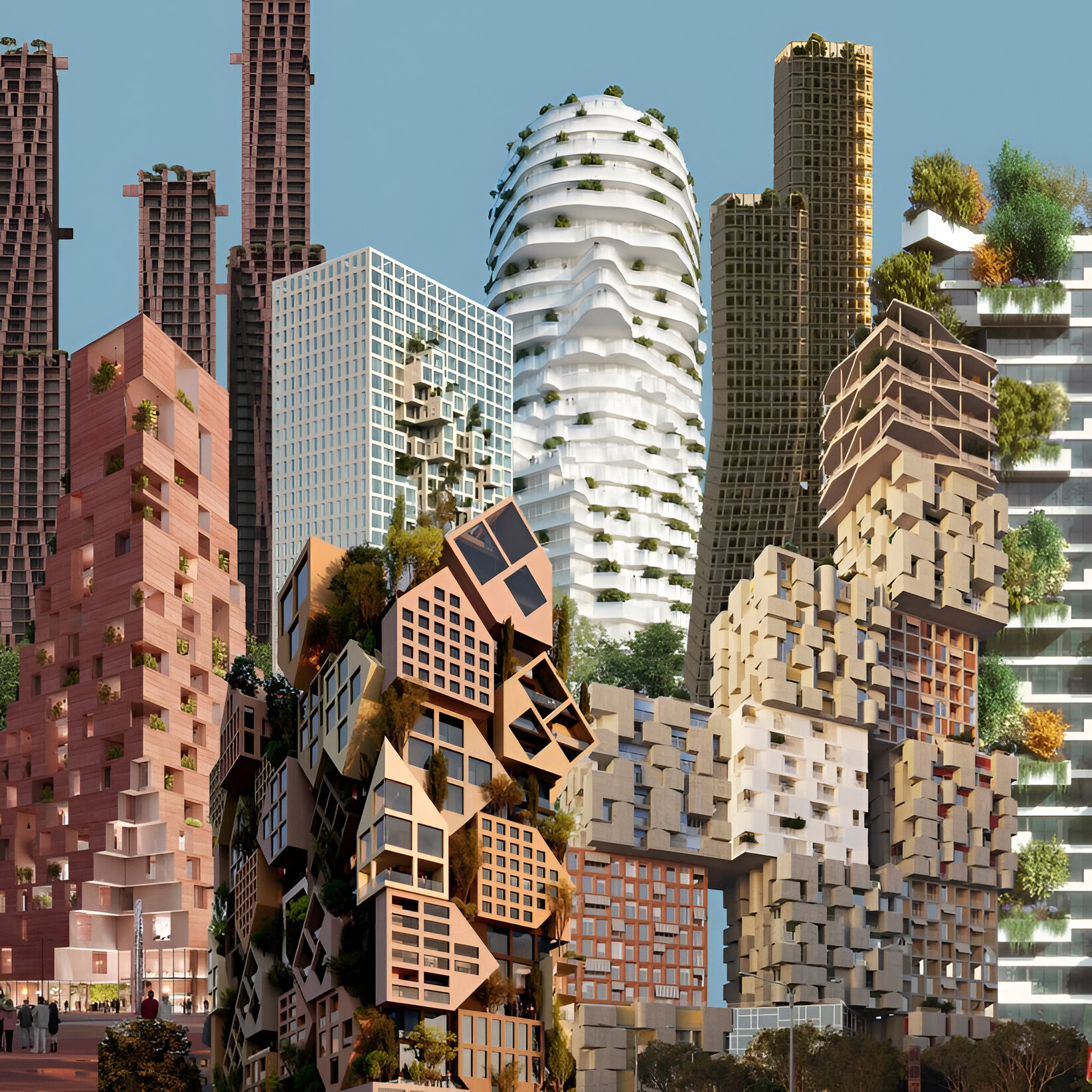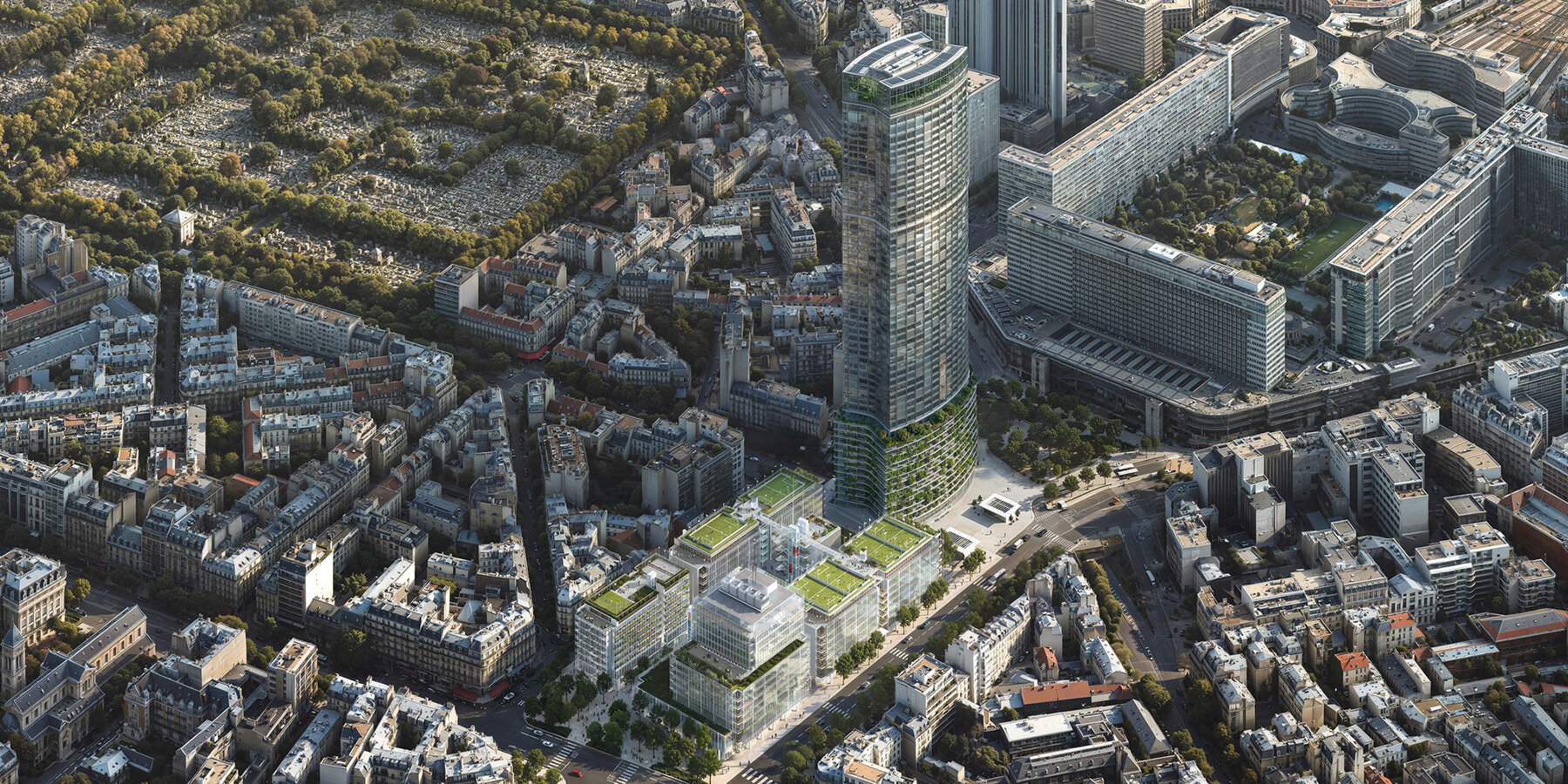
Renzo Piano Building Workshop (RPBW) has unveiled a new retrofit vision for the Ensemble Immobilier Tour Maine-Montparnasse (EITMM), the large urban complex that includes the Montparnasse Commercial Centre and the CIT Tower in Paris. Originally built between 1969 and 1973 by AOM, the project was designed in an era of elevated slabs and inward circulation, where retail and public movement were separated from the street. Over time, that approach left the district fragmented, difficult to navigate, and visually closed off from the surrounding neighborhoods.
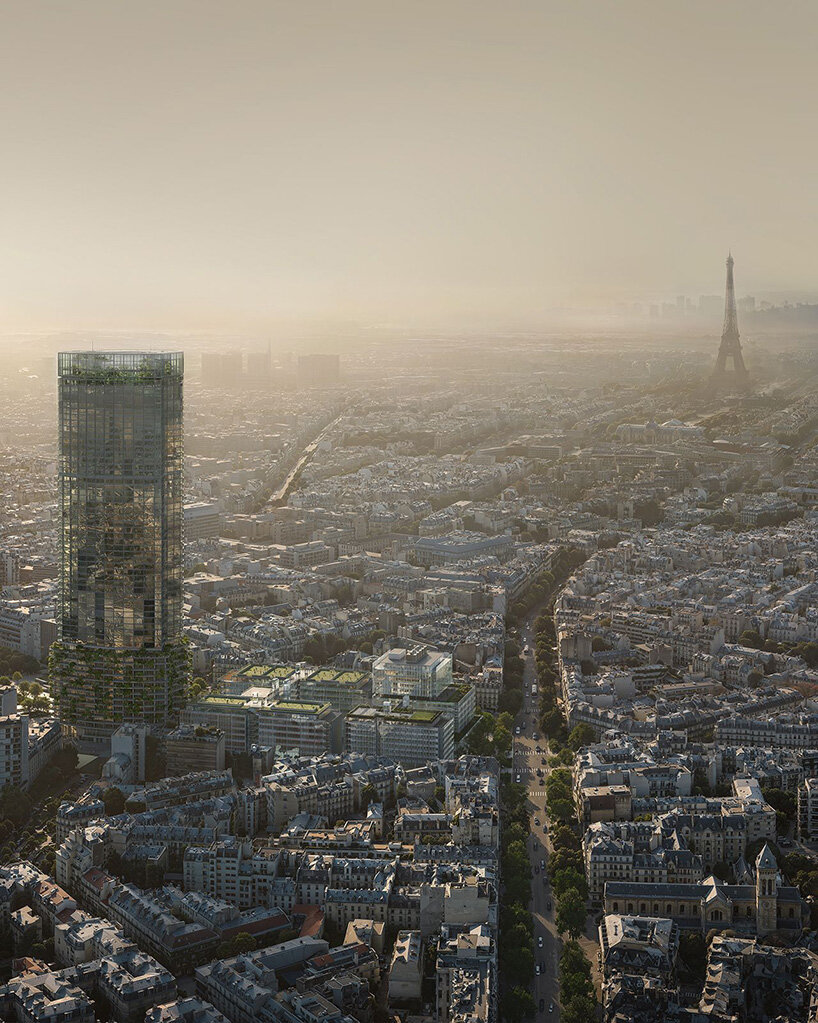
RPBW’s new proposal focuses on the part of the building that matters most in daily city life: the façade and ground-floor interface. Instead of treating the commercial centre as a sealed internal world, the redesign aims to make the perimeter readable, open, and inviting. Transparent and permeable ground levels are introduced to restore visual continuity, allowing pedestrians to see through the site and move across it naturally, rather than being redirected into enclosed corridors. This turns the façade into an active urban edge, not a barrier.
A key architectural move is the creation of new pedestrian routes cutting through the block, linking major access points such as Rue de Rennes and Montparnasse station, while reconnecting adjacent streets across multiple arrondissements. At the center, a large planted piazza becomes the project’s new civic heart: shaded, protected from traffic, and designed for everyday use with cafés, terraces, cultural activity, and sports functions. The goal is a place that feels like a neighborhood living room, not a megastructure leftover.
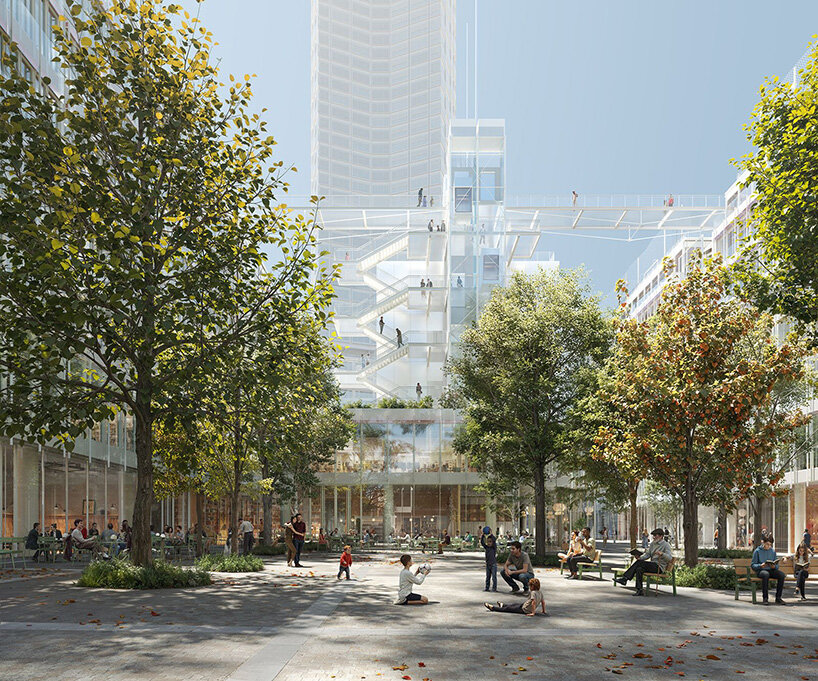
Structurally, RPBW keeps the existing grid as the backbone of the intervention, using reuse to reduce demolition and embodied carbon. Where new volumes are added, they are conceived as lightweight timber structures, allowing additional programs to be integrated with minimal intervention. The result is a Montparnasse that behaves like a Parisian city block again, mixed-use, walkable, and defined by façades that reconnect the building to the city. 
Source: RPBW with additional information added by Glass Balkan