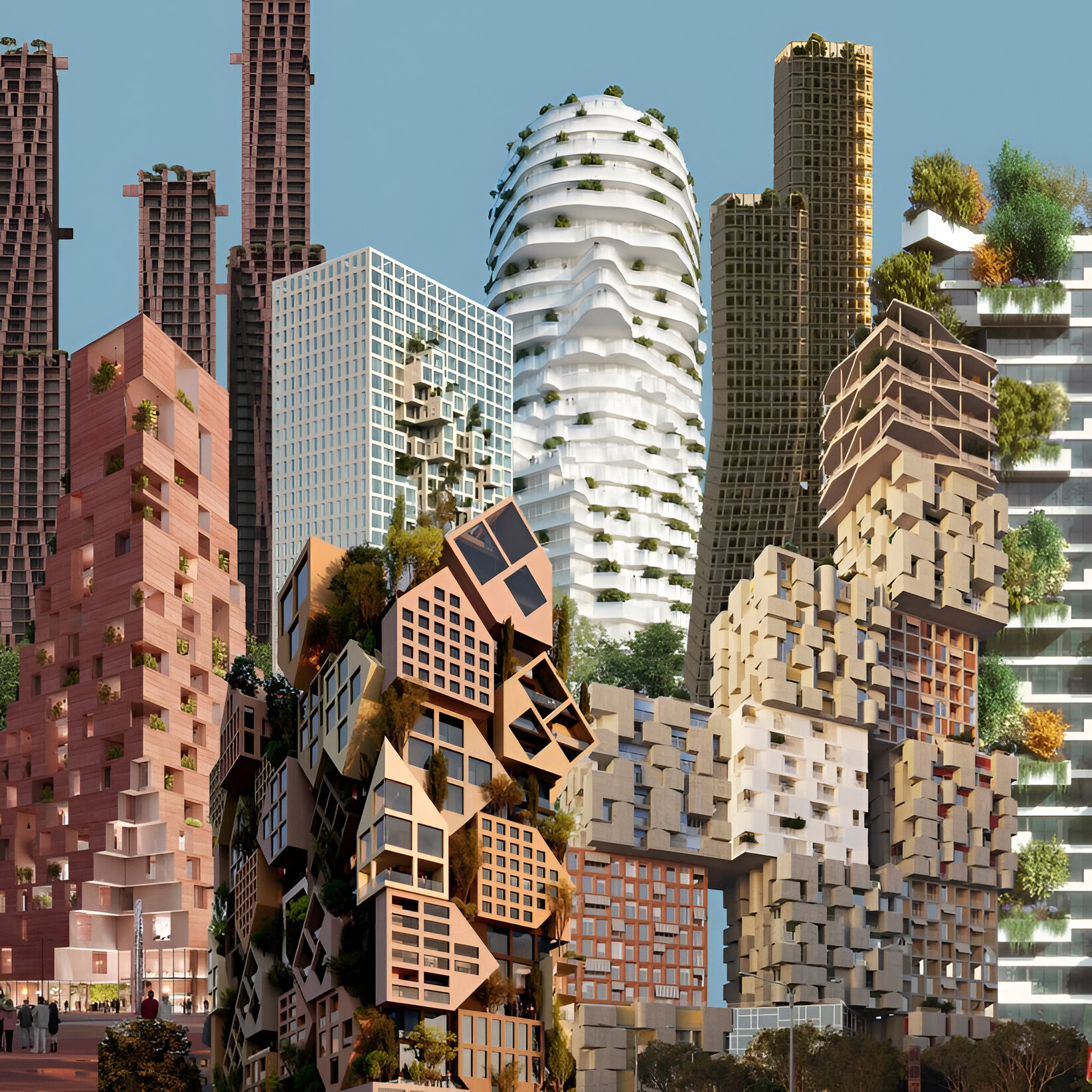
Albania has entered a rare phase of architectural acceleration, where the skyline is not evolving slowly over decades, it is being rewritten in real time. In Tirana, cranes, tower cores, public-space redesigns, and landmark restorations are creating a city that feels like a live exhibition of contemporary architecture. What makes this boom stand out is not only the number of projects, but their authors: global studios are treating Albania as a high-energy testing ground for new typologies, vertical communities, adaptive reuse, and symbolic national identity translated into façades.
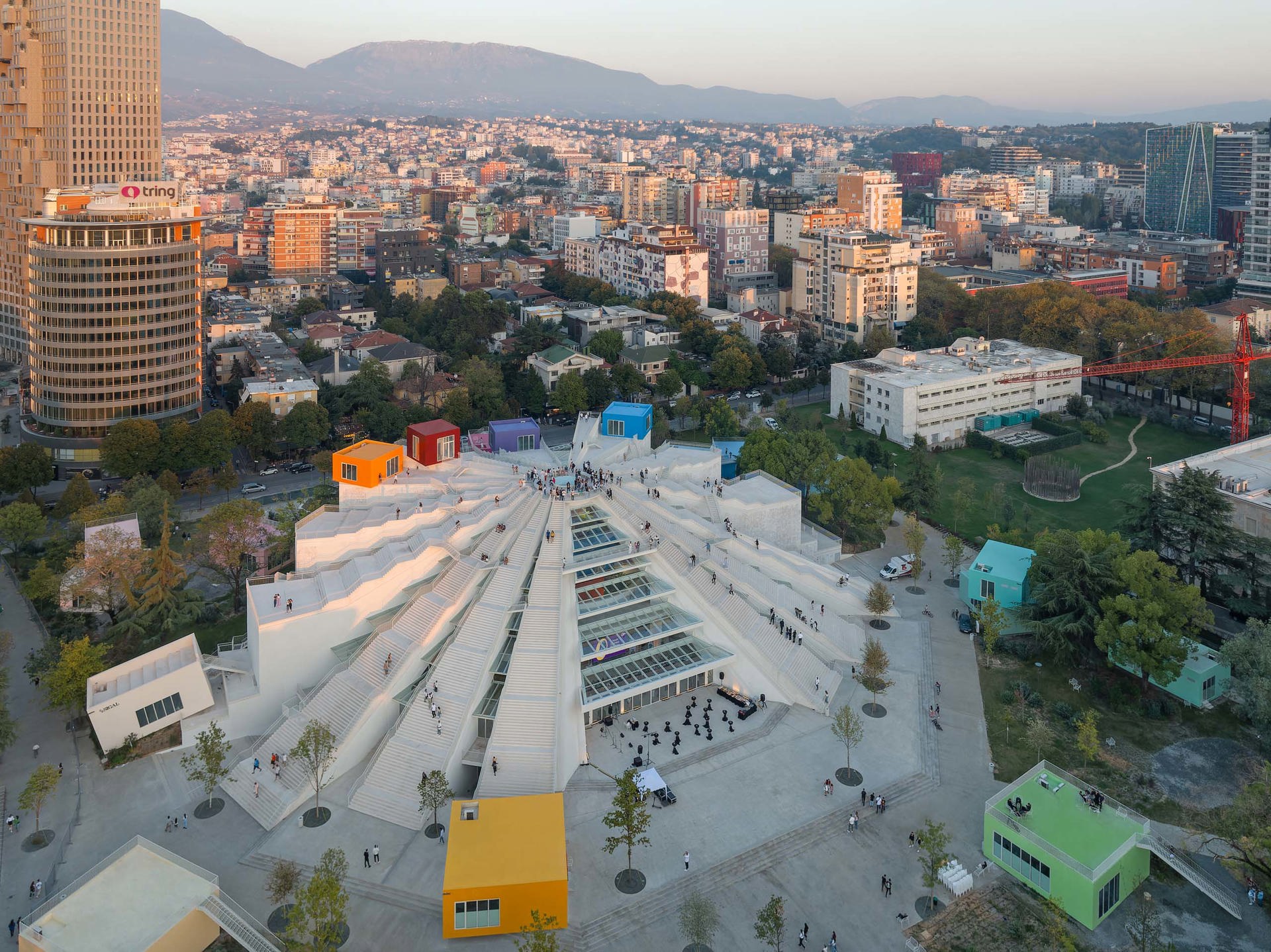
Among the most emblematic built transformations is MVRDV’s Pyramid of Tirana, a former communist-era monument reactivated as a youth-focused cultural and education hub. Rather than removing the structure’s heavy legacy, the project preserves its brutalist form while inserting playful, highly visible elements, colorful staircase-like volumes and climbable interventions that turn the pyramid into an active public landscape. The result is both architectural and civic: a building once associated with the past now functions as a connector between generations, offering space for learning, gathering, and participation.
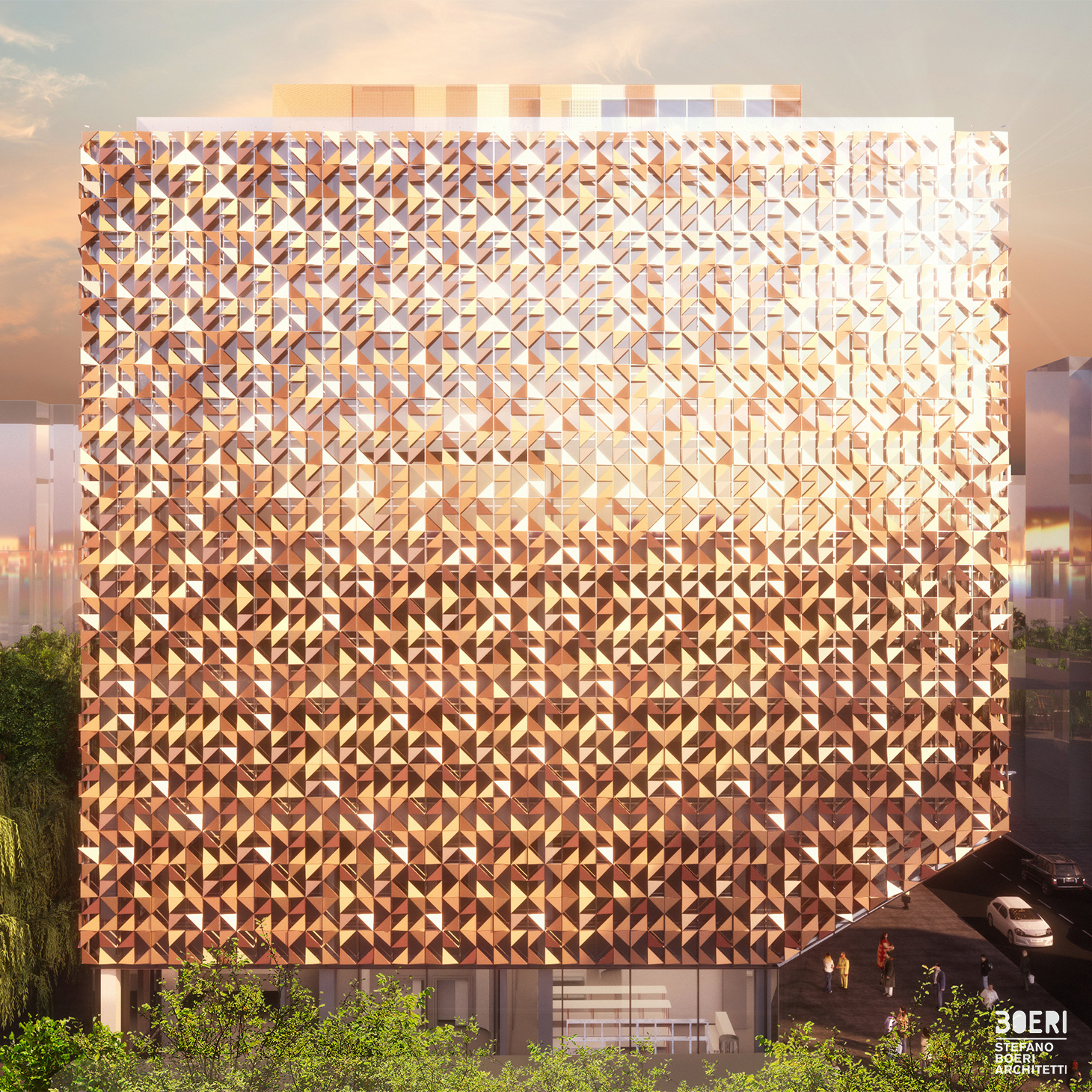
In contrast, Stefano Boeri’s Blloku Cube operates as a compact but highly symbolic insertion in one of Tirana’s most socially loaded districts. Blloku, once restricted during the communist era, is now a dense and energetic neighborhood. Boeri’s cube introduces a contemporary visual marker through reflective and transparent surfaces, signaling the district’s transformation into a new creative and commercial zone. It’s a smaller-scale project compared to mega-towers, but it carries cultural weight: a “signal building” meant to communicate modernity and openness.
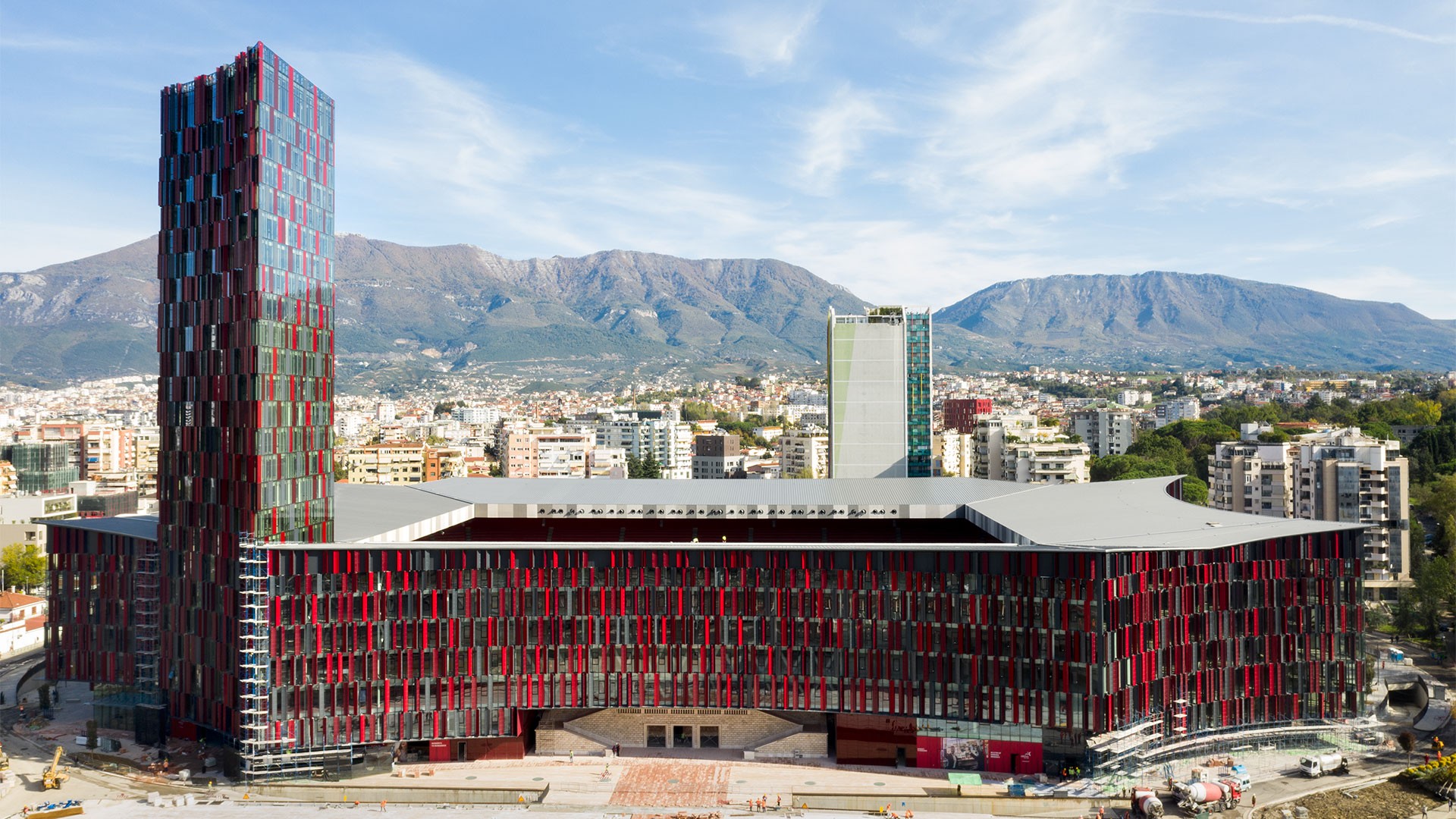
Elsewhere, architecture in Albania is increasingly hybrid, blending civic presence, commercial function, and national symbolism. Air Albania Stadium by Archea Associati demonstrates this clearly by compressing sports infrastructure, hospitality, and urban activity into one mixed-use composition. It is not a standalone arena placed outside the city; it is an urban anchor that holds both public emotion (match-day energy) and continuous daily use. 
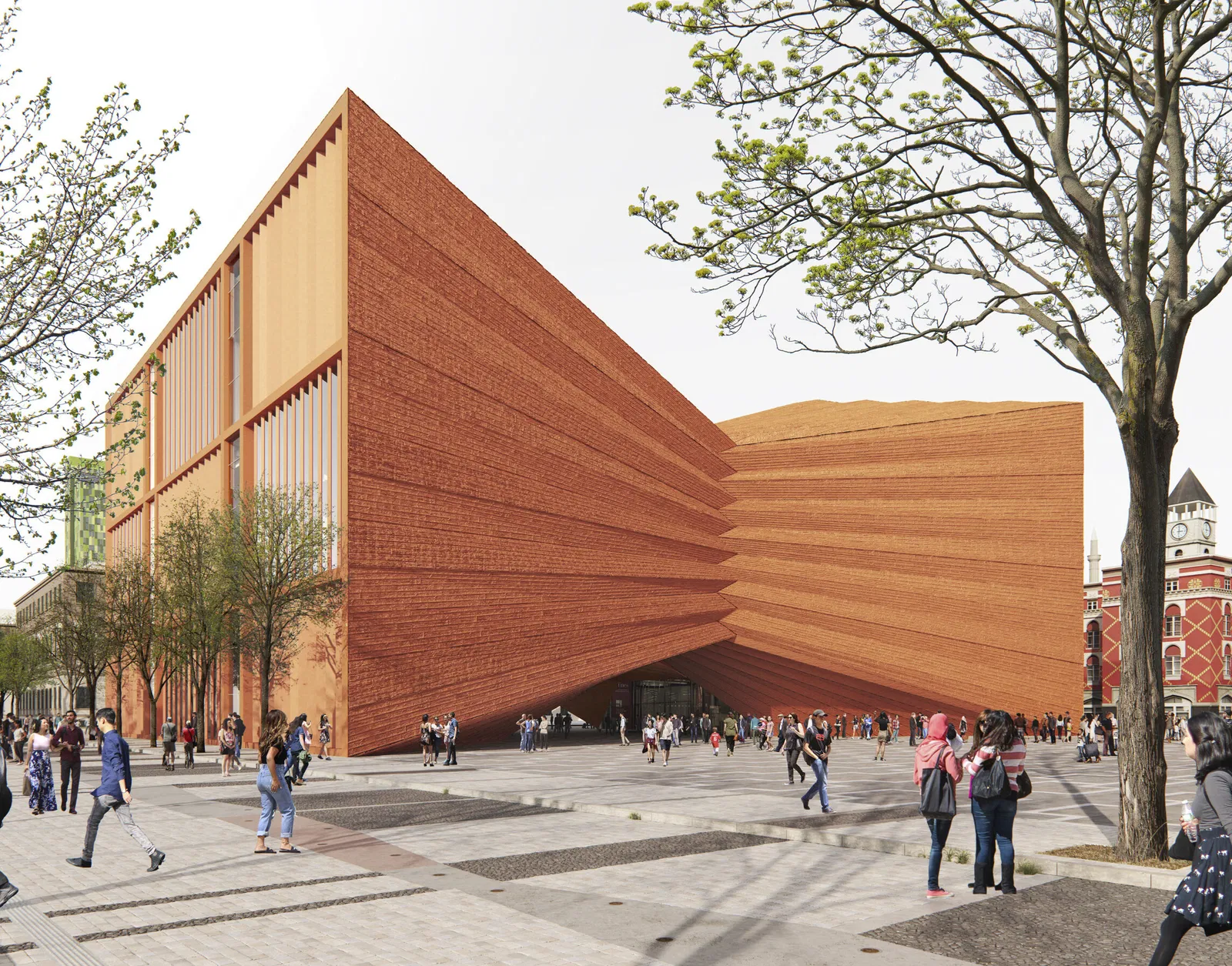
The next wave of Albania’s skyline transformation is already visible through major projects in progress. Bjarke Ingels Group (BIG) is developing the new National Theatre, a cultural landmark with a distinctive bowtie-like architectural form intended to become the centerpiece of a new arts district. The significance here is urban positioning: the theatre isn’t just a performance venue, it is intended to anchor an entire cultural ecosystem around it, shifting the city’s gravity toward a new public focal point.
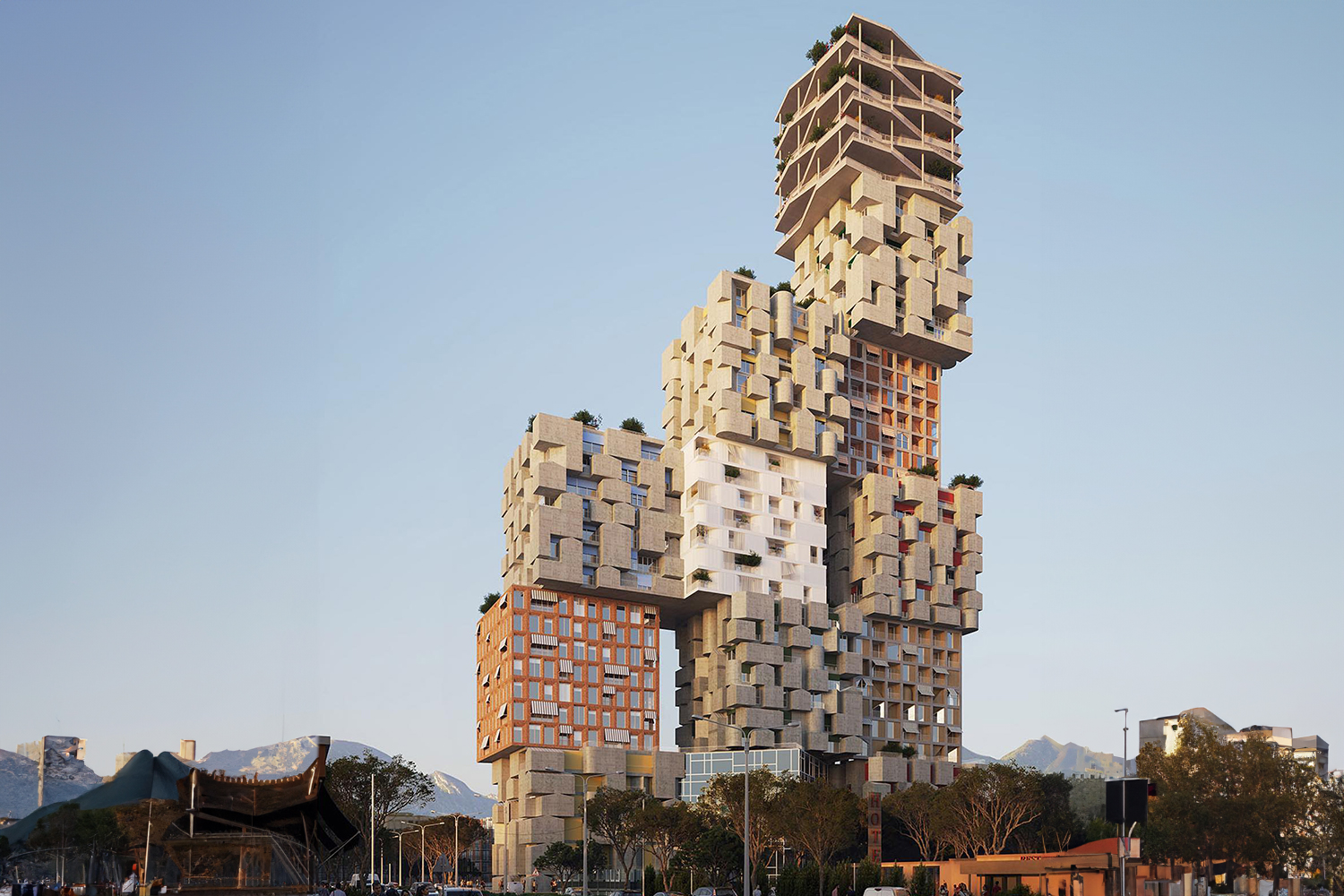
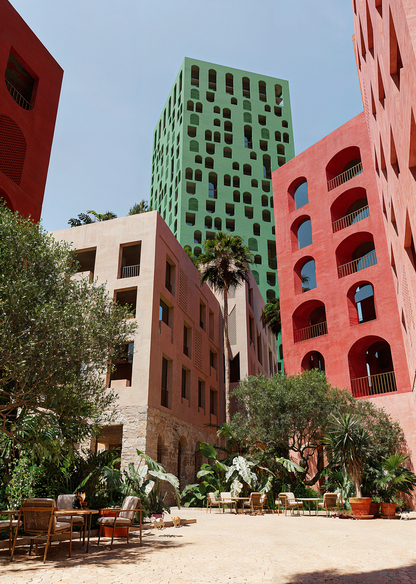
At the residential scale, new tower typologies are challenging the classic high-rise model. OODA’s Hora Vertikale proposes a “tower-as-neighborhood” strategy, stacking 13 modular volumes in a staggered composition enriched with planting. This breaks the uniform slab-tower logic into a structure that reads like multiple communities layered vertically. The key ambition is social: giving a high-rise the diversity and texture of a district.
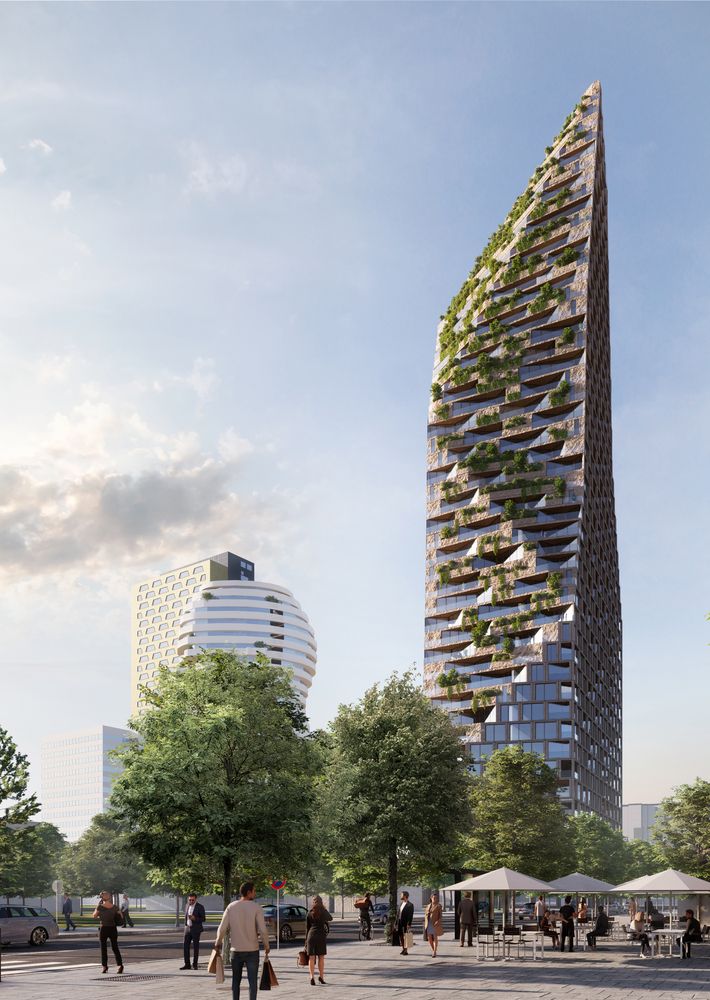
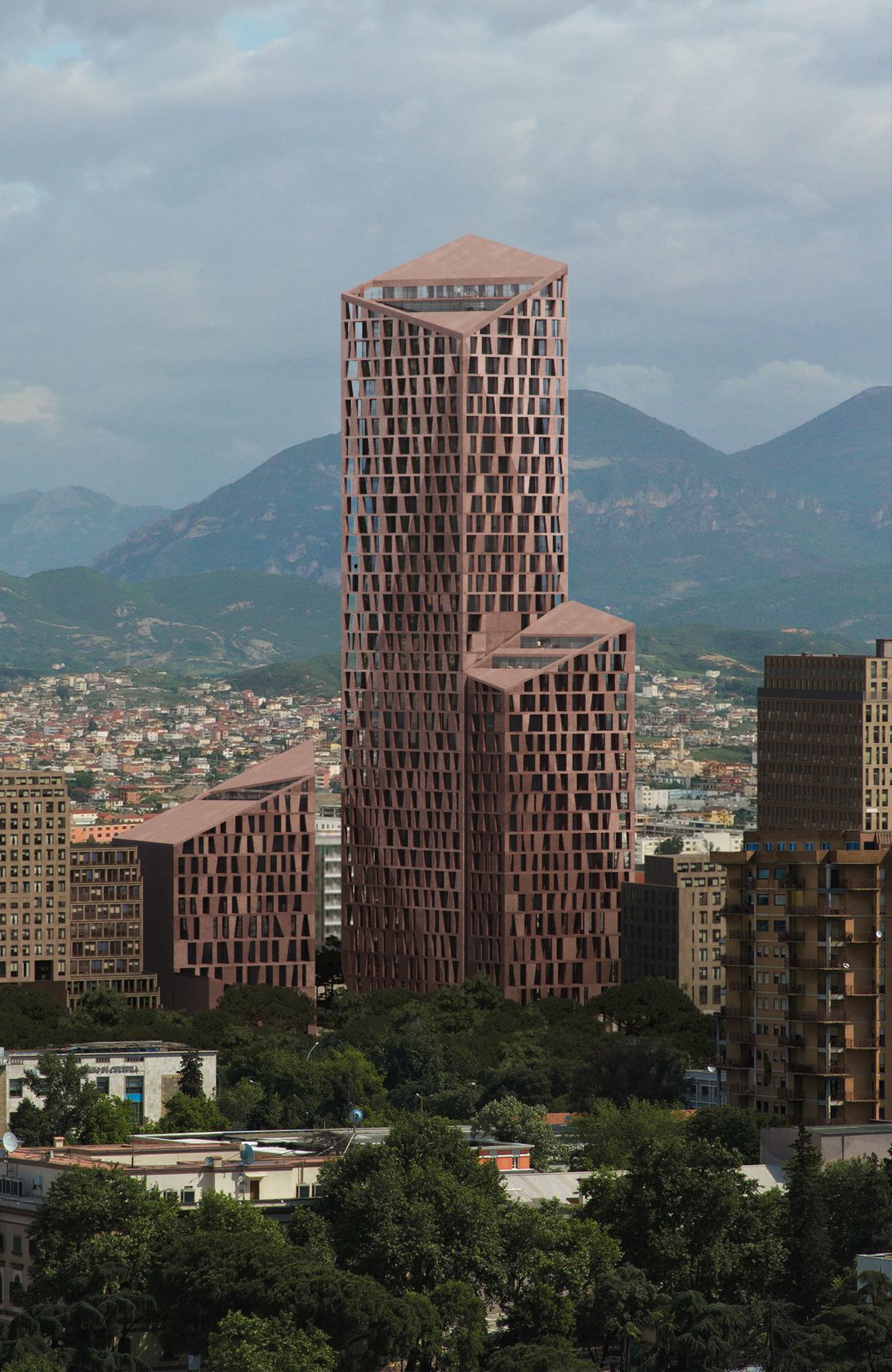
In the same category of skyline shaping, CEBRA’s Mount Tirana takes a more monumental direction, abstracting Albania’s mountainous landscape into a jagged vertical profile that could become the country’s tallest structure. Rather than treating height as the only achievement, the design uses silhouette as identity, a tower meant to “look like Albania,” referencing terrain rather than global corporate minimalism.
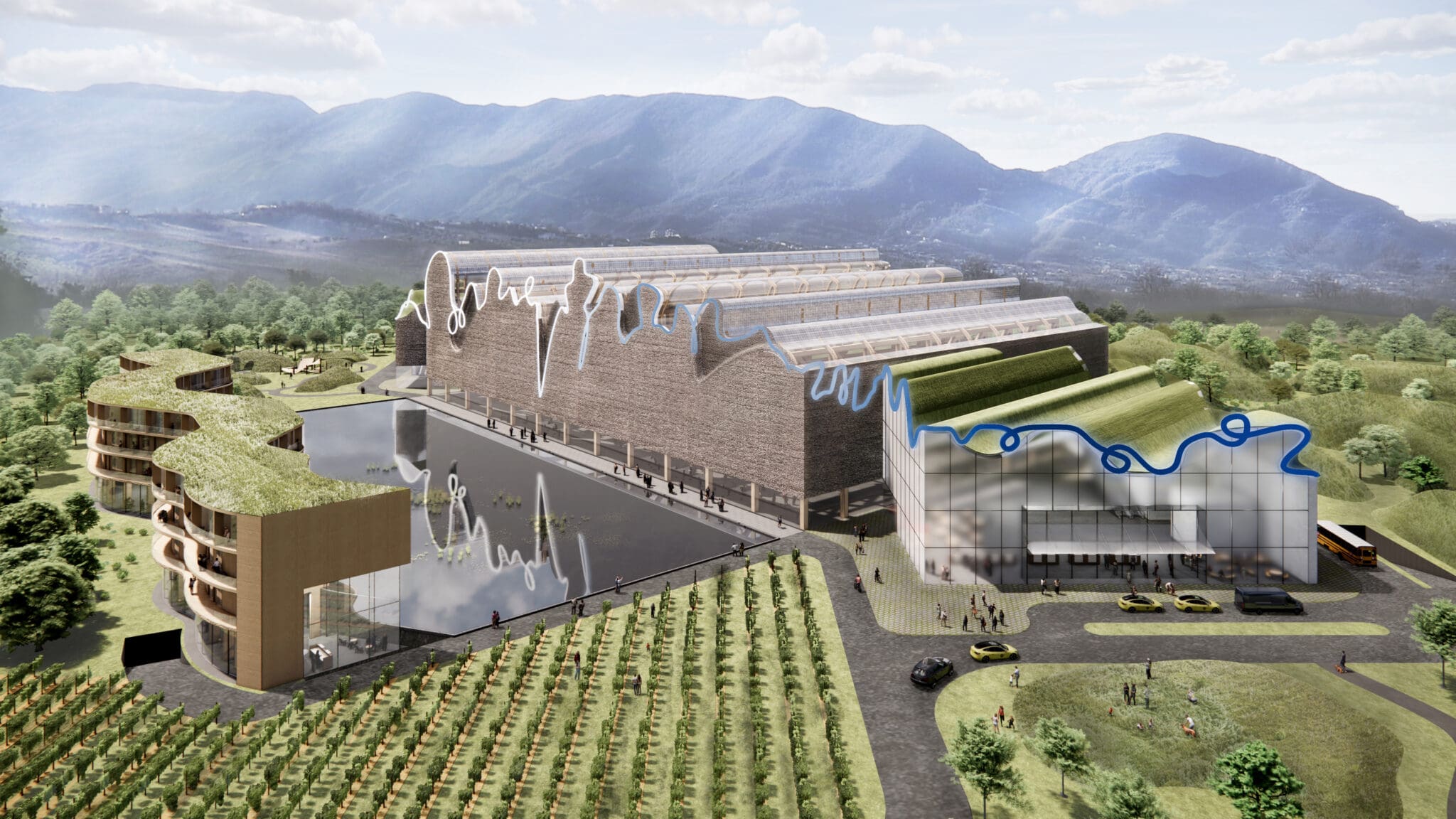
Steven Holl’s Expo Albania expands the architectural language beyond towers, reimagining what a convention and exhibition center can be. Instead of one neutral hall, the proposal is conceived as a sculptural pair of signature buildings organized through landscape, light, and connectivity, positioning Expo infrastructure as a cultural and architectural destination rather than a utilitarian box.
Meanwhile, Oppenheim Architecture continues to play a major role in Albania’s transformation through projects like the New Boulevard Tower and Vlora Beach Tower, reflecting an approach that emphasizes “silent monumentality”, architecture that seeks presence through clarity, material honesty, and site response rather than pure spectacle.
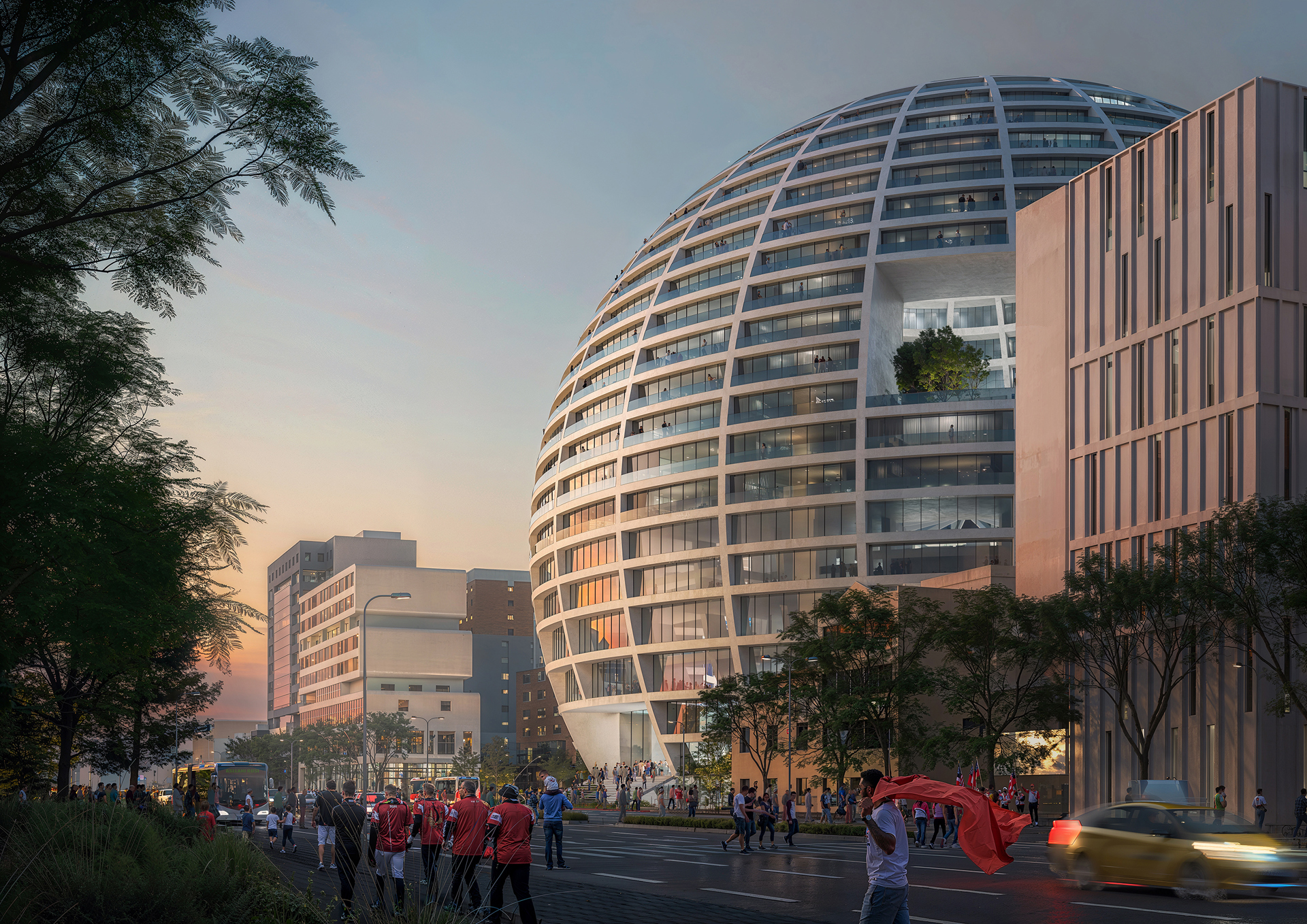
Beyond what is already being built, Albania’s pipeline includes visionary proposals that further blur boundaries between civic, residential, and entertainment architecture. MVRDV’s speculative Grand Ballroom imagines a spherical sports arena wrapped by housing, merging typologies in one orbital gesture and reinforcing Tirana’s appetite for experimental urban icons.
Together, these buildings show that Albania is not only building faster, it is building differently. The projects emerging in Tirana and beyond combine adaptive reuse, symbolic form-making, vertical community ideas, and civic reprogramming at a pace rarely seen in Europe today. Albania’s skyline is becoming both a construction reality and a cultural narrative: a country using architecture to express transformation, confidence, and a new place in contemporary European urban identity.
Source: Glass Balkan