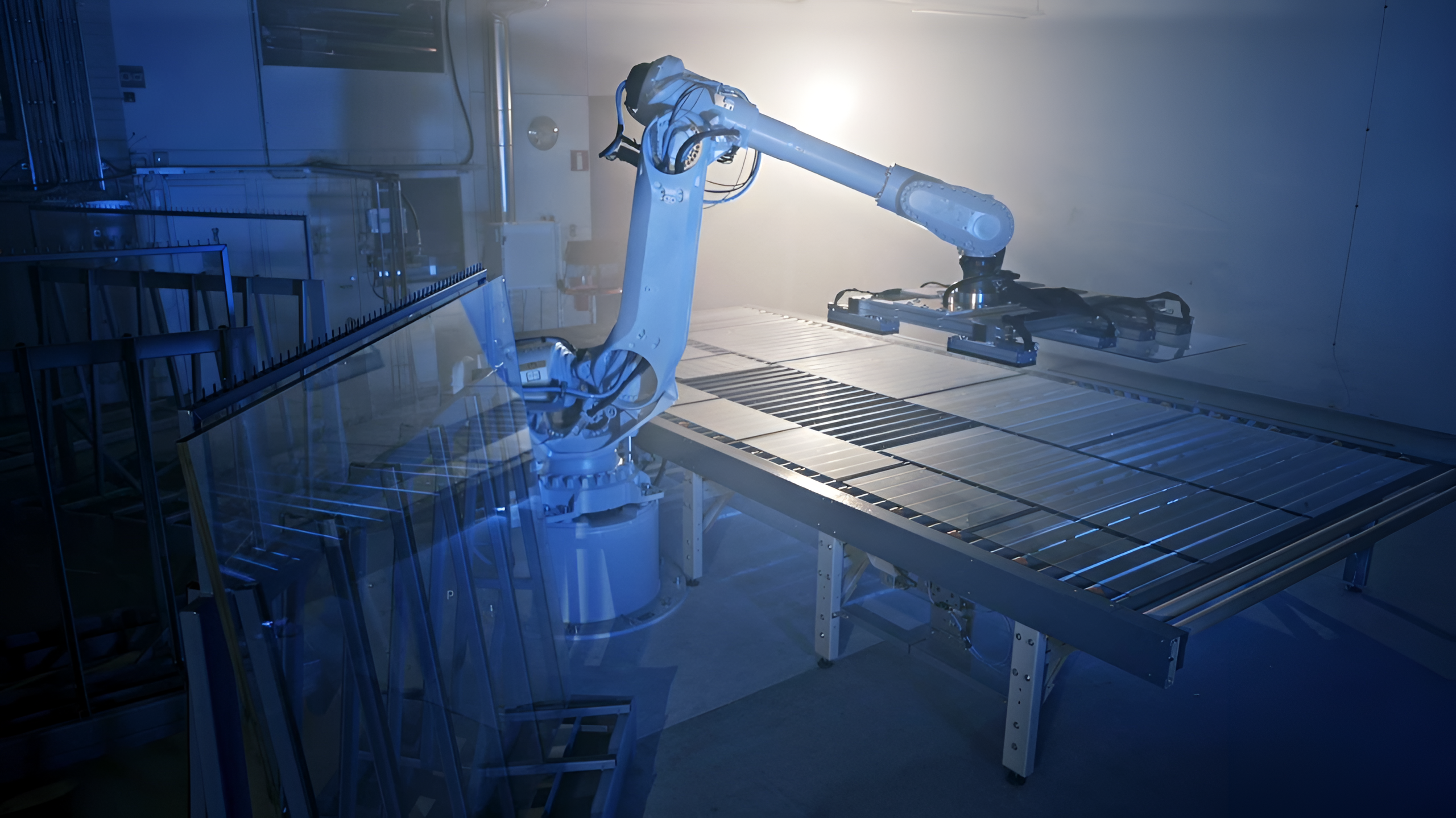
Flat glass processors are increasingly adopting automated loading solutions to improve furnace efficiency, reduce energy consumption and overcome skilled labor shortages. The key development is the combination of robotic loading systems with AI-powered batch building algorithms, which automatically determine the most efficient arrangement of glass sheets on the tempering furnace bed.
In many plants, furnace bed utilization remains at approximately 37%, leaving significant unused capacity during each tempering cycle. Poor loading patterns, empty spaces and furnace waiting times directly increase production costs. According to industry calculations, improving bed utilization from 25% to 45% can reduce annual electricity costs by €40,000–€80,000 per furnace, while also increasing available production output.
AI algorithms optimize loading by analyzing multiple parameters, including glass dimensions, thickness, production orders, furnace size, heating characteristics and historical process data. The system automatically creates optimized batches with fewer empty positions, allowing more glass units to be tempered in each cycle.
When combined with robotic handling, automated loading can achieve up to 90% automation of the tempering process, improving repeatability and reducing dependence on manual labor. However, a hybrid production model remains important, allowing operators to manage special shapes, oversized panels and complex customer requirements. 
Source: Glaston with additional information added by Glass Balkan