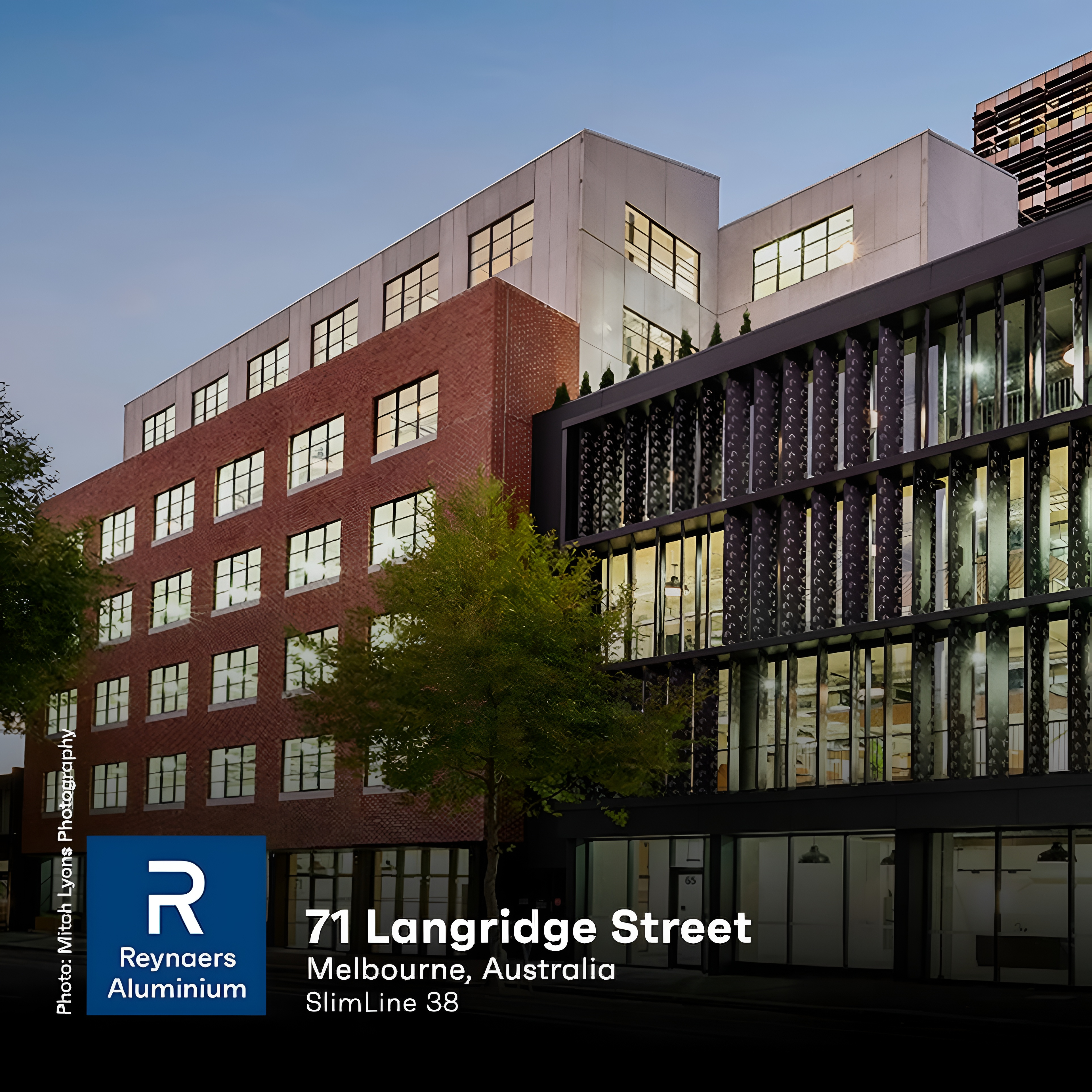
The redevelopment of 71 Langridge Street in Collingwood, Melbourne, designed by Preston Lane, is a detailed exercise in industrial adaptive reuse combined with high-performance commercial architecture. Located less than three kilometres from Melbourne’s CBD, the 7-level, 5,300-square-metre project transforms a former warehouse into a mixed-use creative precinct incorporating flexible office floors, a private art gallery, end-of-trip facilities, 58 car spaces, 80 bicycle/scooter spaces, and a landscaped rooftop terrace designed for communal use.
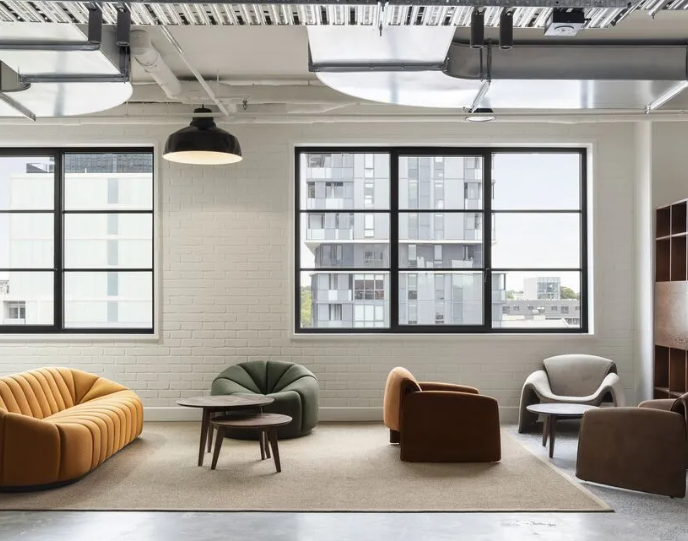
The architectural strategy deliberately preserves the building’s industrial DNA. Existing red-brick façades, exposed concrete structure, and visible mechanical services are retained and refined rather than concealed. This approach reinforces the raw aesthetic of Collingwood’s warehouse heritage while upgrading the building to contemporary workplace standards. The internal planning introduces open-span office floors, allowing flexible tenancy layouts and maximizing natural light penetration through deep floor plates.
A key feature of the redevelopment is the dual façade composition. The original warehouse volume maintains its heritage character, while a secondary inserted structure introduces a contrasting black architectural language with large glazed surfaces and patterned sun-shading elements. This layered approach creates visual tension between old and new while maintaining functional integration through shared circulation cores and a rooftop connection.
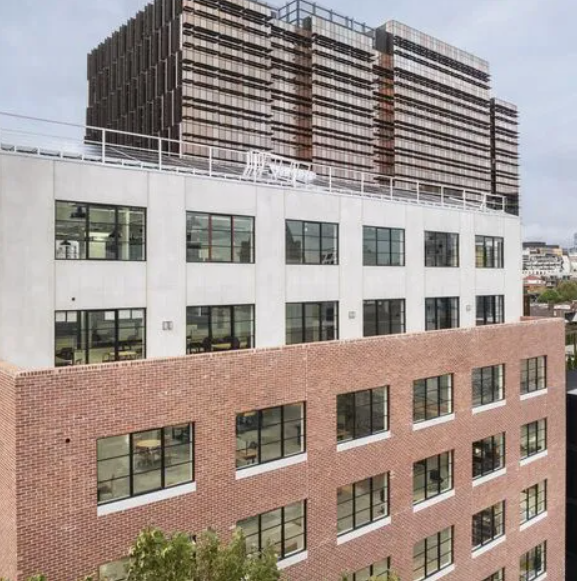
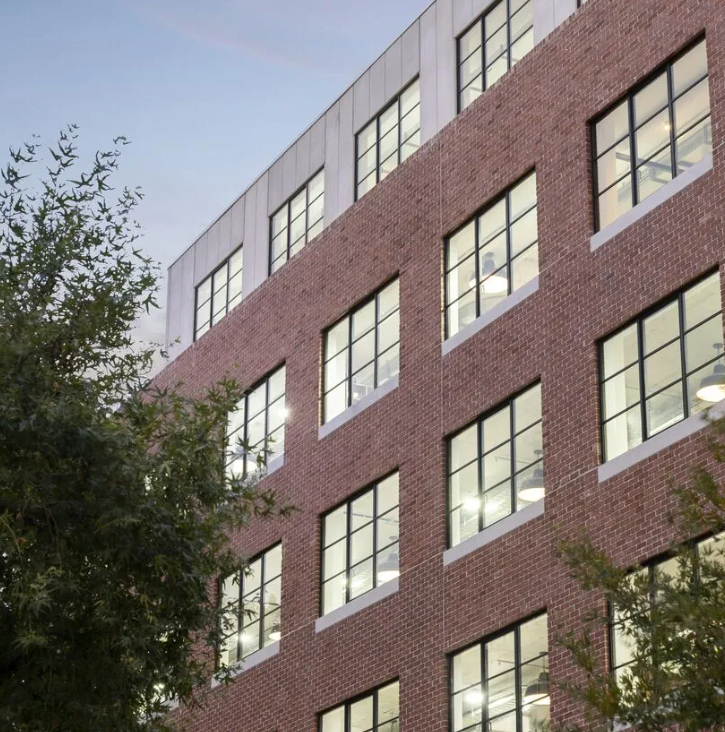
A central technical component is the integration of SlimLine 38 windows by Reynaers Aluminium. Chosen for their ultra-slim sightlines and steel-look aesthetic, the system enables large-format glazing while meeting modern thermal insulation and acoustic performance requirements. This was critical in achieving the design intent of maintaining an industrial steel-window expression while delivering energy-efficient envelope performance suitable for commercial office use. 
The project was developed in collaboration with Domain Hill, with Preston Lane leading the architectural vision. Together, they positioned the building as a future-ready workspace that respects the site’s 19th-century industrial origins while accommodating contemporary creative industries.
Source: Reynaers with additional information added by Glass Balkan