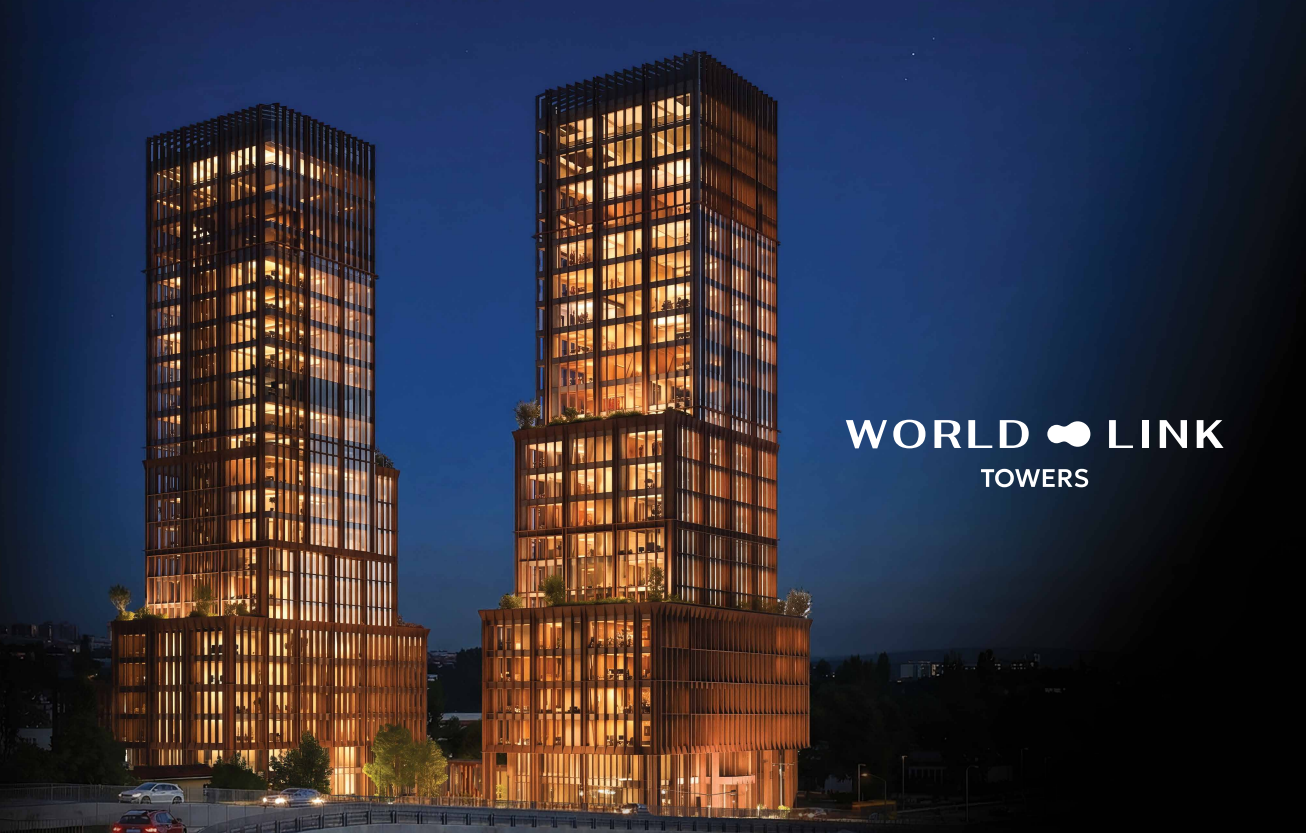
World Link Towers is positioned as a flagship commercial development in Prishtina, designed to operate as an institutional-grade business platform rather than a conventional office real estate product. Developed by BP HOME Investment, it reflects a strategic response to the increasing demand for internationally benchmarked office infrastructure in Kosovo, particularly from companies seeking regional headquarters functions, diaspora-backed enterprises, and export-oriented service firms.
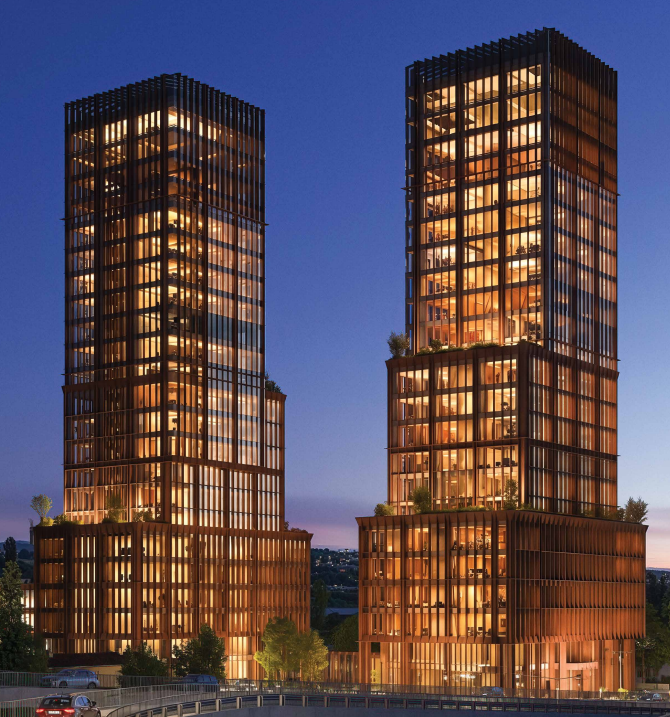
The project is structured around a dual-tower system, Alpha Tower and Omega Tower, supported by an annex building, forming a unified commercial campus with a total built area of 31,608.9 m². The spatial distribution is deliberately balanced between the two towers, with Alpha Tower at 15,219.4 m² and Omega Tower at 15,320.6 m², indicating a symmetrical master-planning approach that reinforces the concept of dual but integrated business identities within a single development ecosystem.
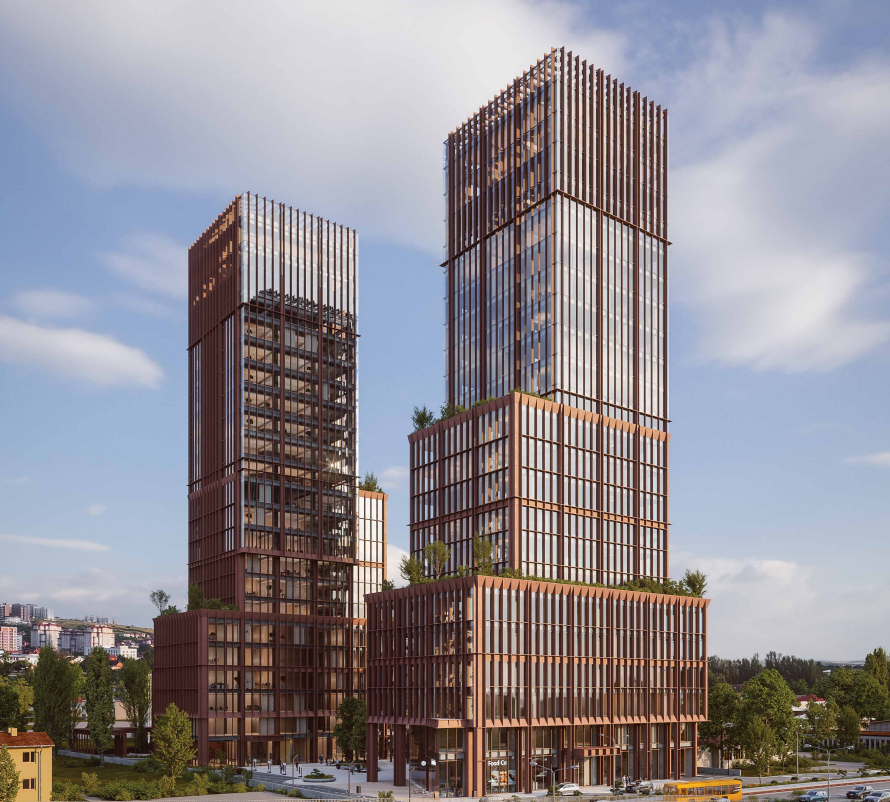
From an architectural standpoint, the towers are designed with a strong emphasis on vertical efficiency and spatial flexibility. The 20-level configuration supports a tiered organization of workspace functions, allowing lower floors to accommodate high-traffic business operations while upper levels are optimized for executive, institutional, or client-facing functions. The nine high-speed elevator cores are not merely a convenience feature but a core component of the building’s circulation strategy, engineered to maintain operational continuity under peak occupancy conditions.
A key differentiator of the development is its explicit alignment with global-grade workplace standards. Floorplates are designed to support both partitioned and open-plan configurations, enabling tenants to transition between traditional corporate structures and agile, hybrid organizational models without structural limitations. This adaptability is critical for international firms that require scalability without relocation risk. 
The parking system, with over 700 dedicated spaces across multiple levels, is integrated as part of the building’s operational logic rather than an external utility. In dense urban commercial environments such as central Prishtina, parking capacity directly influences tenant acquisition potential. The inclusion of EV charging infrastructure further signals alignment with European mobility transition frameworks and corporate sustainability requirements.
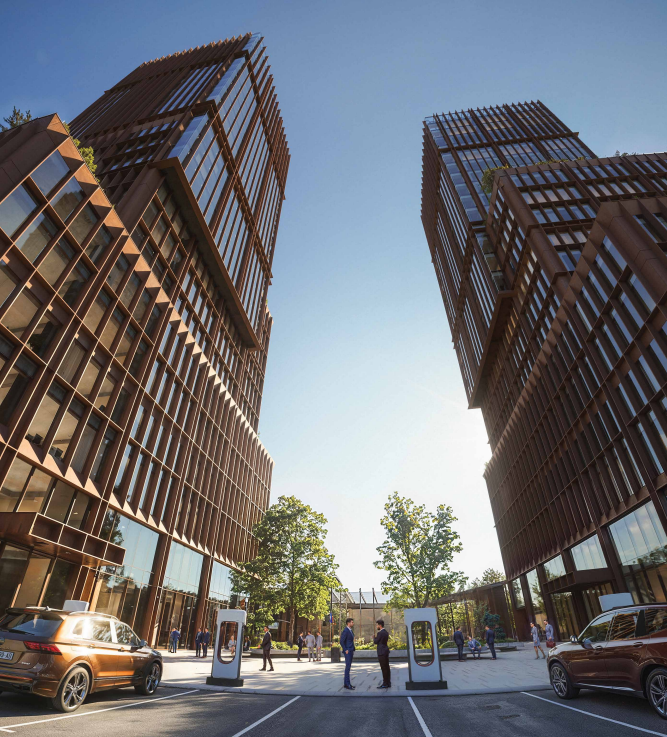
Location remains one of the project’s strongest strategic assets. Situated along Prishtina’s primary airport corridor, the development occupies a high-visibility commercial axis connecting the city center, institutional zones, and regional transport infrastructure. The proximity to the central bus terminal and direct connectivity to Prishtina International Airport establishes a multi-modal accessibility framework that is uncommon in comparable regional developments. This positioning enables the project to function as a logistical node for both physical mobility and corporate interaction flows.
The amenity program is structured as a fully integrated business-support ecosystem. Rather than treating amenities as supplementary, the development embeds them as functional extensions of workplace performance. Concierge and reception services operate as an institutional front-of-house layer, reinforcing corporate image and visitor management. Dedicated event spaces provide internal conferencing and external engagement capabilities, reducing reliance on external venues for corporate functions.
Wellness infrastructure, including fitness and relaxation zones, is incorporated to address productivity sustainability over long working cycles. Rooftop cafés and sky lounges introduce hospitality-level spatial experiences into the office environment, supporting informal networking, client engagement, and cross-company interaction. Landscaped terraces further extend usable workspace beyond enclosed interiors, reflecting contemporary trends in biophilic and hybrid office design.
Operational services such as on-site childcare, dry cleaning, and curated retail environments create a semi-autonomous working district model. This reduces time loss associated with external errands and supports workforce retention by addressing practical lifestyle constraints within the same physical environment. Bicycle infrastructure and EV charging stations further diversify mobility options and align with evolving urban sustainability frameworks.
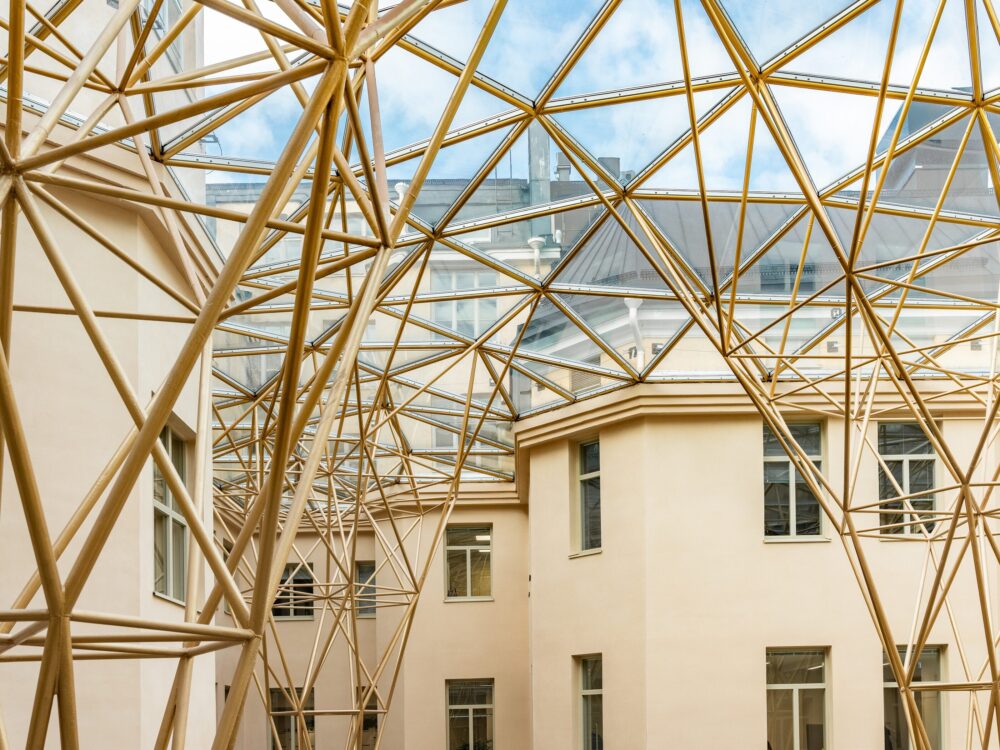
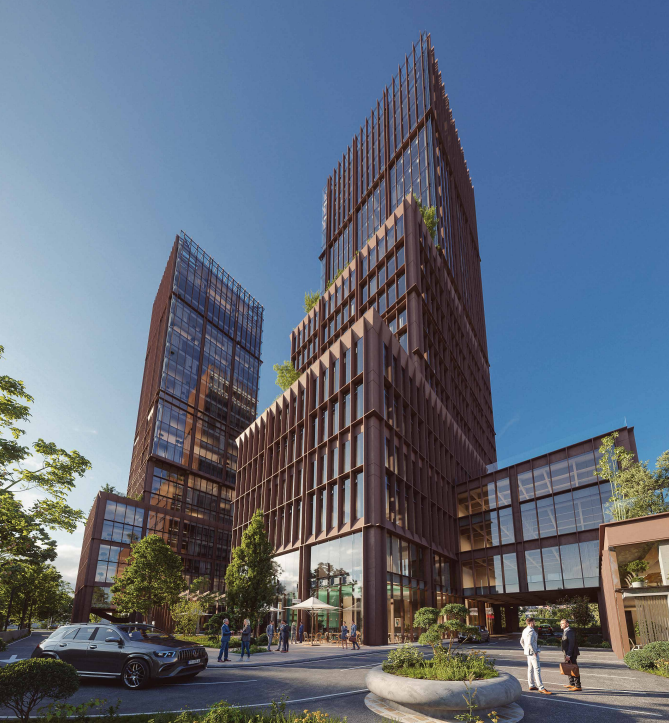
Architecturally, the façades are defined by high-performance glass systems that prioritize daylight optimization, thermal efficiency, and visual transparency. The vertical articulation of the towers establishes a strong skyline presence intended to signal institutional credibility and modern economic identity. The integration of terraces at multiple levels introduces both environmental performance benefits and spatial differentiation across floors, preventing monotony in large-scale office environments.
At a macro level, World Link Towers represents a structural attempt to reposition Prishtina within the regional hierarchy of business destinations. Rather than competing solely on cost advantage, the development emphasizes infrastructure quality, connectivity, and ecosystem integration as primary value drivers. This aligns with global trends in secondary business hubs such as those emerging in Southeast Europe, where cities compete by offering hybrid advantages: lower operational costs combined with increasingly sophisticated commercial infrastructure.
Source: World Link Towers with additional information added by Glass Balkan