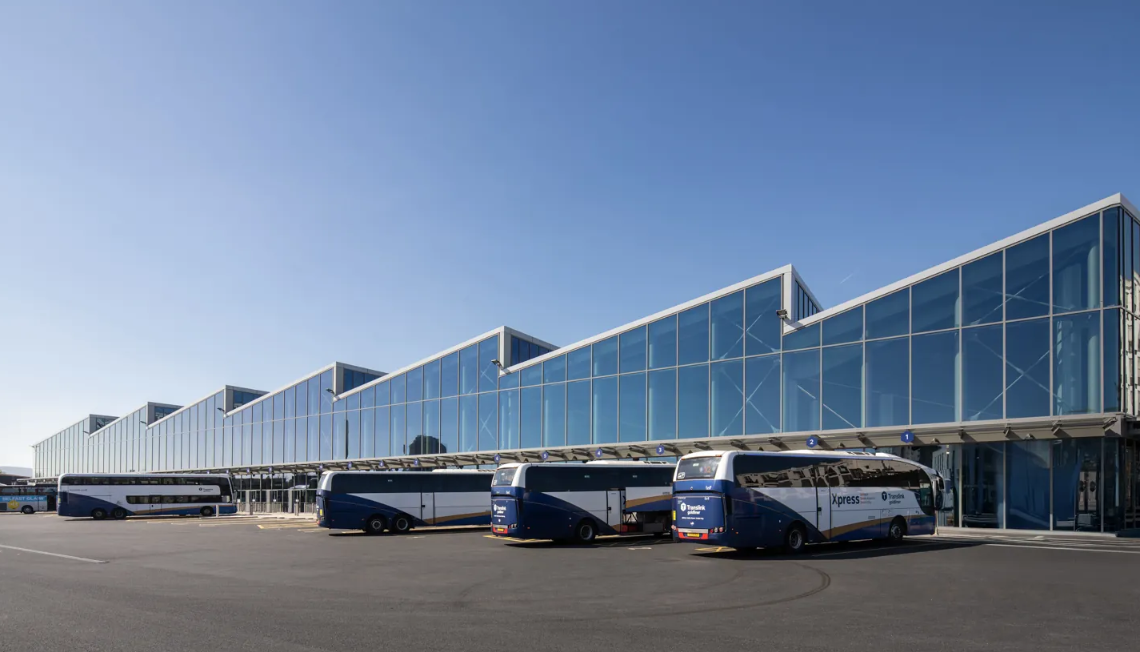
The delivery of the new façade package at Belfast Grand Central Station represents a significant example of how contemporary transport architecture is increasingly dependent on integrated fire-rated glazing technologies capable of combining transparency, compartmentation and envelope performance within a single system.
Developed as part of Belfast’s £340 million urban mobility transformation, the station was designed to manage approximately 20 million passenger movements annually while creating a highly open and visually connected public environment. For architects RPP, the extensive glazed façades were central to the project’s architectural language, demanding exceptionally large transparent surfaces without compromising fire strategy requirements or façade performance.
To achieve this balance, Pyroguard worked alongside façade contractor Williaam Cox and processor Carey Glass to engineer a fully tested and certified fire-resistant curtain wall assembly using the Schüco FW 50+ FR 60 system combined with Pyroguard Protect T-EI60/25-3 glazing.
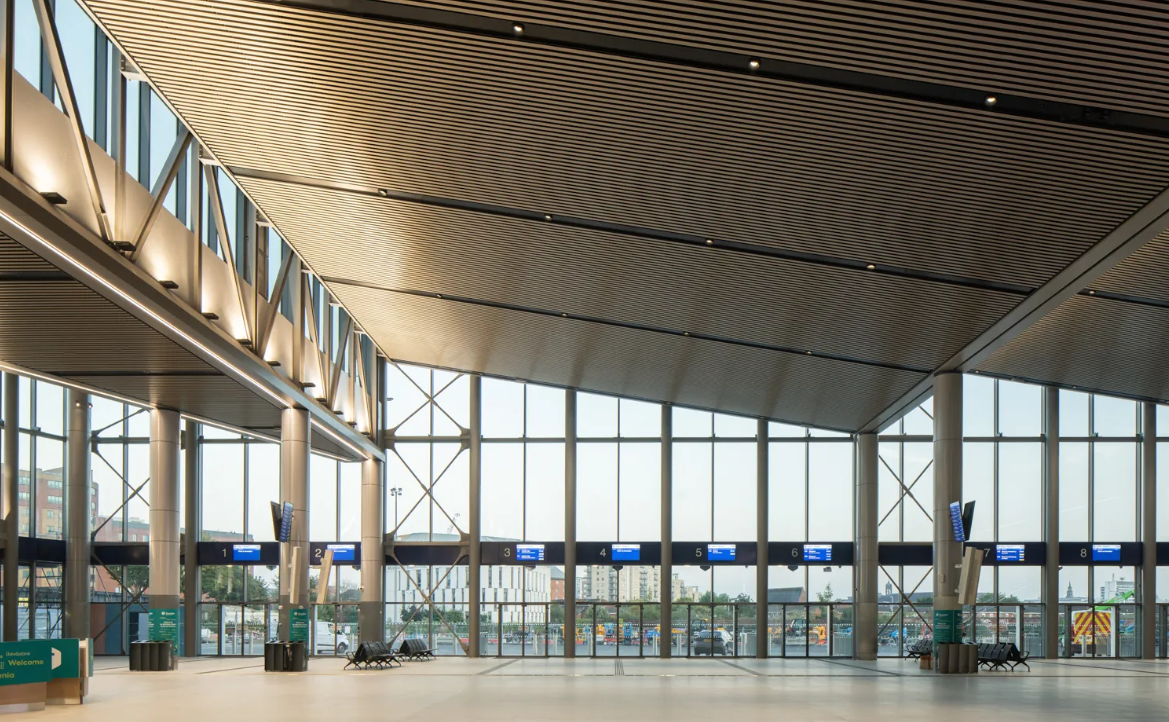
More than 400 m² of fire-rated glass was incorporated across the station envelope, with the specification selected specifically for its ability to deliver EI60 integrity and insulation performance while accommodating oversized pane dimensions and narrow framing sightlines. This combination was critical in maintaining visual continuity throughout the concourse and preserving the lightweight appearance demanded by the architectural concept. 
From a façade engineering perspective, the project required precise coordination between glass weight, framing tolerances, fire-resistant interlayers and structural loading criteria. The integration of large-format fire-rated units within curtain walling systems introduced additional complexity relating to thermal stress management, dead-load transfer and movement accommodation across expansive glazed elevations.
The glazing configuration also addressed the operational demands of a high-traffic transport environment by combining fire protection with enhanced impact resistance, P1A attack classification, acoustic insulation and thermal efficiency. High visible light transmission, reaching up to 80%, further supported daylight optimisation strategies intended to reduce reliance on artificial lighting within the main circulation areas.
According to project partners, one of the key technical achievements was maintaining consistent façade sightlines across both standard and fire-rated zones, avoiding visual disruption between protected and non-protected areas of the building envelope. This level of façade continuity is increasingly important in major transport infrastructure projects where architects seek seamless transparency alongside compliance with evolving fire safety regulations.
The completed scheme later received recognition at the 2025 Schüco Excellence Awards, where the façade package was commended for its advanced system integration, structural coherence and technically refined execution across one of the UK and Ireland’s most complex transport glazing projects.
Source: Pyroguard with additional information added by Glass Balkan