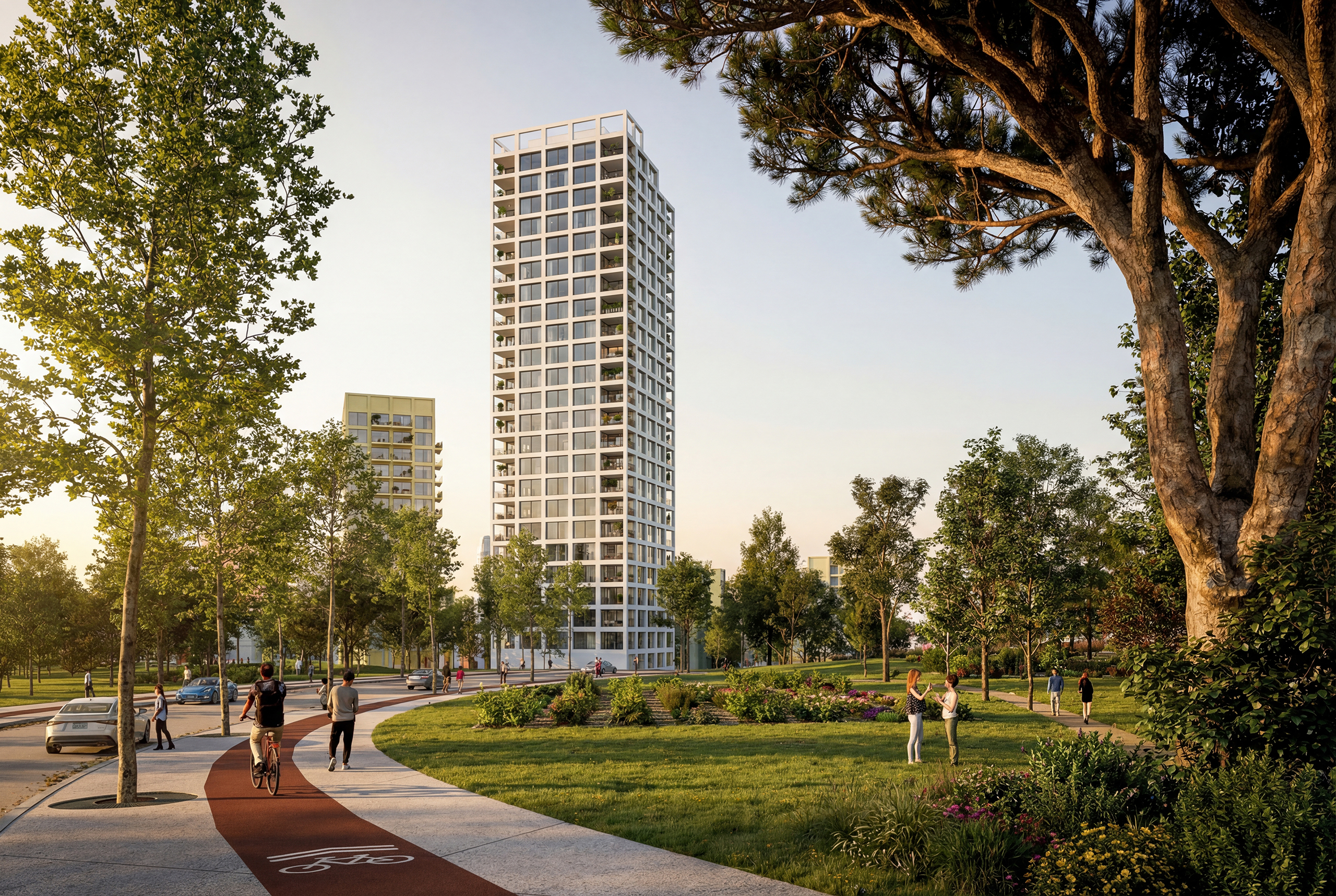
MVRDV and OODA, working with LOLA Landscape Architects and engineering consultancy Thornton Tomasetti, have presented a detailed landscape-led regeneration strategy for a 28-hectare riverfront site in eastern Lisbon, located between Marvila and Beato along the Tagus River. The project, recently approved by the Lisbon City Council, transforms a fragmented industrial landscape into a structured mixed-use district titled The Marvila Masterplan.
At the core of the proposal is a spatial framework organized into four distinct development clusters aligned with surrounding urban areas: Açúcar, POLU, Beato, and Madre Deus. Each cluster is designed with its own density gradient, building typology mix, and public space hierarchy, while remaining connected through a continuous green-blue infrastructure system. The masterplan introduces around 1,400 residential units, including a defined share of affordable and social housing integrated within mixed residential blocks rather than isolated zones, supporting social integration across the district.
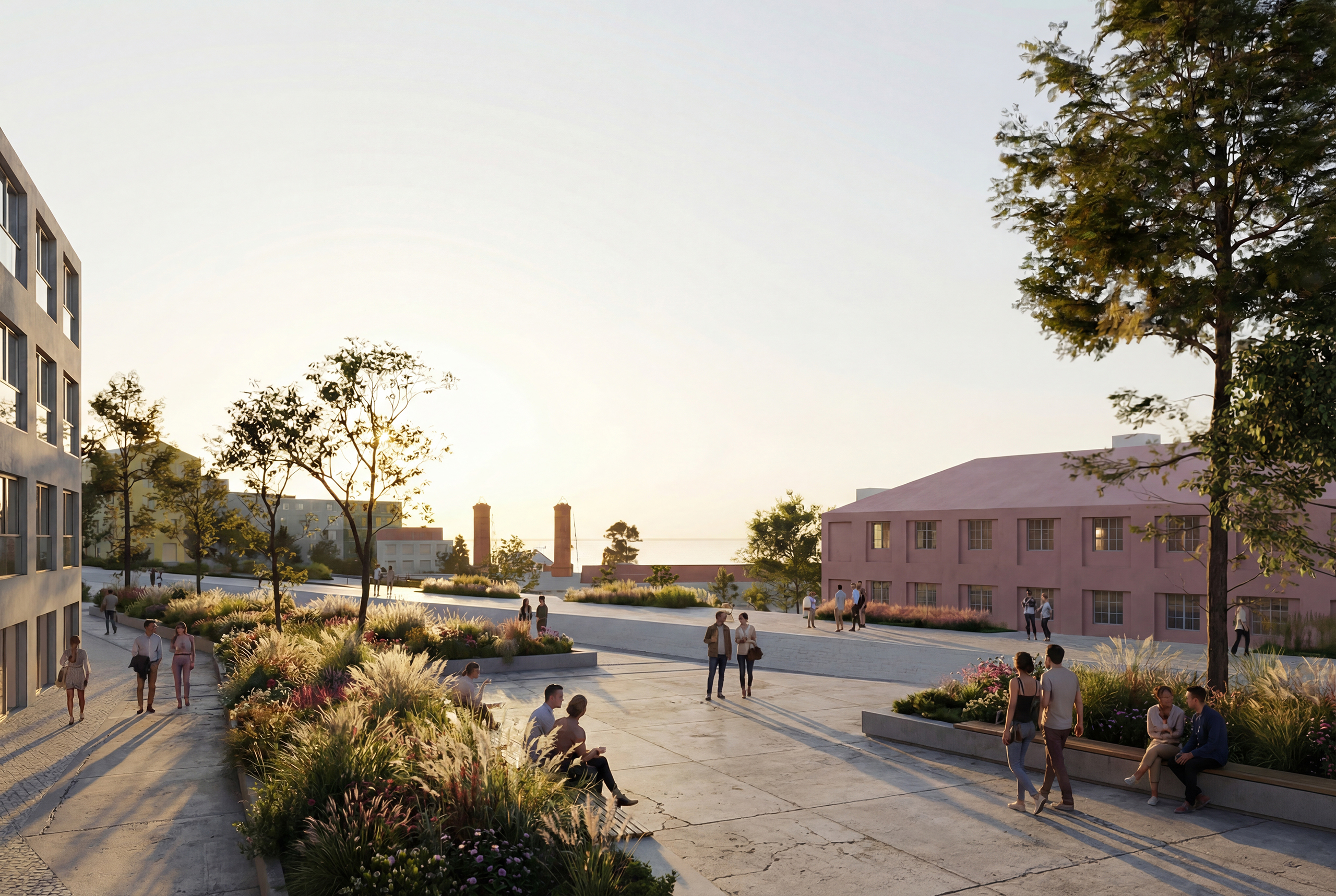
Building massing varies significantly across the site, with lower-rise edges transitioning toward higher-density cores closer to mobility corridors and transit nodes. Courtyard blocks, open perimeter blocks, and hybrid typologies are used to ensure porosity and daylight access while maintaining urban density targets. Ground floors are largely reserved for active uses such as retail, services, and community facilities, reinforcing a continuous pedestrian experience.
A defining component is the central linear park that connects all four clusters. This landscape spine functions as both ecological infrastructure and public realm, integrating stormwater management systems, infiltration landscapes, and drought-adapted planting strategies. These systems are designed to reduce surface runoff into the Tagus and improve site-wide climate resilience. The plan also preserves key ecological and heritage elements, including the historic Convento do Beato and a landmark mature tree that becomes the centerpiece of a civic square. 
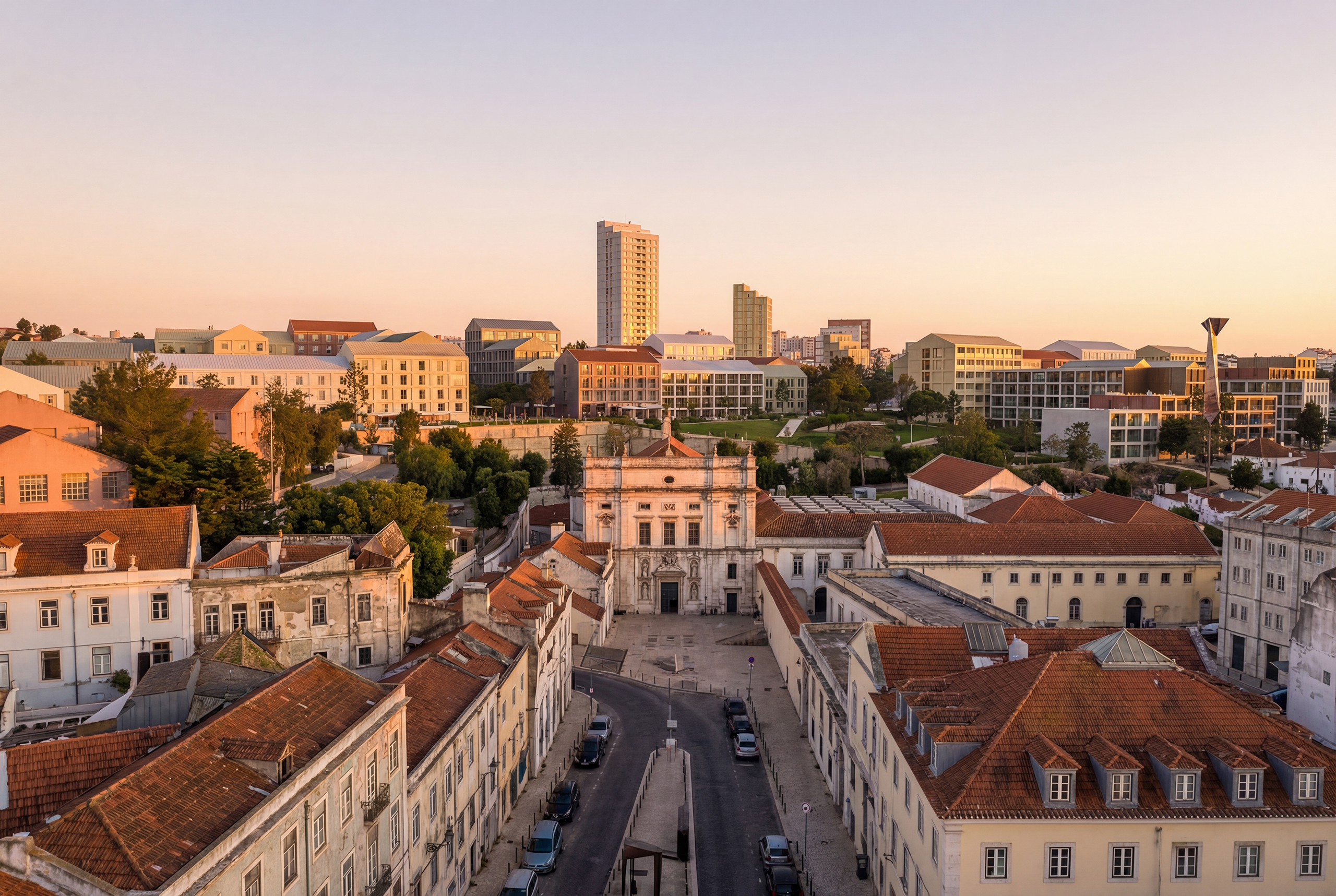
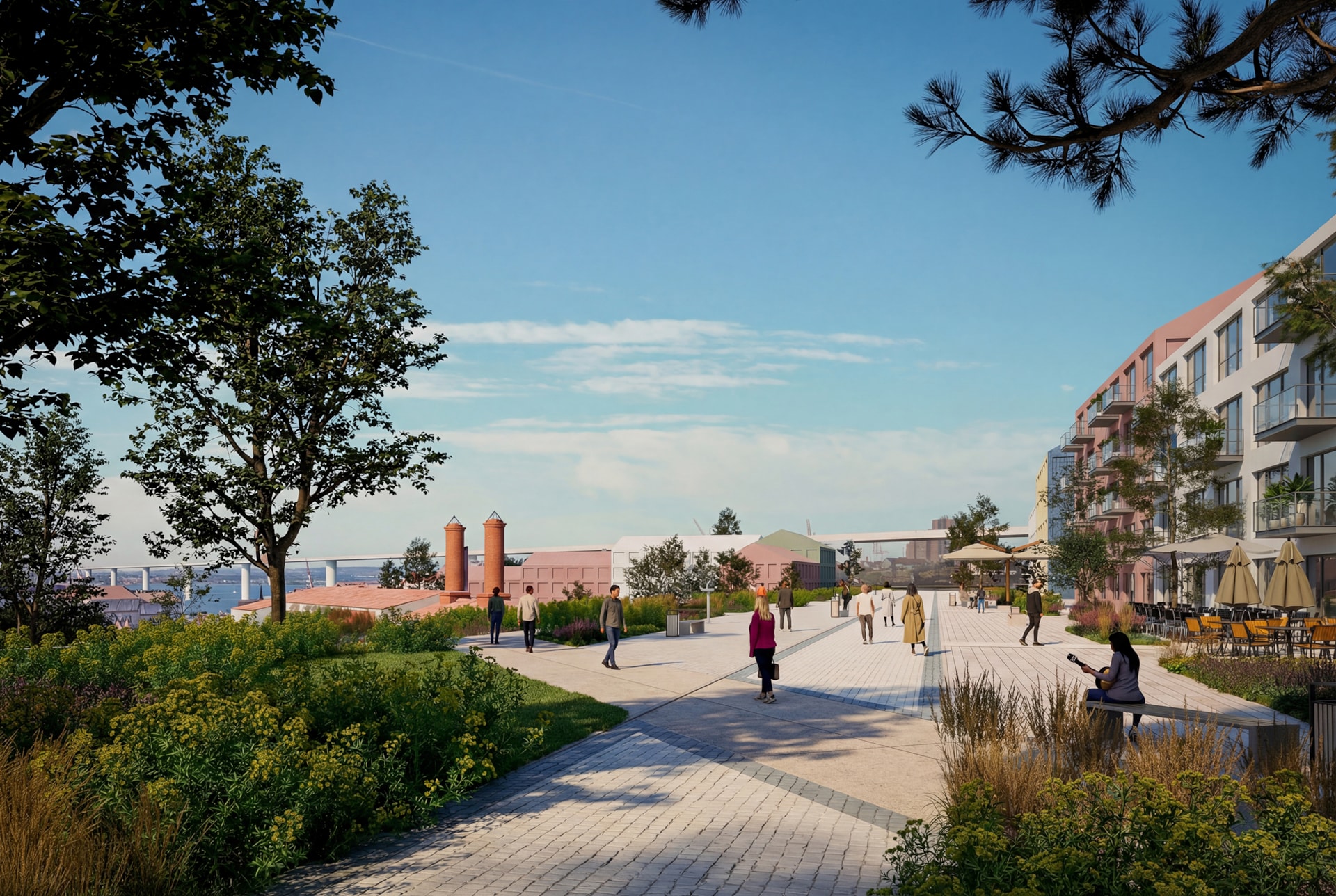
Mobility and connectivity interventions are central to overcoming the site’s current fragmentation caused by railway infrastructure. The plan introduces a raised deck structure over sections of the Northern Line railway, reconnecting pedestrian flows between Chelas station and the riverfront. In addition, a new multimodal transport building at Marvila station consolidates transit access, while redesigned street grids prioritize walking and cycling over private vehicle use.
The future Third Tagus Crossing (TTT) bridge alignment is incorporated into the masterplan through strategic green buffers and partial coverage of infrastructure corridors to mitigate noise and visual impact. Phased development is a key delivery strategy: each stage introduces usable public space and landscape early, ensuring activation even during long construction timelines.
Source: MVRDV with additional information added by Glass Balkan