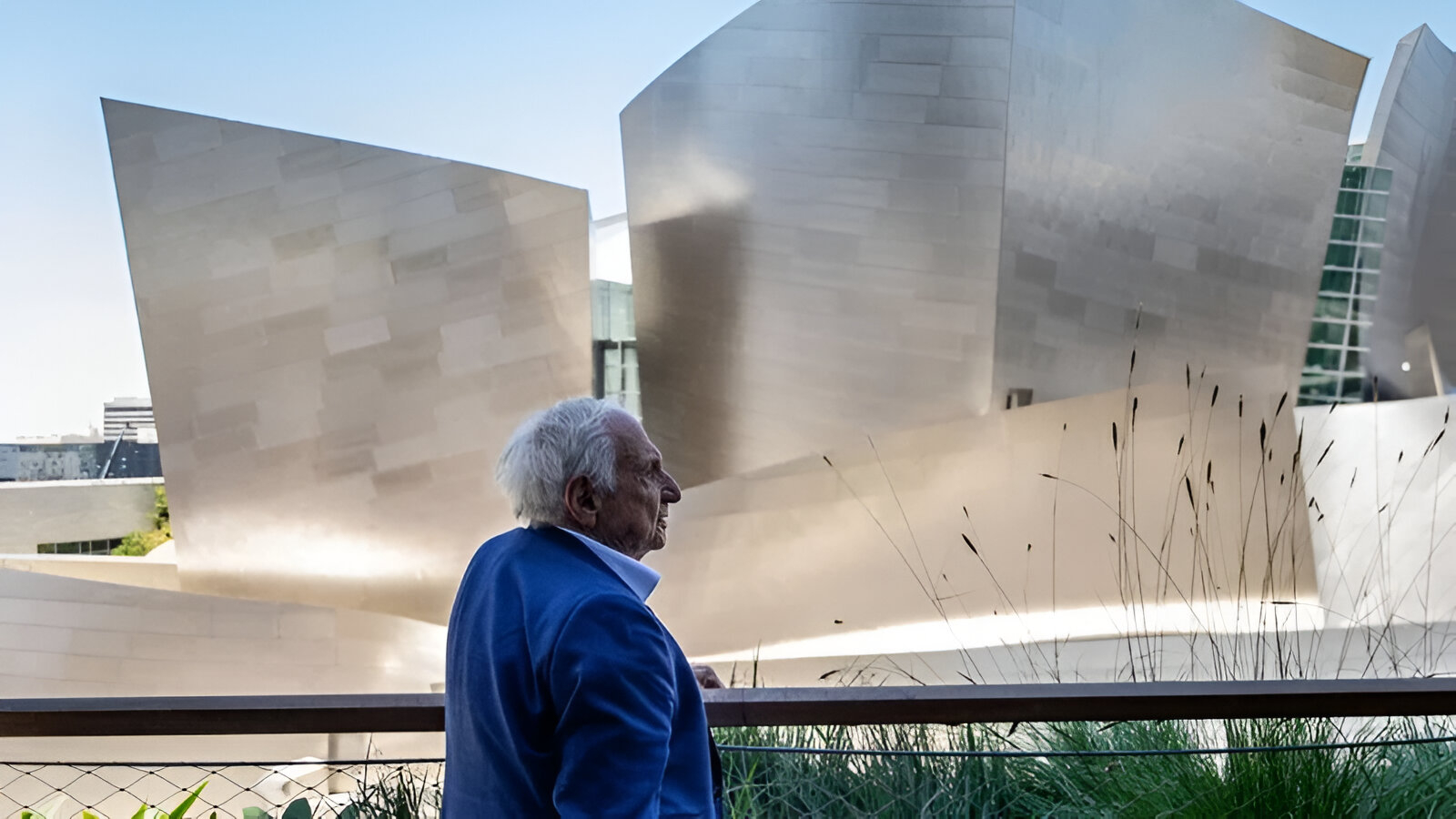
Frank Gehry’s passing on December 5 marks the close of a career that fundamentally redefined how glass, curvature and structural movement are understood in architecture. His buildings were not sculptural simply for visual theatre; they were feats of engineering born from material science, digital modeling and fabrication systems that forced façade industries to advance decades ahead of schedule.
Dancing House: Precision in Deconstructivism
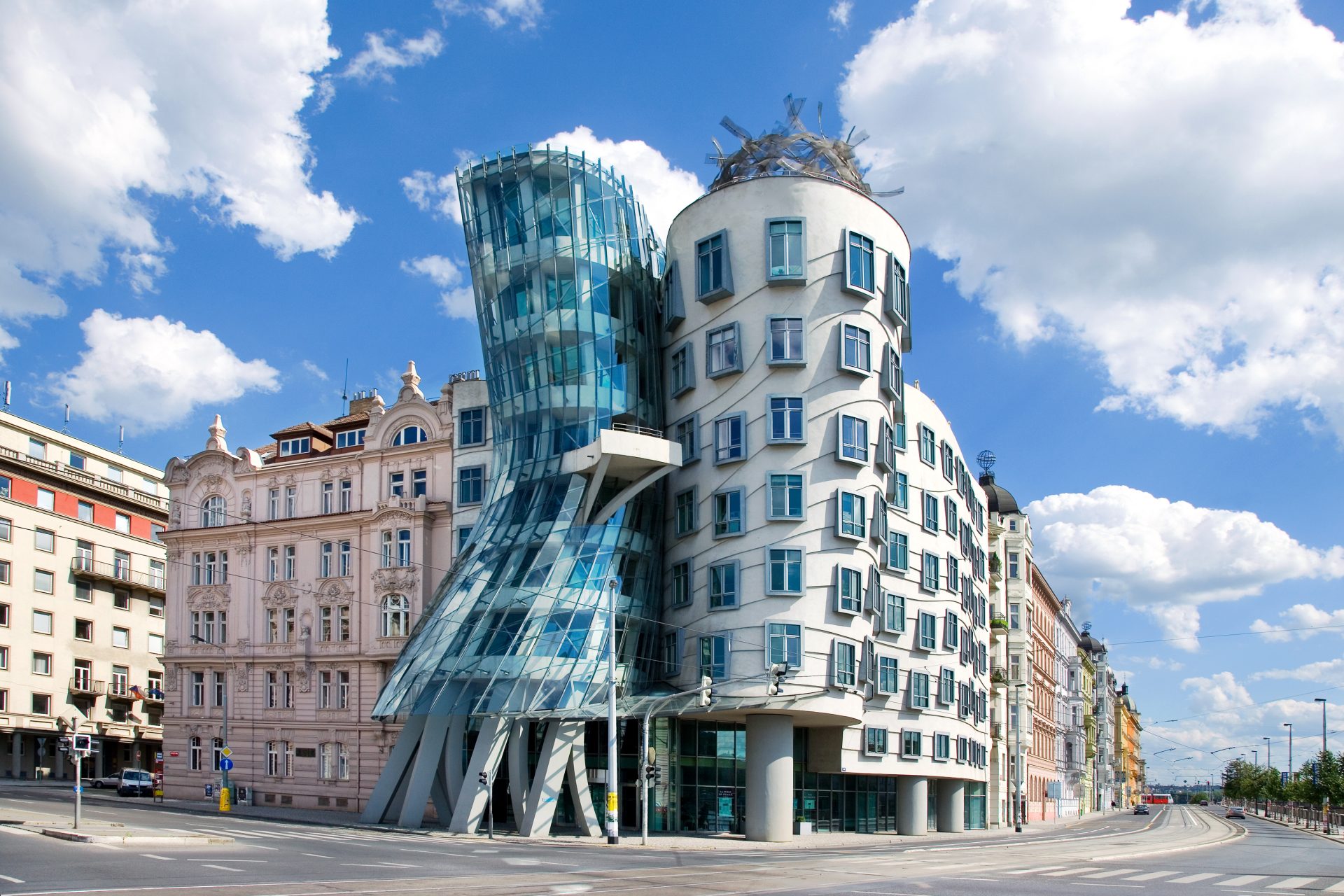
The Dancing House in Prague (1996), co-created with Vlado Milunić, is often referenced through its “Fred and Ginger” metaphor, yet its innovation lies in structural discipline. The leaning glass tower, “Ginger,” required non-standard steel framing to support controlled asymmetry. Its curvature was not improvisation but calculated through early aerospace-grade CATIA modeling. The adjacent concrete tower, “Fred,” uses window protrusions placed to intentionally disrupt façade rhythm and mass comprehension. Rather than treating glass as static curtainwall, Gehry deployed transparency as kinetic statement, motion expressed through engineered geometry.
Fondation Louis Vuitton: Industrial Curvature
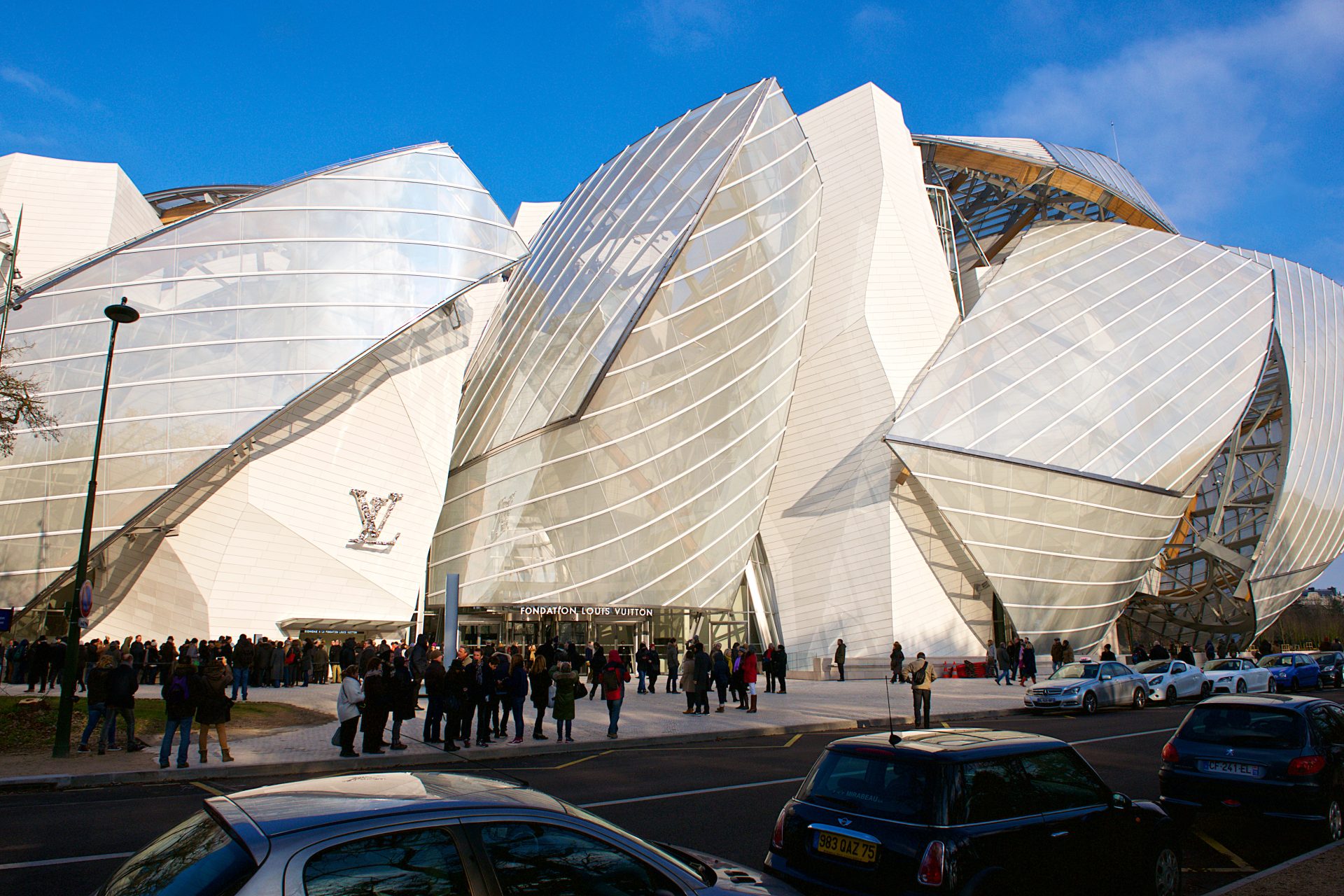
Photo: Oliverouge 3 / Shutterstock.
The Fondation Louis Vuitton in Paris (2014) remains one of the most ambitious curved-glass achievements ever built, comprising 13,500 m² of laminated glazing and approximately 3,500 completely unique panels forming 19 “sails” around a reinforced concrete core. Fabrication by Sunglass Industry (now sedak) required a customized furnace capable of bending and tempering simultaneously, eliminating the need for thousands of individual molds.
Robotics guided panel shaping from a shared 3D CATIA/BIM model, minimizing optical distortion. Kuraray’s SentryGlas interlayer was selected not only for clarity but for edge stability in double-curved lamination, minimal creep under heat exposure, and UV resilience. This project was not simply façade design, it was industrial material science at building scale. 
Guggenheim Bilbao: Economy and Perception
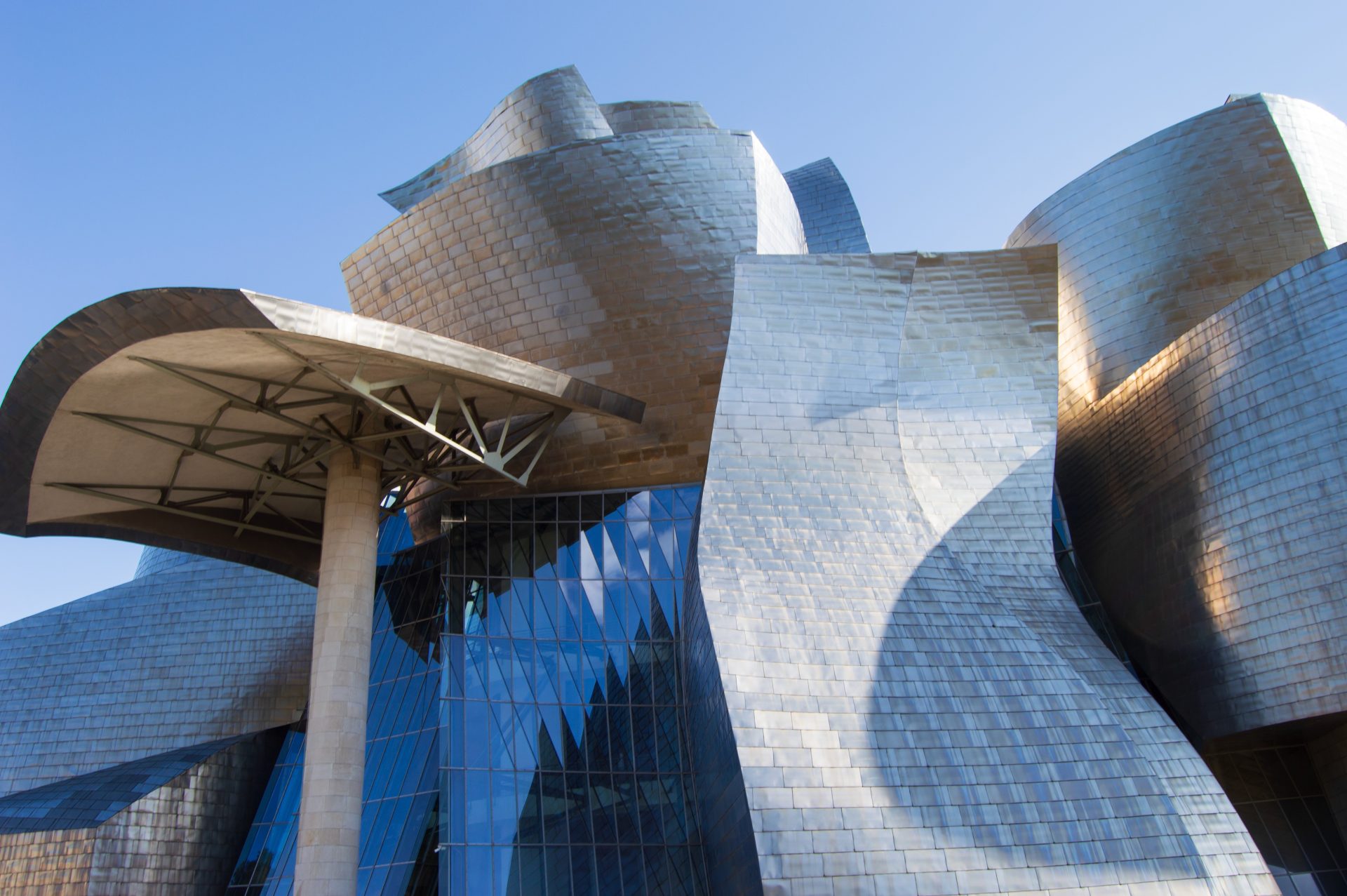
Photo: Lieven Detilloux / Shutterstock.
The Guggenheim Museum Bilbao (1997) expanded Gehry’s impact from architecture into urban economics, lifting annual tourism from roughly 100,000 visitors to over 1.3 million and coining the global term “Bilbao Effect.” CATIA enabled non-repetitive titanium cladding, chosen over stainless steel for maritime oxidation resistance, compound-curvature flexibility and reflective mobility with river light. Inside, the atrium’s curtainwall reads as curved despite using only angled flat panes, a deliberate perceptual strategy that later defined Gehry’s visual language.
Beyond form, Gehry pioneered parametric logic through Gehry Technologies, integrating clash detection, real-time fabrication mapping and CNC façade extraction. His legacy is both emotional and structural: glass as movement, titanium as fluid skin, architecture as engineered sensation.
Source: USGlassMag with additional information added by Glass Balkan