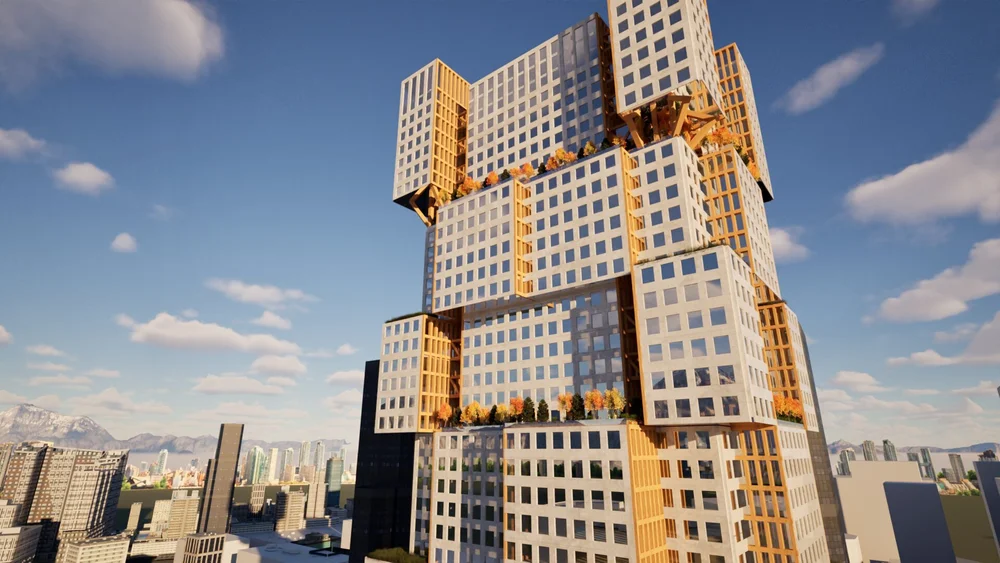
In a moment when many American downtowns remain half-occupied and rents continue to rise, StudioLowe Design proposes a realistic path forward for both challenges. Their Well-Ness Affordable Housing concept, developed for Denver’s Republic Tower, rethinks the familiar office-to-housing conversion model with an emphasis on daylight, livability, and full spatial efficiency.
Denver currently faces a striking imbalance: an office vacancy rate nearing 40 percent alongside a housing shortage estimated at 30,000 units. While adaptive reuse has become a common policy suggestion, most commercial towers are not designed for residential needs. Deep floorplates restrict daylight, ventilation, and views, issues that typically make conversions expensive, spatially compromised, or visually monotonous.
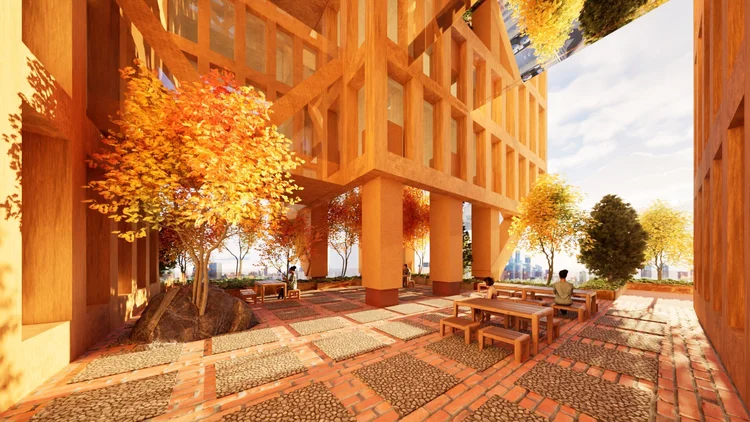
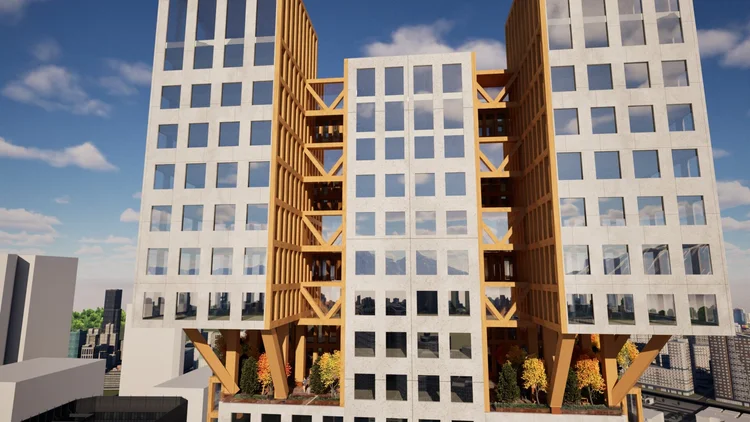
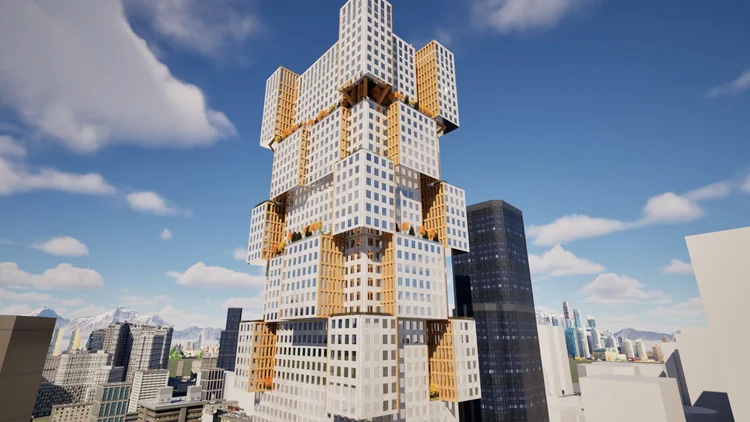
The Well-Ness strategy introduces a carefully engineered alternative. Instead of carving a central light well through the building, StudioLowe proposes lateral openings along select façades, combined with mirrored heliostatic elements that guide natural light deeper into interior zones. This approach preserves nearly all rentable floor area while avoiding the disruptive removal of structural cores. According to the design team, converting the upper thirty floors alone could create approximately 780 new units, supported by outdoor communal terraces carved from the new light atria.
Beyond numbers, the proposal challenges long-standing assumptions about affordable housing aesthetics. Rather than uniform blocks or over-styled façades, Republic Tower would gain subtle variation only where daylight access is truly achievable. The result is a more dignified and context-aware transformation, one that treats affordability as a matter of quality rather than reduction. 
As urban centers continue adjusting to post-pandemic work patterns, the project offers a measured response. It demonstrates that high-rise reuse does not have to mean reduced design ambition, and that cities like Denver can convert vacancy into opportunity without erasing their architectural identity.
Source: StudioLowe Design with additional information added by Glass Balkan