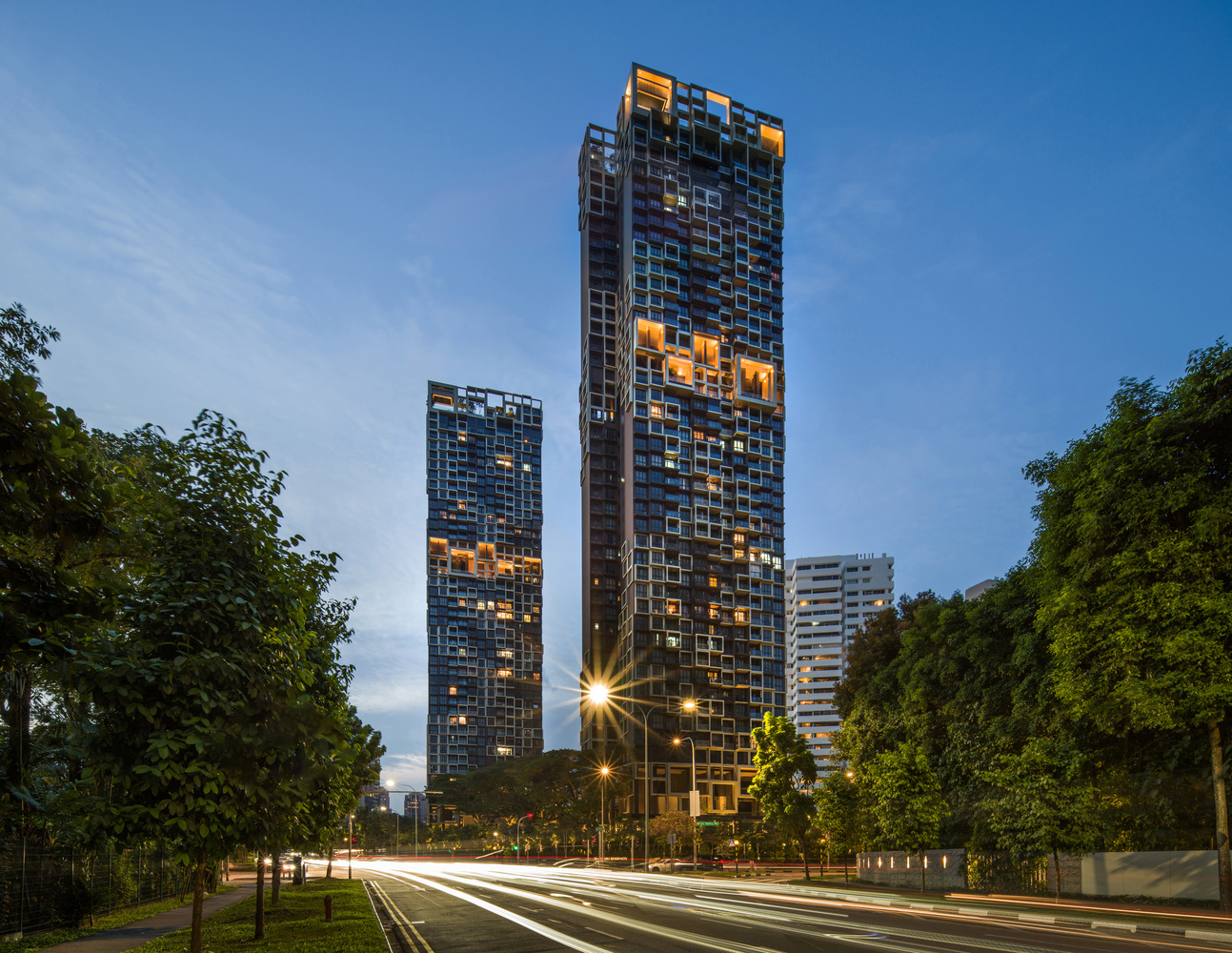
In the dense, vibrant heart of Singapore’s River Valley district lies Irwell Hill Residences: twin 36‑storey towers that challenge what modular housing can be. Developed by City Developments Limited (CDL) and built using factory‑prefabricated modules by ADDP Architects LLP, the project leans on efficiency, sustainability, and speed. But its standout feature – the façade – comes from MVRDV, which transformed what might have been a repetitive block into a textured, expressive landmark.
From Standard Modules to “Pixels”
The base structure uses PPVC – Prefabricated Prefinished Volumetric Construction. Entire rooms, complete with interior finishes and external façades, are built off‑site, then stacked and assembled on‑location. This method brings major advantages: shorter build time, fewer workers needed on site, reduced waste, and lower carbon emissions from transport and heavy machinery.
But PPVC has a downside: by nature, it tends to produce monotonous, box‑like buildings with identical floors stacked one on top of another. That’s where MVRDV’s intervention becomes clever. Rather than hiding the modules, the architects embraced them, treating each as a “pixel.”
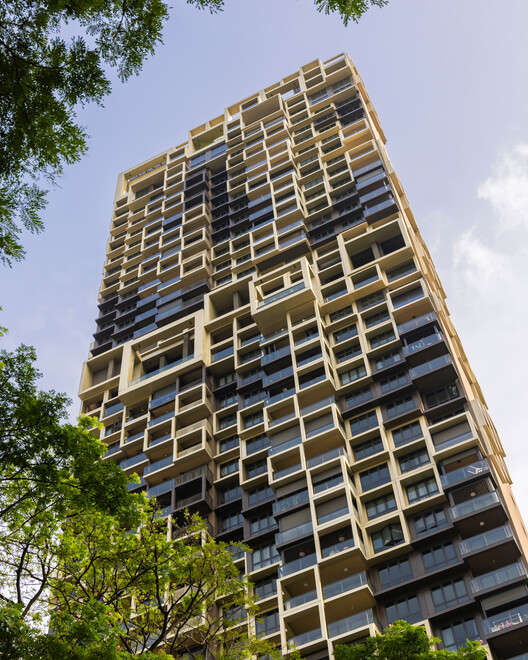
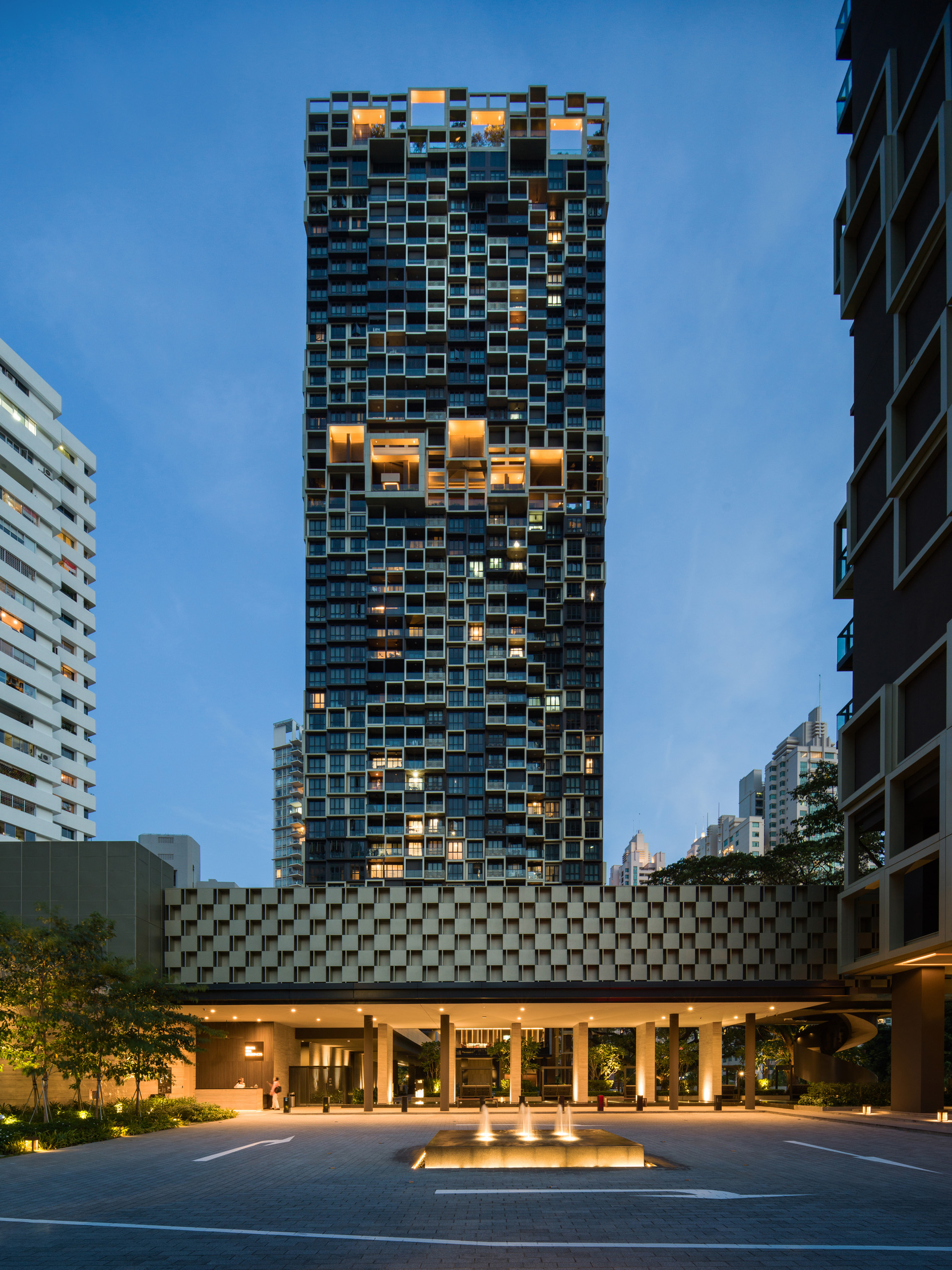
Each volumetric unit becomes a three-dimensional pixel: some are recessed, others projected. Metal frames envelop these units, creating depth and shadow, transforming flat walls into a living, textured surface. Balconies, loggias, and terraces emerge naturally, varying as the modules shift forward or back. 
A Façade with Colour, Rhythm and Nature
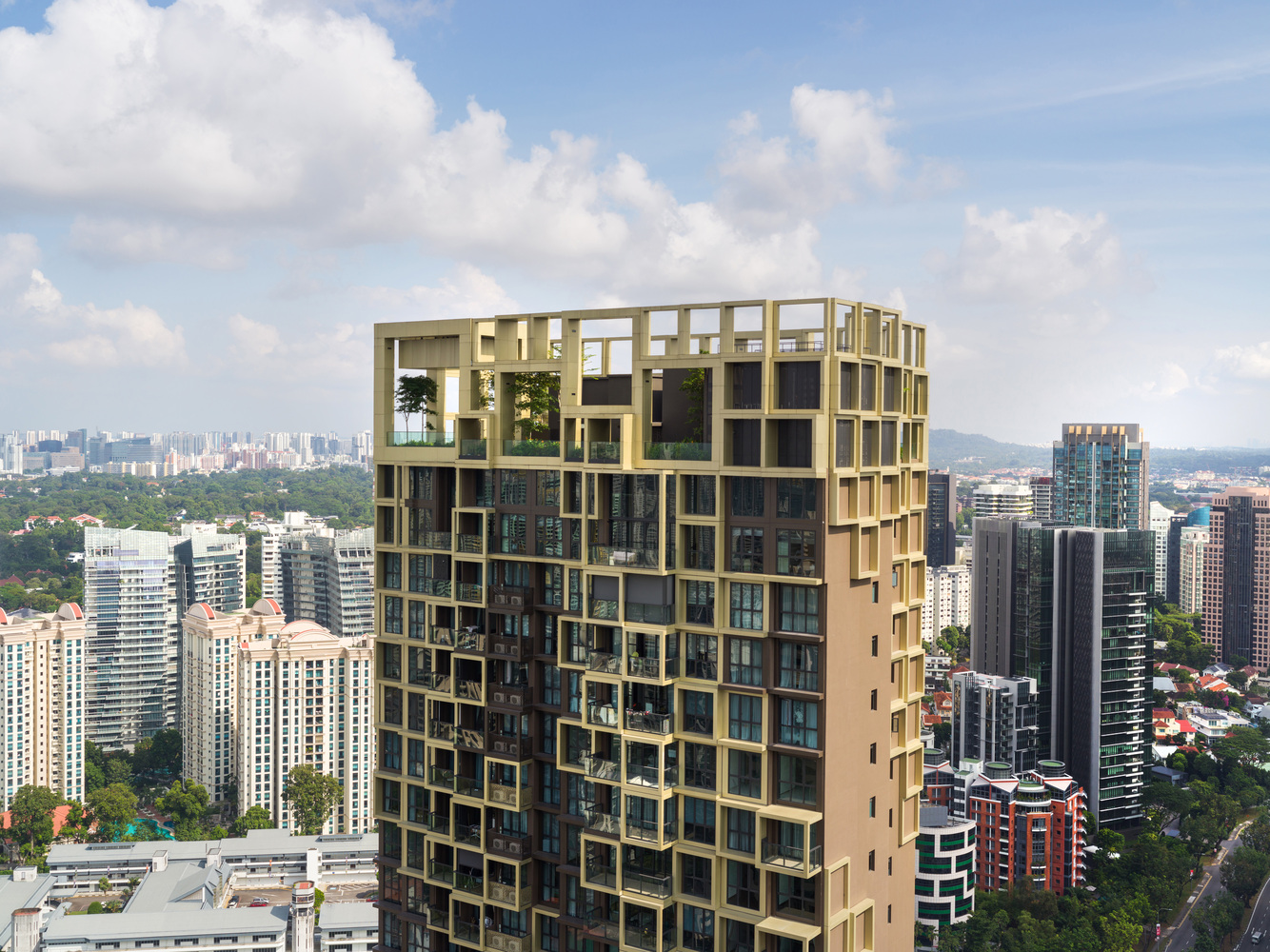
To avoid a sterile grid, MVRDV used a restrained, elegant colour palette: champagne‑gold and deep brown tones dominate the metal frames and infill panels. Rather than forming strict geometry, the pattern evokes climbing plants, a subtle nod to nature, contrast to concrete, and a way to inject organic rhythm into the city skyline.
During the day, sunlight hits the façade at changing angles, the recessed and projected modules cast shifting shadows, giving the towers a sense of movement and life. At certain moments, from certain angles, the façade appears almost alive, as if breathing.
Communal Greenery, Marked by Artful Façade Changes
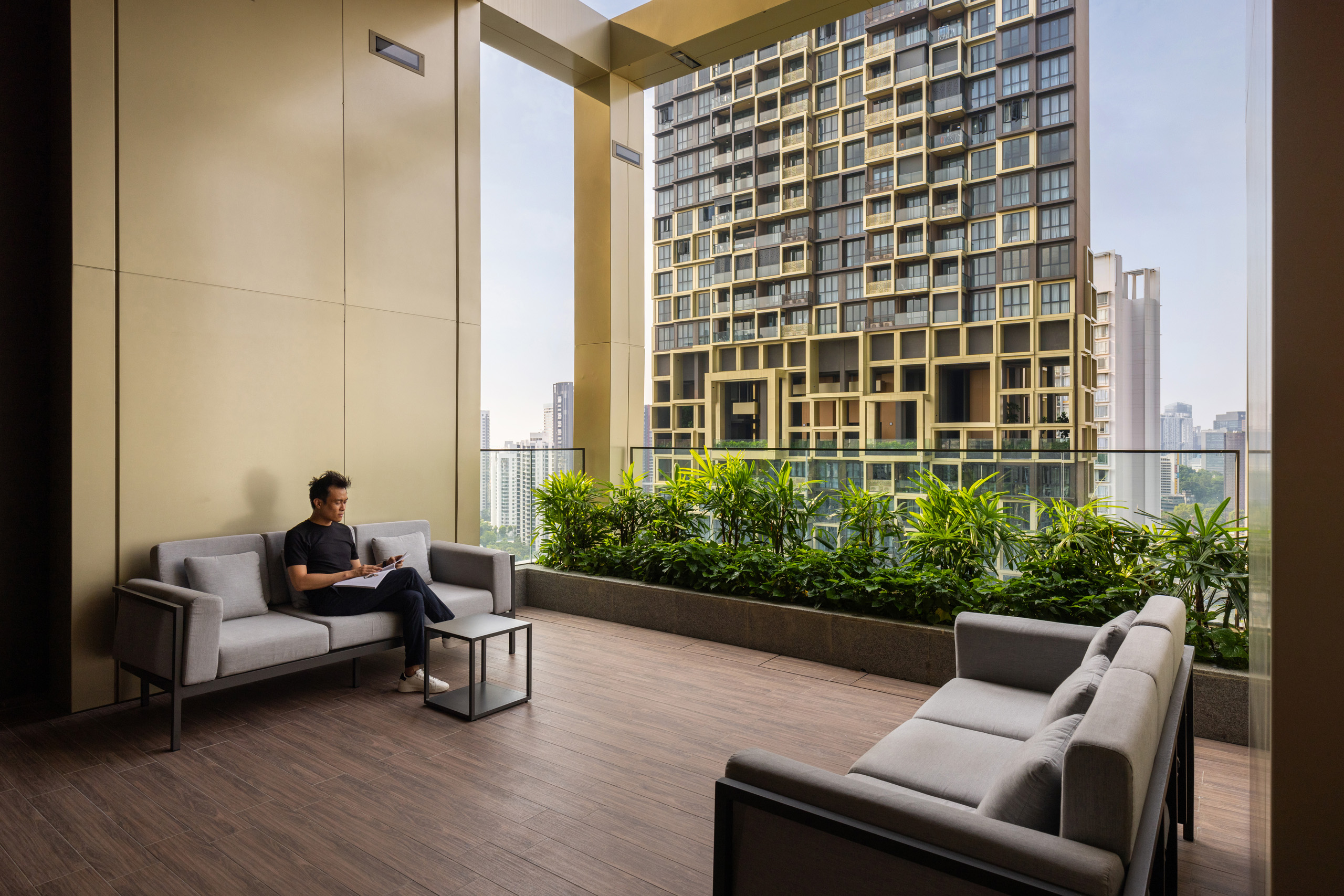
Perhaps the most poetic aspect: the façade isn’t just decoration, it marks the building’s social and communal heart. On the 24th floor, a sky‑garden, around four storeys high, cuts through the grid. Here, the rigid regularity relaxes: instead of single‑unit pixels, double‑ and triple‑wide frames open up to reveal trees, planting, seating areas.
At the top, a rooftop communal terrace, dubbed “Irwell Sky”, uses the same logic. Larger openings, deeper frames, and planted terraces announce a shift from private residences to shared spaces. On the skyline, these “breaks” look like bands of greenery, vertical gardens punctuating the rhythm of pixels.
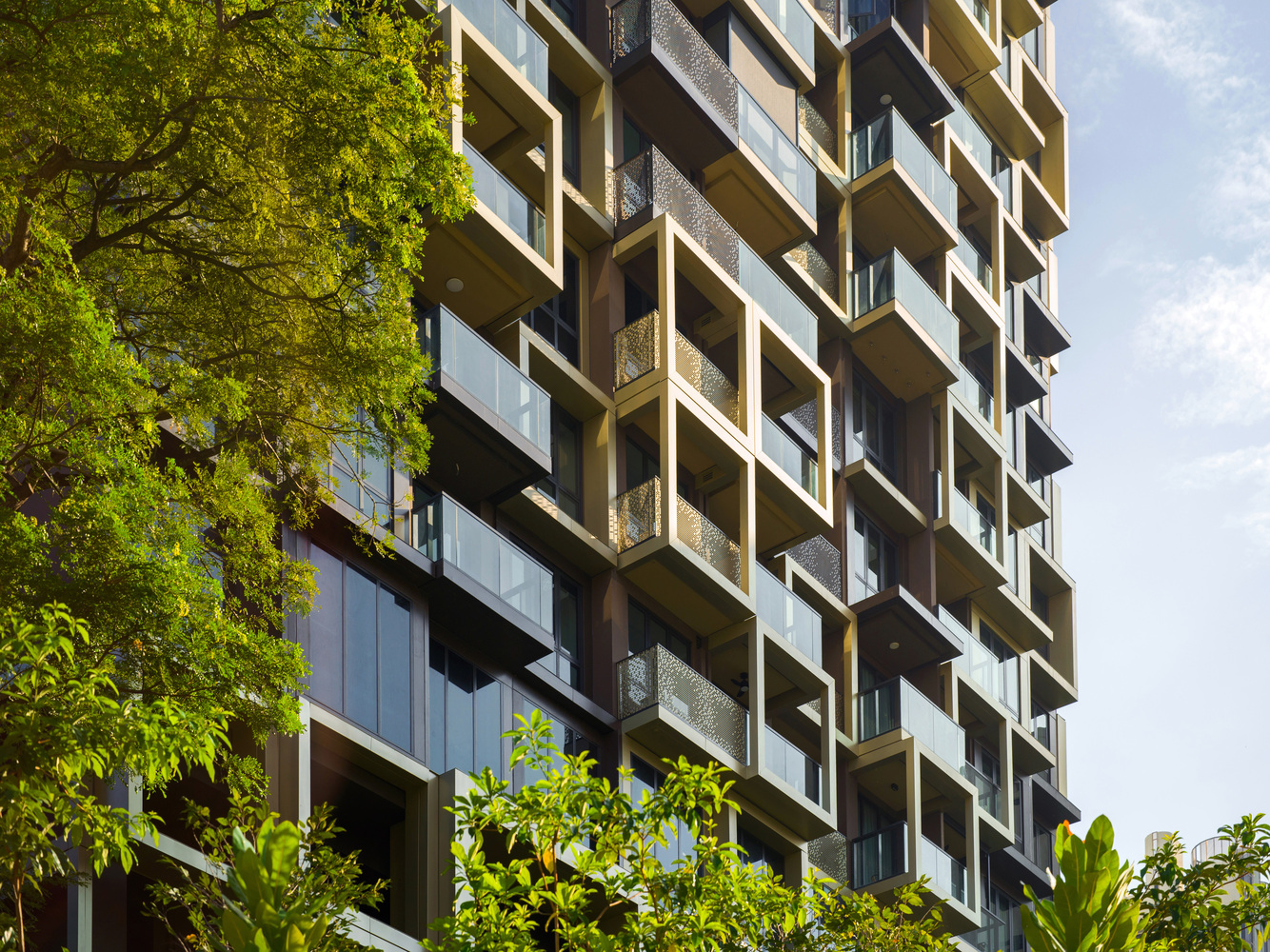
More than cosmetic: these generous openings modulate light and wind, provide shade, airflow and greenery, important in Singapore’s humid climate, and visually soften the towers, making them feel more approachable, more human.
Source: MVRDV with additional information added by Glass Balkan