European aluminium producers are urging the European Union to strengthen its sanctions regime by closing a loophole that still allows Russian aluminium to enter the bloc through third countries despite the ban on direct imports.
According to industry representatives, almost 90% of Russian primary aluminium is now exported to non-EU markets, generating nearly USD 10 billion in annual export revenue. Russian metal is sold at discounted prices to major aluminium-processing countries, including Türkiye and China, before being converted into semi-finished and finished products that can be exported to Europe.
In 2025, Russia supplied around 20% of Türkiye’s primary aluminium imports, making it the country’s second-largest supplier. These imports increased by 5% compared with 2024 and generated more than EUR 800 million in direct revenue for Russia. Türkiye is also the EU’s largest external supplier of aluminium extrusions, including profiles, bars, rods and tubes used in construction, automotive and industrial applications, accounting for approximately 55% of EU imports in this category.
Price data further illustrates the competitive advantage. Russian aluminium billets, the primary feedstock for extrusion production, were sold into Türkiye at around 11% below comparable EU import prices in 2025. Turkish extrusions entering the EU were also priced below the EU average, including 23% lower for bars and rods, 7% lower for hollow profiles and 4% lower for solid profiles. 
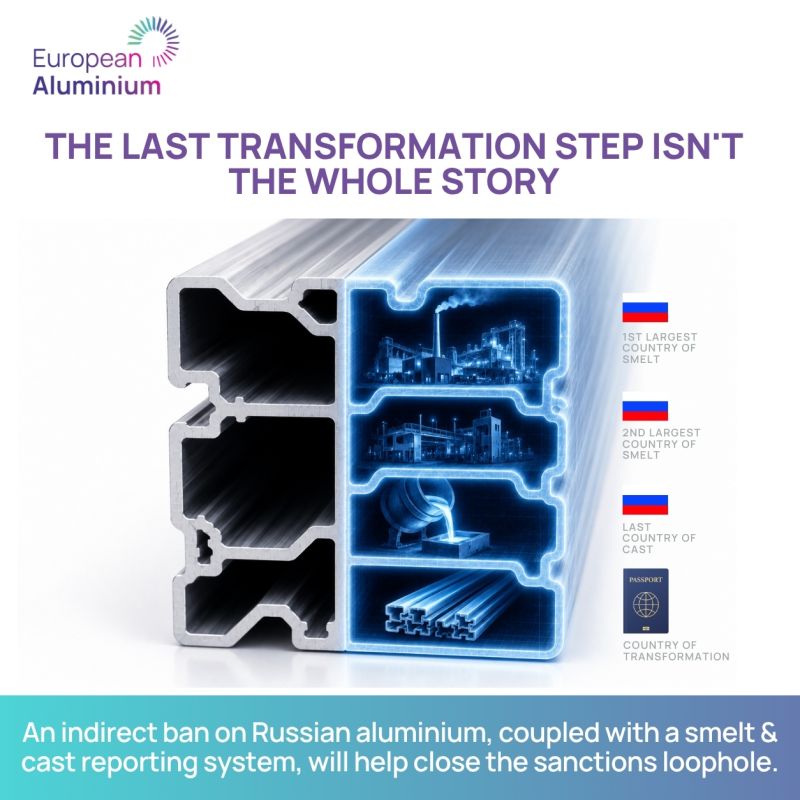
To close the loophole, the industry is calling for an indirect ban on Russian aluminium in the next EU sanctions package. Proposed measures include mandatory reporting of the first and second largest countries of smelt and the last country of cast, targeted customs inspections on high-risk imports, monitoring trade flows from countries importing significant volumes of Russian aluminium, and increased scrutiny of billets, extrusions and other semi-finished products.
The industry also warns that geopolitical tensions in the Persian Gulf, a major global primary aluminium production hub, could increase reliance on discounted Russian metal if regional supply is disrupted. In 2025, Gulf countries supplied around 42% of Türkiye’s aluminium ingot imports, meaning prolonged instability could accelerate substitution with Russian aluminium.
Source: european-aluminium.eu with additional information added by Glass Balkan