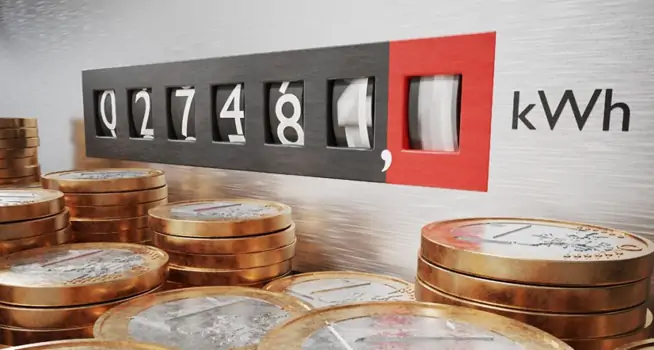
The European Commission has updated the ETS State Aid Guidelines (the rules that define how EU countries can support industry under the EU Emissions Trading System after 2021). The update focuses on indirect CO₂ costs, the part of electricity prices that increases because power generators include the cost of carbon allowances in their pricing. For electricity-intensive industries, this can become a major production cost pressure even though emissions are not released directly on-site.
The revised guidelines expand eligibility to the entire glass fibre sector, meaning Member States may now include all glass fibre products under Prodcom code 23.14 in their national compensation schemes. Before this revision, the glass fibre industry was only partially covered: eligibility was limited to specific product categories such as glass veils (23.14.12.30) and glass mats (23.14.12.10). Now, the broader 23.14 scope allows full-sector access, instead of supporting only a narrow segment of glass fibre outputs.
If a Member State has an indirect CO₂ cost compensation programme in place (or decides to extend one), it can grant eligible installations compensation for a portion of the indirect emissions costs linked to electricity used in production. Under the revised framework, the aid can cover up to 80% of eligible indirect CO₂ costs, depending on the national scheme design and the conditions applied.
Glass fibre production relies heavily on electricity across melting, forming, and downstream processing. Glass Fibre Europe highlights that electricity accounts for roughly 30% of the sector’s total energy consumption, making electricity pricing and carbon-related surcharges especially sensitive for competitiveness. The sector is also moving toward industrial transformation and electrification to align with the EU’s climate neutrality pathway, investments that can increase costs in the short term. 
The Commission’s change does not automatically trigger payments. Each Member State must decide whether to include glass fibre under 23.14 in its national scheme. Where governments implement this option, compensation can reduce carbon leakage risk and help keep EU glass fibre production competitive against producers in regions with lower energy prices and no equivalent carbon cost in power markets.
The revised guidelines are available on the European Commission website: Commission amends ETS State aid Guidelines.
Source: The European Commission with additional information added by Glass Balkan