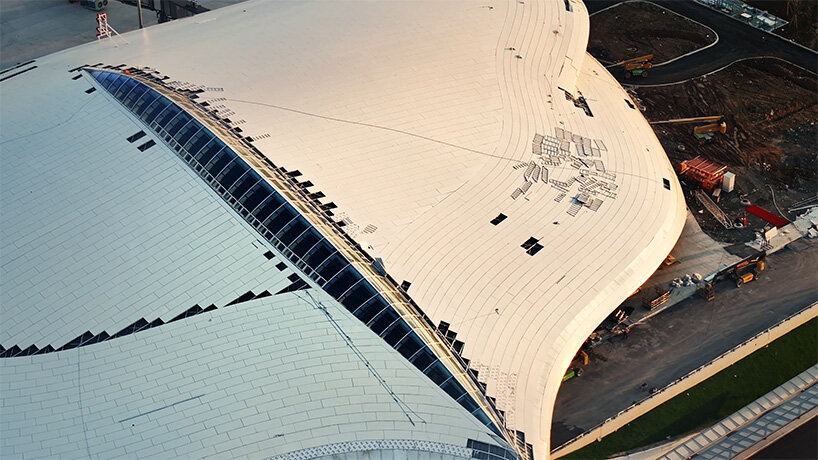
Lishui Airport, designed by MAD Architects, has officially opened in China, introducing a distinctive architectural identity shaped almost entirely by its roof structure, a vast silver-white canopy inspired by a bird in flight.
Located within the mountainous valleys of Lishui’s “forest city,” the 2,267-hectare airport demonstrates a design philosophy that prioritizes landscape integration, structural lightness, and human-scaled mobility rather than monumental scale. For the façade and building-envelope sector, the project stands out as a strong example of how lightweight materials and fluid geometry can define both architectural expression and operational efficiency.
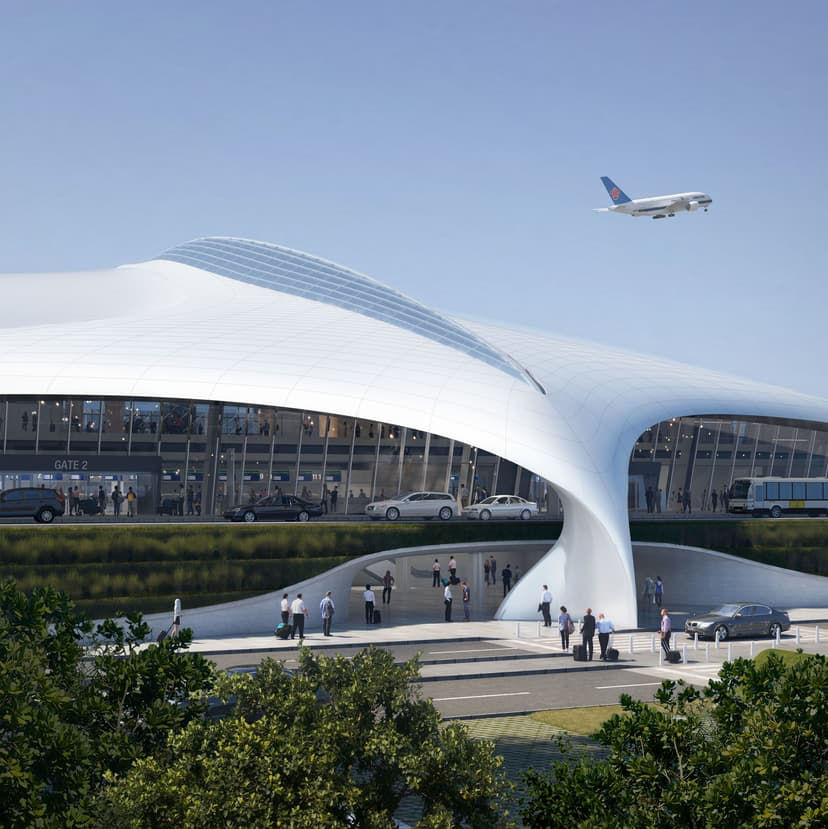
The defining element of the airport is its feather-like roof shell, formed from lightweight aluminum panels engineered to achieve large spans while maintaining a thin visual profile.
From a materials and façade perspective, the selection of aluminum plays a central role:
- Weight efficiency: reduced structural load enables the expansive, flowing geometry of the canopy.
- Form flexibility: aluminum panels allow smooth curves and continuous surfaces, reinforcing the organic concept.
- Durability: high resistance to corrosion ensures long-term performance with reduced maintenance cycles.
- Reflective finish: the silver-white surface enhances daylight reflection, visually blending the terminal with surrounding skies and mountains.
The roof is supported by 14 umbrella-shaped columns, designed to minimize structural clutter while emphasizing openness. A dramatic cantilever extending approximately 30 meters creates a covered, naturally lit entrance zone and strengthens the impression of movement and lightness.
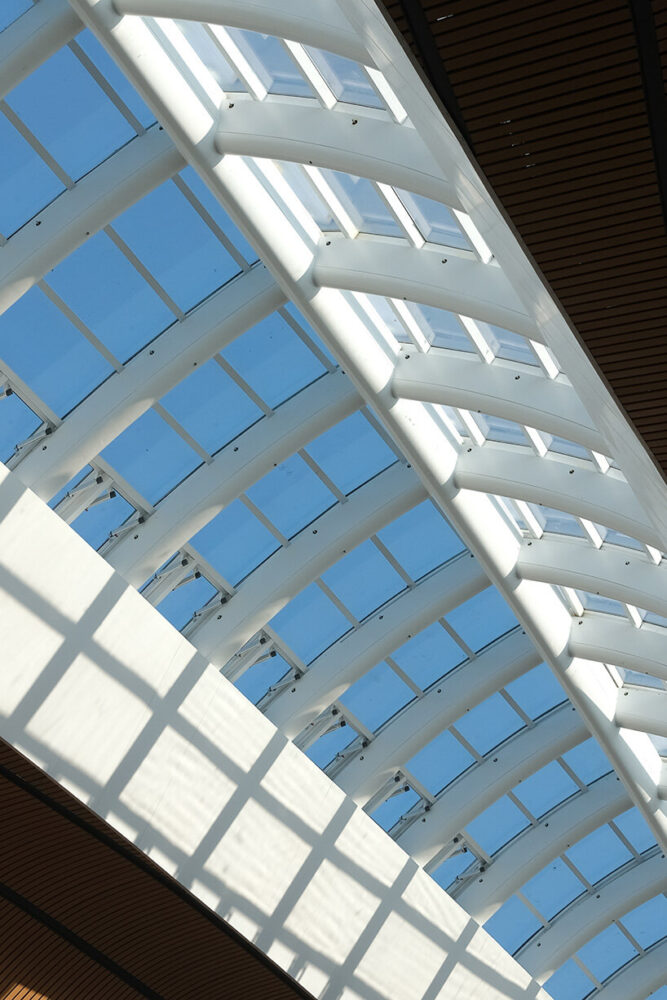
A central skylight integrated into the roof system introduces abundant natural light into the terminal, reducing reliance on artificial illumination and reinforcing the architectural rhythm of the canopy from within. 
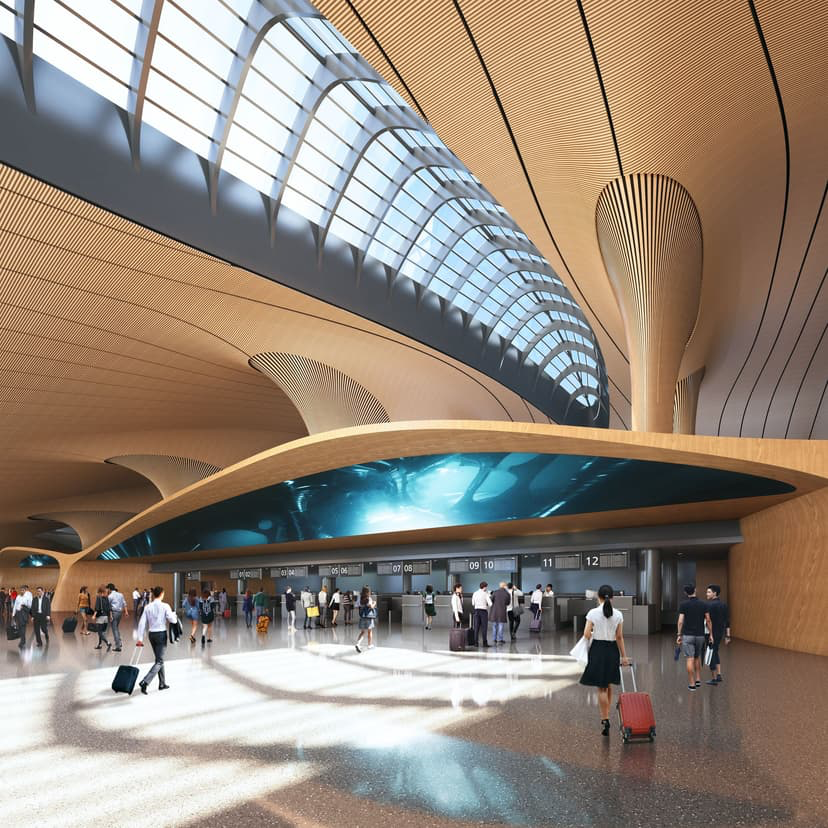
Material contrast is key: while the exterior expresses a cool metallic identity, the interior introduces warm wood-toned finishes, creating a softer, human-focused atmosphere. The terminal adopts a “one-and-a-half-story” layout, with ceiling heights transitioning from 4.5 to 13 meters to balance intimacy and spatial openness.
Arrival and departure zones are compactly organized to simplify passenger movement, a strategy aligned with the airport’s role as a regional feeder hub.
Lishui Airport launches with infrastructure sized for approximately one million passengers annually, including three boarding bridges and five remote stands. Expansion capability is embedded into the structural system, enabling growth toward 1.8 million passengers by 2030 and up to five million passengers by 2050, including provisions for a future international terminal.
This long-term flexibility demonstrates how early material and structural decisions, particularly the roof system, can support phased development without compromising architectural identity.
Image courtesy of MAD Architects
Source: MAD Architects with additional information added by Glass Balkan