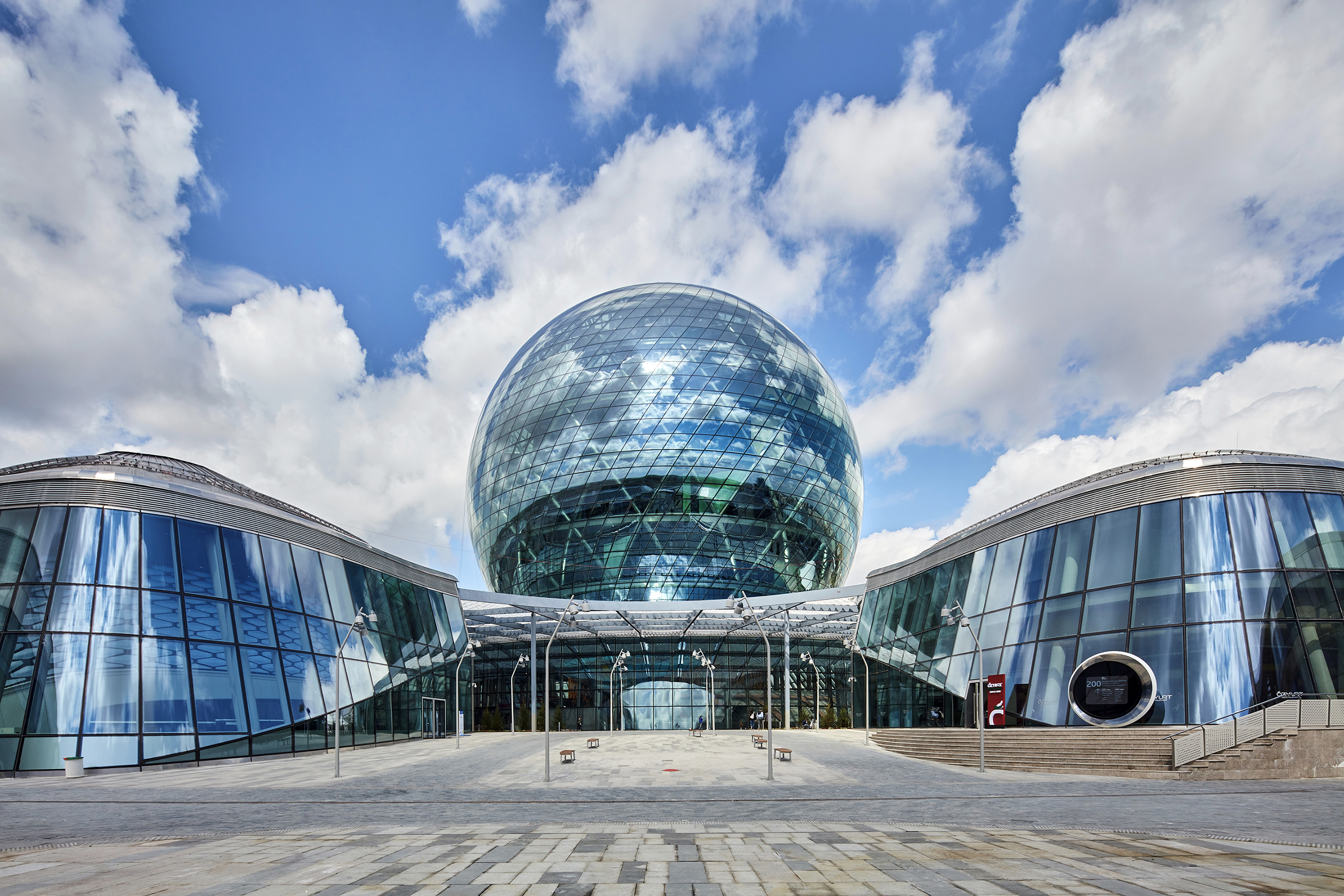
When Nur Alem opened for EXPO 2017 in Astana, Kazakhstan, its 100-metre-high spherical form immediately became one of the most recognizable buildings in the city. Designed by Adrian Smith + Gordon Gill Architecture, the project was conceived around the theme of Future Energy. But beyond its visual impact, Nur Alem represents a significant achievement in glass engineering, façade design and environmental performance.
The building measures approximately 80 metres in diameter and 100 metres in height, with around 24,000 m² of floor space across eight levels. Its defining feature is the façade: approximately 4,600 individually engineered curved glass panels covering around 35,000 m².
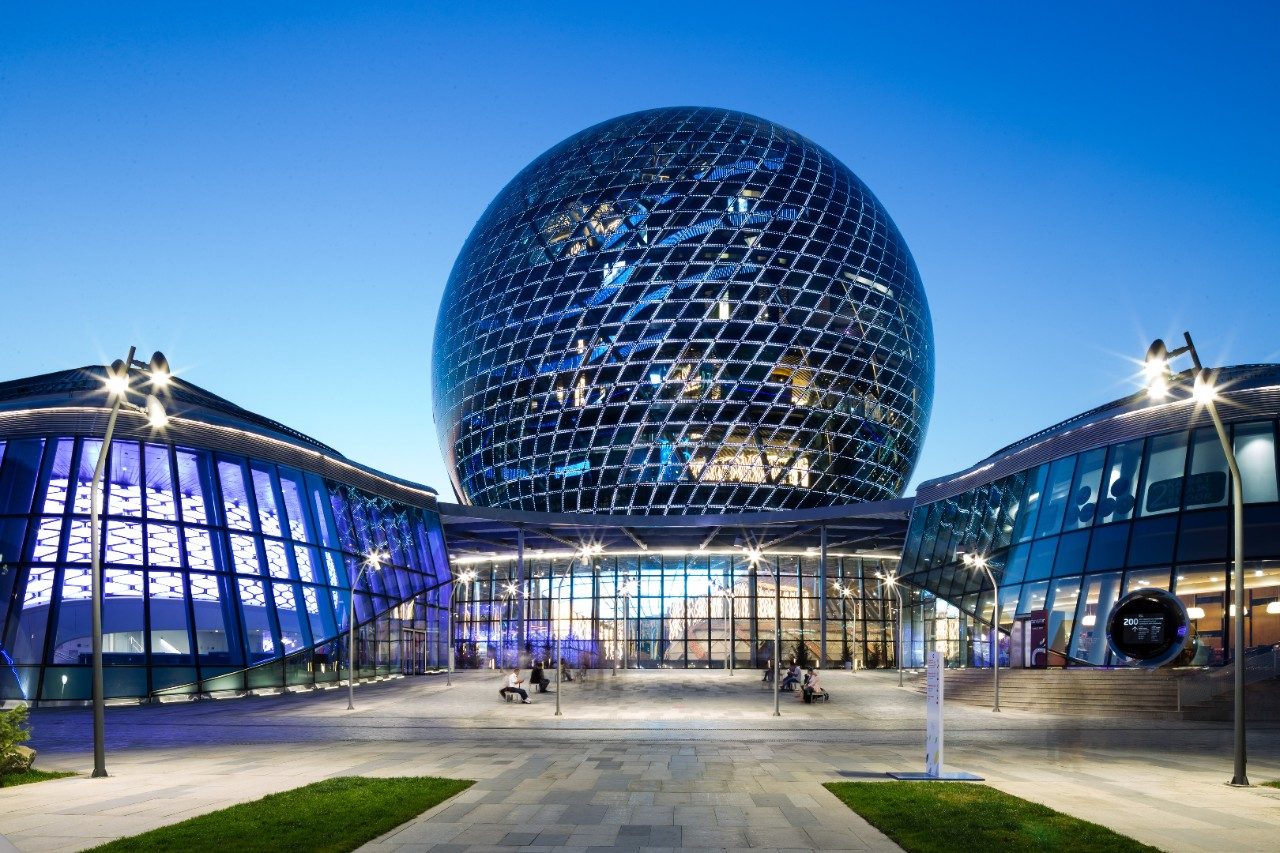
The objective was to create a smooth glass sphere, rather than a faceted structure assembled from flat panels. This required the development of double-curved glass, with individual units formed in three dimensions to follow the geometry of the building.
Each panel was effectively a bespoke component. The glass was heated in specially developed ovens until it became sufficiently pliable to take the shape of a mould, before being gradually cooled to retain the required geometry. This manufacturing process was essential to achieving the continuous appearance of the façade. 
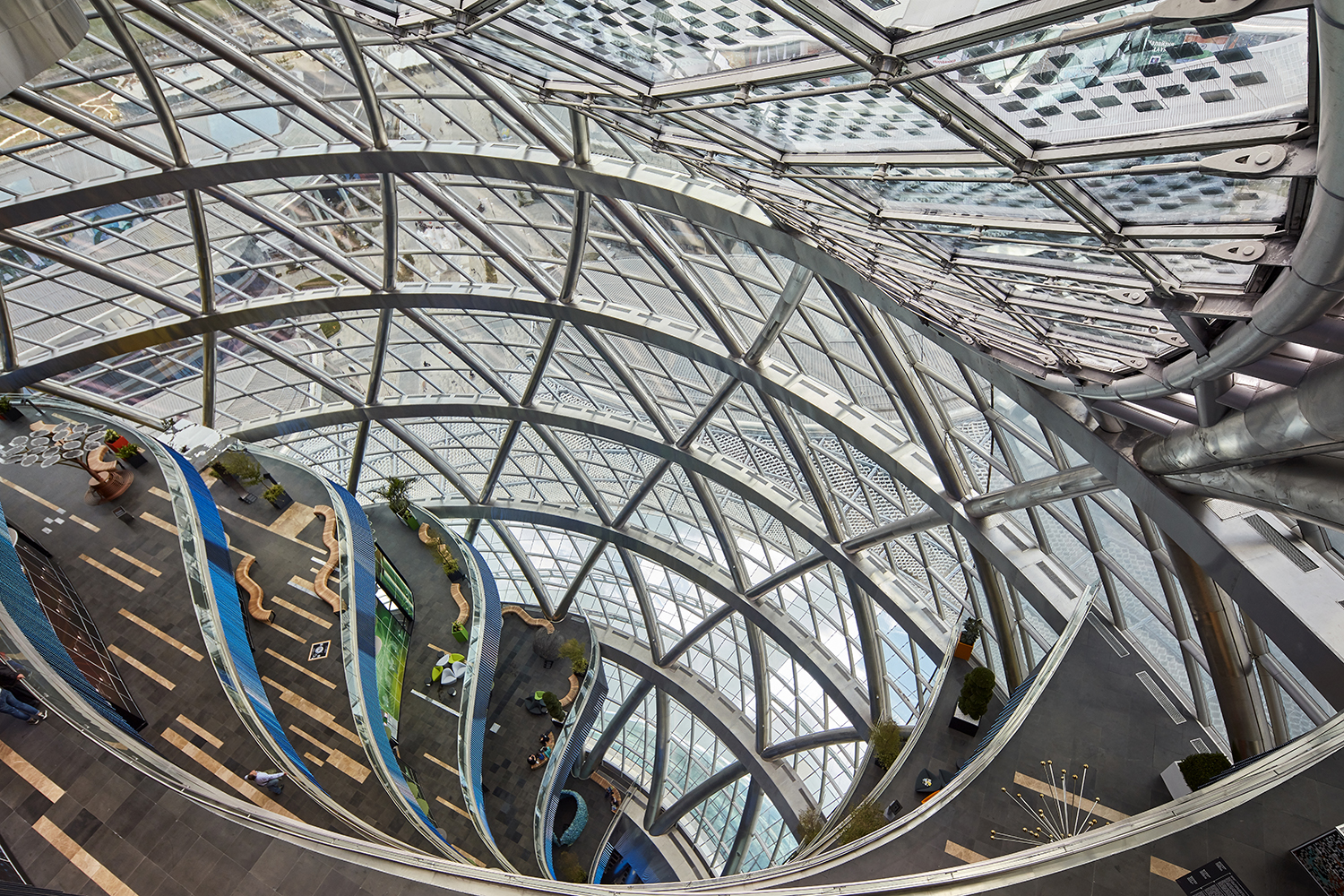
The scale of the units added another level of complexity. Project information indicates approximately 4,600 curved panes, with maximum panel dimensions of roughly 3 × 6 metres. The glazing was produced as double-curved insulating glass units, incorporating a triple-silver coating and two-colour ceramic screen printing. A reported U-value of approximately 1.1 W/m²K demonstrates that thermal performance was considered alongside the architectural requirements.
For a building with approximately 35,000 m² of glazing, solar performance could not be treated as a secondary consideration.
The façade uses ultra-clear low-iron glass with low-E coating and ceramic frit. The frit pattern varies across the façade to assist with solar control while maintaining daylight and views. Guardian SunGuard SNX 50/23 HT was specified for the glazing, providing solar-control performance suited to the building’s extensive transparent envelope.
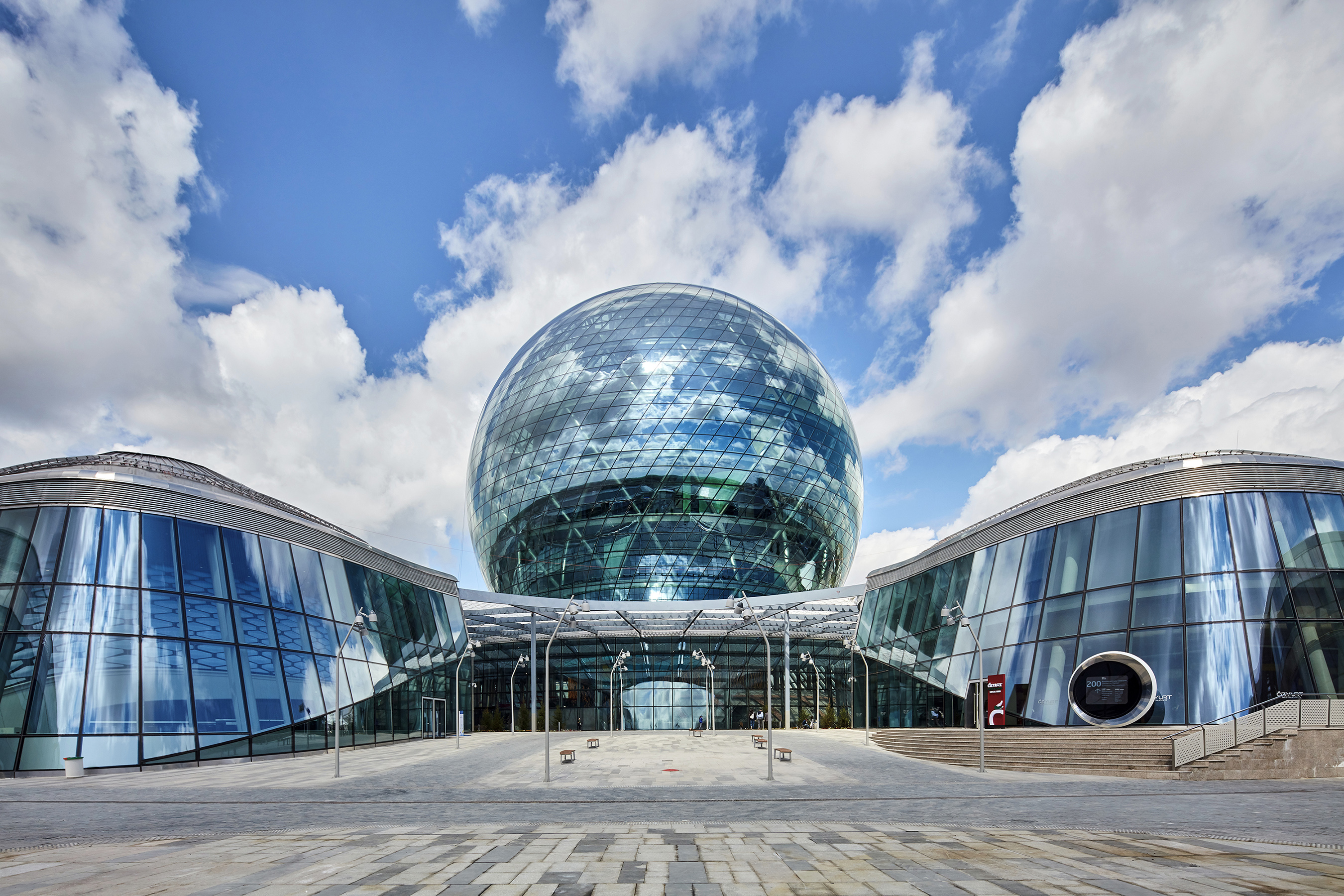
The façade was therefore designed to perform a difficult balancing act: admit useful daylight, control glare, limit unwanted solar heat gain and maintain thermal efficiency.
Nur Alem’s façade was also developed as an active component of the building’s energy concept.
The design team used BIM and Rhino/Grasshopper to test different iterations of the building geometry, examining structural behaviour, daylight, energy consumption and solar exposure. This computational approach became particularly important for positioning the building-integrated photovoltaic system.
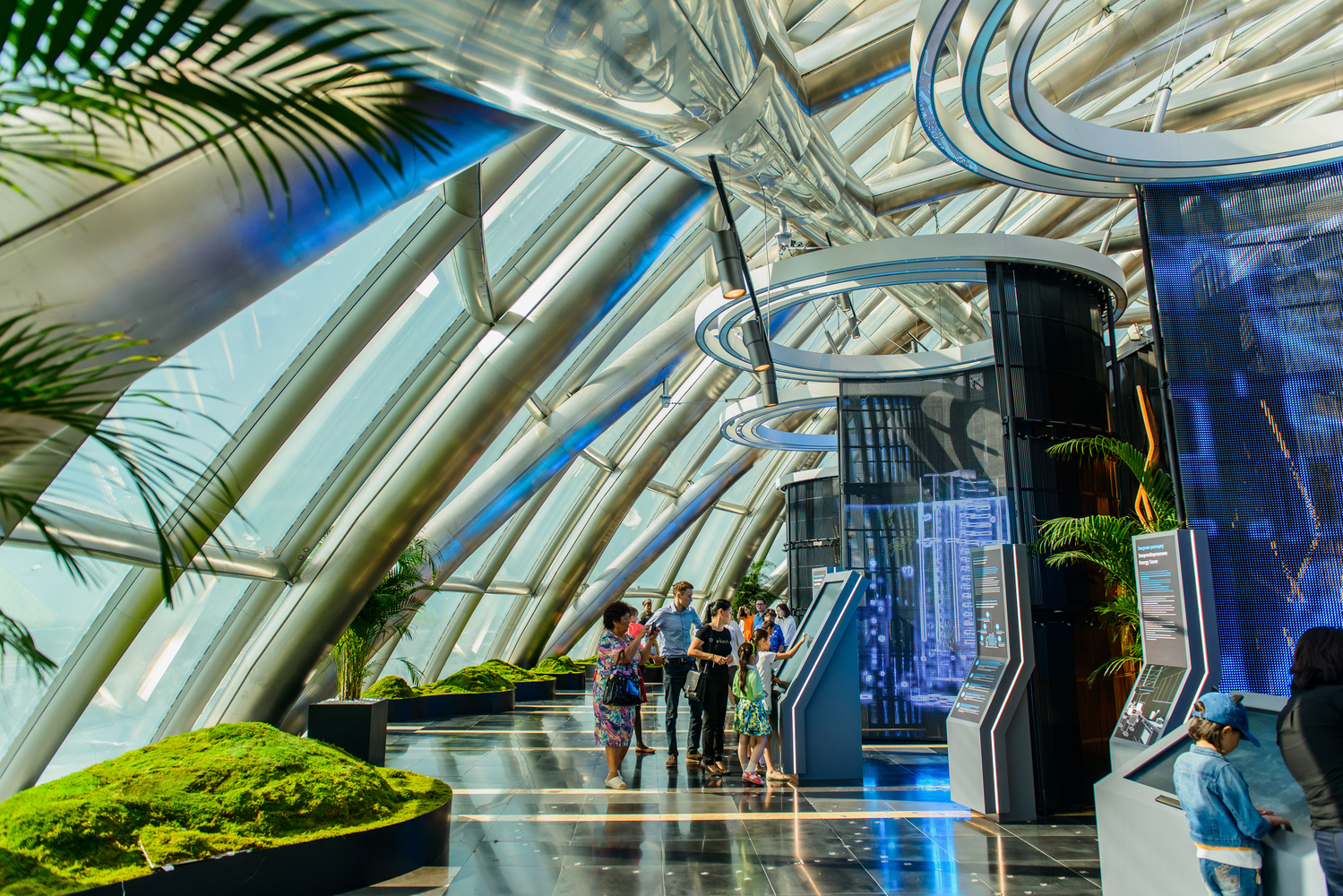
BIPV cells were incorporated near the top of the sphere, where modelling was used to maximize exposure to the sun. The design-stage energy model predicted approximately 81,056 kWh of electricity generation per year, equivalent to around 2.21% of total energy demand.
The upper portion of the sphere also incorporates two wind turbines. The form of the opening was extensively modelled and tested with wind engineers to capture Astana’s predominant southwest winds while responding to the city’s harsh winter climate. The turbines were predicted to generate approximately 52,700 kWh annually.
The technical achievement of Nur Alem lies in the relationship between its geometry, glass fabrication and building performance.
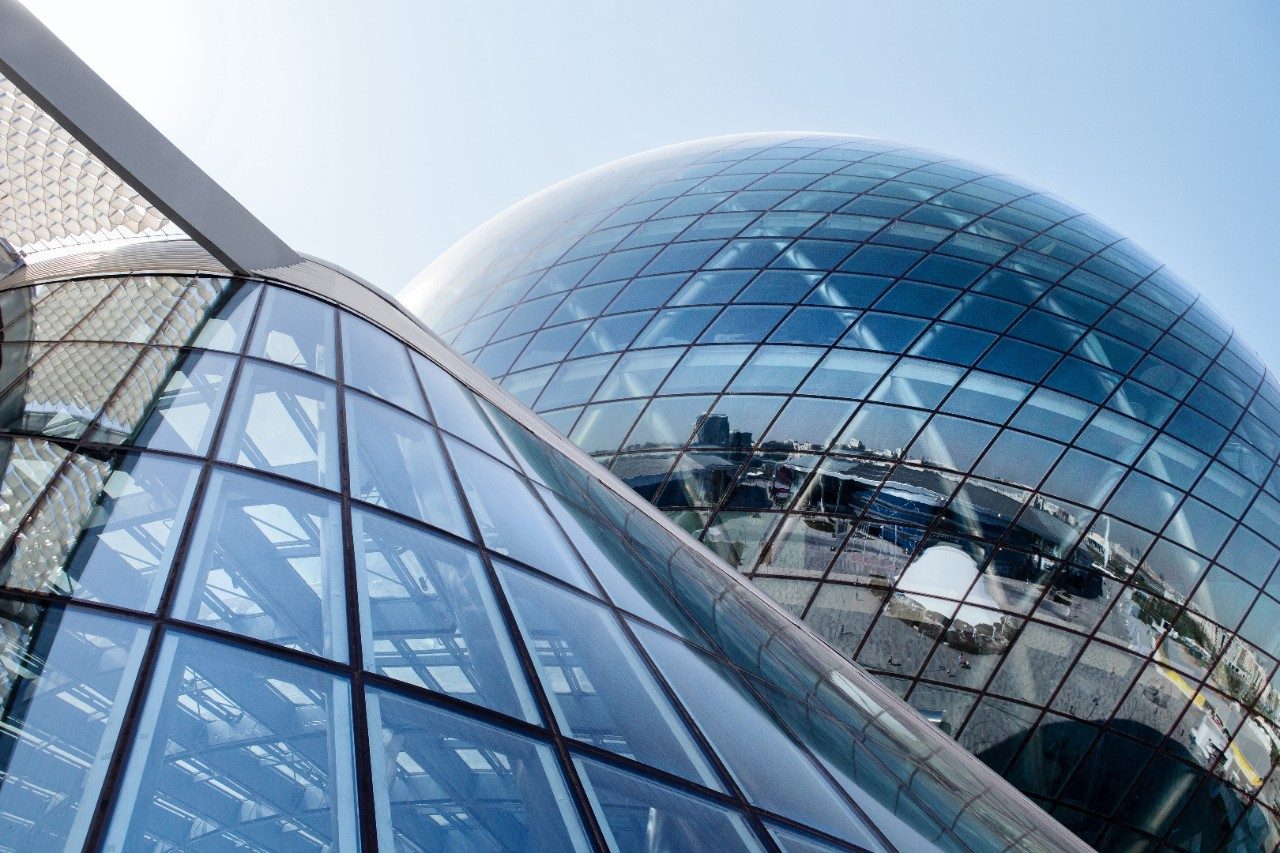
Its façade combines double-curved insulating glass, low-E solar-control technology, ceramic frit, integrated shading, BIPV and renewable-energy systems within a single architectural envelope. Even the horizontal curtain-wall mullions contribute to the building’s environmental strategy, incorporating radiant heating tubes, LED lighting and a BMS-controlled shading system.
Source: Adrian Smith + Gordon Gill Architecture with additional information added by Glass Balkan