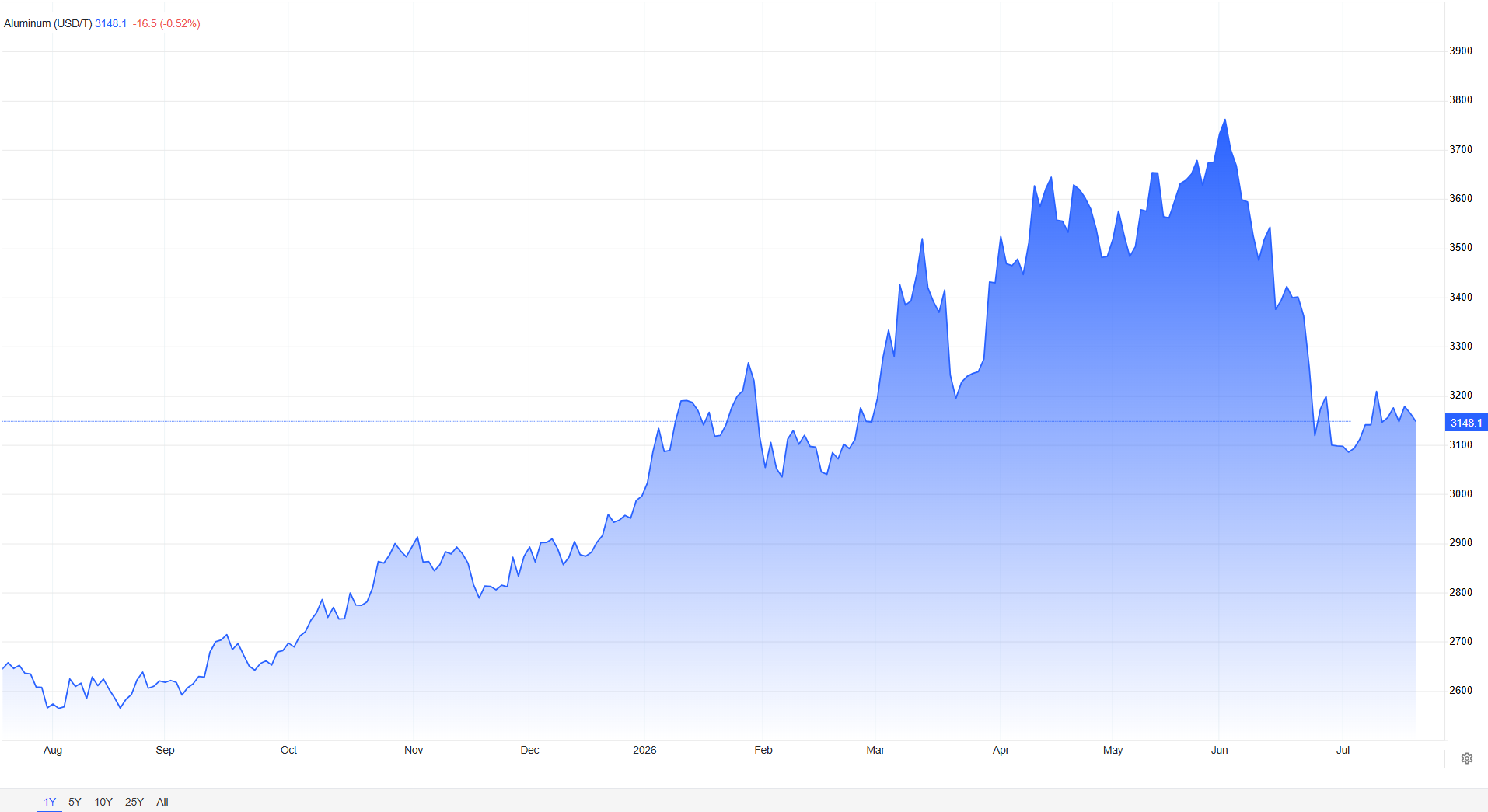
Aluminium prices have entered a correction phase after a strong upward movement during the past year, with benchmark aluminium futures trading at approximately $3,160 per tonne. Despite the recent decline of around 6–7% over the past month, prices remain approximately 20% higher year-on-year, reflecting a market still influenced by elevated production costs, constrained supply conditions and long-term demand growth.
The aluminium market has experienced significant volatility due to the combination of energy costs, production limitations and changing global demand patterns. Aluminium smelting is one of the most electricity-intensive industrial processes, requiring approximately 13–15 MWh of electricity per tonne of primary aluminium produced. As a result, power prices remain one of the key variables affecting global production economics, particularly in Europe where several smelters have faced reduced competitiveness due to higher energy costs.
A major factor supporting aluminium prices has been supply-side uncertainty. China accounts for more than 55% of global primary aluminium production, making its production policies a critical influence on international markets. Capacity controls, environmental regulations and energy consumption restrictions have limited the ability of producers to significantly increase output. At the same time, global aluminium inventories have remained closely monitored, with market participants watching stock levels at major exchanges including the London Metal Exchange (LME).
Demand fundamentals continue to provide structural support. Aluminium consumption is increasing across several high-growth sectors, including electric vehicles, renewable energy infrastructure, construction and advanced façade systems. The automotive industry is expected to remain a major demand driver, as aluminium content per vehicle continues to rise due to lightweighting strategies and battery-electric vehicle development. In construction, aluminium remains essential for curtain wall systems, high-performance windows, solar mounting structures and energy-efficient building envelopes. 
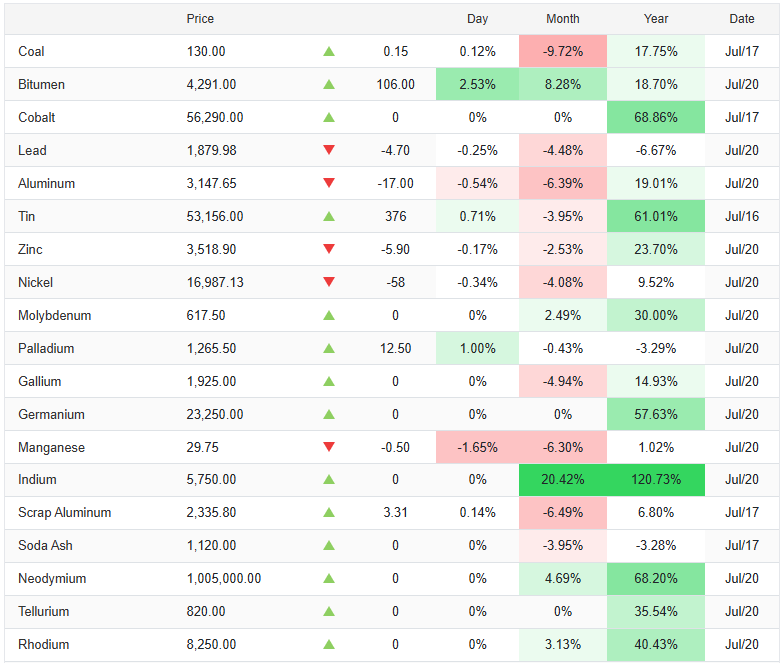
The recent price correction reflects weaker short-term demand, slower manufacturing activity in Europe and China, higher interest rates and delayed construction investments. Improved supply availability and inventory replenishment have also eased upward pressure. For aluminium extruders, façade manufacturers and architectural system providers, volatility in aluminium billet prices, alloy premiums and energy surcharges remains a key challenge, encouraging greater use of recycled aluminium, long-term supply contracts and production efficiency measures.
Despite short-term fluctuations, aluminium fundamentals remain strong, supported by electric vehicle lightweighting, renewable energy infrastructure and sustainable construction, with medium-term forecasts pointing toward the $3,200–$3,400 per tonne range. However, energy costs, Chinese production levels and global industrial activity will remain the main drivers of future price movements.
Source: tradingeconomics.com with additional information added by Glass Balkan