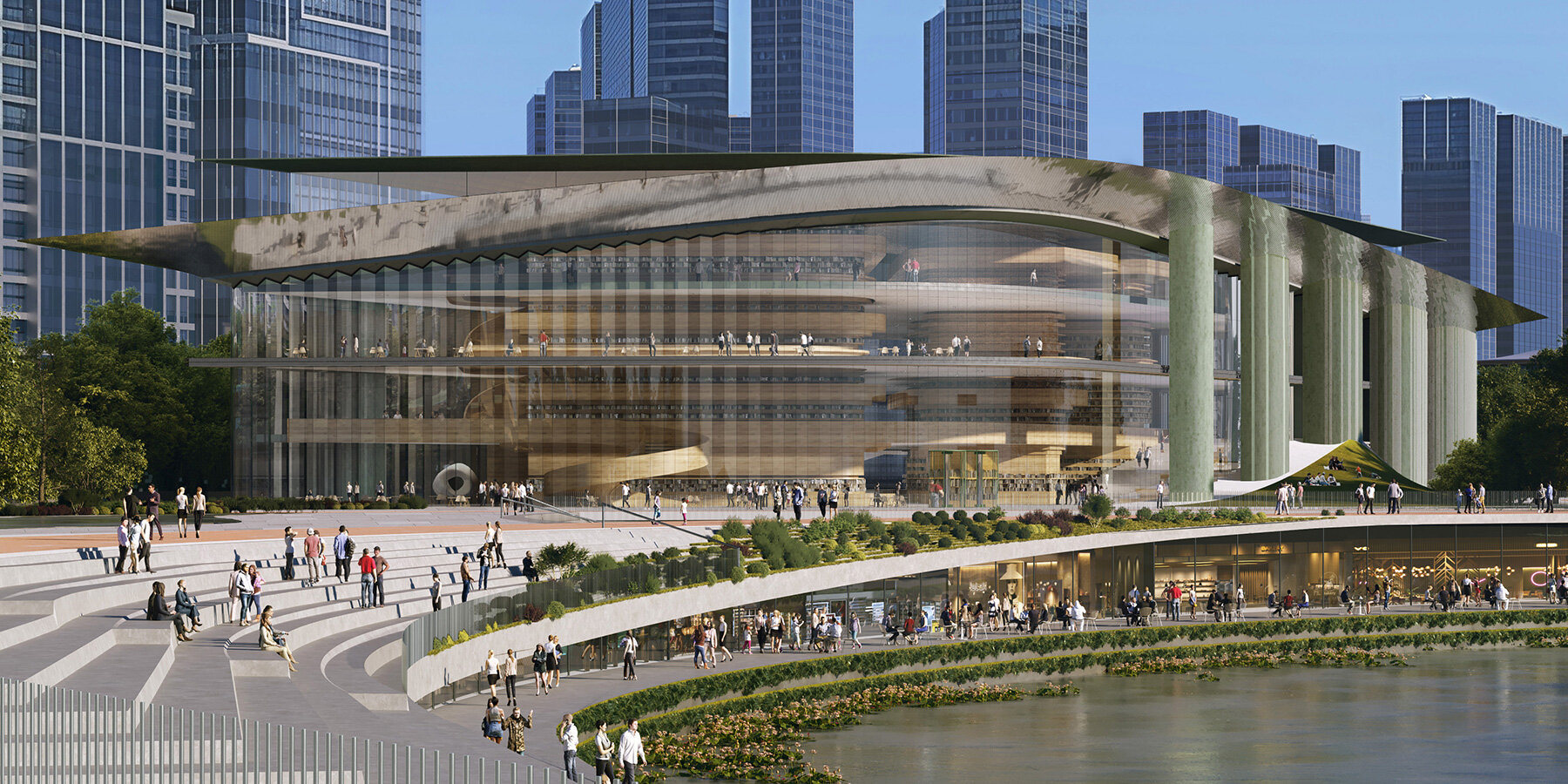
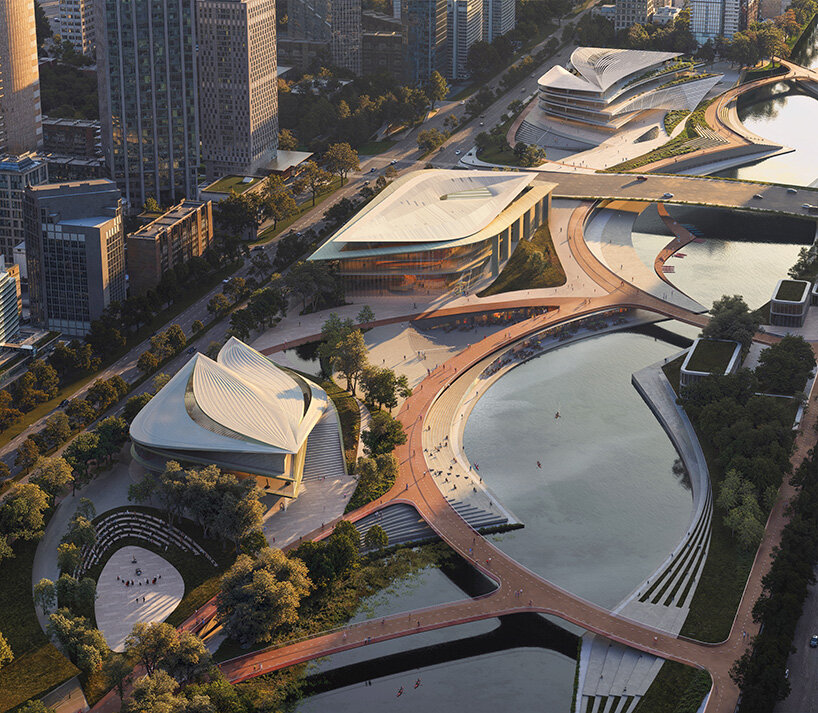
Zaha Hadid Architects has been selected to design a series of major cultural buildings within the Qiantang Bay Cultural District in Hangzhou, China, a large-scale canal-side regeneration project that places façade performance, daylight control, and material expression at the centre of architectural identity.
Anchored along the Central Water Axis in Xiaoshan district, the development transforms former industrial land along the Zhedong Canal into a linear cultural corridor. The buildings are conceived not as isolated icons, but as climate-responsive civic structures whose envelopes mediate between public space, water, and interior use.
Structure and façade as one system
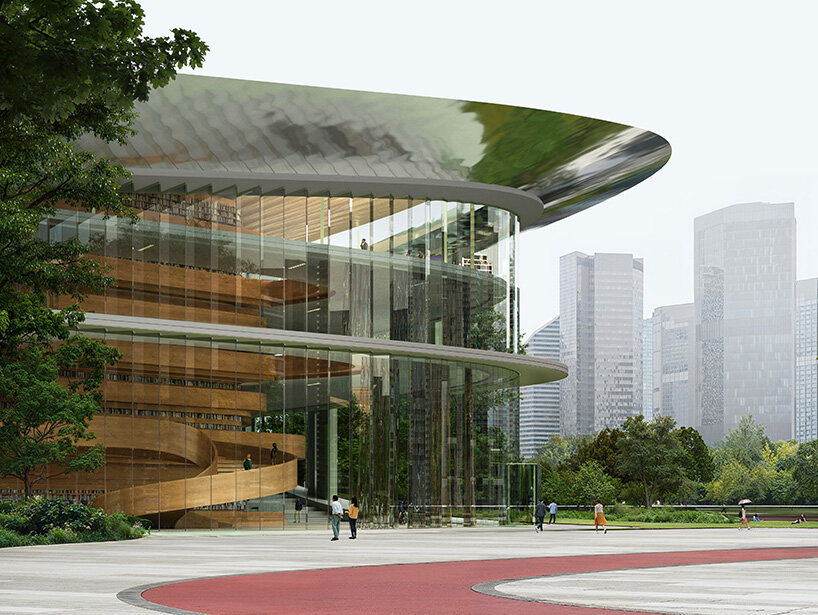
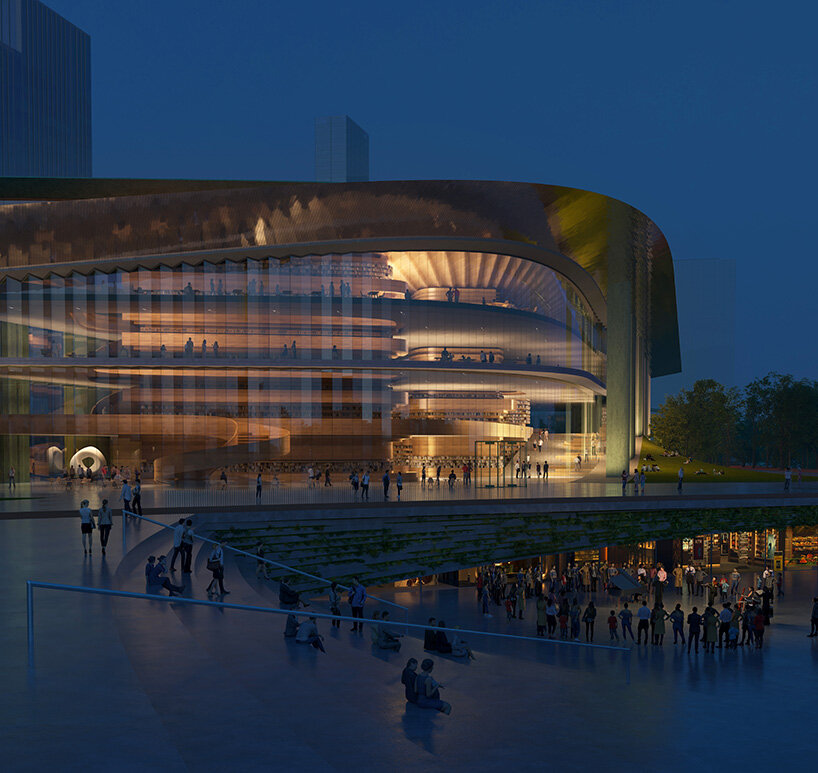
The proposed library acts as the civic anchor of the district and is defined by a façade concept that merges structure, enclosure, and program. A series of inhabitable columns form the primary load-bearing system while simultaneously housing book collections, reading areas, and community spaces. This approach allows the building’s internal function to be legible on the exterior, replacing conventional curtain-wall logic with a more expressive structural envelope.
The façade material palette draws from Hangzhou’s historic association with jade craftsmanship. Precision-crafted masonry tiles create depth and tonal variation, while integrated folded glass elements introduce controlled daylight deep into the interior. These glazed components are positioned to balance transparency and solar control, reducing glare while maintaining visual connection to the canal and surrounding landscape. 
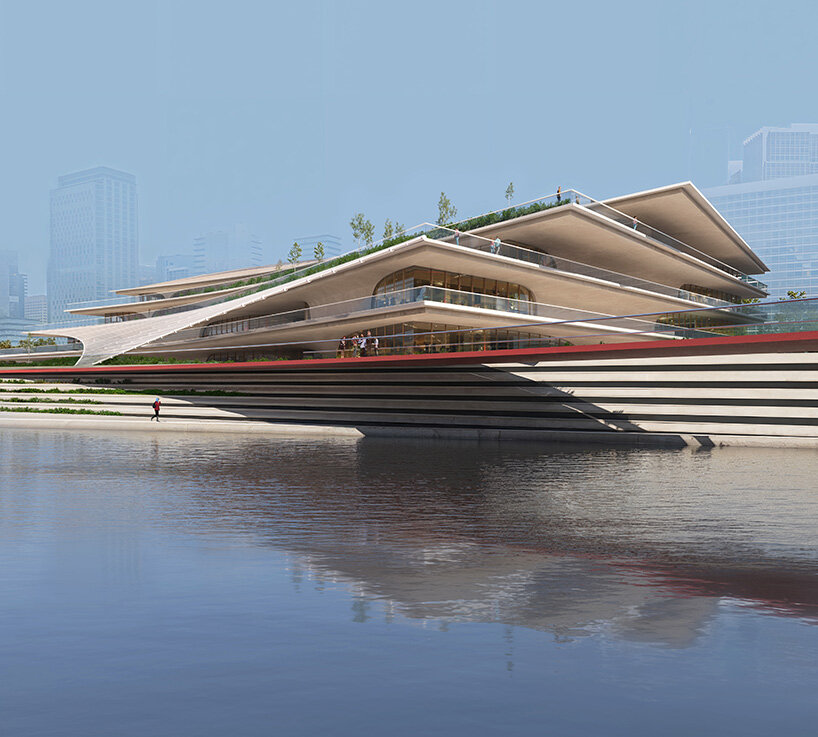
International Youth Centre: transparency and adaptability
The International Youth Centre adopts a more open and dynamic façade strategy. Its canal-facing elevations incorporate larger glazed areas framed by aluminium systems, supporting flexibility for auditoriums, studios, and exhibition spaces. Terraces and recessed façades provide shading while extending activities outdoors, reinforcing the building’s role as a hub for exchange and public events.
Across both buildings, façade design is closely aligned with environmental performance. High-performance glazing, aluminium structural systems, and passive shading strategies respond to Hangzhou’s humid subtropical climate, while the overall development integrates sponge-city principles to manage water, heat, and long-term resilience.
Together, the Qiantang Bay cultural buildings demonstrate how contemporary façade design can combine function, climate intelligence, and civic presence, positioning architecture as an active interface between people, culture, and the urban environment.
Project info:
Name: Qiantang Bay Cultural District
Architect: Zaha Hadid Architects | @zahahadidarchitects
Location: Hangzhou, China
Principal: Patrik Schumacher
Competition project directors: Lei Zheng, Simon Yu
Competition associate: Jinqi Huang
Competition project architect: Yenfen Huang
Competition project leads: Yenfen Huang, Charles Harris, Sonia Magdziarz
Source: ZHA with additional information added information added by Glass Balkan