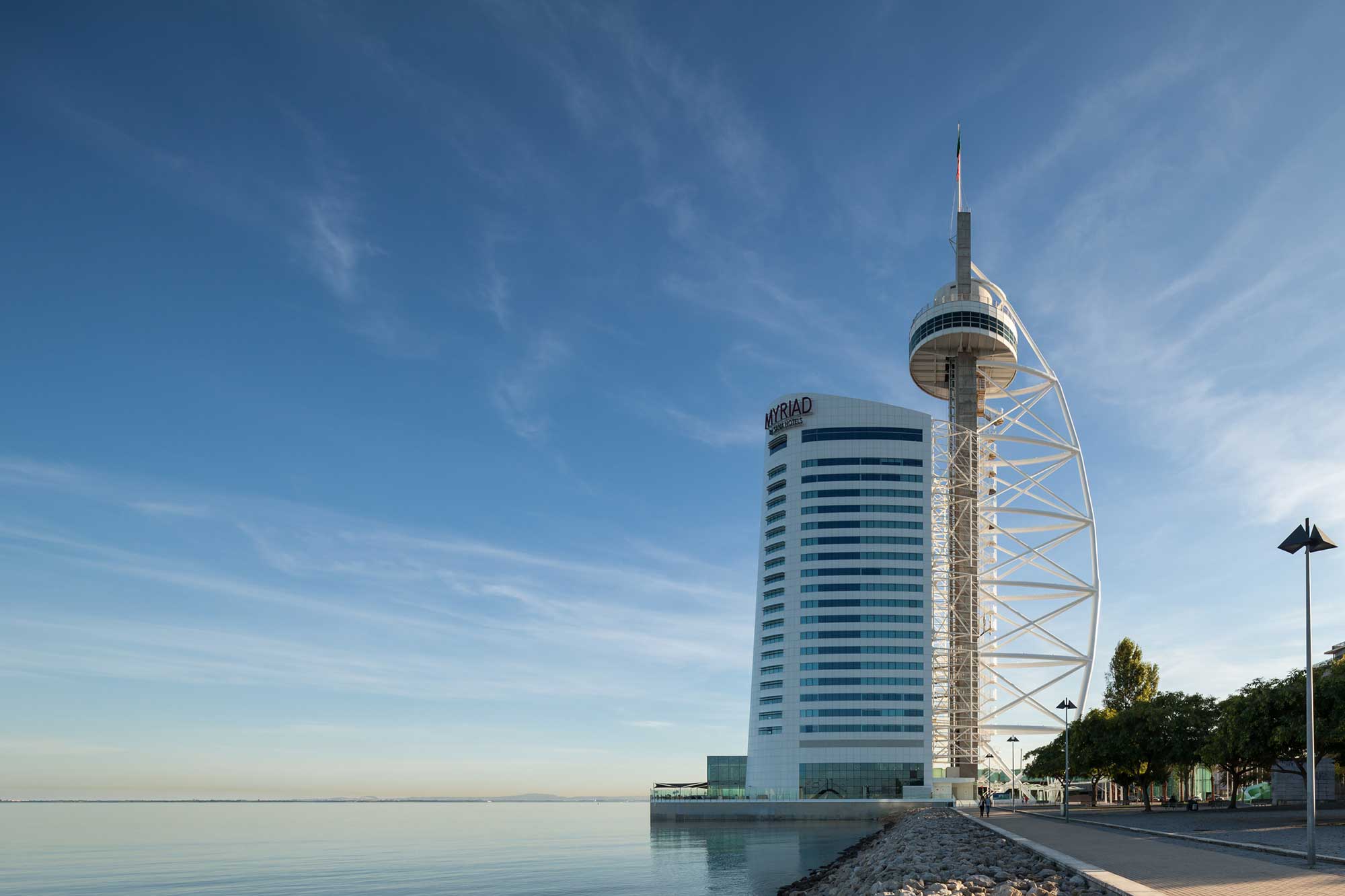
Completed in 1998 for Expo ’98, the Vasco da Gama Tower (Torre Vasco da Gama) is one of the clearest examples in Portugal where a building’s external identity was not created through a conventional curtain wall, but through a façade strategy driven by structure, symbolism, and skyline visibility. Located in Parque das Nações, Lisbon, the tower was conceived as a landmark object, an architectural “signal” for the waterfront regeneration that defined the city’s late-1990s transformation.
The project, designed by Leonor Janeiro and Nick (Nicholas) Jacobs, is repeatedly described as a tower inspired by a Portuguese caravel. This narrative is not branding, it is the foundation of the envelope concept.
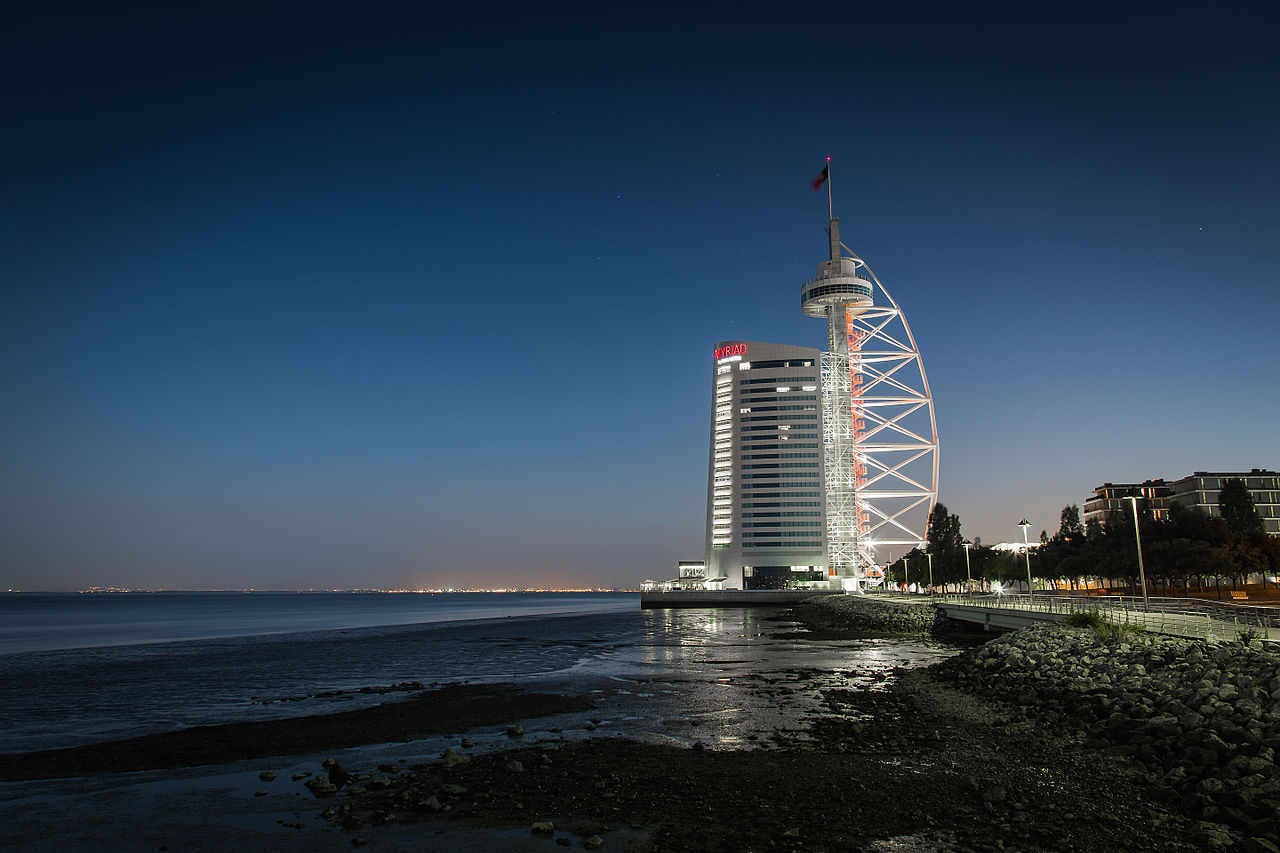
The main vertical volume operates as the “mast”, while the defining external feature is a metallic “sail”: a steel lattice structure attached to the tower’s body. Instead of an enclosed glazed skin dominating the reading of the building, the “sail” becomes the primary façade layer, a visible architectural element that frames the tower, controls its silhouette, and creates depth and dimensionality when seen from different viewpoints across the riverfront.
The tower combines a concrete central core with steel framing, producing a hybrid structural system where the external metal component is not a secondary addition, but part of the building’s defining geometry. The result is a façade that reads as an engineered surface: a controlled rhythm of diagonals, tubular members, and open voids that deliver a lightweight visual character while reinforcing the maritime reference. 
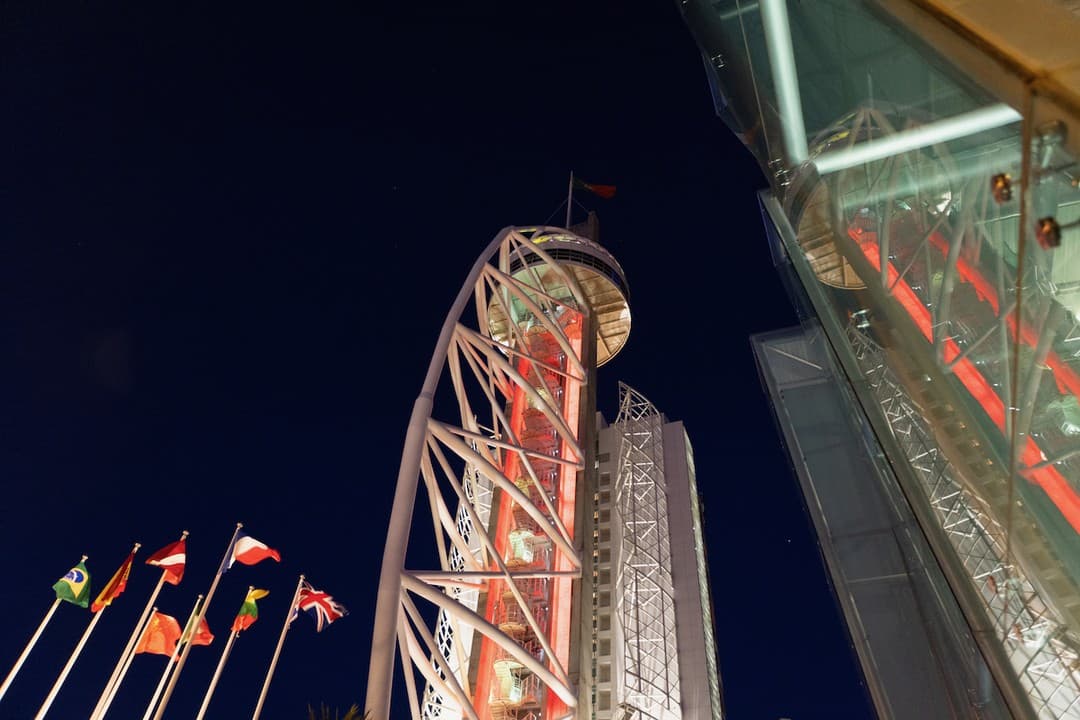
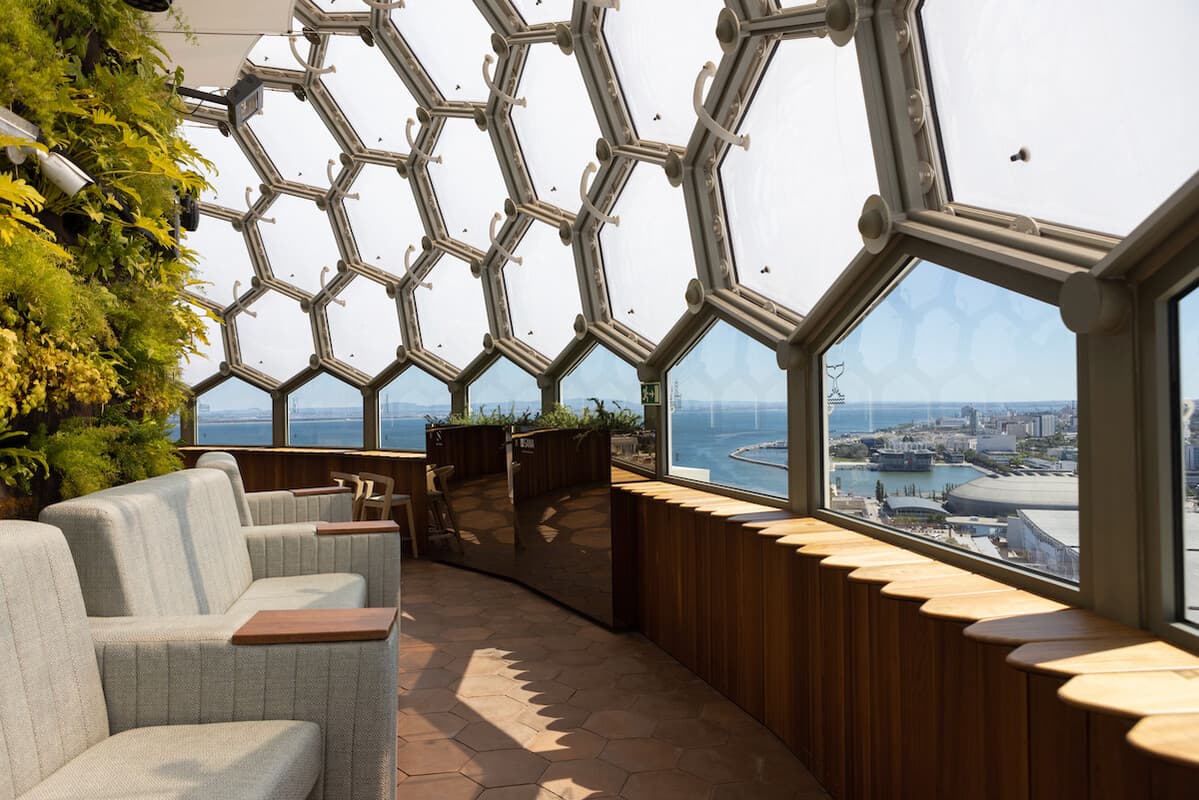
Unlike modern glazed towers where transparency and reflection carry the architectural message, Vasco da Gama Tower uses contrast: a solid vertical shaft paired with an open, breathable lattice layer. This two-part composition creates the effect of “movement” on the skyline, the sail appearing lighter, almost floating alongside the main structure. At night or in changing daylight, the lattice structure holds a strong graphic presence, functioning like a signature façade frame rather than a sealed building envelope.
A later phase added a new façade narrative next to the original structure. In 2012, the site was expanded with the Myriad by SANA Hotels, designed by Nuno Leónidas, introducing a contemporary hospitality volume with a more typical modern envelope language. The pairing is instructive: one element defines its façade through structural symbolism (steel sail), while the newer addition reflects a more current glass-and-cladding approach, showing how Lisbon’s riverfront architecture transitioned from Expo-era iconography to today’s premium development standards.
Source: Vasco da Gama Tower with additional information added by Glass Balkan