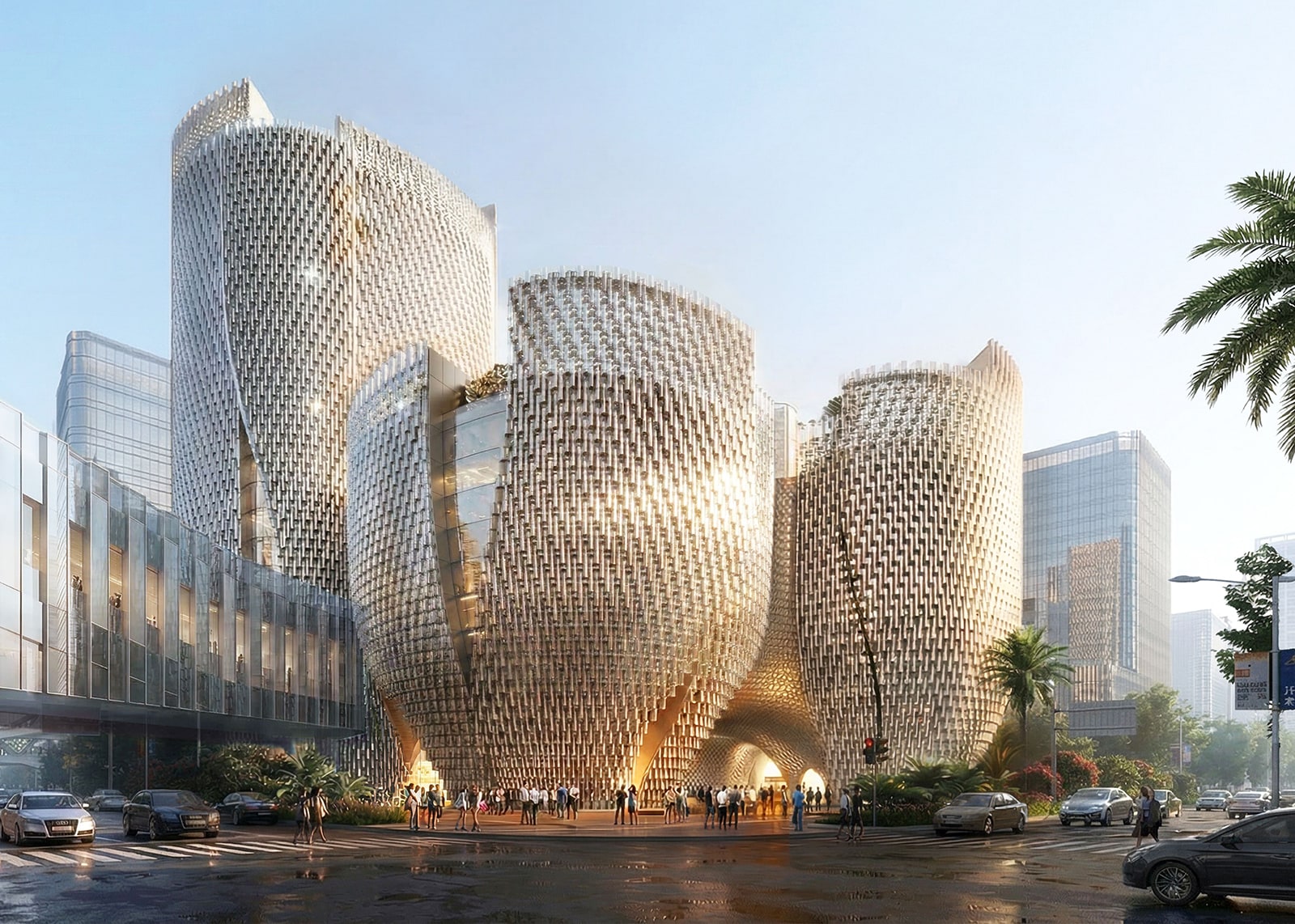
The Róng Museum of Art in Shenzhen, designed by Büro Ole Scheeren, demonstrates how the city’s technological momentum is shaping a new generation of architectural façades. Located in Nanshan District, the museum integrates five sculptural volumes that rise from slender bases and expand upward, creating elevated exhibition pavilions above a shaded public plaza. The design blurs the line between building and urban space, allowing the ground level to function as a naturally ventilated forum, accessible for gathering, walking, and informal engagement.
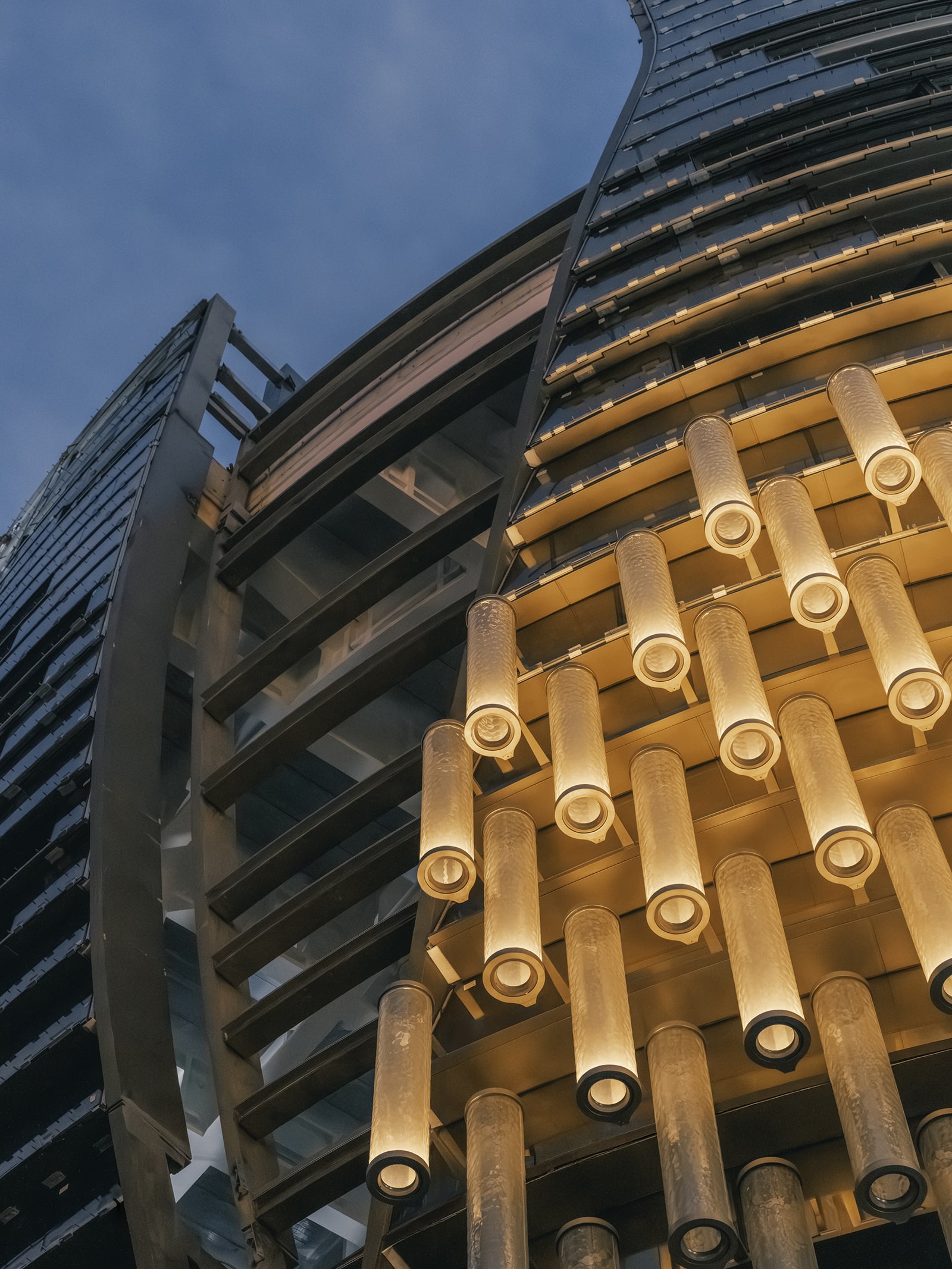
The building’s most striking feature is its double-layered façade system. A secondary skin of suspended glass tubes wraps each volume, with spacing and density carefully parametrically calibrated. This system generates a textured, dynamic surface that responds to sunlight, diffuses interior light, and reduces heat gain while maintaining visual openness. The façade is more than a visual statement: it supports natural ventilation, provides shading, and channels rainwater to ground-level retention areas, showcasing how architectural form and environmental performance can converge.
The stepped volumes of the museum create a cascading effect, with each layer subtly receding to emphasize the sculptural quality of the structure. During the day, sunlight interacts with the layered glass, creating shifting reflections and nuanced shadows inside the galleries. At night, integrated lighting activates the individual tubes in sequence, transforming the museum into a softly glowing landmark visible across Shenzhen’s skyline.
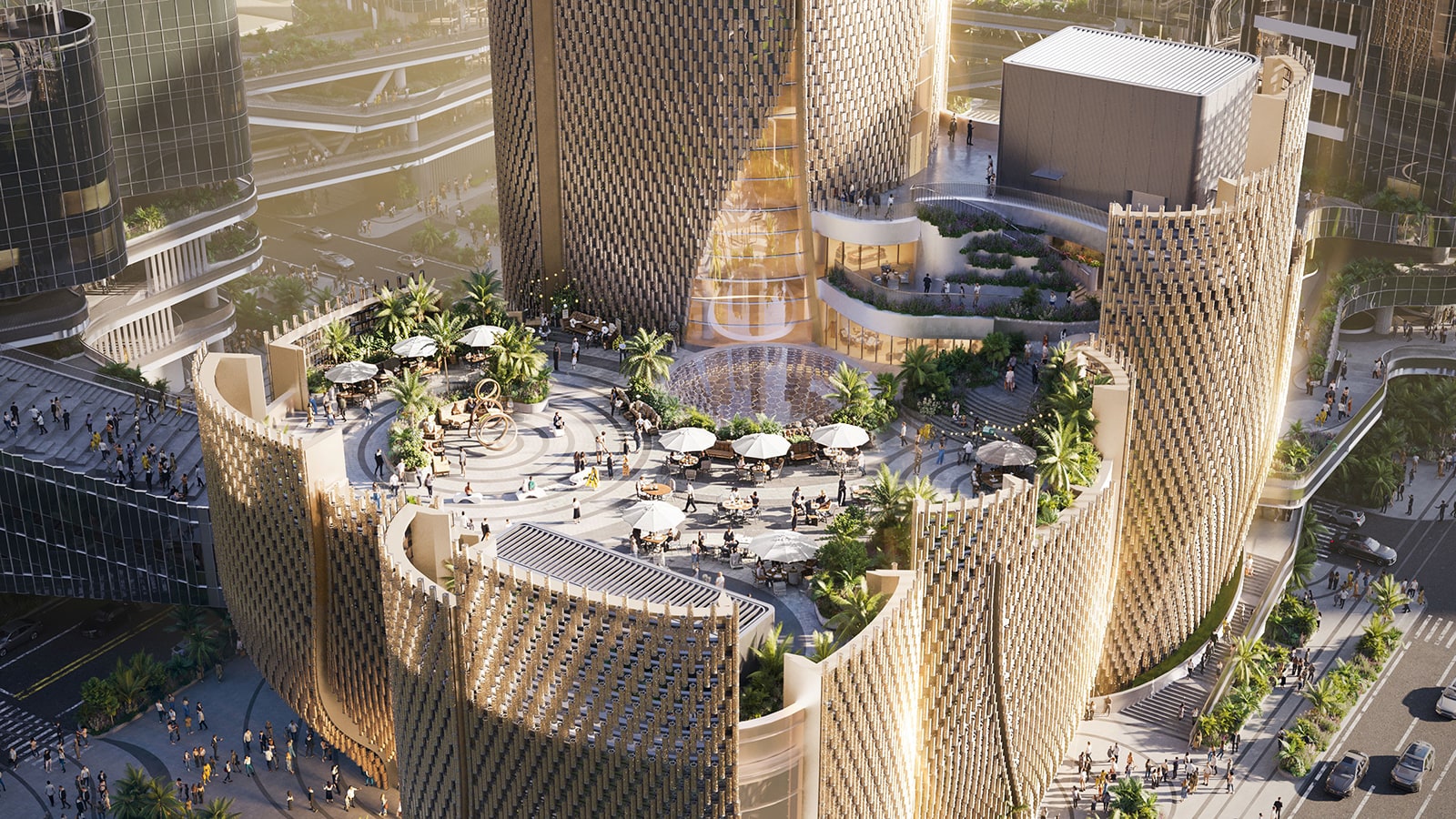
Internally, movement follows a gradual ascent along a staircase hugging the façade, offering changing perspectives of the surrounding urban context and waterfront. The gallery spaces are flexible, with double-height rooms for large installations and smaller adjacent areas for more intimate exhibits. This organization supports a variety of curatorial approaches and public engagement. 
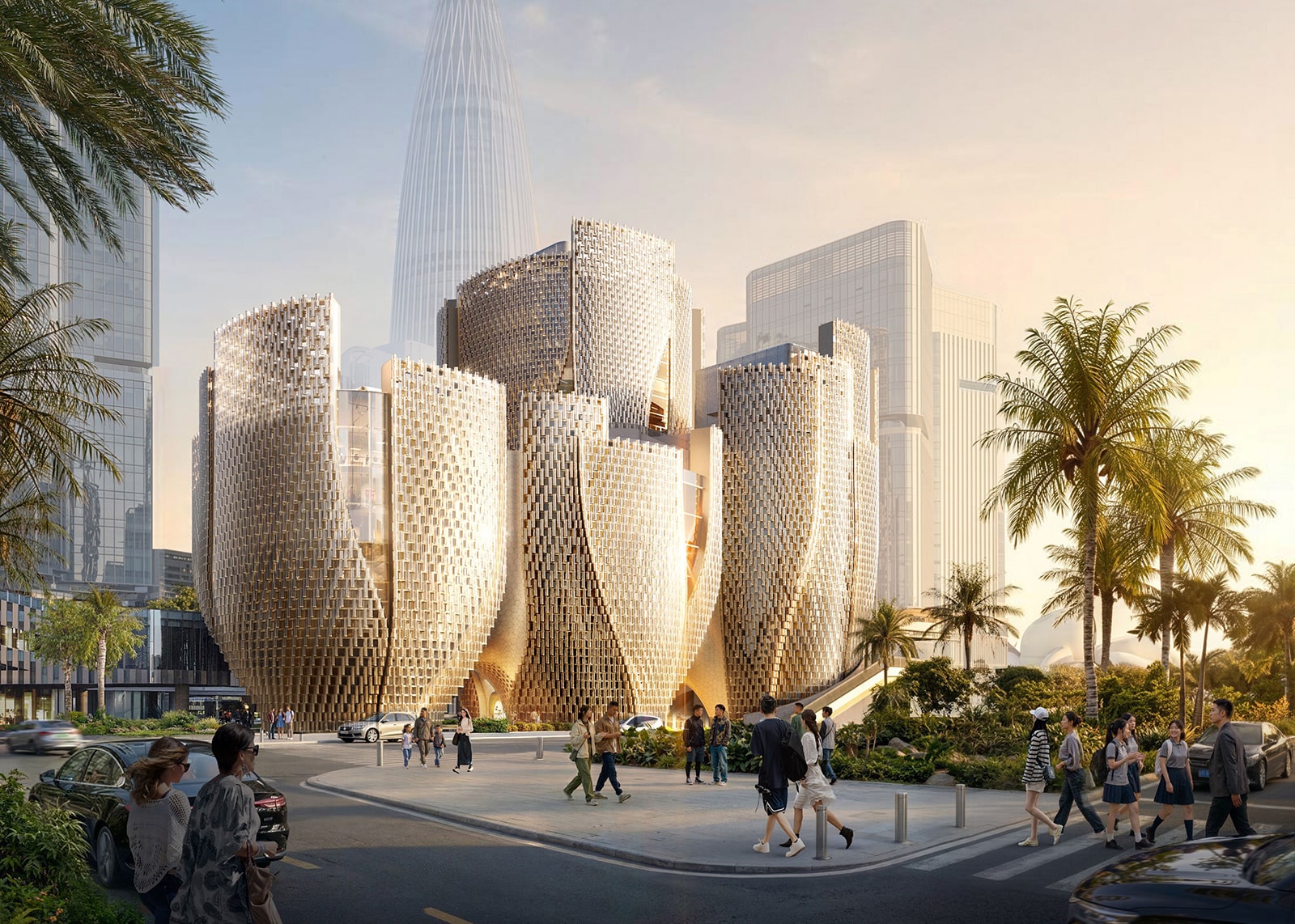
Through its façade, Róng Museum of Art demonstrates how Shenzhen’s tech-driven culture is redefining material, environmental, and aesthetic strategies in contemporary architecture. The project illustrates that innovation is not just in function or form but in how a building engages the city, interacts with light, and performs sustainably, establishing a new benchmark for cultural architecture in China.
Source: Büro Ole Scheeren with additional information added by Glass Balkan