A pilot project led by the Zurich University of Applied Sciences (ZHAW) in collaboration with Glas Trösch has demonstrated that end-of-life windows can be successfully recycled back into float glass, marking a significant step toward a closed-loop recycling system for architectural glazing.
Although recycling flat glass can significantly reduce energy consumption in float glass production, large quantities of post-consumer glazing still end up in landfill. The initiative, launched in mid-2025 under the project name “Windows of Opportunities,” set out to prove that a full recycling chain for insulating glass units is technically achievable.
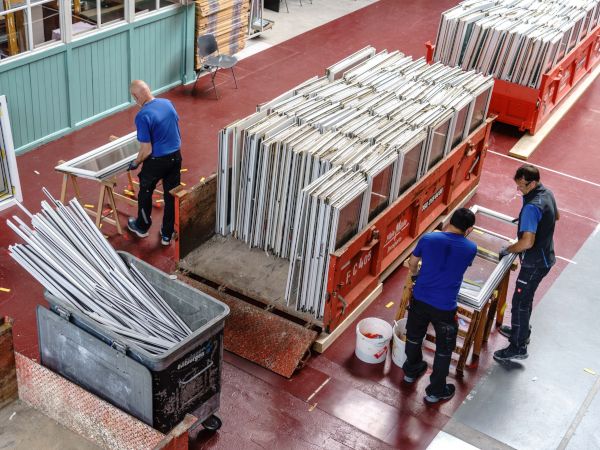
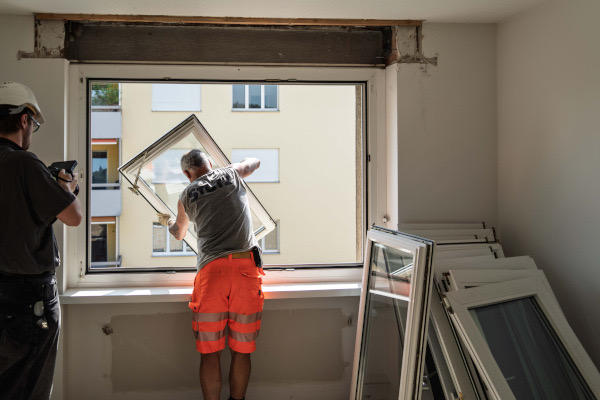
The project began with the removal of 375 window sashes from a residential building in Winterthur, Switzerland. After dismantling, the windows were transported to a nearby Glas Trösch facility where installers manually separated the insulating glass units from the PVC frames.
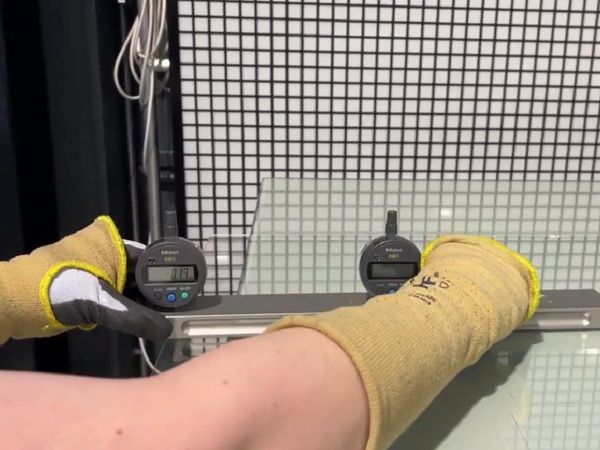
The frames were sent to specialised recyclers, while the glass was crushed, cleaned and processed into high-purity cullet. Maintaining purity is essential for float glass production, so the material underwent strict quality analysis before approval. 
Within a few weeks of dismantling, more than 2.6 tonnes of recycled glass were successfully reintroduced into the melting furnace at a Glas Trösch float glass plant. The process resulted in CO₂ savings of approximately 1.33 tonnes.
The pilot marks the first documented project in Switzerland to trace the full recycling chain of post-consumer insulating glass units, from dismantling and separation through sorting, cleaning and remelting.
The results demonstrate that all stages of the process are technically feasible with current technology, provided that strict quality standards for glass cullet are maintained. However, many steps were carried out manually, making the process relatively time-intensive and highlighting opportunities for future automation and optimisation.
According to Michelle Schneider, project manager at ZHAW’s Institute for Constructive Design, flat glass recycling is still at an early stage, making practical demonstrations particularly valuable for the industry.
Lars Zimmerli, member of the Glas Trösch Group Management, noted that the experience gained from the project provides important insights into how recycling systems can be organised to be not only technically and logistically effective, but also economically viable.
Source: ZHAW with additional information added by Glass Balkan