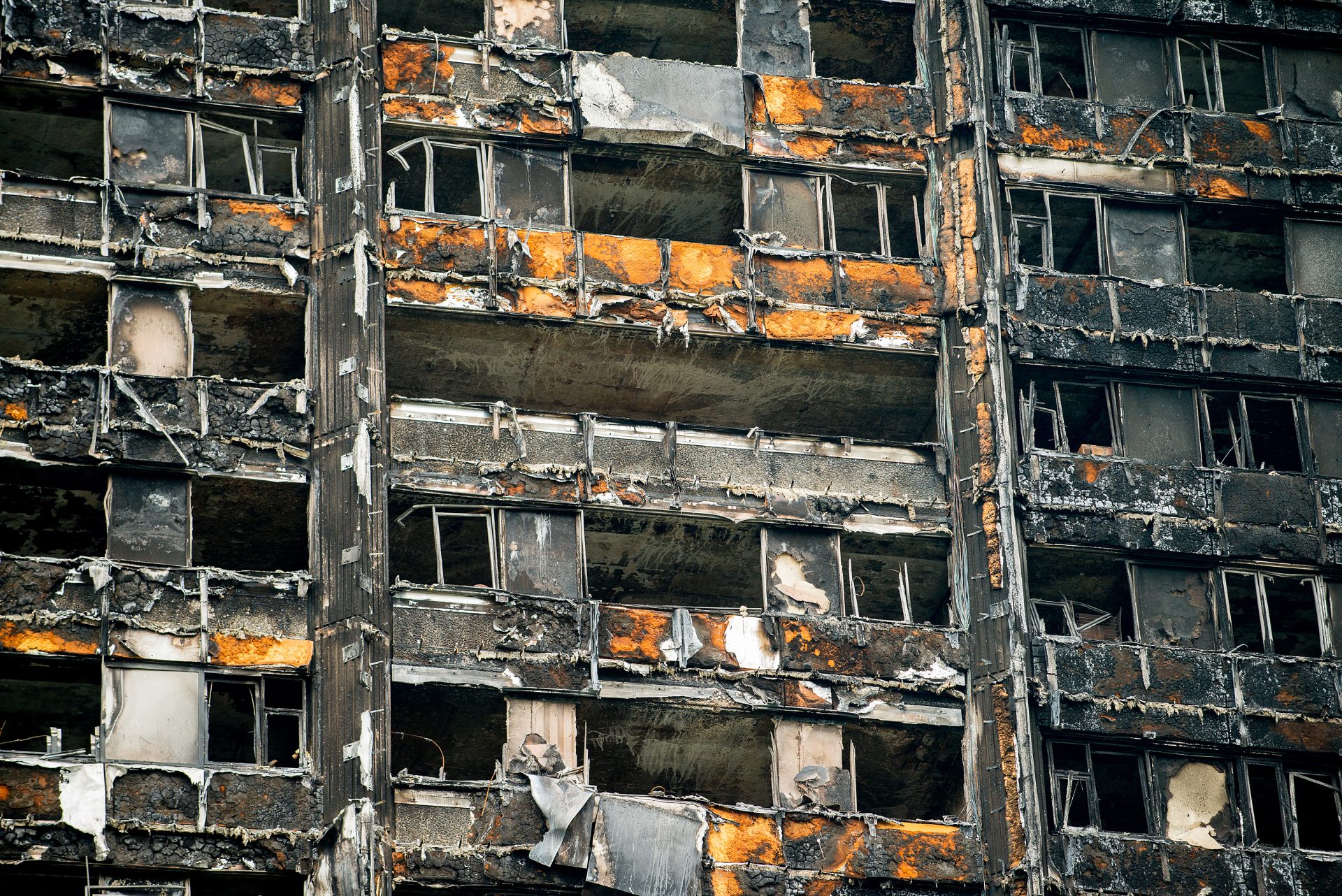
The Grenfell Tower fire remains a defining moment for building safety in the United Kingdom, prompting sweeping regulatory changes after 72 lives were lost in June 2017. The disaster exposed critical failures in façade systems, leading to stricter fire safety rules, including updates to Approved Document B and tighter restrictions on combustible materials in high-rise residential buildings.
Although laminated glass was not formally banned, its use in balcony balustrades became limited. Concerns centered on interlayers such as PVB and SGP, which were thought to pose fire risks due to potential melting or dripping during a blaze. This cautious stance, however, has been increasingly challenged by the glass industry.
Research has played a key role in reshaping the conversation. A 2021 study, “Qualitative Assessment of Fire Hazard Posed by Laminated Glass Balcony Balustrades on Fire Spread,” found no evidence linking laminated glass balustrades to increased fire spread beyond the balcony of origin. These findings have strengthened industry calls for a more evidence-based regulatory approach.
Now, the Health and Safety Executive is reviewing existing guidance, including possible exemptions that would allow laminated glass balustrades under specific conditions. Proposed revisions aim to balance safety with practical application, reflecting a shift toward performance-based standards. 
Source: USGlassMag with additional information added by Glass Balkan