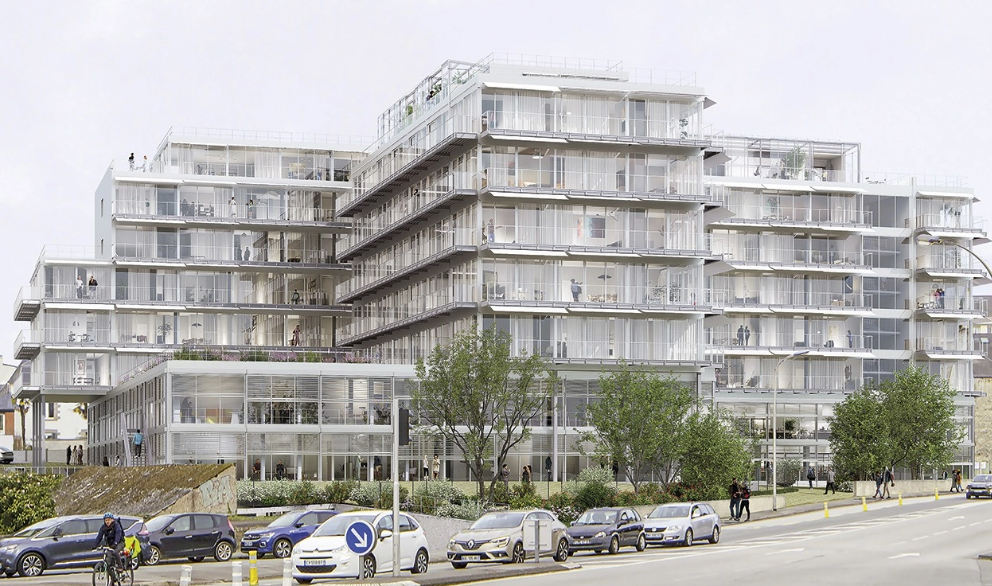
The transformation of the former Cité Administrative in Vannes into a mixed-use complex of housing and offices is fundamentally a façade project. While the concrete structure of the 1967 modernist building remains intact, its envelope undergoes a complete redefinition, with glass playing the central role.
Originally characterized by opaque asbestos-containing panels and a rigid administrative expression, the building is being stripped back to its structural frame. The intervention replaces these outdated façades with high-performance glazed envelopes, introducing transparency, environmental performance, and spatial flexibility.
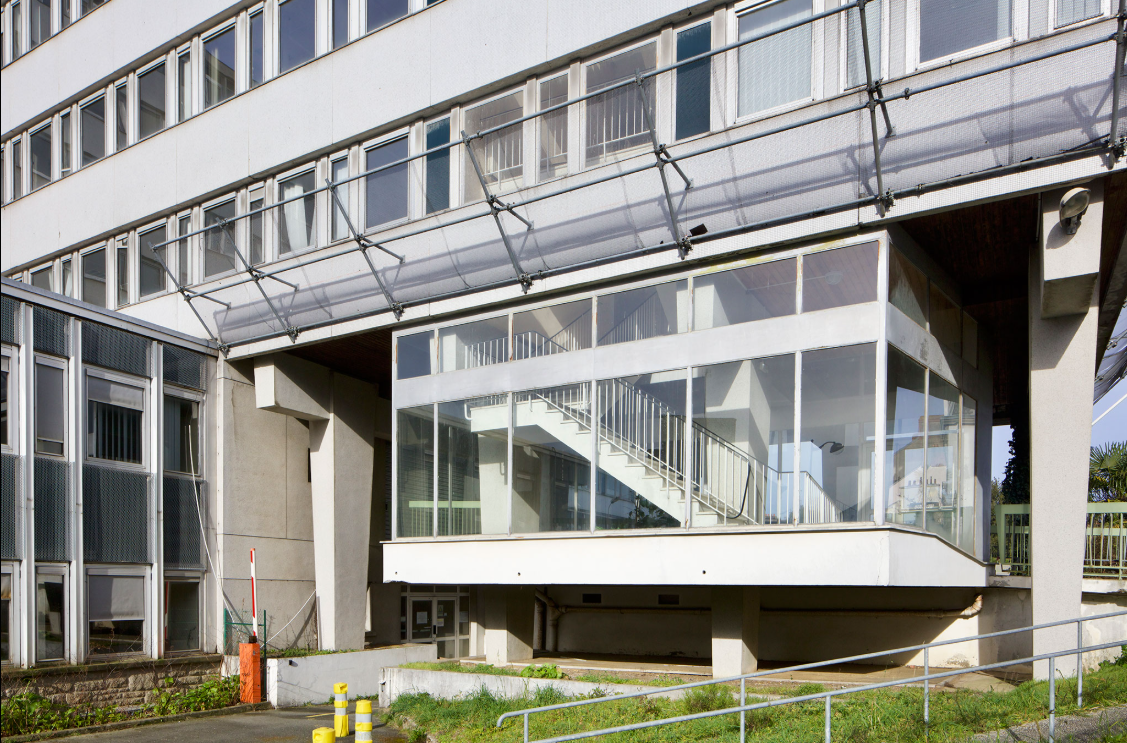
The design strategy follows a principle long associated with Lacaton & Vassal: never demolish when transformation is possible. By preserving the concrete skeleton – columns, beams, slabs – the project significantly reduces embodied carbon. The new glass façade becomes a climatic and architectural upgrade layered onto the existing structure.
A defining feature of the intervention is the addition of continuous projecting balconies running along the elevations. These balconies form a transitional buffer zone between interior and exterior. Behind them, floor-to-ceiling glazing allows abundant daylight into the new apartments and office spaces. The depth of the balconies enables seasonal adaptability, acting as winter gardens that improve thermal comfort and solar control. 
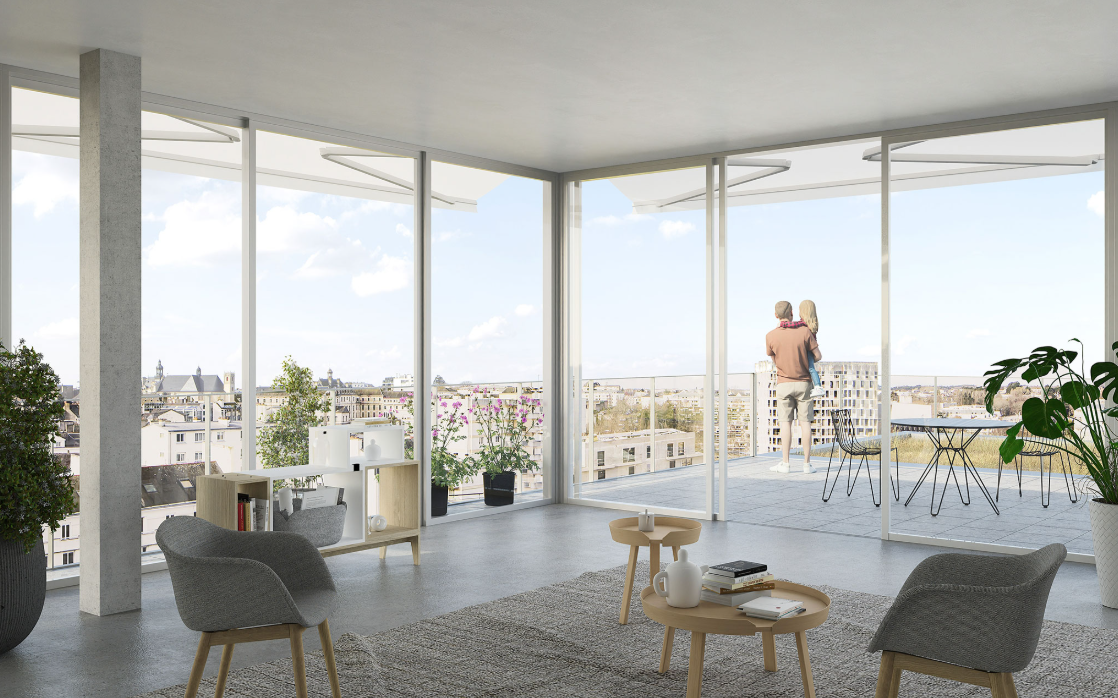
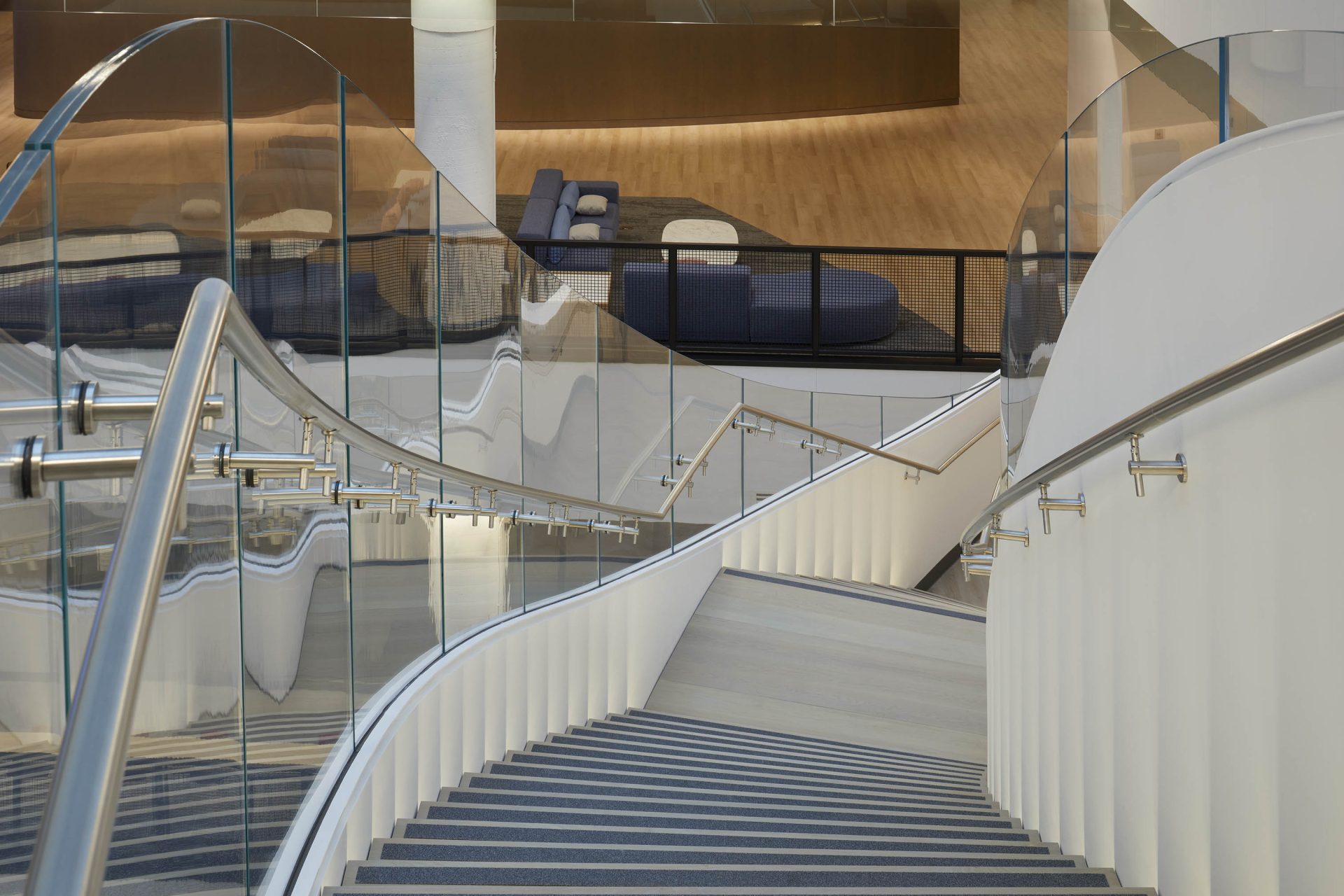
Technically, the façade is expected to employ insulating glass units with low-emissivity coatings to enhance energy efficiency, combined with thermally broken aluminium framing systems. Laminated safety glass is likely used for balcony balustrades and enclosure elements, ensuring compliance with residential performance standards.
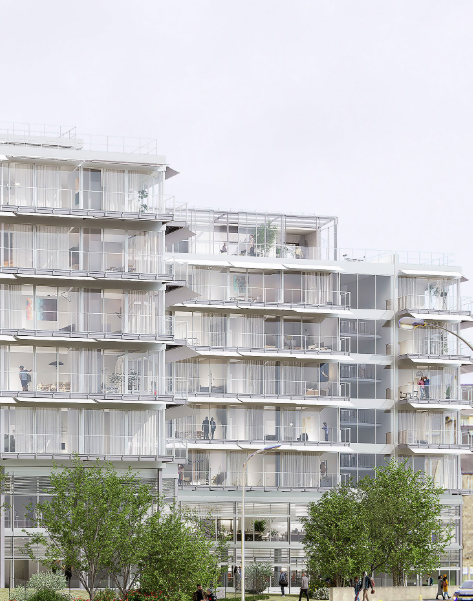
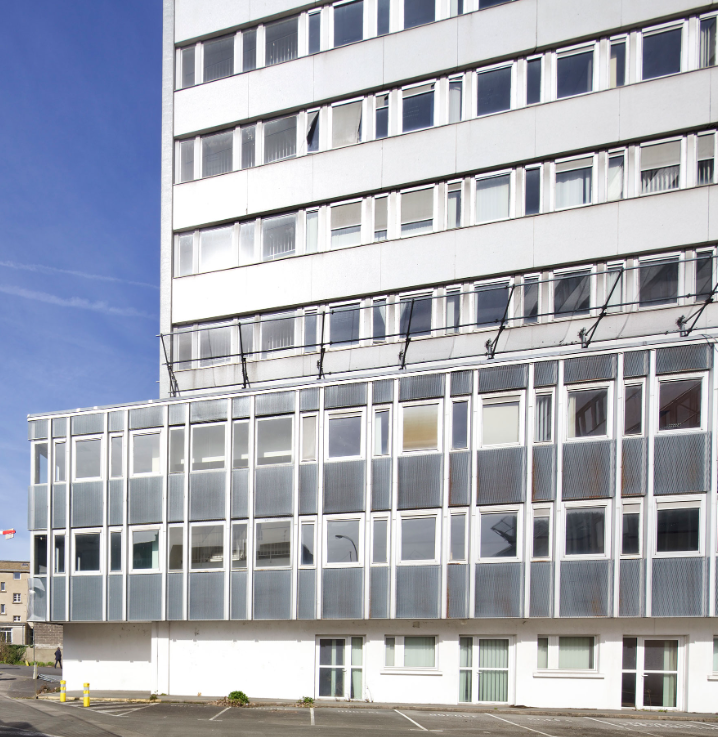
The result is not an erasure of the building’s modernist identity, but its evolution. The horizontal rhythm of the original design is preserved, while transparency replaces opacity. Glass becomes the tool that converts an administrative complex into 176 residential units and mixed-use spaces, including 35% social and affordable housing.
Source: metalocus.es with additional information added by Glass Balkan