Escalating geopolitical tensions involving Israel, the United States and Iran are beginning to affect global energy markets, raising concerns for energy-intensive industries such as glass manufacturing.
The conflict has increased uncertainty around energy supply in the Middle East, particularly around the Strait of Hormuz, a strategic shipping route through which around 20 percent of the world’s oil and liquefied natural gas shipments pass. Any disruption to this corridor can quickly influence global energy prices and market stability.
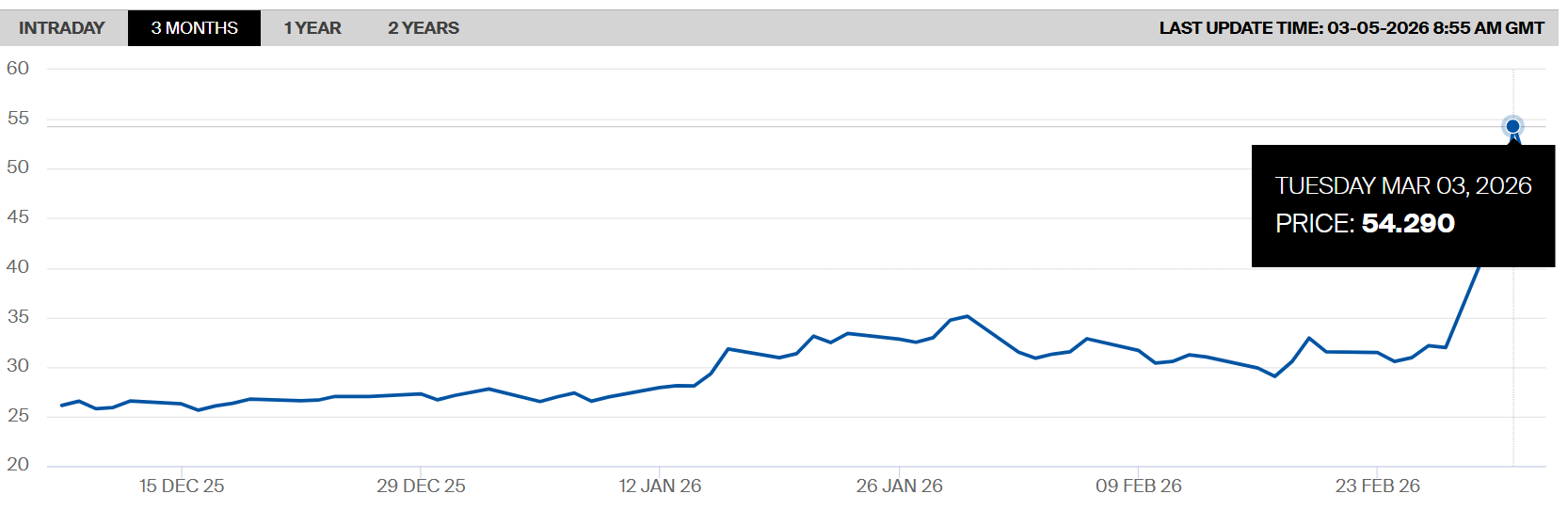
Energy markets have already reacted with increased volatility. European natural gas prices traded on the Dutch TTF hub, the benchmark for gas prices in Europe, have surged sharply in recent months. Prices have risen from around €25 per megawatt hour in late 2025 to nearly €65 per megawatt hour in early March 2026, representing an increase of more than 150 percent. The rise reflects growing concerns about supply disruptions and tighter competition for global LNG shipments.
Glass manufacturing is one of the most energy-intensive industrial processes. Float glass furnaces must operate continuously at temperatures above 1,500–1,600°C to melt raw materials such as silica sand, soda ash and limestone. 

To maintain these temperatures, most glass furnaces rely heavily on natural gas, making the industry particularly sensitive to fluctuations in energy prices. In many European glass plants, energy can account for 20 to 35 percent of total production costs, and this share can increase significantly during periods of high gas prices.
When energy costs rise, manufacturers face higher operating expenses for furnace operation, raw material melting and thermal processing. As a result, producers may adjust glass prices or optimise production in order to manage the increased costs.
Higher energy prices can eventually influence the broader construction supply chain. If gas prices continue to rise, glass manufacturers may face pressure to increase prices for products such as float glass, coated architectural glass and insulated glass units.
Source: Glass Balkan