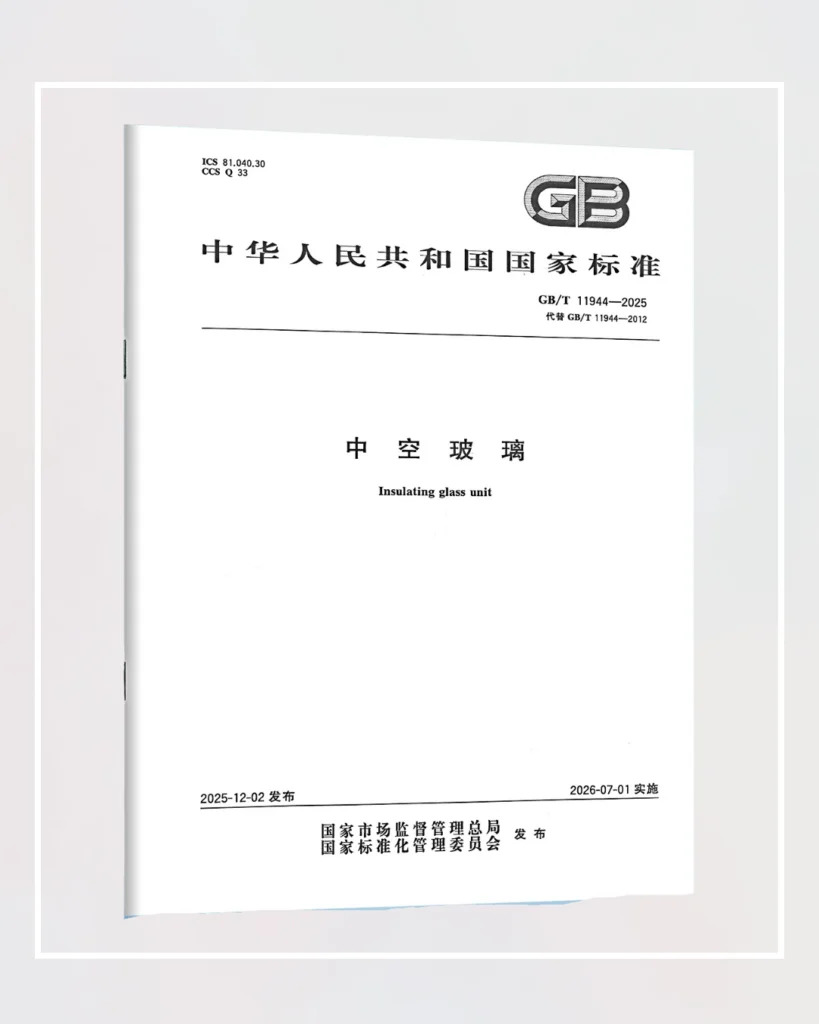
China’s revised GB/T 11944-2025 Insulating Glass standard officially came into effect on July 1, 2026, introducing significant updates to the country’s requirements for gas-filled insulating glass units (IGUs). The new standard strengthens quality control, performance verification, and durability testing while supporting China’s broader objective of developing safer, greener, and more energy-efficient buildings.
The revision aligns with the government’s “good housing” initiative, announced in the 2026 Government Work Report, which calls for the construction of buildings that are safe, comfortable, green, and intelligent. Since insulating glass is a critical component of the building envelope, the updated standard aims to improve thermal performance, reduce energy consumption, and ensure greater consistency across manufactured products.
One of the most notable changes is the formal recognition of gas-filled insulating glass as an independent technical term under Clause 3.3. Unlike the previous GB/T 11944-2012 edition, where gas-filled units were listed only as a product classification, the revised standard defines them separately. It also expands the terminology from specific gases such as argon and krypton to the broader category of inert gases, creating flexibility for future glazing technologies, including mixed-gas and xenon-filled insulating glass.
The updated standard also introduces more rigorous durability requirements. Although the minimum initial inert gas concentration remains 85%, the evaluation of gas retention after accelerated aging has been strengthened. Instead of requiring only a minimum gas concentration of 80%, the revised standard now requires an average concentration of at least 82%, while maintaining the 80% minimum for individual measurements. The dual requirement is intended to improve production consistency and ensure reliable thermal insulation throughout the service life of insulating glass units. 

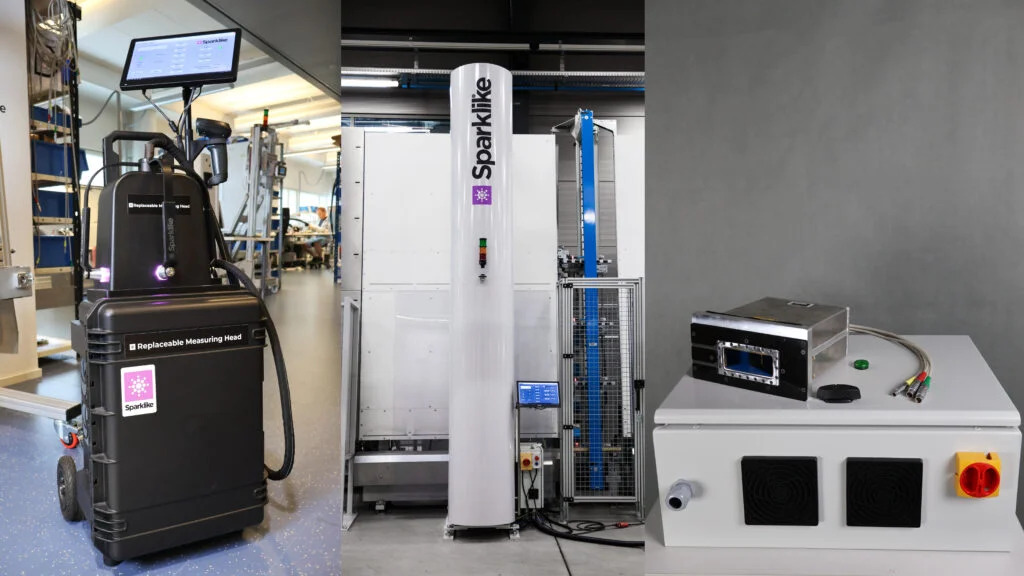
A major technical addition is Appendix H, which introduces Tunable Diode Laser Absorption Spectroscopy (TDLAS) as an approved non-destructive method for measuring inert gas concentration. Traditional testing methods require breaking the sealed insulating glass unit to analyze the gas content, limiting inspections to sample testing and preventing repeated measurements on the same unit. TDLAS eliminates these limitations by measuring gas concentration through the glass without damaging the sealed cavity.
The non-destructive approach enables 100% inline quality inspection, verification of installed insulating glass, and repeated testing before and after durability or aging tests. It also provides manufacturers and researchers with more detailed data on gas retention, seal performance, and leakage rates, supporting the development of improved spacer systems, sealing materials, and manufacturing processes.
According to Sparklike, the combination of stricter gas concentration requirements and the adoption of TDLAS technology represents a significant step forward for China’s insulating glass industry. The updated GB/T 11944-2025 standard provides a more robust framework for quality assurance, helping manufacturers produce higher-performing insulating glass while giving developers, contractors, and building owners greater confidence in the long-term energy performance of gas-filled glazing systems.
Source: Sparklike with additional information added by Glass Balkan