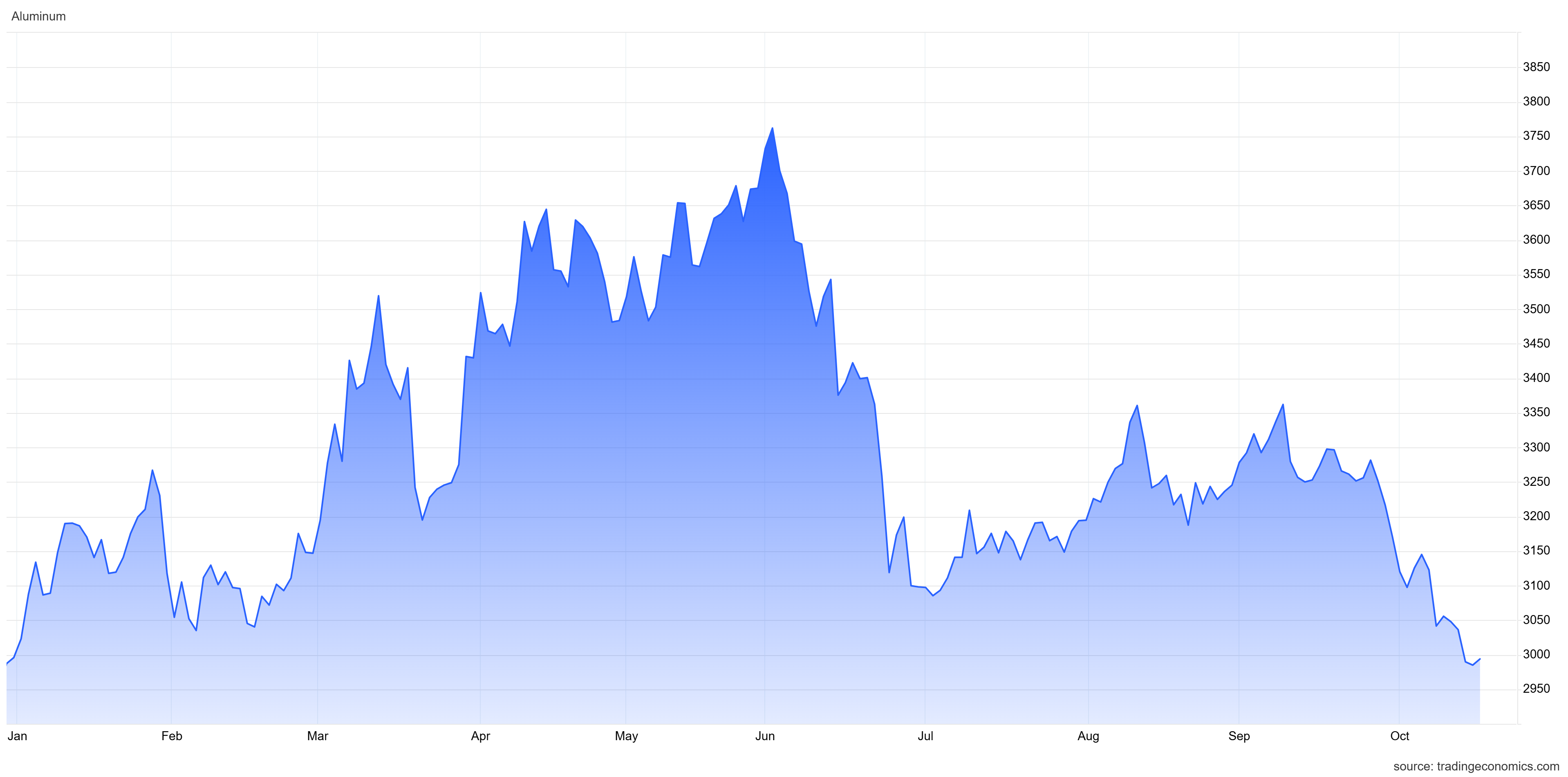
Aluminium prices have fallen below $3,000 per tonne in October, reflecting a shift in market conditions after months of supply uncertainty. According to Trading Economics, the benchmark price stood at $2,985 per tonne on 15 October, down 8.8% over the previous month. Despite this decline, prices remained 6.64% higher than a year earlier.
The recent movement comes amid changing global supply conditions. Disruptions to aluminium production in the Middle East, including damage to smelting facilities and shipping difficulties around the Strait of Hormuz, have removed significant production capacity from the market. At the same time, increased exports from China, additional output from Indonesia and the gradual recovery of some production facilities have helped ease concerns about global availability. These competing pressures continue to shape price movements.
European Buyers Face a Different Price Reality
A lower benchmark price does not necessarily translate into cheaper aluminium for European manufacturers. On 14 October, Reuters reported that the European duty-paid physical aluminium premium stood at around $559 per tonne above the London Metal Exchange (LME) cash price, approximately double its level at the end of February. This premium reflects the additional cost of obtaining physical metal in the European market, where supply constraints remain significant.
Alongside international supply pressures, Europe faces domestic challenges that can affect industrial activity. Protests, strikes and transport disruptions may temporarily restrict access to roads, ports and freight services, making deliveries more difficult and increasing logistics costs. Even when demonstrations concern wages, public spending or government policies rather than industry, their consequences can extend to businesses and supply chains. 
However, these disruptions should be distinguished from the factors directly influencing the global aluminium benchmark. There is currently no established evidence that European protests are responsible for the recent fall in aluminium prices. Their potential impact is more immediate at the operational level, particularly when transport interruptions delay deliveries or affect production schedules.
What It Means for the Glass and Façade Industry
For aluminium profile manufacturers, window producers and façade contractors, the market presents a mixed picture. Lower benchmark prices may offer some relief when purchasing raw materials, but elevated physical premiums, energy expenses, transport costs and processing charges can limit the benefit.
Companies sourcing aluminium across European markets should therefore monitor both LME prices and regional physical premiums rather than relying on the benchmark alone.
The coming months will depend on how global production recovers, whether geopolitical disruptions persist and how European industrial activity develops. For the glass, aluminium and façade sectors, the key question is not simply whether aluminium prices are falling, but whether the overall cost of obtaining and processing the metal will follow the same direction.
Source: Glass Balkan