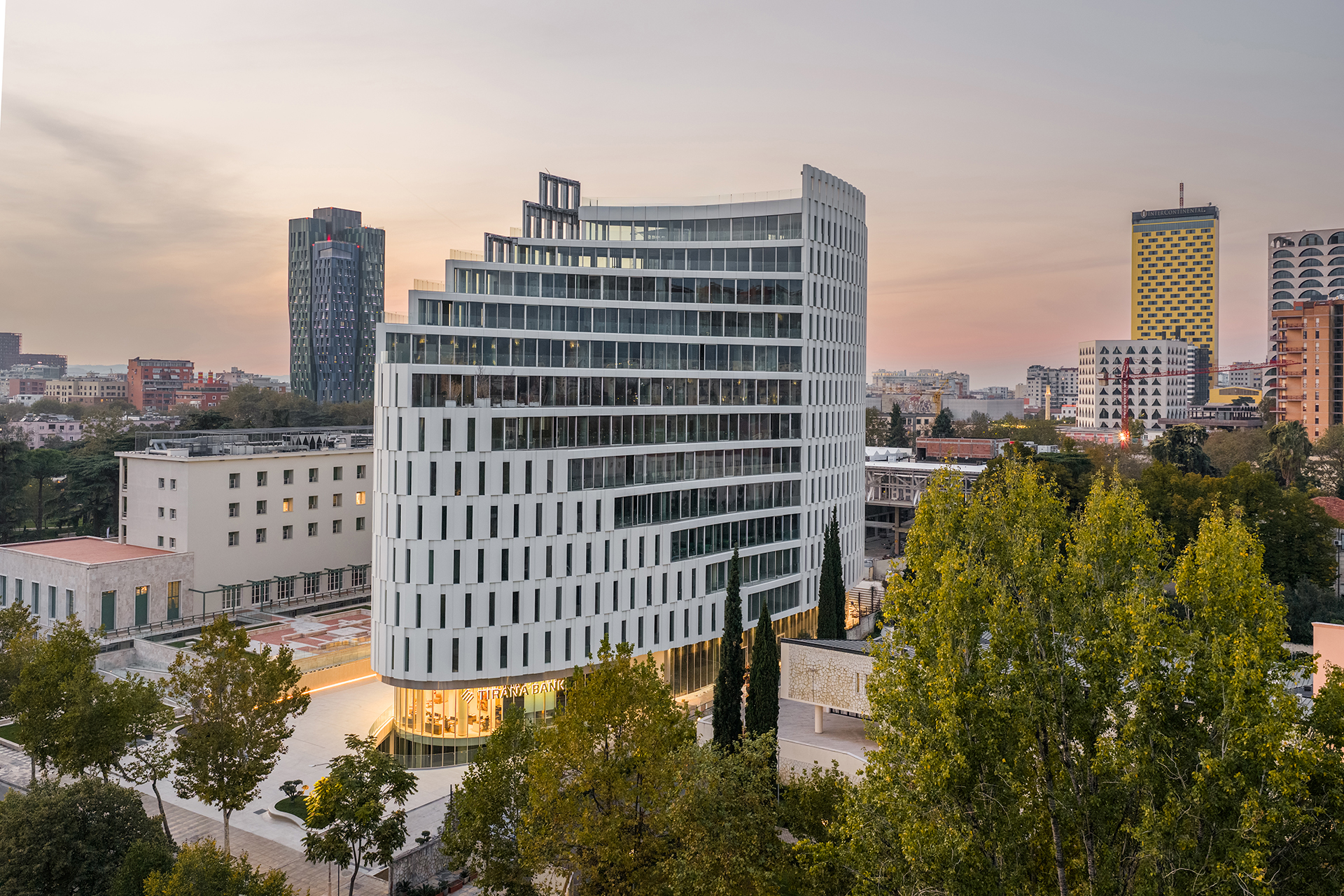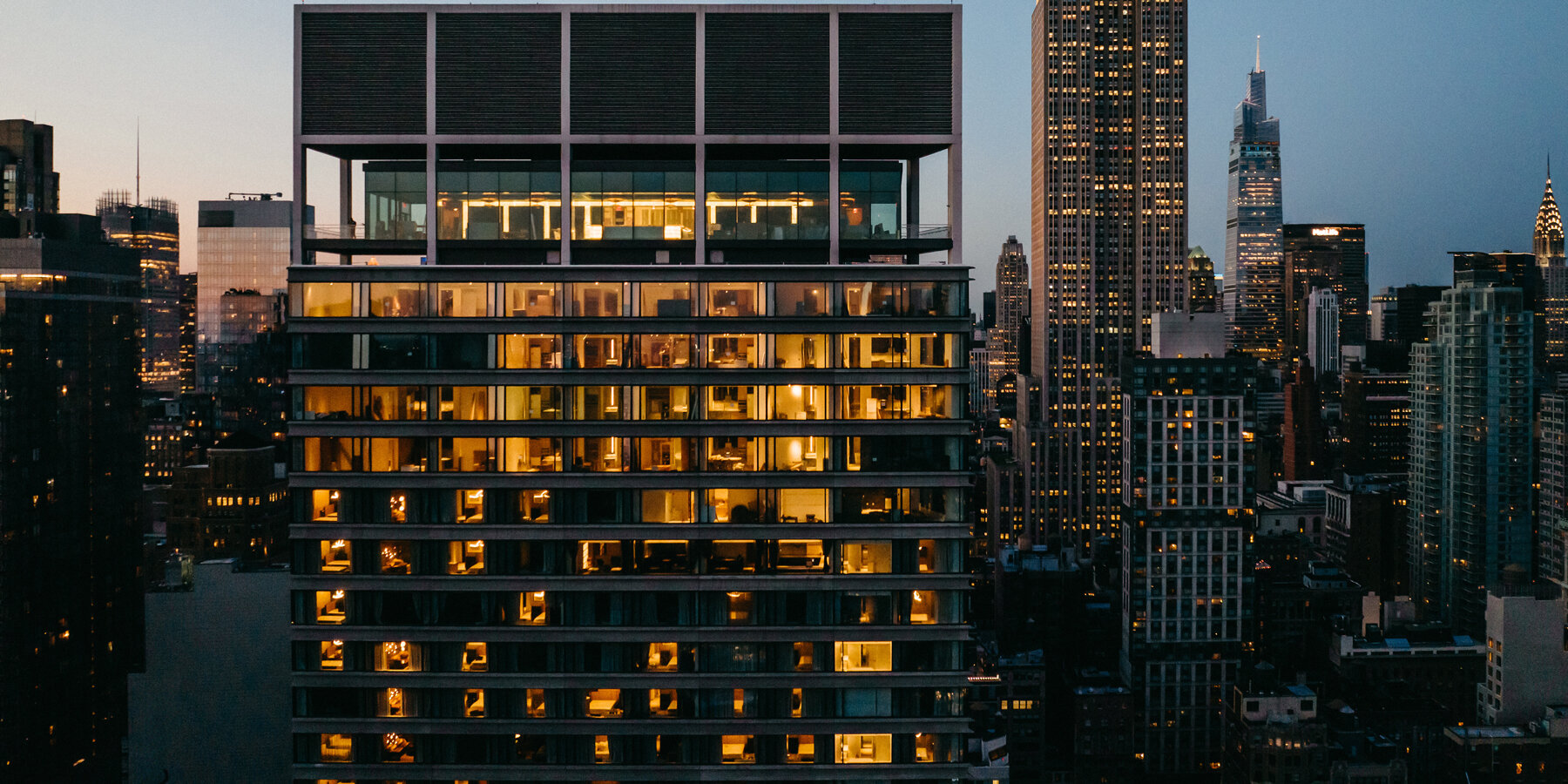
At 1185 Broadway, on the corner of Broadway and West 28th Street in Manhattan’s NoMad district, stands the Ritz‑NoMad, a tower that climbs 580 feet (≈ 176.8 m) into the skyline. The building rises on a foundation of a five‑story podium, which touches the street and anchors the hotel to the neighborhood. This base holds the entrance lobby, restaurants, a ballroom and event spaces, everything that lives at the human, street‑level scale.
Above the podium, a slender tower lifts on exposed concrete columns, visually separating the public “ground” floors from the hotel and residential tower above. That design gives the structure an elegant, elongated profile that distinguishes it from the surrounding lower-rise fabric.
Inside the tower there are 250 guest rooms and 16 luxury penthouse residences, giving the building both the character of a hotel and the permanence of a residence block.
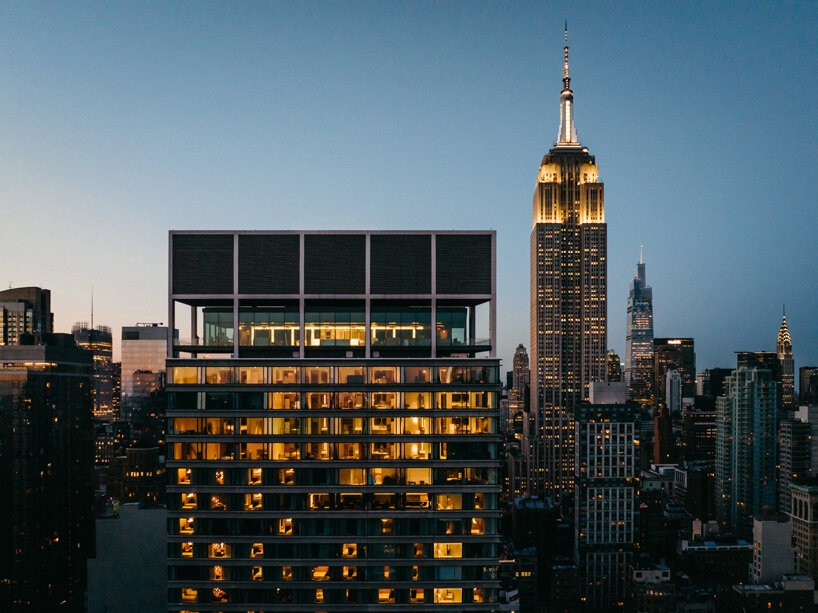
One of the most striking features of Ritz‑NoMad is how differently its southern and northern faces are treated, a deliberate architectural decision that gives the building dual personalities. On the southern elevation, the façade opens up: large windows alternate with precast concrete “C‑shaped spandrels”, creating horizontal bands that wrap around the tower. This grants guest rooms expansive views, over lower Manhattan, toward Madison Square Park and the broader cityscape, and ensures abundant natural light inside. 
In contrast, the northern façade is far more restrained: it is largely composed of cast‑in‑place and precast concrete panels with narrow, vertical “punch” windows, a solution driven by functional needs (elevator cores, services, structural wall) and offering a solid, sculptural presence.
The podium continues that aesthetic logic: using the same precast concrete material but with larger panels and deep horizontal reveals, interrupted by long ribbons of windows. The result at street‑level is a blocky, substantial base that nonetheless invites street activity – retail, restaurants, entryways – blending mass with transparency.
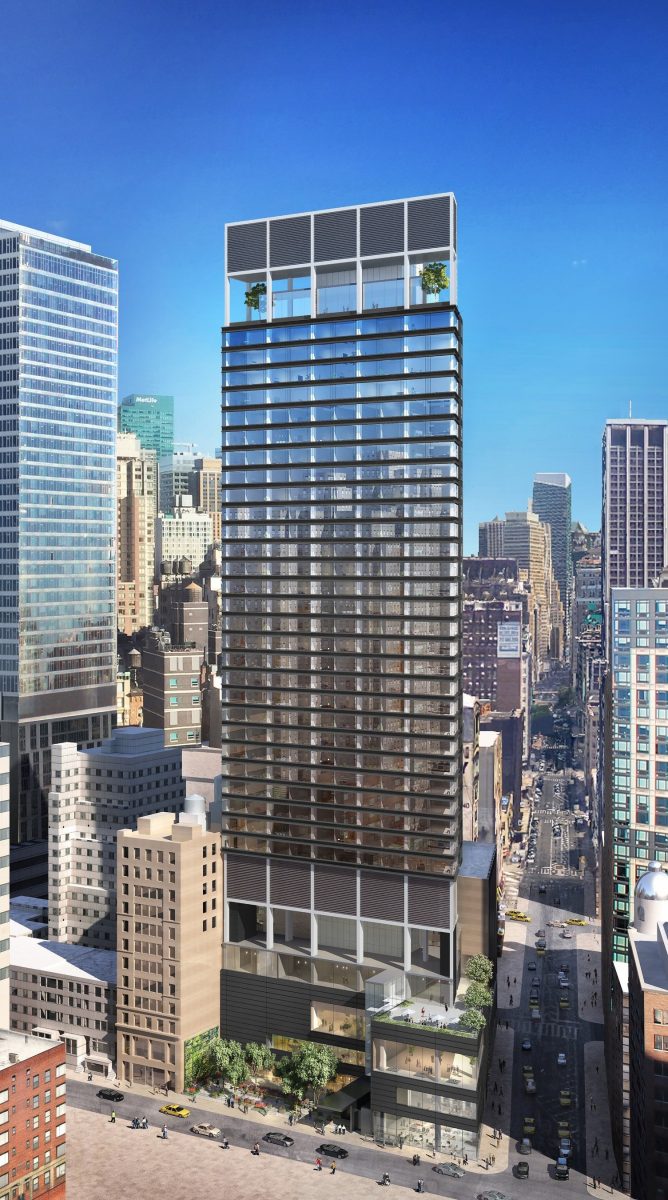
The volume of the podium is shaped as an “L” in plan, wrapping around a landscaped plaza (about 4,000 ft²). This plaza and the building’s retail and dining entries connect directly to the sidewalk at Broadway & 28th, offering a public‑facing interface rather than a fortress‑like front.
By lifting the tower above via columns, the designers ensured the tower portion doesn’t dominate at street‑level. Instead, the building transitions gently from a human‑scale base to a vertical silhouette, striking a balance between being part of the city’s everyday flow and standing out as a refined urban landmark.
Ritz‑NoMad proves that luxury high‑rises don’t need to erase the city around them. With thoughtful use of materials, exposed concrete, precast panels, curtain walls, and smart articulation (podium + tower, horizontal vs. vertical façades), the building respects its environment while embracing height and modern living.
Source: vinoly.com with additional information added by Glass Balkan