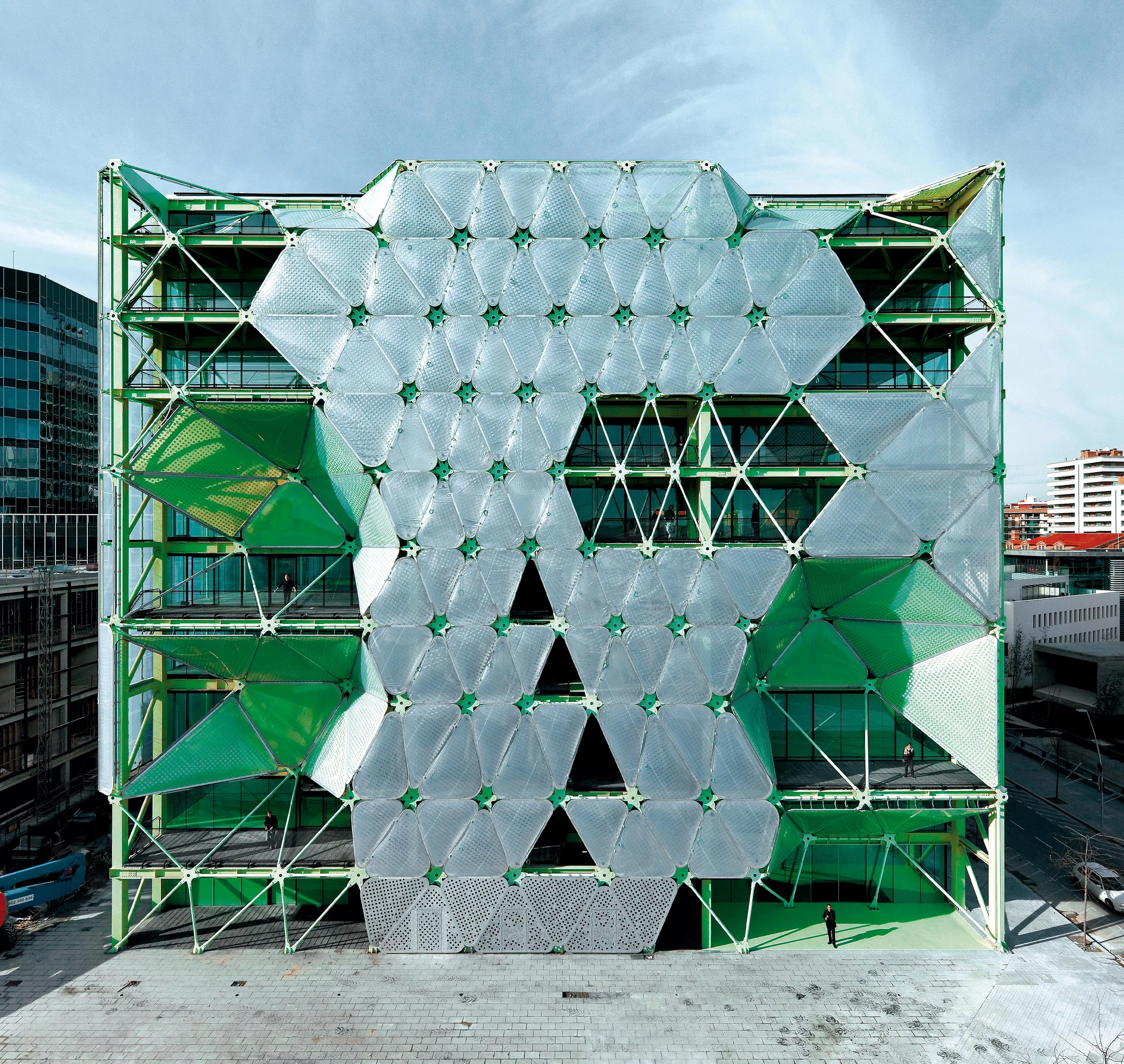
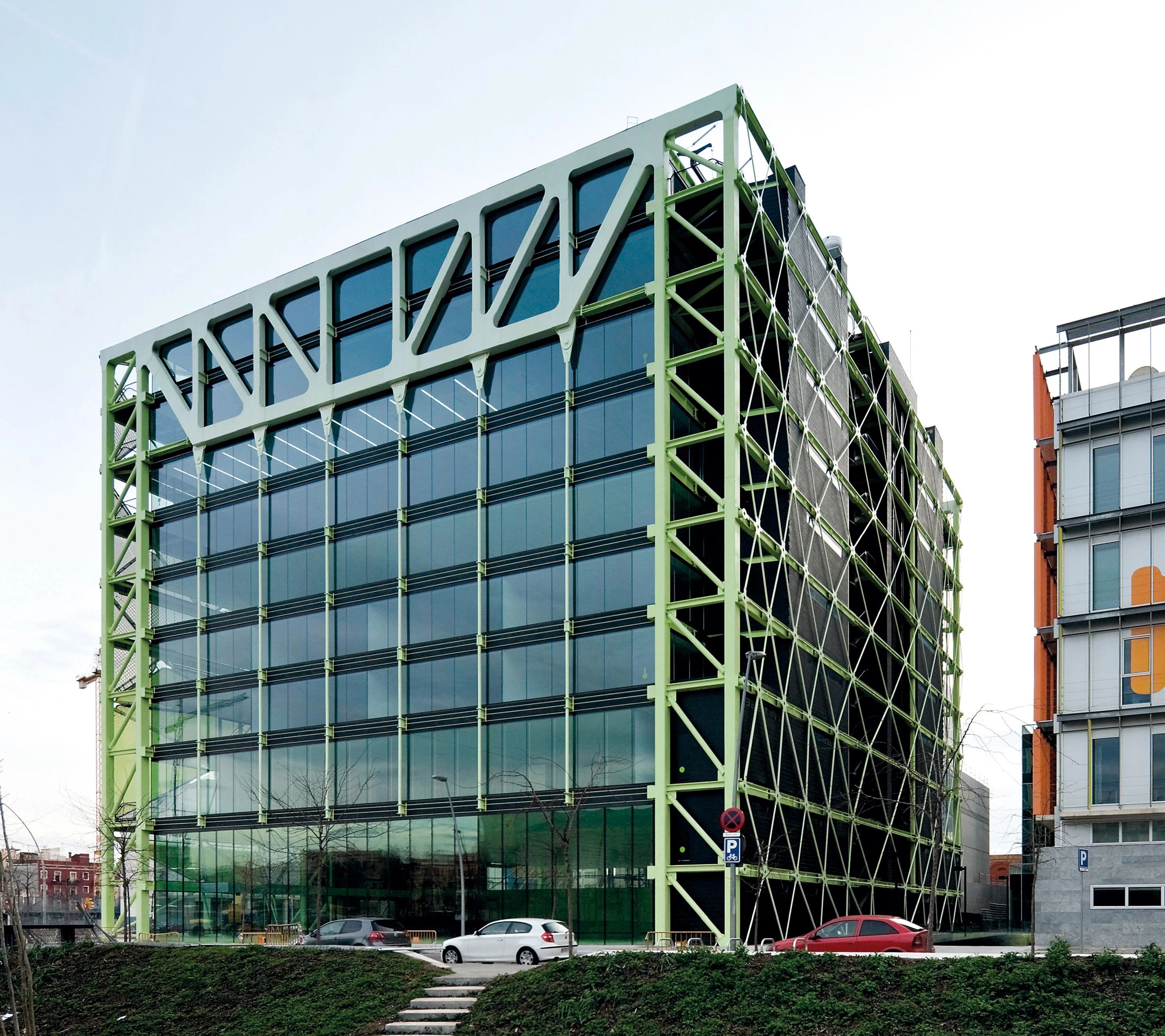
Designed by Cloud 9 / Enric Ruiz-Geli, Media-TIC is a 22@ district office building in Barcelona completed in 2010, where the façade was conceived as an active environmental system rather than a conventional building envelope. The project combines an exposed steel structure with extensive glazing and approximately 2,500 m² of ETFE, creating a skin that can change its optical performance according to solar conditions.
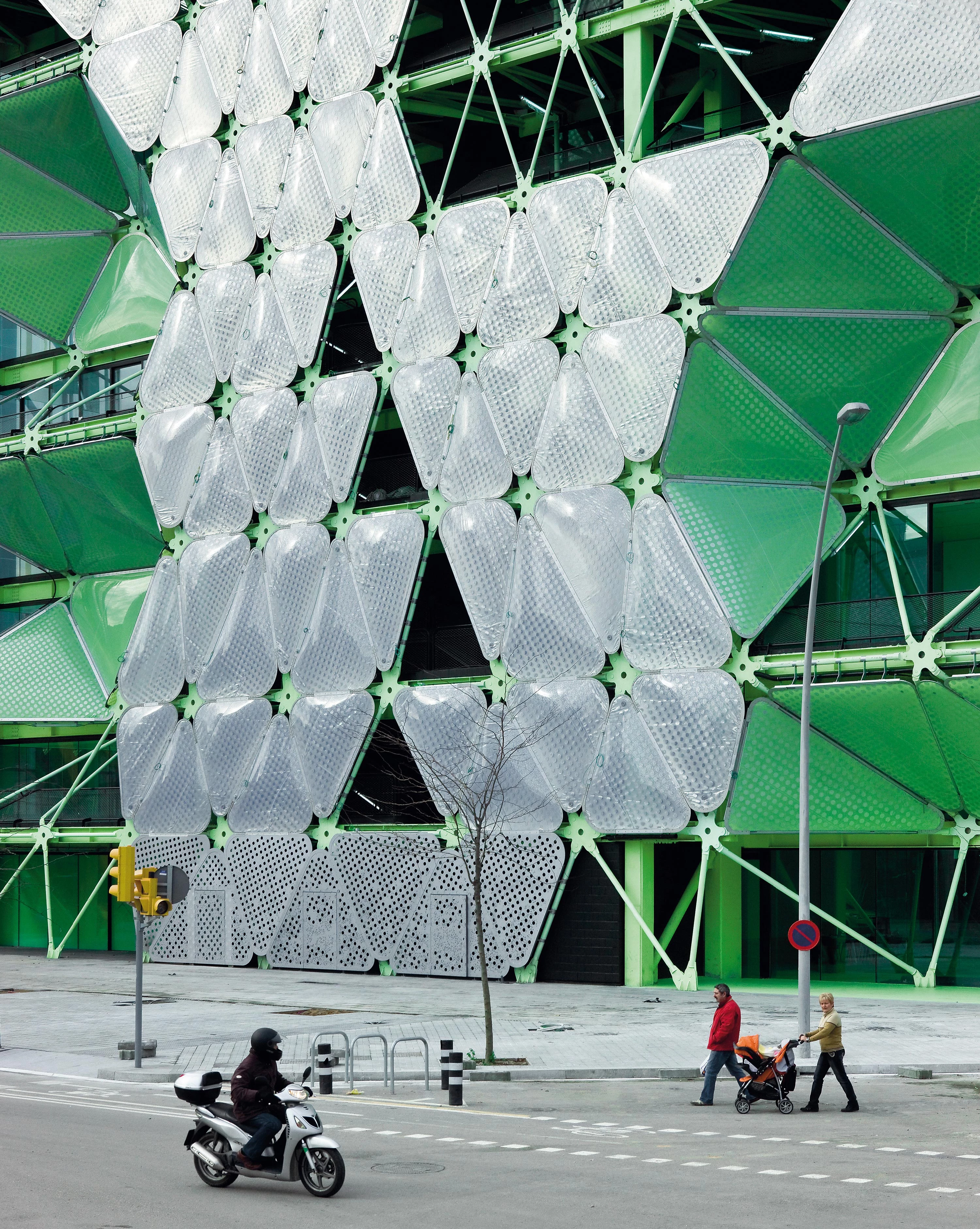
The most distinctive element is the ETFE system on the building’s solar-exposed façades. Rather than using a fixed solar-control coating or external shading device, the project uses inflatable ETFE cushions whose configuration can change. The south-east façade incorporates a multilayer diaphragm system in which the position of printed patterns changes as the cushions are inflated, allowing the façade to become more or less opaque and control the amount of solar radiation entering the building.
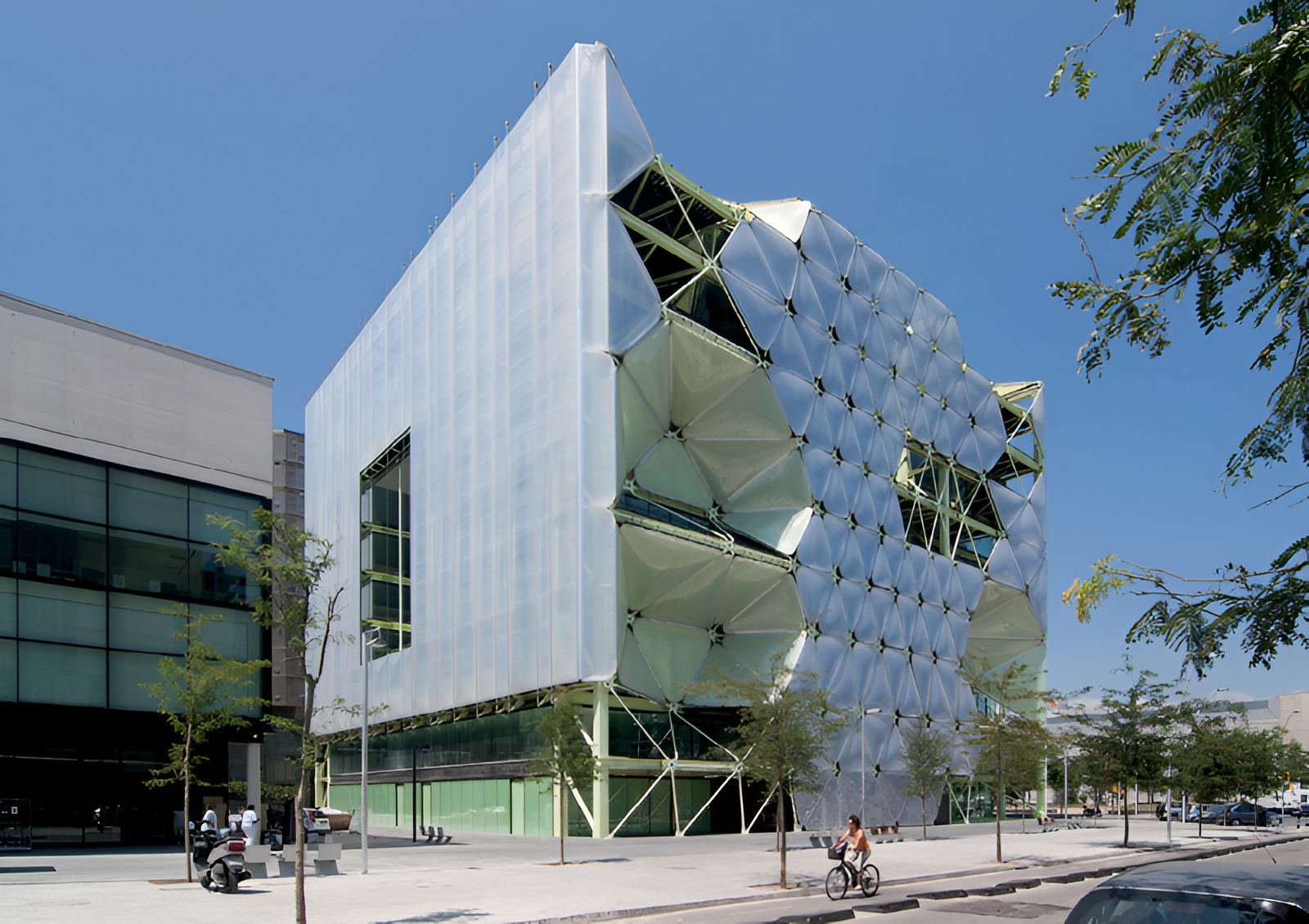

The south-west façade uses a different pneumatic strategy. Nitrogen is introduced into the ETFE cushions to create a fog-like layer, increasing the opacity of the membrane and reducing solar gain. The two façades therefore respond to the building’s different orientations with two distinct technical solutions.
The system incorporates approximately 104 sensor and control platforms, monitoring environmental parameters such as temperature, humidity and pressure. These controls allow the ETFE cushions to respond to changing external conditions, making the façade a dynamic part of the building’s environmental strategy. 
The ETFE development also required a highly specialised fabrication process. Cloud 9 worked with Vector Foiltec and Dragados on prototypes and CAD/CAM development, translating the architect’s digitally generated façade concept into a buildable pneumatic membrane system.
Behind the membrane skin, Media-TIC uses an exposed steel structural frame, with the building’s C-shaped structure supporting the upper floors while leaving the ground level largely open. The contrast between the green steel, transparent glazing and translucent ETFE makes the technical systems of the building deliberately visible rather than concealed.
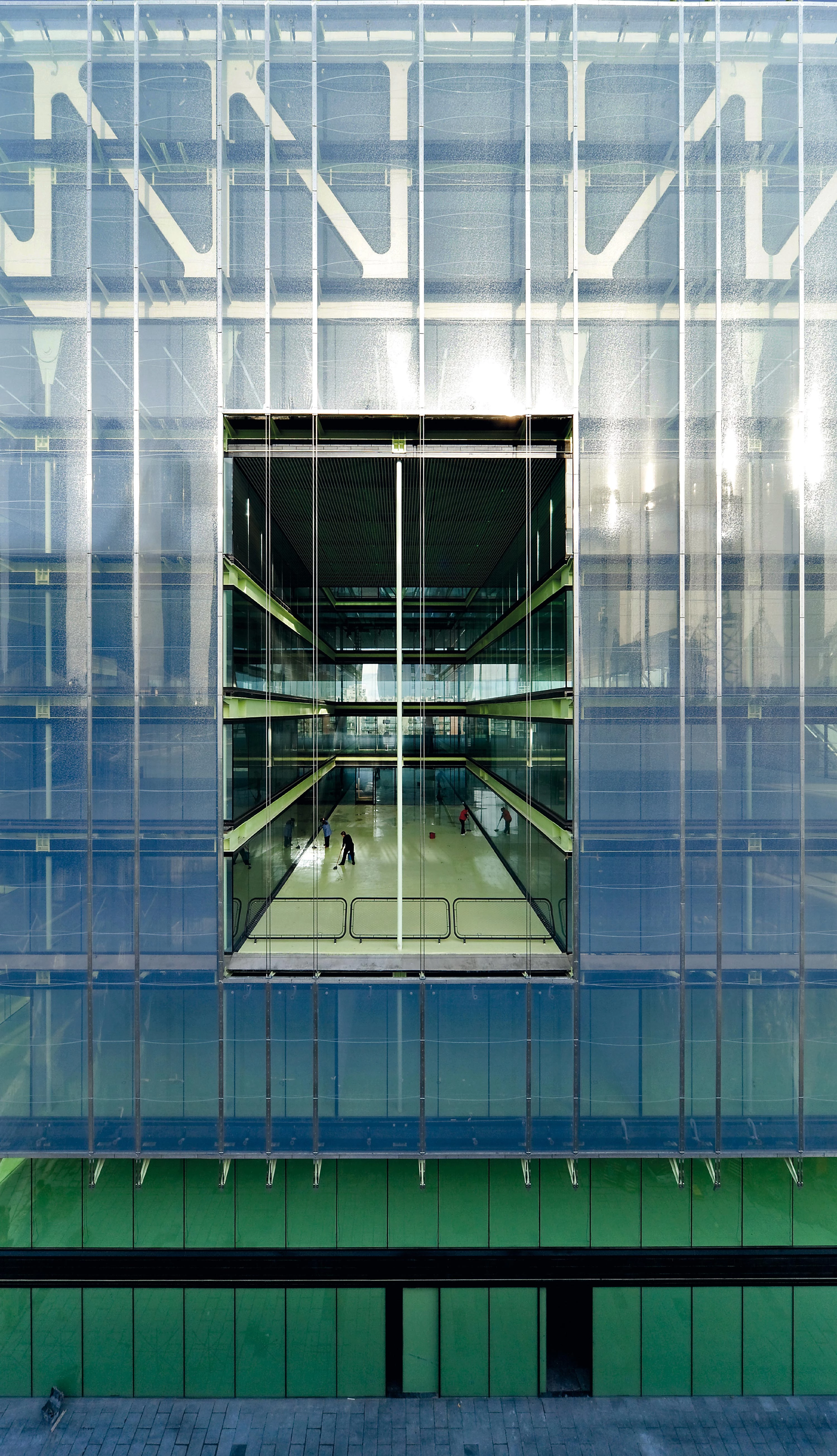
What makes Media-TIC exceptional is that its façade does not have one fixed appearance or one fixed solar-control performance. Through inflation, multilayer ETFE, printed patterns, nitrogen-filled cushions and sensor-based control, the envelope can modify its response to sunlight. The result is a façade that functions simultaneously as enclosure, solar-control device and environmental technology, an unusually advanced approach to responsive building skins for a project completed more than 15 years ago.
Source: ruiz-geli.com with additional information added by Glass Balkan