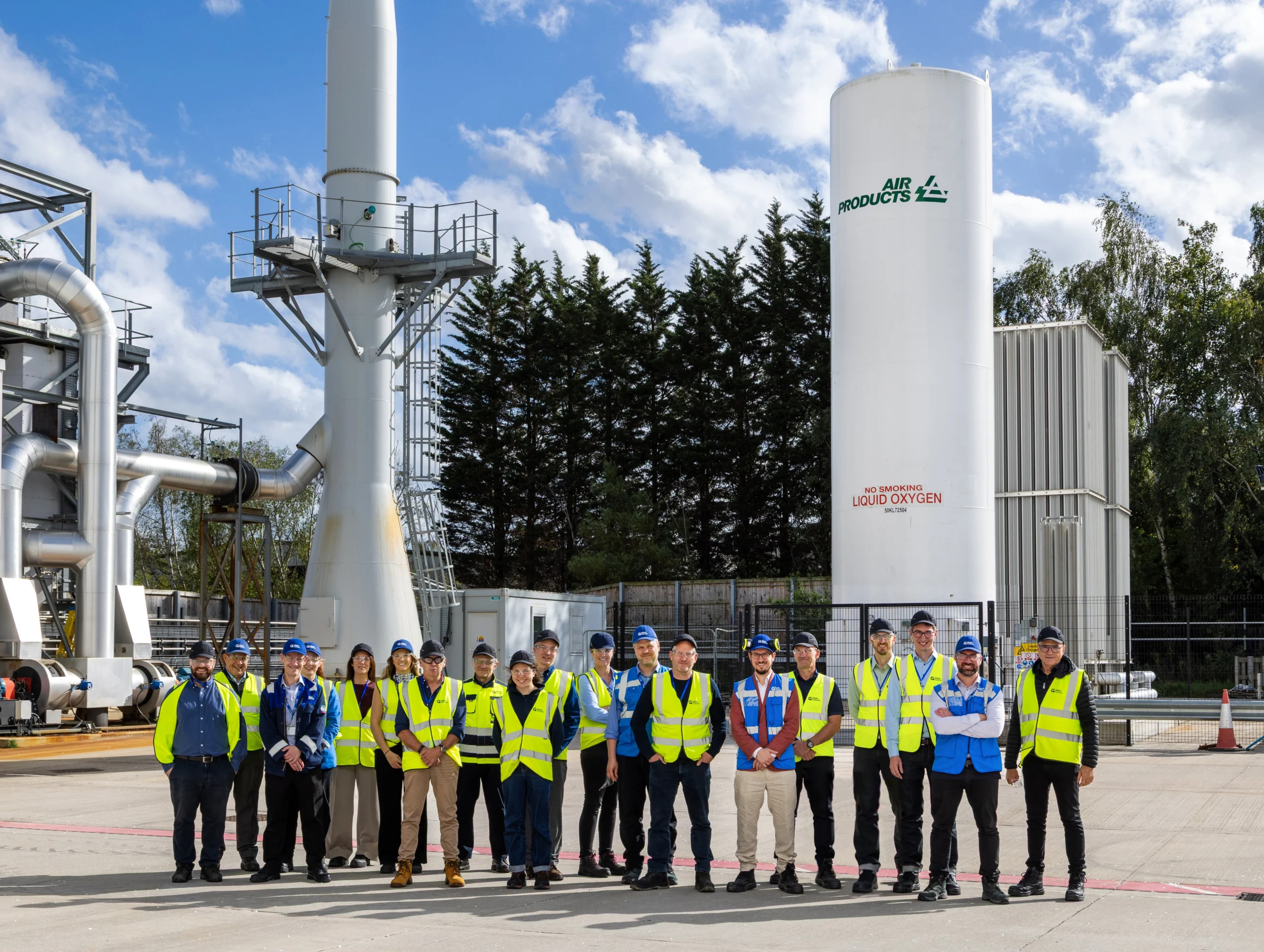
Glass manufacturers from the flat and container glass sectors met at Glass Futures’ Global Centre of Excellence for a practical industry event focused on furnace optimisation, decarbonisation and future-ready production.
Hosted by Air Products and Glass Futures, the event examined how manufacturers can improve furnace efficiency today while preparing for alternative fuels and emerging technologies. Participants took part in live demonstrations, technical discussions and hands-on sessions, allowing them to evaluate technologies in realistic operating conditions and consider their suitability for individual furnace configurations.
A key focus was the role of industrial gases, combustion technologies and alternative fuels such as hydrogen in reducing fossil-fuel dependency. Rather than waiting for a single future solution, manufacturers were encouraged to identify immediate opportunities to optimise combustion and furnace performance while developing longer-term decarbonisation strategies. The collaboration brings together Air Products’ expertise in industrial gases, combustion and hydrogen, with Glass Futures’ ability to test, validate and scale technologies in a real-world glassmaking environment.
Petr Tlamicha, Combustion Segment Manager Europe and Africa at Air Products, stressed that decarbonisation solutions must deliver without compromising furnace performance, product quality or cost-effectiveness. 
Aston Fuller, General Manager at Glass Futures, emphasised that practical testing can help manufacturers de-risk technology adoption and make better-informed investment decisions for the next generation of glass furnaces.
Source: Glass Futures with additional information added by Glass Balkan