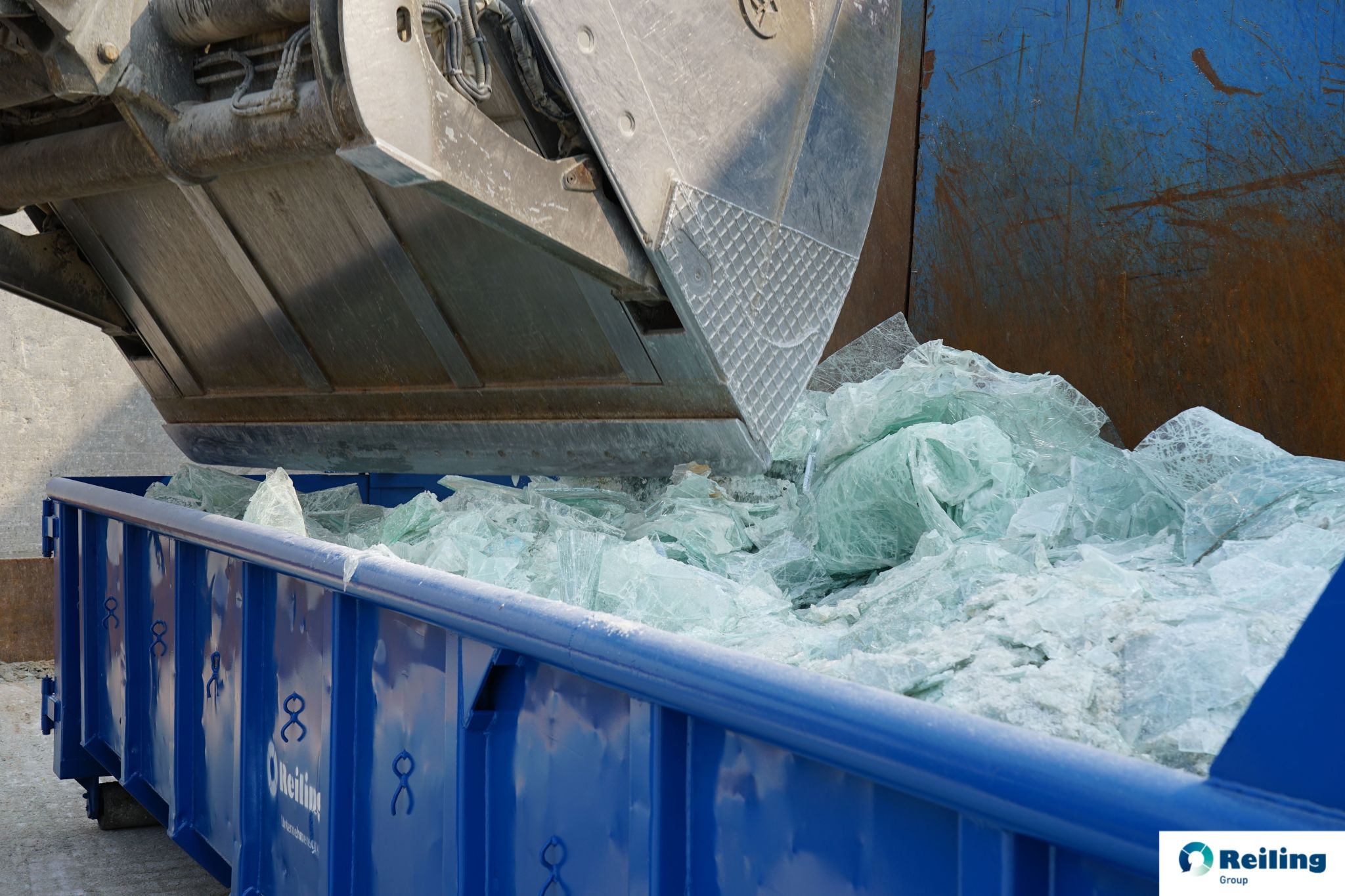
End-of-life window panes, automotive glazing and laminated safety glass do not necessarily become waste. With specialised processing, these materials can be recovered and converted into high-quality glass cullet for use as a secondary raw material in new glass production.
Reiling Group operates 14 glass recycling sites across Germany and Europe, where flat glass passes through several processing stages. The first requirement is the separate collection of different glass streams, allowing materials such as window glass, automotive glass and laminated products to be processed according to their composition.
The material is mechanically crushed and broken down, while composite components are separated from the glass fraction. Films, plastics and metallic contaminants are removed through a combination of technologies, including magnetic separation, non-ferrous metal separation, vacuum extraction and electro-optical sorting.
The objective is to produce a clean and consistent glass cullet fraction suitable for remelting. This recycled material can be supplied particularly to the float glass and container glass industries, where it replaces part of the virgin raw-material input. 
The use of cullet has direct process benefits. Because recycled glass melts at a lower temperature than the raw materials required to produce new glass, increasing cullet content can reduce furnace energy demand and associated CO₂ emissions, while simultaneously lowering the consumption of primary resources such as sand, soda ash and limestone.
Source: Reiling Group with additional information added by Glass Balkan