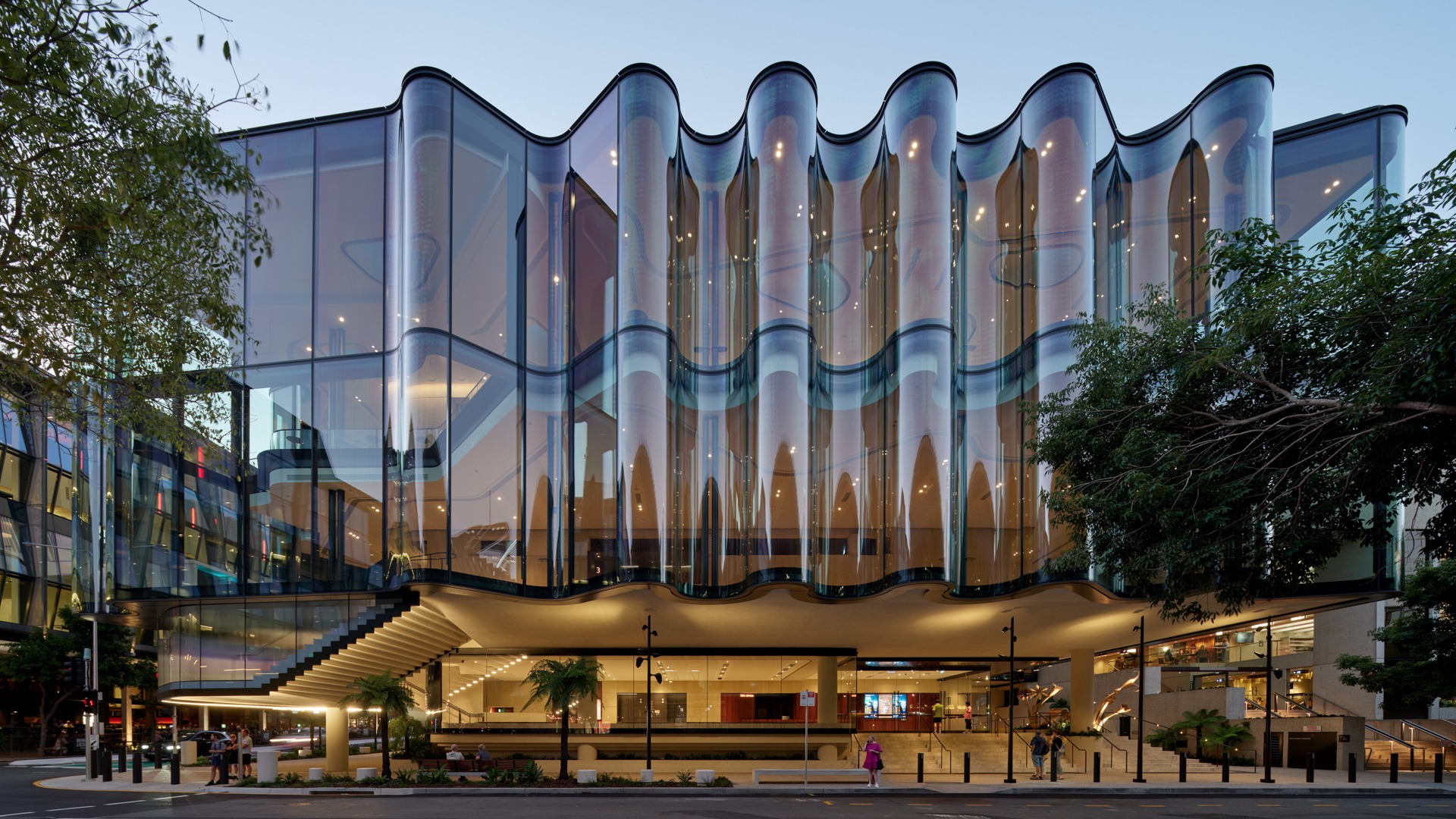
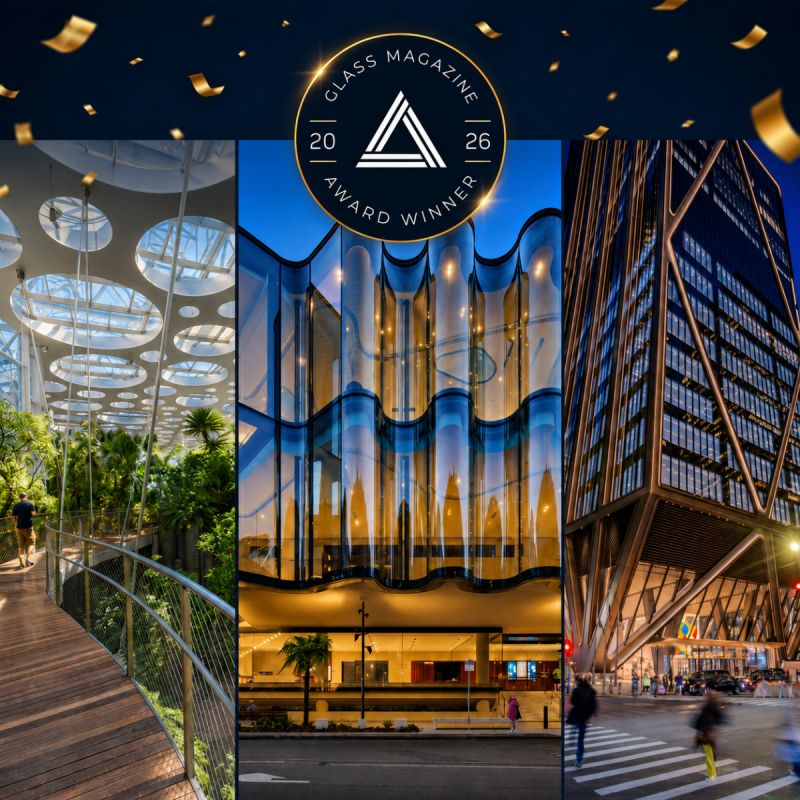
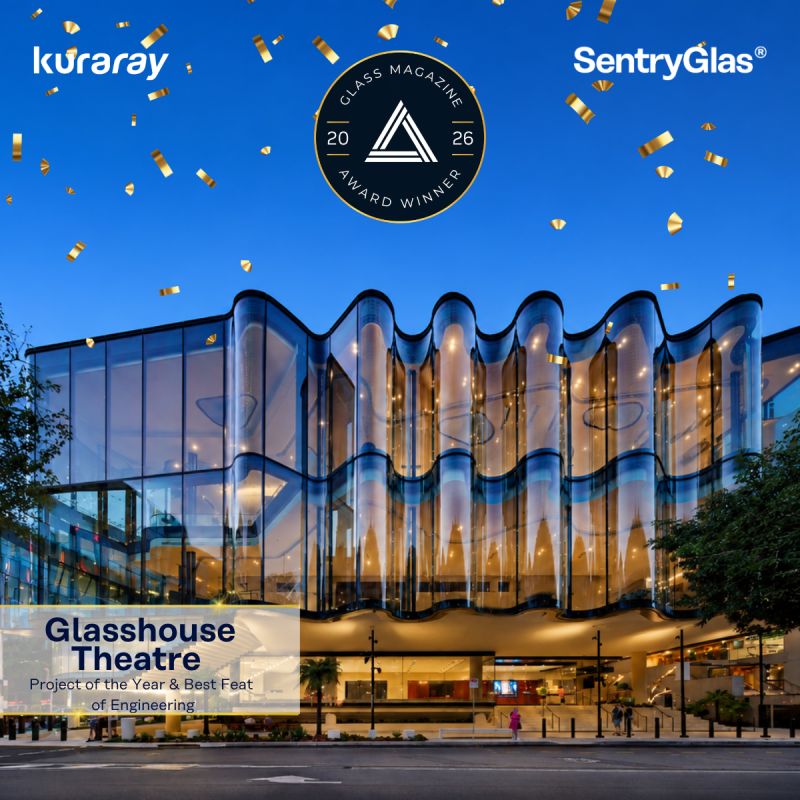
The Glasshouse Theatre at Queensland Performing Arts Centre (QPAC) in Brisbane, Australia, has received two major Glass Magazine Awards: Project of the Year and Best Feat of Engineering. The 1,500-seat performing arts venue was recognised for its highly engineered structural glass façade, which forms the defining architectural element of the building.
Designed by Blight Rayner Architecture in collaboration with Snøhetta, the theatre features a rippling, transparent façade inspired by the movement of the Brisbane River. The system was developed as a frameless, three-dimensional glass structure, requiring close coordination between architects, engineers, glass specialists and installers.
The façade consists of 217 individually shaped glass panels, creating a continuous undulating surface across the building. The panels incorporate flat, concave and convex insulating glass units, with curved elements reaching approximately 23 feet in height. The geometry required controlled radii, precise forming and tight installation tolerances.
NorthGlass fabricated the curved glass, while seele Inc. served as façade specialist. The laminated insulating glass incorporates 1.52 mm SentryGlas interlayers supplied by Kuraray, providing the structural performance required for the complex curved assemblies. 
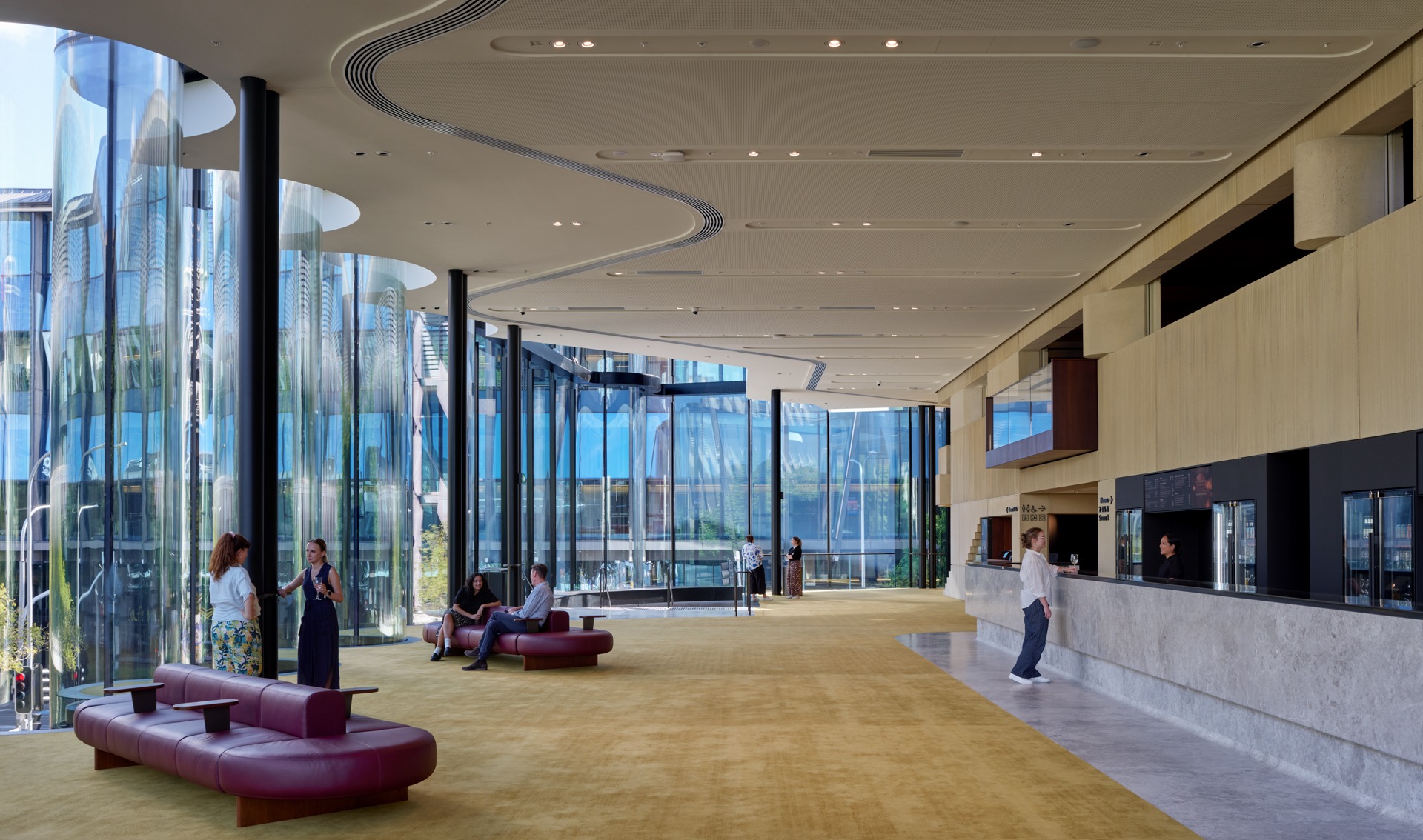
The façade’s structural system carries vertical loads through tension rods and glass fins, while horizontal wind loads are addressed through structural silicone glazing. This combination allows the glass to remain visually dominant while accommodating the structural and environmental demands of the site.
The engineering challenge extended beyond the glass geometry itself. Each panel had to integrate accurately within the larger three-dimensional façade while maintaining the continuous wave effect across the theatre’s envelope.
The project team included Arup as structural engineer and the Queensland Government/QPAC as owner.
Glass Magazine Awards judge Austin Zajicheck described the façade as an ambitious expression of structural glass, noting that its technical complexity is resolved into a fluid architectural form. The dual awards recognise both the engineering achievement and the role of the façade in defining the theatre’s architectural identity.
Source: Kuraray with additional information added by Glass Balkan