The higher a building rises, the more dominant wind becomes as a structural design factor. For modern supertall towers exceeding 300 metres in height, wind engineering is no longer a secondary calculation but a fundamental discipline that influences the building’s geometry, structural system, façade design and occupant comfort. Unlike traditional low-rise buildings, skyscrapers are highly sensitive to dynamic wind effects, including vortex shedding, turbulence, acceleration and lateral movement.
Wind engineers use a combination of computational fluid dynamics (CFD), boundary-layer wind tunnel testing and aeroelastic modelling to predict how a tower will behave under different environmental conditions. In advanced wind tunnel laboratories, scaled models are tested with simulated atmospheric boundary layers that replicate urban terrain, surrounding buildings and extreme wind scenarios. Engineers measure parameters such as wind pressure distribution, base overturning moments, structural acceleration and dynamic response. Studies on supertall structures, including buildings reaching 600 metres and conceptual 1,000-metre towers, rely on high-frequency force balance (HFFB) testing and pressure measurement systems to optimise wind-resistant designs.
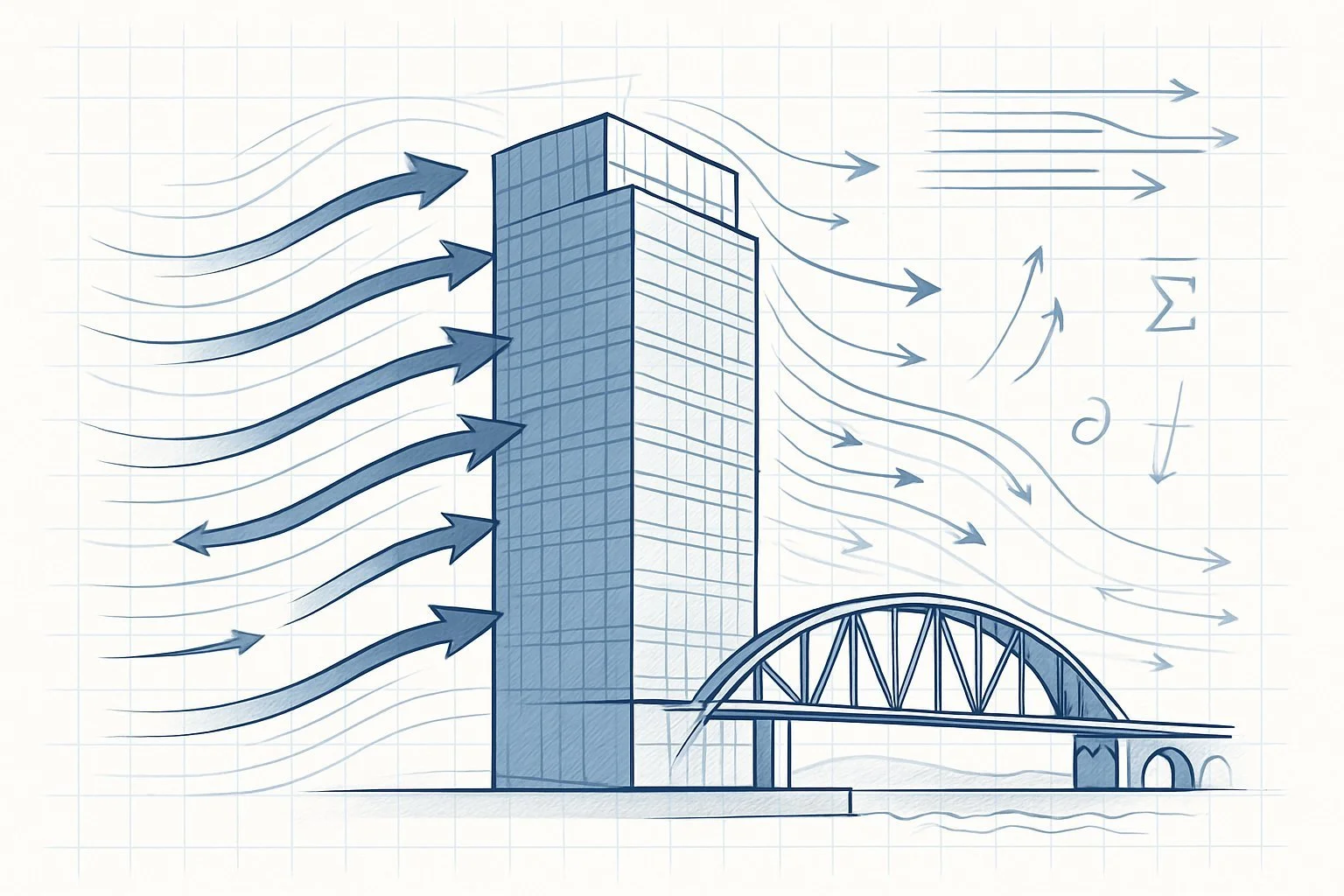
A key challenge is controlling building sway. Tall structures are intentionally designed with controlled flexibility because excessive stiffness would increase material consumption and construction costs. However, uncontrolled movement can affect occupant comfort, particularly on upper floors where acceleration caused by wind-induced vibration becomes noticeable.
To manage these effects, engineers integrate advanced structural systems such as outrigger walls, belt trusses, aerodynamic shaping and tuned mass dampers (TMDs). Tuned mass dampers operate by using a large suspended mass that moves in the opposite direction of the building’s motion, reducing vibration caused by wind excitation. These systems have been extensively studied through wind tunnel experiments and are widely applied in high-rise engineering. 
Building geometry itself has become a major wind-control strategy. Many modern skyscrapers use tapered forms, setbacks, twisting profiles and rounded corners to disrupt vortex formation. The aerodynamic design of towers such as the 828-metre Burj Khalifa reduces wind forces by preventing strong repetitive vortex shedding along the building height.
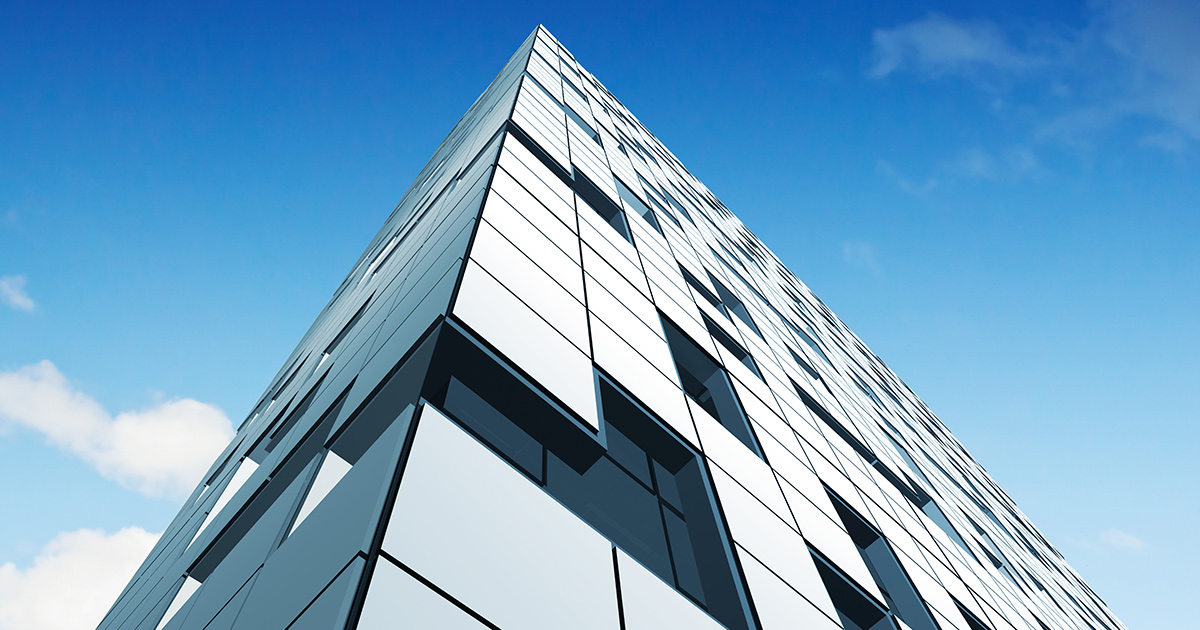
Wind engineering also directly impacts façade systems. Curtain walls, aluminium framing, glass panels and anchoring systems must resist extreme positive and negative pressures while maintaining airtightness, thermal performance and water resistance. Large-format glazing units installed hundreds of metres above ground require precise structural calculations to accommodate building movement without compromising façade integrity.
Source: Glass Balkan