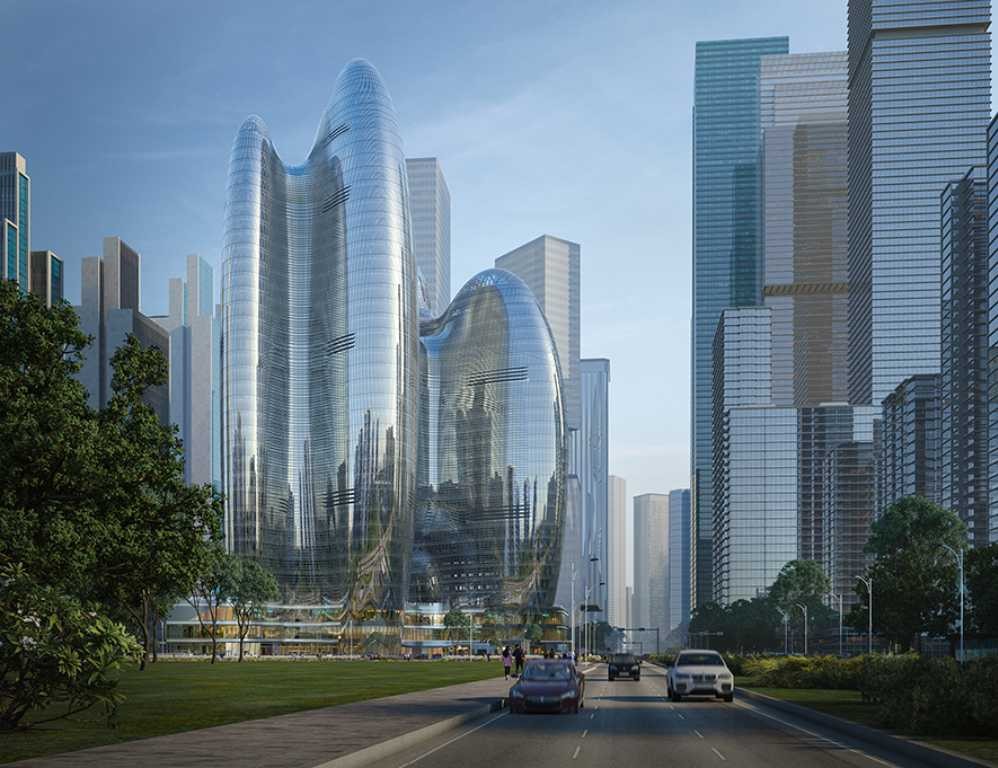
The new OPPO Global Headquarters rising in Shenzhen Bay is setting new benchmarks for façade engineering, combining advanced architectural design with some of the most sophisticated curved glass technology ever implemented in a commercial high-rise. Designed by Zaha Hadid Architects under the direction of Patrik Schumacher, the landmark development features approximately 14,000 individually curved insulating glass units, all incorporating Edgetech’s flexible Super Spacer® technology.
Located within Shenzhen’s 117-hectare Super Headquarters Base district, the project comprises four interconnected towers reaching nearly 200 metres in height and delivering around 248,000 square metres of floor space. The building’s sculptural form is defined by flowing curves and a highly complex hyperbolic glass façade that pushes the limits of modern façade construction.
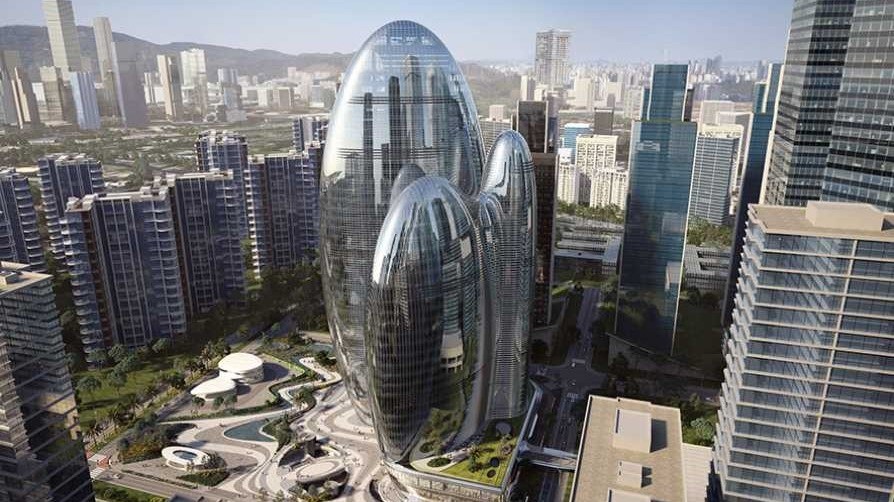
The curtain wall includes around 70,000 square metres of insulating glass manufactured by Tianjin North Glass Industrial Technology Co., Ltd. Among the 14,000 panels, approximately 9,000 are double-curved free-form units featuring convex-concave and saddle-shaped geometries. Single-curved panels reach arc lengths of up to 5.4 metres, while double-curved units extend to six metres, with some incorporating bending radii as tight as one metre.
The façade also includes several remarkable engineering achievements, including a 41-square-metre hyperbolic façade element weighing more than 10.8 tonnes, a 2,000-square-metre double-curved self-supporting net-shell structure, and a 240-square-metre hyperbolic dome positioned 200 metres above the building’s Sky Bar. 
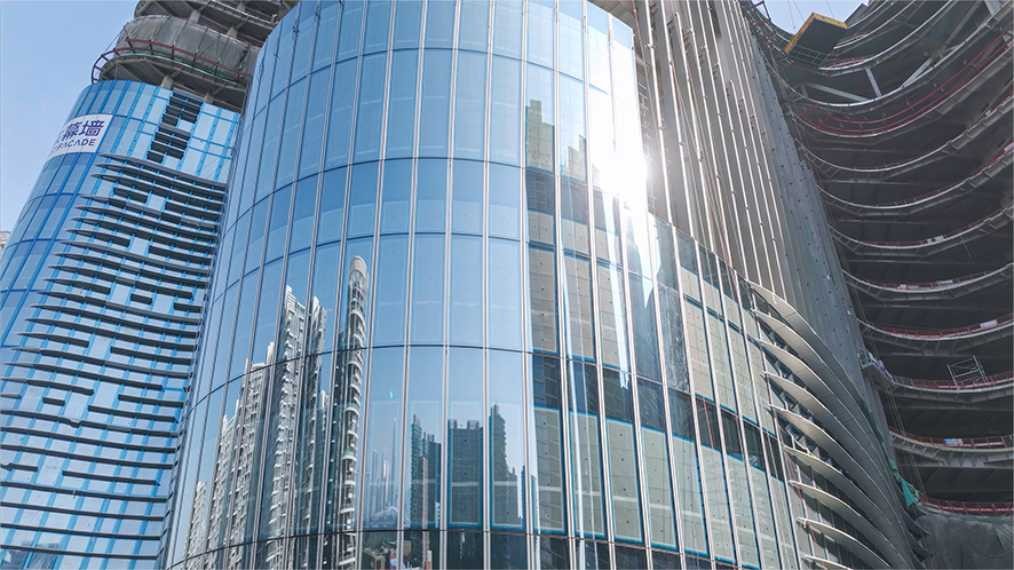
Most glazing units consist of four-pane, double-laminated insulating glass incorporating 16 mm Super Spacer® TriSeal™ warm-edge spacers. Constructed from ultra-clear 10 mm glass with solar-control and low-emissivity coatings, the units deliver both thermal efficiency and structural performance despite their complex geometries. According to project partners, Super Spacer® was selected because its flexible foam construction could accurately accommodate irregular shapes and double-curved profiles while maintaining airtightness and thermal performance.
Development of the façade required four years of testing, optimisation and collaboration between North Glass, façade contractors Far East Façade and CNYD, architects, consultants and the client. The project team developed custom tempering equipment, specialised aluminium bending tools with tolerances of ±1.5 millimetres, and advanced BIM workflows based on LOD 400 models. Extensive mock-up testing, 3D scanning and reverse modelling were conducted between 2020 and 2024 to verify optical quality, dimensional accuracy and long-term performance.
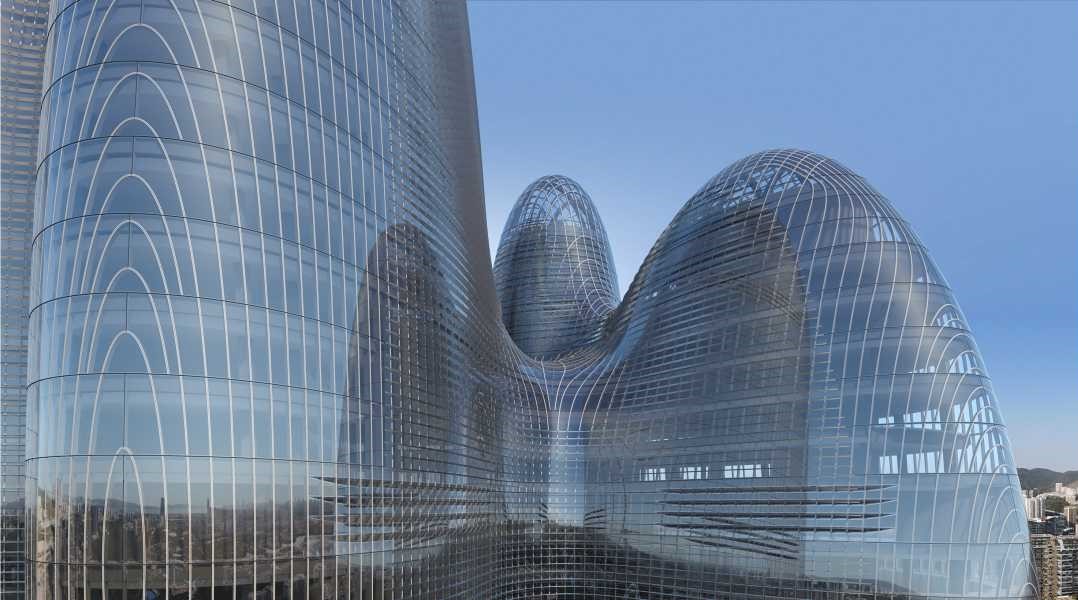
The result is a pioneering façade system that establishes new standards for double-curved glass construction and demonstrates how advanced spacer technology can support some of the world’s most ambitious architectural designs.
Source: Glass Bulletin with additional information added by Glass Balkan