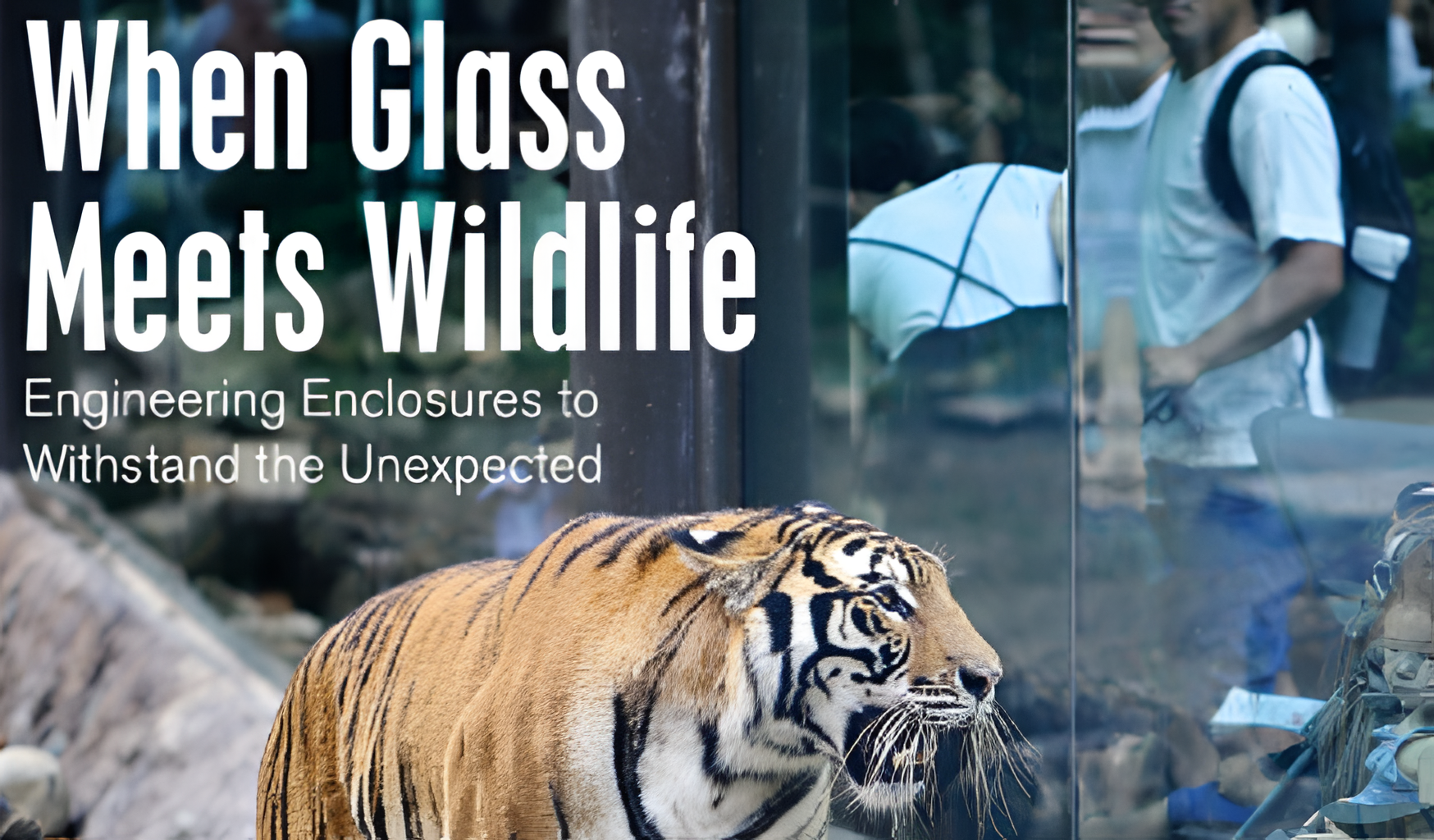
A bonobo at the Memphis Zoo recently damaged an interior lite of exhibit glass after jumping into it. In 2025, “Denny,” a 10-year-old western lowland gorilla at the San Diego Zoo, charged and struck his habitat glass, cracking one of three multi-layered tempered panels. In 2023, two African lions in Erie, Pennsylvania, shattered reinforced enclosure glass after using a rock as a tool.
Though unrelated, these events highlight a shared engineering reality: zoo glazing may crack, but it must not fail. Enclosures rely on laminated glass systems made of multiple tempered or heat-strengthened plies bonded with structural interlayers to maintain integrity after impact.
Stewart Jeske, president of JEI, a façade engineering and building envelope consulting firm, notes that animal behavior makes these systems uniquely complex. Zoo glass must protect visitors from animals, protect animals from visitors, maintain visibility, and support animal welfare through low distortion, minimal stress triggers, and suitable acoustics.
Unlike conventional buildings, zoo enclosures face unpredictable, concentrated impacts. Animals may repeatedly strike the same area of glass or use objects like rocks or toys as projectiles. Outdoor habitats add thermal variation, while aquariums introduce hydrostatic pressure and wave forces. 
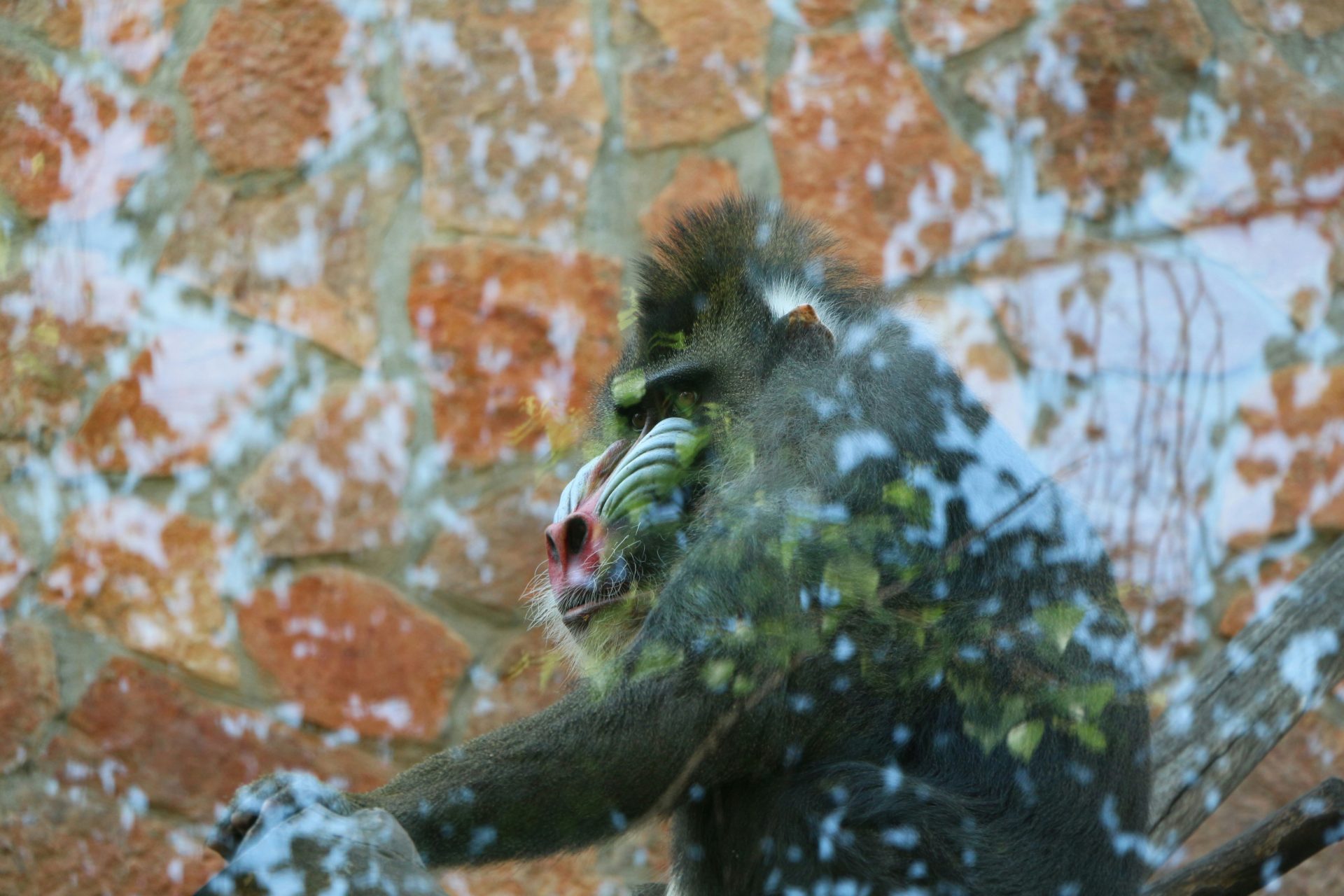
Jeske explains that engineers must consider the mass, velocity, and body stiffness of an animal striking laminated glass. On impact, part of the energy is absorbed by the animal’s deformation, while the rest transfers into the glazing, producing stress and deflection. This raises a difficult question: what is the stiffness of a lion?
With no clear answer, engineers rely on simulations and conservative safety assumptions.
Vaughn Schauss of Kuraray America Inc. notes there are no dedicated standards for animal impact. Human-focused standards like ASTM F3561 address forced entry, and others cover storms or floods, but animal behavior remains unregulated.
As a result, designers use laminated systems with multiple bonded plies to ensure post-breakage stability. Additional design factors include controlling reflections, adjusting light levels for nocturnal species, and allowing UV transmission where needed.
Ultimately, zoo glazing is not just a barrier, it is part of the habitat, engineered for the most unpredictable load case: living wildlife.
Source: USGlassMag with additional information added by Glass Balkan