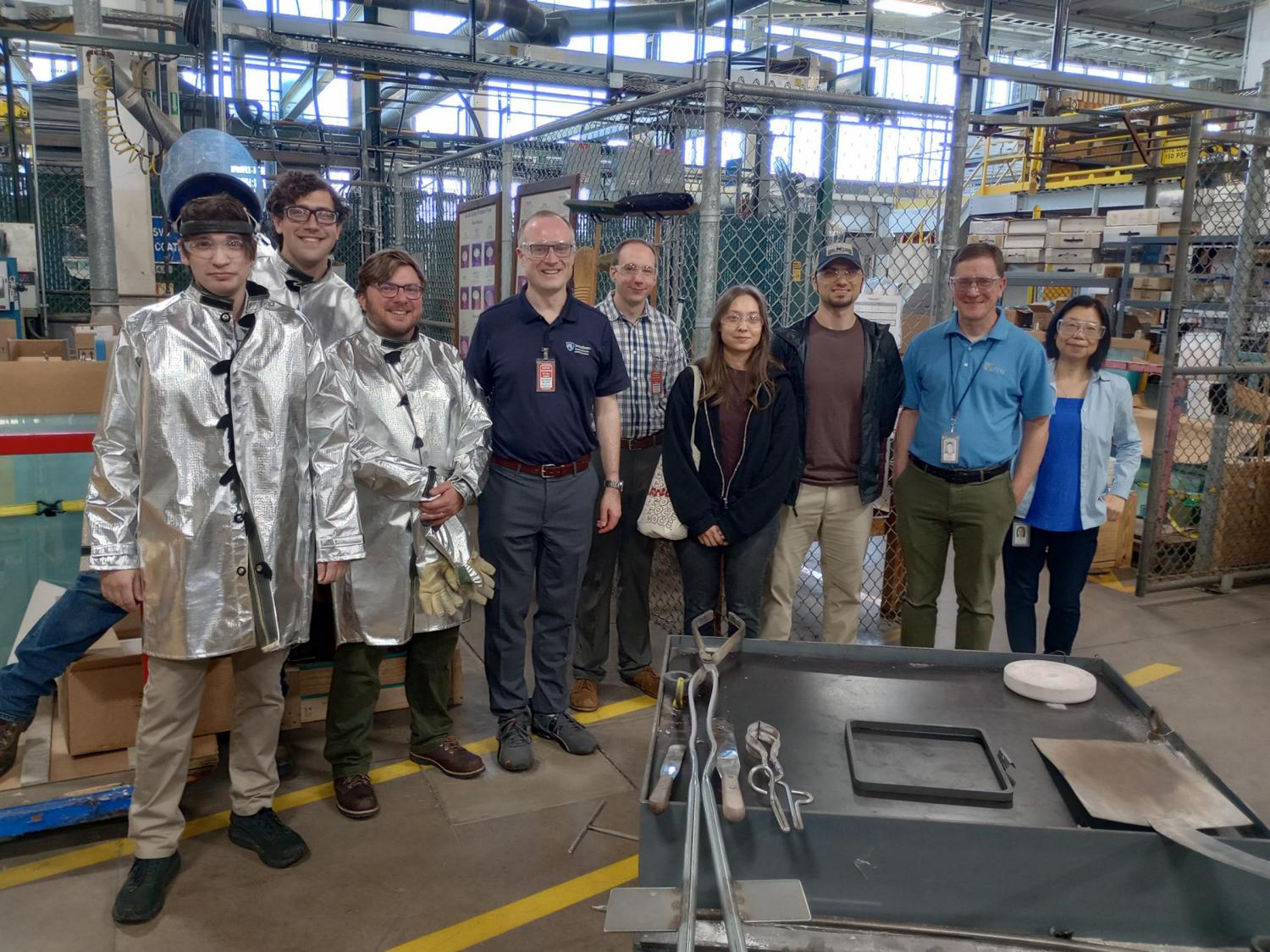
Vitro Architectural Glass has signed a multi-year research agreement with Penn State University to accelerate the development and industrial scaling of LionGlass, a patent-pending glass technology designed to significantly improve sustainability and performance in flat glass applications. The collaboration targets architectural and automotive markets, with research running through July 2028.
LionGlass was invented at Penn State as an entirely new class of glass, offering the first true alternative to traditional soda-lime silicate glass, which has dominated glass production for thousands of years. The technology promises dramatically lower carbon emissions and enhanced mechanical performance, positioning it as a potential breakthrough for the global flat glass industry.
The research will focus on adapting LionGlass for the float glass process, the standard industrial method used to produce flat glass for windows, windshields and solar panels. According to John Mauro, co-inventor of LionGlass and head of Penn State’s Department of Materials Science and Engineering, this step is critical for commercialization, as flat glass represents the largest segment of the global glass market.
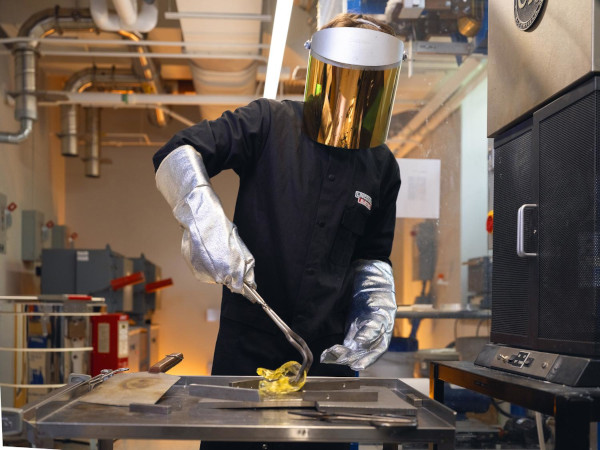
LionGlass offers multiple sustainability advantages. It lowers glass melting temperatures by approximately 400°C, significantly reducing energy consumption, and eliminates carbonate raw materials, which are a major source of CO₂ emissions in conventional glass manufacturing. Overall, the technology could cut the carbon footprint of glass production by up to 50%. In addition, LionGlass demonstrates superior durability, with crack resistance reported to be up to ten times higher than conventional glass in certain formulations. 
For Vitro Architectural Glass, North America’s largest architectural glass manufacturer, the partnership reinforces its long-standing commitment to innovation and advanced materials research. Vitro operates four float glass lines in Pennsylvania and maintains its U.S. headquarters and R&D laboratories in the state, continuing a regional legacy that traces back to the founding of PPG’s glass business in 1883.
As part of the agreement, Vitro employee Daniel Kramer will pursue a doctorate at Penn State while working directly on the LionGlass project. He will lead the research alongside Nicholas Clark, assistant research professor at Penn State and co-inventor of LionGlass. The team will evaluate LionGlass’s compatibility with industrial float lines and downstream processing used in architectural, automotive and solar glass applications.
The collaboration highlights how academic research and industrial expertise can converge to redefine how glass is made, advancing performance while addressing one of the industry’s most pressing challenges: sustainability at scale.
Source: psu.edu with additional information added by Glass Balkan