Vacuum insulating glass (VIG) is becoming a key solution for modern high-performance façades, offering outstanding thermal insulation, acoustic reduction and improved energy efficiency for curtain walls and high-rise buildings. As architects and developers focus on sustainable construction, vacuum glass provides an advanced glazing option for reducing heat loss while maintaining architectural transparency.
A major consideration in façade design is whether vacuum glass can be used as a standalone unit or requires lamination. According to current national standards, vacuum glass used in curtain wall systems is recommended to be installed as a laminated or composite glazing solution to enhance safety, structural performance and durability. For windows and doors, standalone vacuum glass applications are permitted when the required technical performance is achieved.
Internationally, no similar restrictions prevent the use of monolithic vacuum glass, and many projects have successfully incorporated single-unit VIG solutions in advanced building envelopes.
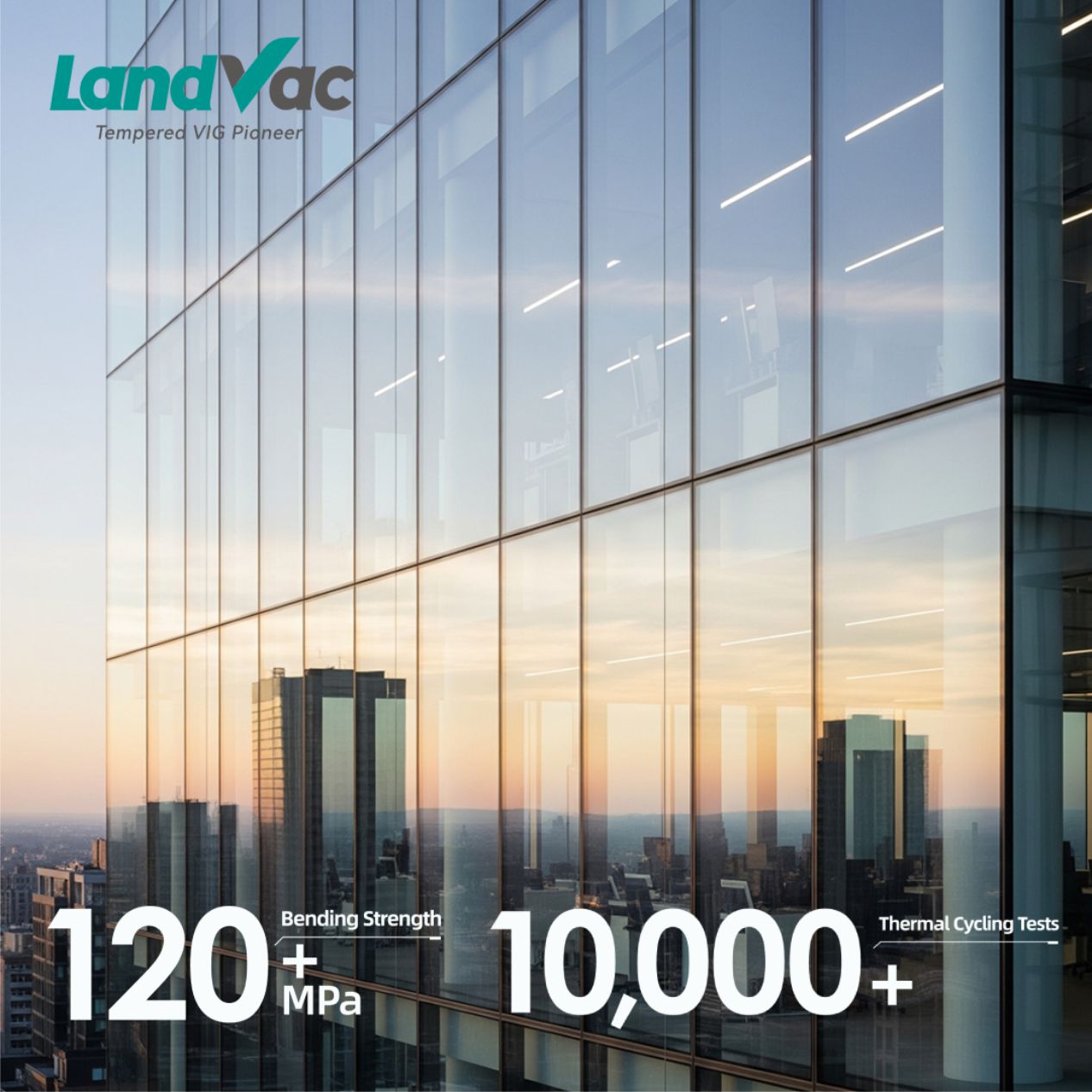
LandVac’s tempered titanium vacuum insulated glass has undergone extensive technical verification for curtain wall applications, including temperature cycling tests, bending strength testing, wind pressure resistance, deformation testing under uniform loads, thermal stress evaluation, wind pressure cycling and impact resistance tests. 
The technology has been applied in landmark projects including the Beijing Academy of Building Research Tongzhou Headquarters, JAC “Maextro” Super Factory, Hefei Taiwanese Business Office Building, Harvard Graduate School of Design curtain wall renovation, and the German FFS-VIG demonstration project.
Source: Glass Bulletin with additional information added by Glass Balkan