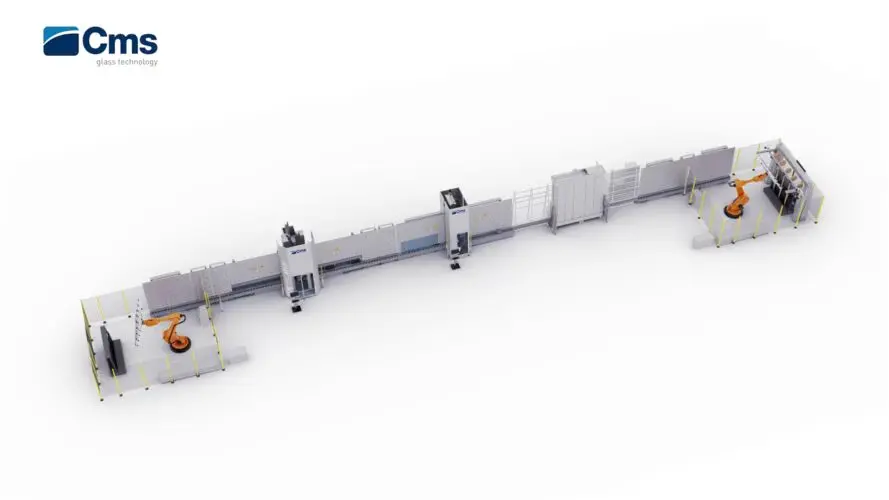
The Balkan glass industry comprises two closely connected segments: primary glass manufacturing and the processing of glass into products for construction, façades and other applications. Primary production is concentrated in a limited number of industrial facilities, while a broader network of regional companies supplies processed glass, insulating units, safety glazing and building-envelope systems. The balance between these activities differs from country to country and can be assessed through manufacturing investments, international trade data and the scale of construction activity.
Production capacity and regional industry structure
At European level, major flat-glass manufacturers include Guardian Glass, AGC Glass Europe, NSG Group, Saint-Gobain and Şişecam, all represented in Glass for Europe. Bulgaria has an established role in primary glass manufacturing through Şişecam’s flat-glass facility. In 2026, the company announced the completion of a new coated-glass line at the Bulgarian facility, with an annual capacity of 6 million square metres and an investment of €20 million. The line operates alongside an existing coated-glass line and expands the company’s capacity for value-added products used in architectural applications. Coated-glass processing should be distinguished from float-glass production: the former adds functional properties to glass, while the latter produces the base glass itself. (Şişecam)
Across the Western Balkans, the industry also includes companies specialising in glass processing and products for buildings. In Albania, Doan Glass identifies glass processing and trading among its activities and lists products including tempered, laminated, reflective, acoustic and insulating glass. Companies such as Vakëfi Glass and All Glass are also active in the Albanian glass sector. These businesses represent the processing and supply side of the market rather than evidence of domestic float-glass production. Similar distinctions are important when examining other Balkan countries: glass processors, aluminium-system manufacturers and façade contractors perform different roles in the building-envelope supply chain and should not be treated as interchangeable categories.

Flat-glass trade: Albania and selected Balkan markets
International trade statistics offer a useful measure of how individual markets obtain and distribute flat glass. According to World Bank World Integrated Trade Solution data based on UN Comtrade, Albania imported approximately US$6.04 million of non-wired float glass and surface-ground or polished glass in sheets under HS code 700529 in 2024. The reported quantity was approximately 963,145 square metres. Italy was the largest listed supplier by value, at approximately US$2.23 million, followed by Egypt at US$1.95 million and Algeria at US$928,000. These figures indicate that Albanian buyers source this category of flat glass from several international markets. (WITS / UN Comtrade) 
For the same product category, Albania reported exports of approximately US$1.66 million in 2024, corresponding to around 288,799 square metres. Imports and exports can occur simultaneously because trade statistics capture cross-border movements, not just domestic production or final consumption. Glass may be imported for processing, redistributed or incorporated into products that are subsequently exported. The figures therefore should not be interpreted as a direct calculation of the domestic market’s size or self-sufficiency.
The wider region also shows substantial cross-border trade. In 2024, imports of the same HS 700529 product category were reported at approximately US$5.22 million in North Macedonia, US$14.14 million in Croatia and US$13.99 million in Bulgaria. Serbia’s reported imports were approximately US$14.82 million. These values provide a useful comparison of trade in one specific flat-glass category, but they do not represent total glass imports: other float-glass classifications, coated or coloured products, processed safety glass and insulating-glass units are recorded separately. The figures also do not establish how much imported glass is used domestically, processed further or re-exported. (WITS / UN Comtrade, country comparisons)

Construction activity and demand for architectural glass
Construction is an important source of demand for architectural glass, particularly for windows, curtain walls, façades, interior partitions and energy-efficient building envelopes. In Albania, construction accounted for 14.4% of gross value added in 2024, up from 13.8% in 2023, according to Eurostat figures reported by CNA. Kosovo’s construction sector accounted for a reported 9.8% of gross value added in 2024. These figures underline the economic importance of construction in parts of the Western Balkans, but they are not direct measures of glass demand. Actual consumption also depends on the mix of new-build and renovation projects, building types, glazing specifications and the amount of glass used per project. (CNA, reporting Eurostat data)
International market forecasts provide further context, although they should not be mistaken for regional projections. Fortune Business Insights estimated the global flat-glass market at US$329.19 billion in 2025 and forecasts growth to US$542.16 billion by 2034, representing a compound annual growth rate of 5.7% over the forecast period. This estimate covers a global market with diverse applications, including architecture, automotive glazing and solar panels; it does not establish the growth rate of the Balkan glass industry. (Fortune Business Insights)
The regional outlook: capacity, specialisation and competitiveness
The available evidence points to a region with different industrial roles rather than a single, uniform glass market. Bulgaria has primary flat-glass manufacturing and additional coated-glass capacity, while trade data show significant imports of selected flat-glass products in Albania, North Macedonia, Croatia and Serbia. Regional processors add value by converting base glass into products suited to specific building requirements. However, the scale of these activities cannot be measured accurately from trade values or company lists alone; comparable data on production volumes, processing capacity and domestic sales remain necessary for a complete assessment.
For regional manufacturers and processors, opportunities lie in products requiring more specialised fabrication and technical control, including insulating units, laminated and tempered safety glass, solar-control glazing and high-performance façade systems. Investment in these segments may help local businesses meet more demanding project specifications and compete across national borders. The commercial case for expansion will depend on access to base glass, energy and operating costs, available skills, construction demand and the ability to maintain consistent product quality.
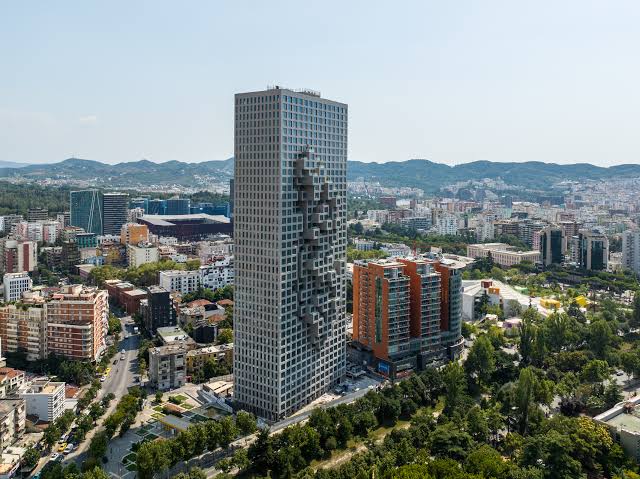
A clearer picture of the Balkan glass industry’s prospects will therefore require country-level analysis that separates primary production from processing and distinguishes imports of raw or semi-finished glass from trade in finished products. These distinctions are essential to identify where the region already has industrial strengths, where reliance on imported materials remains significant, and which areas of manufacturing and processing may offer realistic opportunities for further investment.
Source: GlassBalkan, compiled using data and information from sources mentioned above.