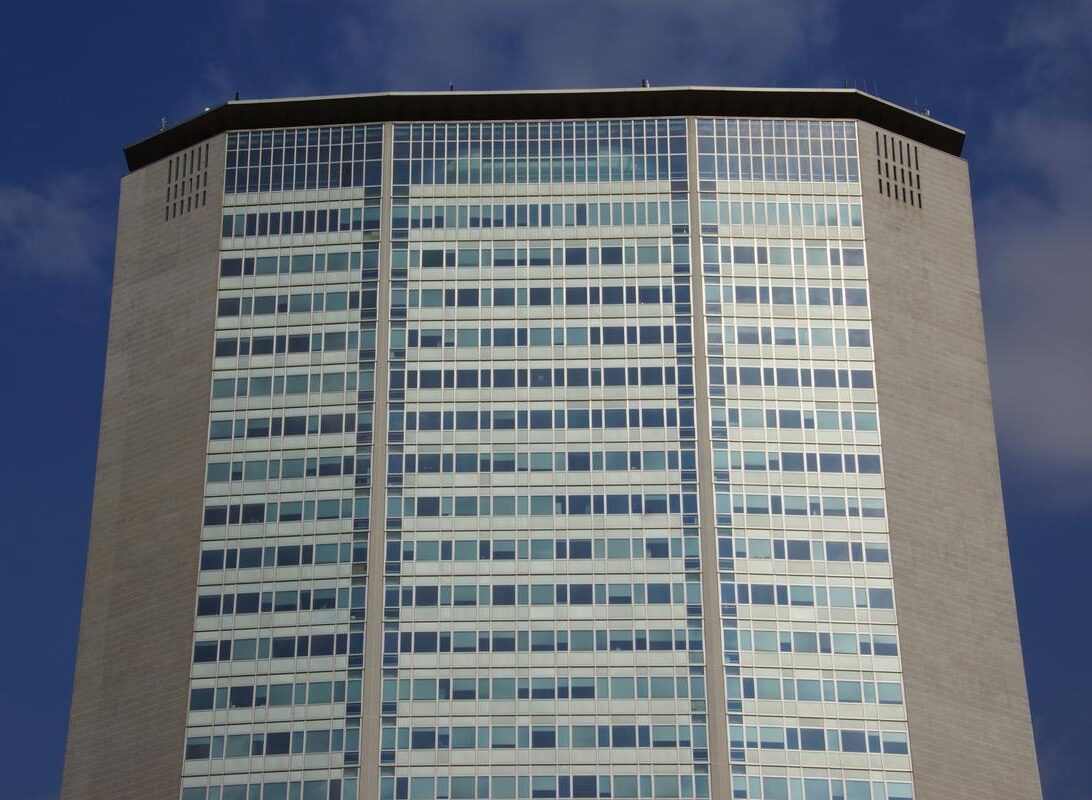
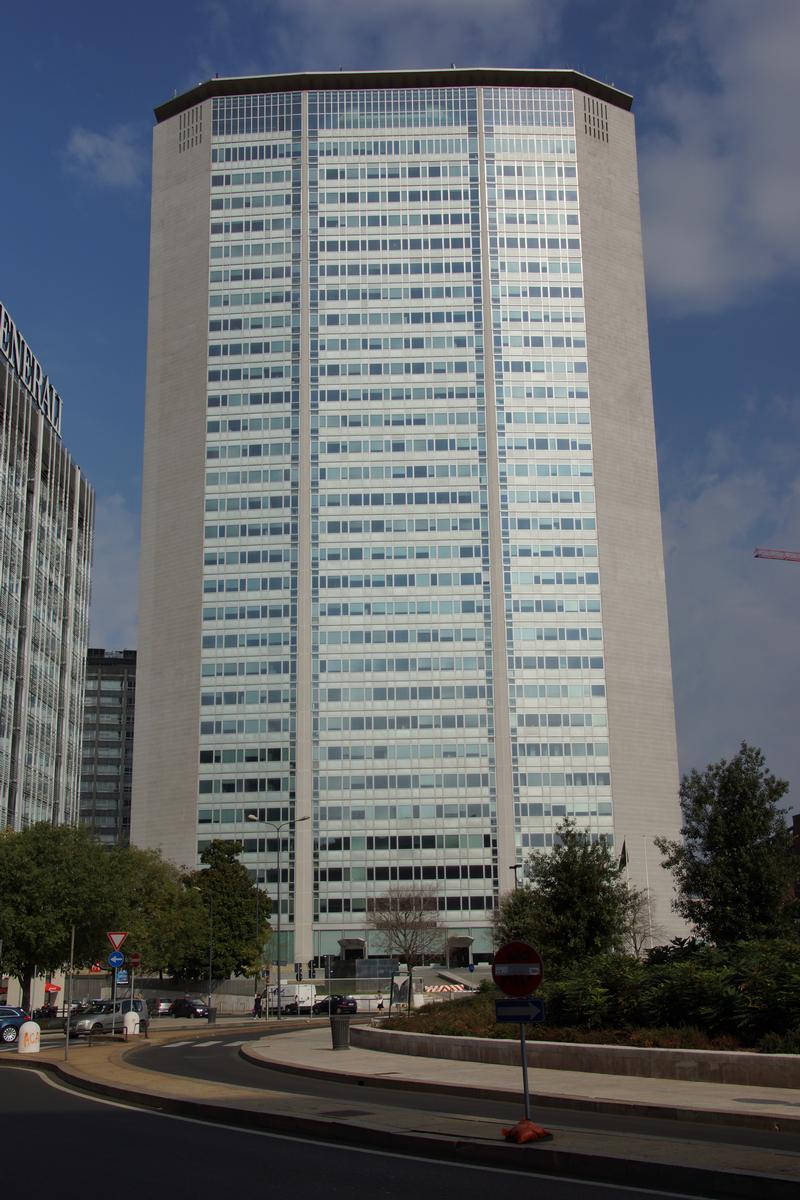
Completed in 1960, the Pirelli Tower (Grattacielo Pirelli) stands as one of Europe’s most defining early skyscrapers, an office tower where the façade was no longer a heavy perimeter wall, but a fully engineered aluminium-and-glass curtain wall executed at true high-rise scale. Commissioned by Pirelli (Pirelli & C. S.p.A.), the project became a milestone of modern construction culture, proving that transparency, precision framing, and modular envelope logic could become the building’s main identity.
The project is credited to Gio Ponti, and official architecture records also attribute authorship to Studio Ponti Fornaroli Rosselli, confirming the tower as a studio-led landmark rather than a single-name gesture. Structural engineering was led by Pier Luigi Nervi, with Arturo Danusso confirmed as responsible for the tower’s reinforced concrete structure within the engineering team engaged by Pirelli. This collaboration between architectural clarity and advanced engineering created the perfect conditions for a façade-first skyscraper: a stable structural core and frame, paired with a controlled, continuous external skin.
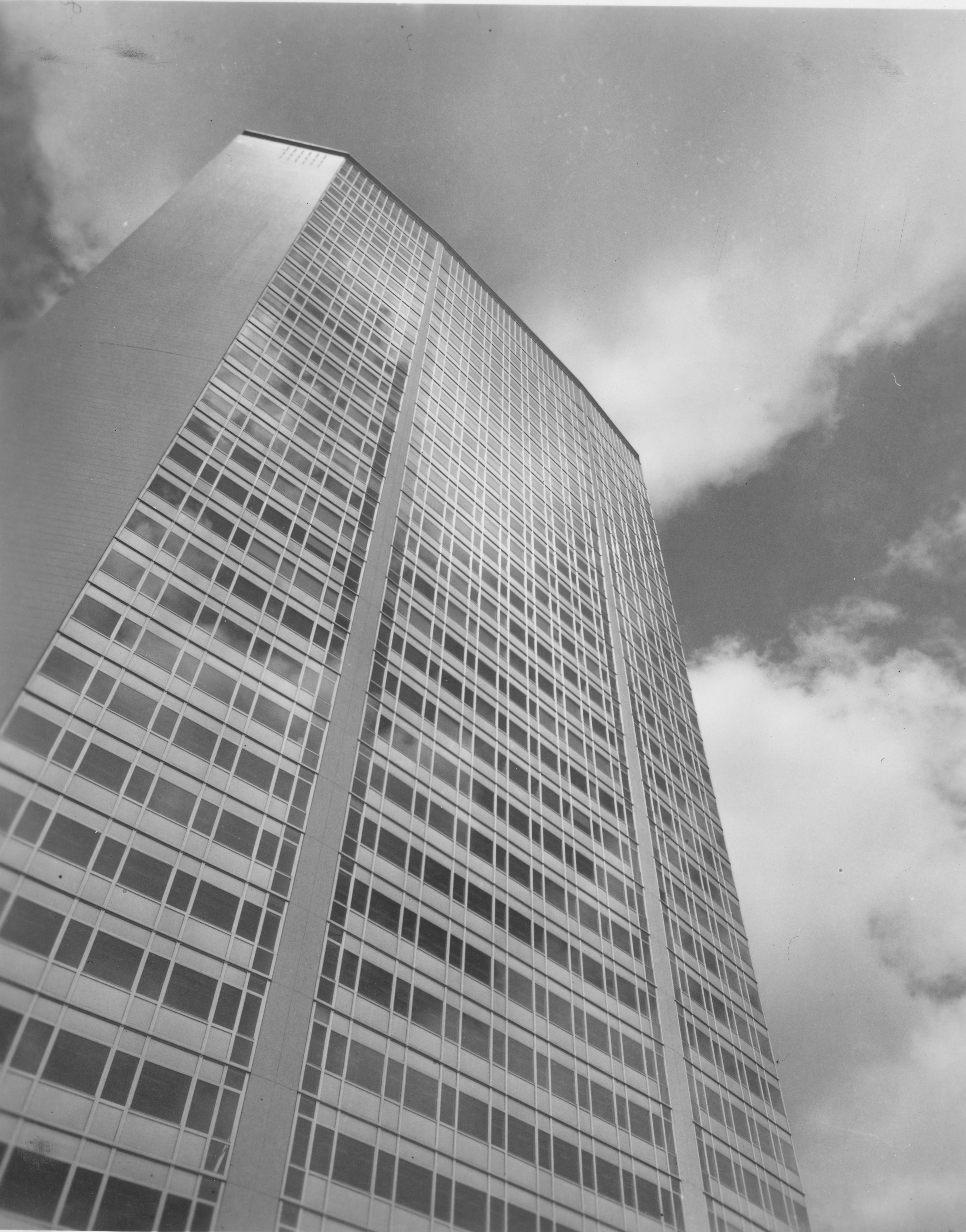
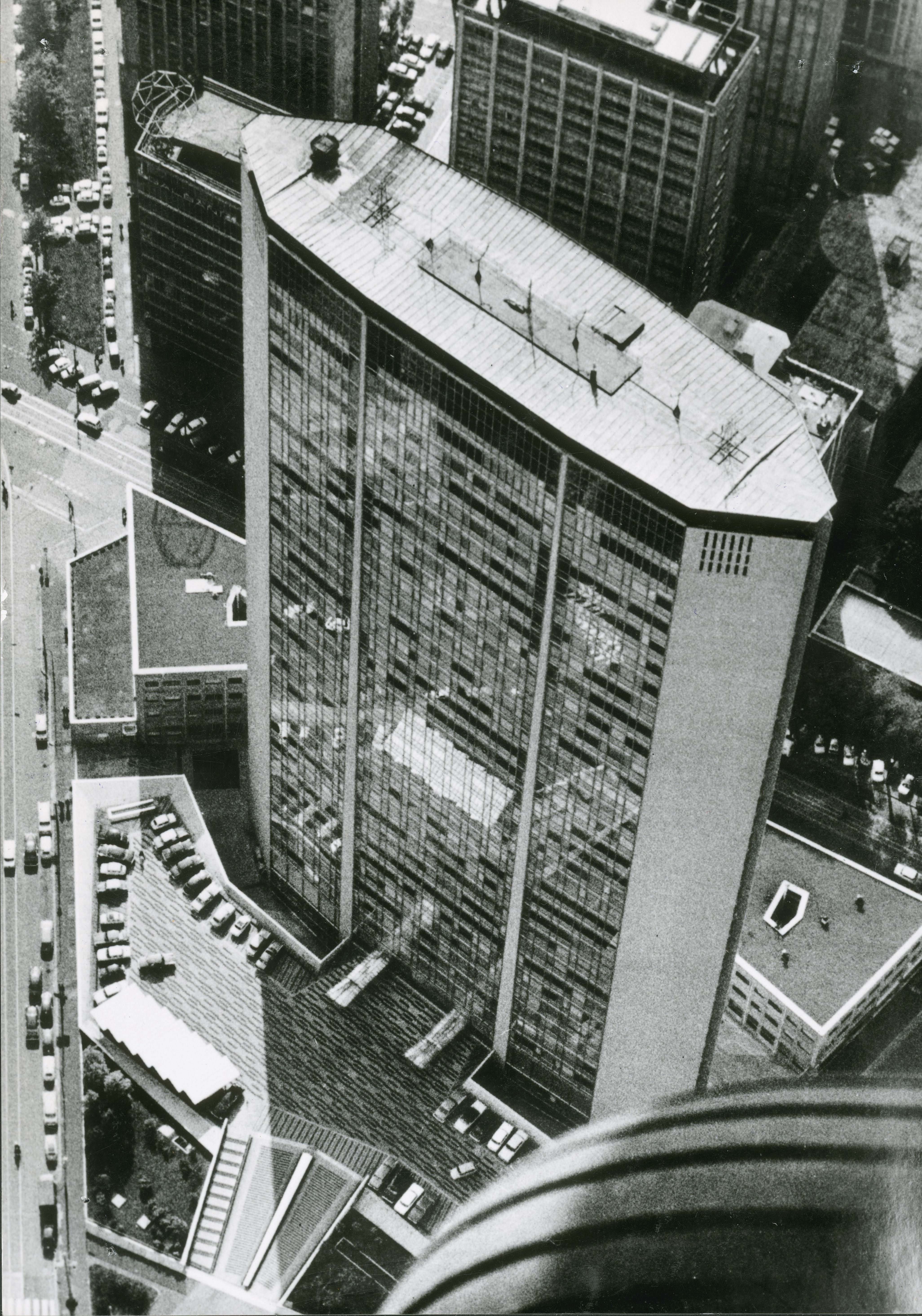
From an envelope standpoint, the Pirelli Tower’s significance is direct and measurable. Its exterior is documented as a continuous glass-and-aluminium curtain wall, described as covering the building by filling the voids between the vertical structural elements, a modern approach where the structure carries the load and the façade becomes the architectural boundary. The curtain wall surface is confirmed at approximately 9,500 m² by Fondazione Pirelli, while another technical façade source documents a larger figure of roughly 10,800 m², reinforcing the fact that the building delivered a vast curtain-wall area for its time.
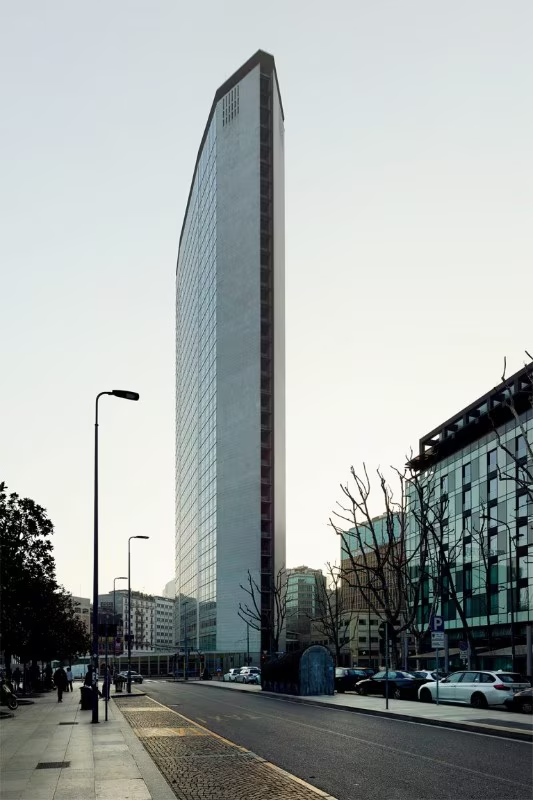
The façade is also described in technical terms as a mullion-and-transom aluminium-and-glass curtain wall system, an industrialised envelope logic that helped standardise high-rise façade construction in Italy. Glazing is documented as thermopane, supported by anodized aluminium mullions deliberately positioned outside the floor slabs. This single detail explains much of the tower’s visual power: by reducing the visible interruption of slab lines, the façade reads as a cleaner, more seamless continuous skin rather than a stack of separate floors. 
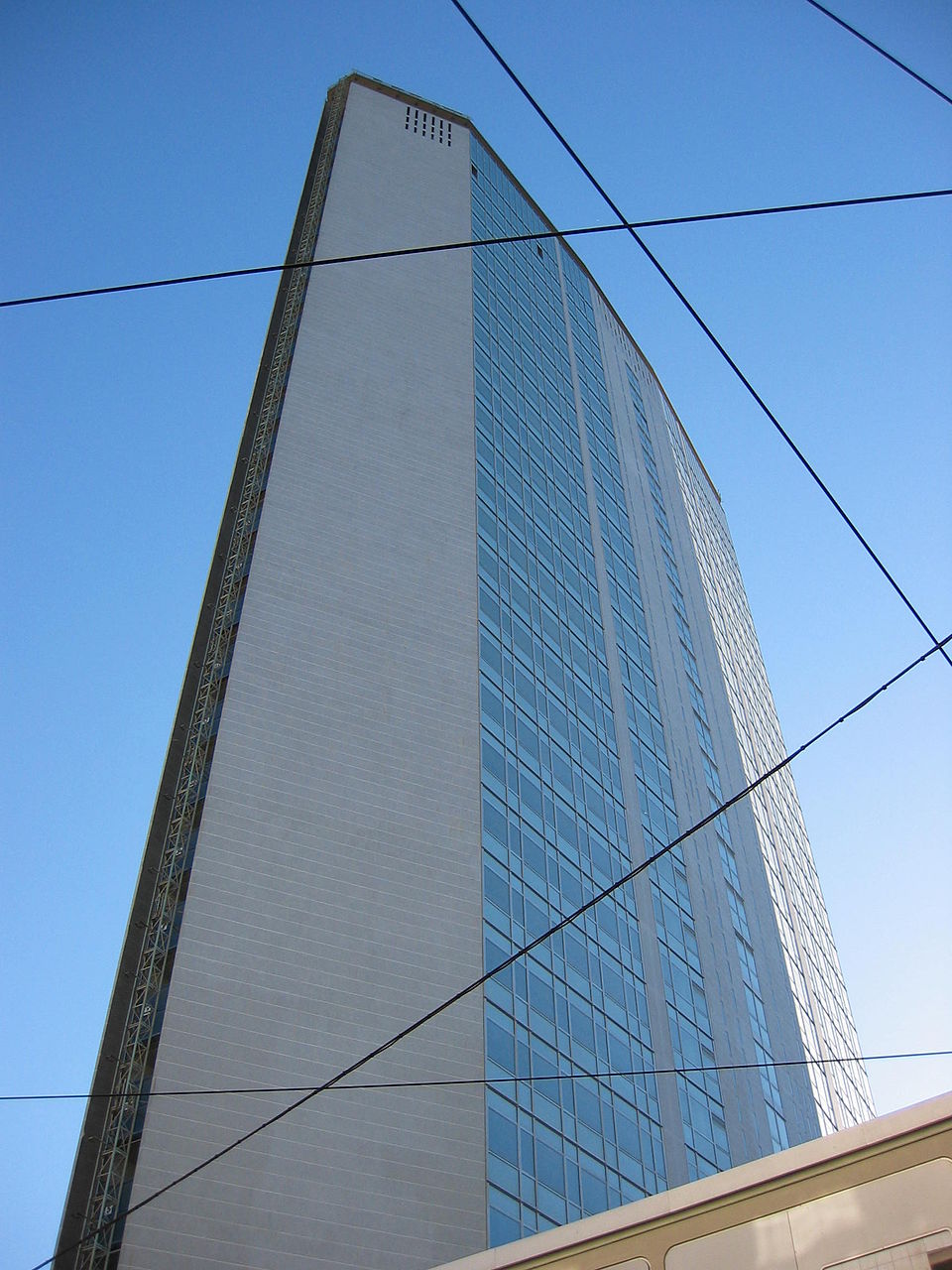
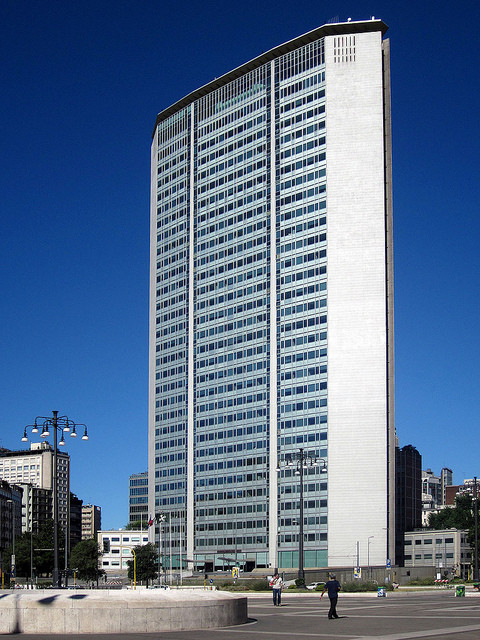
Envelope geometry strengthened the silhouette even further. Technical descriptions refer to two transparent main fronts, connected by continuous inclined side walls, sharpening the tower’s profile and giving it an aerodynamic character that stands apart from box-like towers of the same era. The result is a façade composition based on discipline: transparency where the building needs light and openness, and stronger edge definition where the form requires control and presence.
Decades later, refurbishment documentation confirms the curtain wall’s true industrial nature. Restoration approaches describe the façade being dismantled element-by-element, with aluminium sections carefully handled and profiles subjected to re-anodisation, evidence that the Pirelli Tower’s envelope was conceived as a modular system with recoverable components rather than a one-off surface. Today, the building is owned and used by Regione Lombardia, proving that this curtain-wall landmark remains both historically important and operationally relevant.
Source: Glass Balkan